AudaTours logoAudaTours

西雅图语音导览:传说、地标与文学迷宫

语音指南20 景点

一座形似钻石棱镜的图书馆。几步之遥,一座喷泉低语着秘密。一个城堡般的俱乐部,曾经在城市的雨幕下流淌着禁忌的饮品。西雅图市中心蕴藏着大多数人从未见过的层次。 这个自助语音导览将揭示连当地人也可能错过的故事和隐藏景点,融合了大胆的建筑、公共艺术以及西雅图不安历史的低语。探索一场灾难性大火如何将逾期图书馆藏书变成了意想不到的英雄。谁将智慧雕刻进金属和水中——又是为何?在阴暗的红砖堡垒内,究竟是哪双有力的手真正操控着西雅图? 穿梭于闪烁的玻璃幕墙和阴影笼罩的历史大厅之间。当你漫步于充满传说和创新的街区时,让政治阴谋、狂野抱负、失落、反叛和奇特回归交织盘旋。 从故事在钢铁和石头中闪耀的地方开始你的旅程——每个角落等待的冒险都由你来发现。

导览预览

map

关于此导览

  • schedule
    持续时间 60–80 mins按照自己的节奏
  • straighten
    2.3 公里步行路线跟随引导路径
  • location_on
  • wifi_off
    离线工作一次下载,随处使用
  • all_inclusive
    终身访问随时重播,永久有效
  • location_on
    从 西雅图公共图书馆 开始

此导览的景点

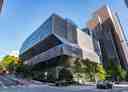
  1. To spot the Seattle Public Library’s Central Library, just look for an enormous, glittering glass-and-steel structure with a funky, geometric crisscross pattern that almost looks…阅读更多收起

    To spot the Seattle Public Library’s Central Library, just look for an enormous, glittering glass-and-steel structure with a funky, geometric crisscross pattern that almost looks like a stack of diamonds wedged between downtown’s tall buildings-it’s hard to miss if you turn your gaze up at the intersection of 4th Avenue and Spring Street. Alright, you’ve made it to the one and only Seattle Public Library! Take a moment to stand still and soak in all that shimmering glass and bold angles. You know, this building doesn’t just house books-it has a story as twisty and unexpected as its design. Picture Seattle back in 1868: muddy streets, horse carts clopping, and a group of determined townsfolk dreaming of opening a library. They tried…and flopped. Two decades later, a band of ladies-hats, long dresses, determination-revived the dream. They raised funds, snagged a land pledge, and then, the whole plan nearly went up in smoke-literally-when the Great Seattle Fire of 1889 swept in. But like a good plot twist, the city bounced back, and by 1891, Seattle had its first reading room, way up on the third floor of a block that eventually became the Seattle Hotel. Soon, they were scrambling to keep up with all the book-loving Seattleites, bouncing from building to building-anyone for some library cardio? The stacks went open-access, so folks could finally browse for themselves, and by 1898 the library moved into the fancy, 40-room Yesler Mansion. Alas, disaster struck again on a fateful New Year’s night in 1901: Yesler Mansion burned down, and with it, almost the entire collection vanished in a puff of smoke. Well, except for the 5,000 books that were out on loan. For once, late library books were heroes! Undaunted, the city asked the famous philanthropist Andrew Carnegie for help, and he wrote a check-no overdue fines there-so they could build a sturdy new library out of sandstone, dedicated in 1906. From there, Seattle became a city of readers: lending, expanding, building branches, and collecting books in Croatian, Finnish, Swedish, even Yiddish, to welcome immigrants from around the world. In fact, by 1916 nearly one in five Seattleites checked out a book-so if you ever lose at trivia, just blame your “well-read ancestors.” But then came the Great Depression, and the library felt the pinch; circulation soared as people searched for comfort and escape, but the budget shrank, employees got laid off, and even programs vanished. Still, the library endured, and by the 1950s, hope rolled in with Seattle’s very first library bond. That money sparked a library revolution: a gleaming new central library (hello, escalators!), new branches, and even a drive-up window-because why should coffee be the only thing you get to pick up from your car? This futuristic glass library you’re staring at opened in 2004, courtesy of world-famous architect Rem Koolhaas. It’s not just cool to look at: inside are a million books (yes, a literal mountain), rows of public computers, special spaces for art and music, and a wild seventh-floor zine archive with over 30,000 handmade treasures. There are even gadgets and laptops you can borrow-talk about a “powerful” library! In 2023 alone, the system had 293,000 active patrons and circulated more than 7 million digital items, from e-books to streaming movies. Classes, events, history archives, and even the nationally recognized Washington Talking Book & Braille Library-all right here. But drama still found its way in: during the COVID-19 pandemic, curbside pickup became the norm, the library served as a crucial community outpost for the city’s unsheltered residents, and staff spent months restoring and reopening. In 2024, a cyberattack shut down online services, leaving librarians to wrangle digital dragons while still helping visitors on-site. Even after all these years, the Seattle Public Library has always found a way to check out survival, renewal, and-of course-a good story. So next time you borrow a book, remember: you’re not just picking up a story; you’re part of one too. Ready to turn the page and see what’s next on our tour? Fascinated by the collections and services, architecture or the gallery? Let's chat about it

    打开独立页面 →
  2. If you look just left of the sparkling glass wall of the library, you’ll spot the Fountain of Wisdom-it’s a dark, metal sculpture shaped like a giant blooming flower, with water…阅读更多收起

    If you look just left of the sparkling glass wall of the library, you’ll spot the Fountain of Wisdom-it’s a dark, metal sculpture shaped like a giant blooming flower, with water gently pouring down its petals and collecting in a shallow pool at its base. Now that you’ve found it, take a moment to soak in the sound of water splashing and imagine you’ve stepped back to when this fountain first made its debut. Picture Seattle in the 1960s-a city buzzing with big ideas, jazz music floating through the air, and everyone sporting their grooviest outfits. The city wanted something special to welcome folks at the library’s entrance. Enter George Tsutakawa, an artist with a knack for blending Eastern and Western styles in ways that nobody quite expected. He didn’t just want to make a pretty fountain; he wanted to stir your spirit, to spark a sense of wisdom right at the doorstep of all those books inside. Rumor has it, some people thought the shape was mysterious-as if the water itself was whispering secrets to the city. And isn’t that what wisdom is all about? Sometimes it’s clear, sometimes it’s a riddle. So go ahead-run your fingers through the cool air, let the splash dance in your ears, and know you’re standing right where art and imagination meet, in the heart of Seattle.

    打开独立页面 →
  3. To spot the Rainier Club, look straight ahead for a striking red-brick building with distinctive Dutch-style gables, set against the backdrop of glass skyscrapers on the corner of…阅读更多收起

    To spot the Rainier Club, look straight ahead for a striking red-brick building with distinctive Dutch-style gables, set against the backdrop of glass skyscrapers on the corner of Fourth Avenue and Columbia Street. Imagine it’s the late 1800s, the air is thick with the smell of wood smoke and excitement as Seattle dreams of growing into something great, even before Washington became a state! Right here, in what was then nearly wild territory, six powerful men huddled together, probably trying to look important, but maybe mostly just trying to keep warm. They wanted a place to meet-a symbol of their ambition-and so, the Rainier Club was born in 1888, in the flickering candlelit hush of early Seattle. Fast forward a couple decades, and a new building stood here, gleaming with possibility. That’s the very same brick fortress in front of you now, finished in 1904, with its playful gables and the imposing presence of a castle built for rain-soaked gentlemen with big dreams. If you listen closely, you might almost hear the shuffle of boots and the muted chuckles from when the club first opened as…a men’s boarding house and a restaurant. Why? Well, the law didn’t even recognize private clubs in 1888! Picture the city’s leaders sneaking through the rain to draft nefarious-er, totally legal-plans for Seattle’s future. They’d eventually reincorporate as a genuine club in 1899, but by then, legends were already growing inside these walls. Before the Rainier Club took root here, it bounced around town like a wandering spirit: first in the lavish mansion of James McNaught, which is now the site of the Central Library, then a grimy stint in the Bailey Building, a spell at the Seattle Theatre, and at last, finding its forever home where you’re standing now. The club’s castle-like façade, designed by Kirtland Cutter, invites you to imagine top hats bobbing, umbrellas dribbling, and horse carriages clattering out front. In 1929, a new wing with shiny Art Deco ornaments and a sweeping Georgian-style entry made sure the Rainier Club was always the fanciest spot on the block-even during bleak times. Rainier Club’s roots tangle deep into the city’s most dramatic moments. After the Great Seattle Fire of 1889 burned half the city to cinders, part of this club became emergency City Hall, as leaders huddled and made desperate plans surrounded by singed suits and hope, the sort of hope only found in rebuilding from ashes and-maybe-a good whiskey. Speaking of whiskey: when Prohibition rolled in like a cold, gray fog in 1916, the club swore, “No employee shall ever serve or possess alcohol.” But, and this is important, it never said anything about the members! I suppose you could say the Rainier Club ran almost as much on secrets as on cigars. During tough times like the Great Depression, membership fees dropped faster than a soggy sandwich, plummeting from $500 to $100 just to keep the doors open. But spirits (and glasses) rose again after Prohibition ended-quirky new liquor laws let only private clubs serve drinks, funneling fun right into places like the Rainier Club. And if you think this was just a place for old men with big mustaches, think again. The club helped organize the monumentally grand Alaska-Yukon-Pacific Exposition of 1909, the fair that transformed Seattle’s University of Washington campus forever and put the young city firmly on the national map. Later in the 1960s, secret meetings here helped launch the Century 21 Exposition, better known as the 1962 World’s Fair. If you squint, you might almost see guests like John Muir stepping out to explore Alaska, or President Bill Clinton’s diplomatic motorcade rumbling up for top-level APEC meetings with Japan and China in 1993. Inside, past those stately doors, incredible art hangs on the walls, including dozens of original prints by Edward S. Curtis-club member, photographer, and sidekick to President Theodore Roosevelt. Distinguished visitors ranged from Buffalo Bill to Babe Ruth, and the club eventually broke its own barriers: Saburo Nishimuro became the first Japanese American member in 1966, Luther Carr the first African American member in 1978, and that same year, the club finally invited women, starting with trailblazing judge Betty Binns Fletcher. Now 1,300 strong, the Rainier Club continues to be a gathering place for folks who shape, shake, and sometimes overturn Seattle’s story. Take a long look at this gabled landmark-you’re sharing the sidewalk with more than a century of secrets, celebrations, and the echoes of some very, very lively conversations. Want to explore the buildings, activities or the prohibition and great depression eras in more depth? Join me in the chat section for a detailed discussion.

    打开独立页面 →
再显示 17 个站点显示更少站点expand_moreexpand_less
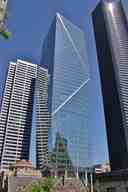
  1. Look up for a tall, slender blue-glass skyscraper with dramatic diagonal lines sparkling in the sunlight, wedged confidently among its taller and older neighbors-if you spot a…阅读更多收起

    Look up for a tall, slender blue-glass skyscraper with dramatic diagonal lines sparkling in the sunlight, wedged confidently among its taller and older neighbors-if you spot a building that looks like it could be auditioning for a movie, you’ve found the F5 Tower! Now, take a deep breath and let’s jump into the world of F5 Tower-a 44-story marvel shimmering above Seattle’s streets. Standing here, it’s easy to imagine you’re gazing up at a massive glass sculpture; in fact, the tower’s angular walls were inspired by none other than Audrey Hepburn’s silhouette from Breakfast at Tiffany’s. So, you could say this building’s got a bit of old-school Hollywood glamour built right in. You’ll notice how its glass reflects the sky and the neighboring towers-don’t worry, the building’s not shy. In fact, the glass is extra special: it’s the same kind used in the One World Trade Center in New York, designed to keep things cool by letting in only the Goldilocks amount of sunshine-not too much, not too little. As it rises 660 feet up, F5 Tower is the sixth-tallest building in all of Seattle…and if you were hoping for a rooftop suite, watch out- the floors skip numbers, so the top one is labeled 48. Math is weird at these heights! Beneath all that futuristic shine, the building also keeps an eye on Mother Nature: it has a 35-foot “living wall” bursting with greenery right on the Columbia Street side, collects rainwater, and even grabs energy from the sun thanks to rooftop solar panels. You might hear the faint trickle of water inside--if you ever get a peek at that vertical garden. If you’re wondering why the building looks like it’s squeezing into its spot, that’s because it is-each floor is a different size, starting narrow and getting wider as you head up, like a skyscraper doing yoga stretches. Linked right next door is a piece of Seattle history: the domed roof you see below belongs to the old First Methodist Episcopal Church. When the tower was built, the education wing was carefully removed, but the main church stuck around, reborn as Daniels Recital Hall. So, on one block you can hear the future humming and the past softly singing at the same time. Inside, there’s 516,000 square feet of office space, all leased out to F5 (don’t even bother asking about renting a desk unless you know your way around network security). On the lower floors, high rollers and lucky guests get to lounge in a luxury hotel, currently operated by Lotte Hotels & Resorts. But the building had a dramatic start: construction began in 2008, hit pause during the economic crash, and picked up again in 2014. And talk about plot twists-workers found old colossus-sized cables underground from the 1980s Columbia Center project, which kicked off a lawsuit. Drama, drama, drama. Speaking of drama, in 2016, a construction elevator went rogue and dropped several floors after high winds tangled a power cord. Luckily, everyone survived with only minor injuries, but if you ever felt your stomach drop in an elevator, imagine that times ten-! Today, the F5 Tower stands as a symbol of Seattle’s soaring ambitions and a reminder that every shiny new building has its share of wild stories, close calls, and maybe even a little movie-star magic shining from its glassy skin. So keep your eyes up, your questions ready, and your elevator rides short! Wondering about the design, construction or the incidents? Feel free to discuss it further in the chat section below.

    打开独立页面 →
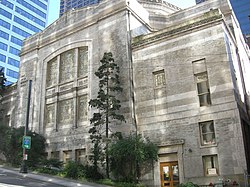
  2. To spot Daniels Recital Hall, just look for the big, elegant beige-brick building with large stained glass windows on your left - it has a tall, rounded crown and is tucked right…阅读更多收起

    To spot Daniels Recital Hall, just look for the big, elegant beige-brick building with large stained glass windows on your left - it has a tall, rounded crown and is tucked right between modern glass towers at the corner of Fifth Avenue and Marion Street. Alright, go ahead and take it all in! Imagine, for a moment, that you’re standing outside in 1908, right as the finishing touches are going onto this incredible sanctuary. The streets around you are full of the rumble of horse-drawn carts and the deep tolling of church bells. This building, now known as Daniels Recital Hall, was once the beating heart of an ambitious new age for Seattle’s faithful. Instead of the classic Gothic look most churches preferred in those days-think pointy arches and lots of spooky shadows-this sanctuary showed off a modern twist: the Beaux Arts style, all smooth lines, terracotta vines, and giant, glowing windows by Povey Brothers Glass Company. If you could step through those doors a century ago, you’d be hit by the sweet smell of polished wood and the sound of voices gathering. The congregation had just moved in from their old 3rd Avenue spot, and this place was absolutely sparkling. Built on a hulking rectangular base, the main hall stretches three stories up, right under a huge dome decked out with red terracotta tiles. Imagine 1,800 people squeezed inside for a Sunday sermon, or the odd whispered giggle of kids in a Sunday school class hidden beneath your feet in the basement classrooms. Time marches on, of course, and this building saw plenty of it: in 1950, it grew a new wing for education and community gatherings-because, let’s be honest, even churches need to make room for bake sales and bingo nights. But as decades passed and downtown Seattle’s skyline started to rise, the Recital Hall-then still known as the First United Methodist Church-found itself in a battle that would last twenty-five years. Preservationists, the city, developers, and the church all wrestled with the same question: should this piece of Seattle’s past be torn down for yet another skyscraper? At one point, the church even won the right to keep religious buildings off the historic landmarks list. With the threat of demolition looming, the future was anything but certain. You can still see some scars from that long fight; the decorative cornice was chopped away in 1990, changing the church’s classic silhouette. At last, something kind of miraculous happened-a deal! Kevin Daniels and Nitze-Stagen & Co. swooped in, and rather than flatten this beautiful sanctuary, they agreed to tear down only the 1950s education wing. They’d keep the original church, giving it a brand new purpose: music! Picture sunlight pouring through those stained glass windows as the hall is filled with music, the air humming. Since 2009, musicians have come from all around to take advantage of those perfect, echoing acoustics-that’s right, you’re standing next to a place where the walls quite literally sing. Concerts-sometimes free-drew crowds, and for six years, TV cameras from the local show "Crescendo!" captured everything from Bach to boogie. The building even snagged a role in video game history, appearing as a post-apocalyptic synagogue in "The Last of Us Part II!" But, as with any star, there were quiet moments of drama: construction, renovations, church groups moving in and out, and more than one last-show-before-the-makeover. Every inch of this place-from the sturdy bricks to the glowing dome-holds part of Seattle’s story. It’s proof that a city can be forward-thinking while still holding onto its roots, a delicate dance between memory and progress. So next time someone says history is silent, you can tell them you’ve stood right here, outside a building that’s seen the past, survived the struggle, and finally found its new song. Okay, let's keep moving before one of those stained glass angels asks us to join choir practice!

    打开独立页面 →
  3. Look up-way, way up-and you’ll see the Seattle Municipal Tower towering above you, with its sleek grid of beige and glass wrapping its sides and a pointy glass hat at the very…阅读更多收起

    Look up-way, way up-and you’ll see the Seattle Municipal Tower towering above you, with its sleek grid of beige and glass wrapping its sides and a pointy glass hat at the very top, making it stand out against the sky. You’re standing in front of history and a lot of stairs-trust me, your feet are glad you’re outside! Imagine the early 1980s, Seattle bustling with classic apartments at this very spot and residents getting their morning paper as rush hour whizzed past. The city was ready for a skyscraper, but not just any skyscraper-a tall one, the biggest on the block. Local developers Herman Sarkowsky and Delbert Belfoy had their eye on this place and started planning what they called the “Sixth & Columbia Building.” Now, here comes our first bit of tension-a group of renters living in the Doris and Breslin Apartments thought, “Hang on! Where would we go?” So they took their fight to court, suitcases packed with courage more than clothes, standing up for their homes amid plans for a building that would cast a literal shadow over their future. Meanwhile, on drawing boards and in coffee-fueled meetings, architects wrestled with questions: Would they make this a 55-story giant or go all out with 65, including a daring stretch over the expressway ramps? The plan for the bigger tower had one wild feature-a part of it floating above the roaring I-5 entrance ramp. Developers needed to “lease air”-yes, lease the sky itself-from the state to pull that off. Throw in a skyway that would zip across Columbia Street, and you’ve got Seattle’s version of an indoor amusement park, minus the roller coasters. Once the dust and debates settled, the tower began to rise. In 1990, it finally debuted as the AT&T Gateway Tower-only to have a bit of an identity crisis, swapping names to KeyBank Tower whenever the mood (or the anchor tenant) changed. By 2004, the city had claimed it for good, bestowing the proud and official title you see today: Seattle Municipal Tower. Now, here’s where it gets quirky. A brainchild of Bassetti/Norton/Metler/Rekevics Architects, this building has more surprises than a magician’s hat. For instance, the lobby isn’t even on the ground floor-nope, it’s way up on floor four, and if you need to find a friend upstairs, you’ll need a game plan. Elevators are divided by league: lower floors, upper floors, and a special “sky lobby” on 40 where you switch rides, as if you’re boarding a rocket. For the bravest visitors wanting to reach “The Tip” on floor 62, well-you need a secret-encoded badge just to hitch that private elevator from floor 61. Even its restaurants play a bit of hide and seek. The three are perched on the plaza at the sixth floor, but only one welcomes you indoors. The rest say, “Come around the outside!” As for getting to the plaza or the tunnels below? Don’t even think about using the main elevators. You’ll either have to transfer at floor four or take the winding decorative stairs-try not to get dizzy, but no promises. Standing here, you might sense the pulse of Seattle’s government. The city scooped up this 722-foot marvel in 1996, snatching a bargain during an economic slide, and now it’s home to the real muscle behind municipal works-Seattle City Light, utilities, Human Services, and more. It’s part of the Seattle Civic Center complex, with City Hall just nearby, kind of like a dynamic duo fighting bureaucracy one paper at a time. For those curious about the tip-top, the crown of glass you see up there isn’t a fancy penthouse-it’s full of mysterious, clanking elevator equipment. Take a long look up and imagine the stories packed inside every one of those windows: city builders, dreamers, reluctant tenants, and planners who dared to lease the sky itself.

    打开独立页面 →
  4. Right in front of you, you’ll spot a giant, empty pit surrounded by concrete walls and a smattering of overgrown weeds-just look for a big construction site right at the corner of…阅读更多收起

    Right in front of you, you’ll spot a giant, empty pit surrounded by concrete walls and a smattering of overgrown weeds-just look for a big construction site right at the corner of 3rd Avenue and Cherry Street, with the glassy City Hall looming in the background. Now, let me transport you back in time-and not just a few years! Where you’re standing was once home to the mighty Public Safety Building, an old city fortress that watched over downtown Seattle until it was demolished in 2005. For a while, the only excitement here was the occasional tumbleweed (okay, maybe not tumbleweed, but lots of concrete dust). Imagine the city buzzing with talk of replacing it with something truly spectacular: a 43-story tower called Seattle Civic Square, a place that promised sparkling condos, shiny offices, and a public plaza big enough to host grand city celebrations. The architects even dreamed up fountains and glassy walls-Seattle’s own Emerald City fantasy! But no epic tale is complete without a few plot twists, right? Just as shovels were ready to hit the dirt, the Great Recession came along. It swept through the country like a cold wind, freezing construction and dreams in place. Years ticked by, and spats over money, design, and even a wild city hall scandal knocked the plans around like a pinball. In fact, a developer named Triad had their grip on the project-until things got so messy, the mayor had to step in! Allegations of under-the-table pressure, lawsuits with fiery tenant groups, and settlement deals that would have made even seasoned politicians sweat filled the air. When the dust settled, Triad was out, but not before agreeing to pay millions into affordable housing-because even in the high-stakes world of downtown Seattle, you can’t just play Monopoly with the city’s future! Next, Touchstone Development took a swing at it, but their effort fizzled out, too. The site slipped quietly into limbo while everyone in town whispered, “Will anything ever rise at 3rd and Cherry?” Enter Bosa Development in 2016, with a new vision and even more ambitious dreams: a shiny, sloping tower with room for hundreds of condos, glitzy retail shops, and a promise to boost affordable housing in the city. Their architect even tossed out all office space to focus just on housing, a pivot as dramatic as a plot twist in a mystery movie. Fast forward to today, and the story still isn’t finished. Bosa broke ground, then paused, blaming sky-high costs and a jittery market-a modern cliffhanger! For now, the pit in front of you waits, like a giant empty stage hungry for its next act, surrounded by the city’s energy on all sides. So look around! From the City Hall next door to the nearby Pioneer Square light rail entrance, you’re standing at Seattle’s most suspenseful real estate saga-where fortune, mishaps, and ambition have clashed for nearly two decades, and the best part is, the finale has yet to be built. Keep your eyes peeled-one day, this hole will rise up as a monument to persistence, patience… and a little dash of Seattle drama.

    打开独立页面 →
  5. To spot the Grand Opera House, look for a tall, rectangular brick building with arched entryways and windows, and imagine it standing just off Cherry Street with its painted-over…阅读更多收起

    To spot the Grand Opera House, look for a tall, rectangular brick building with arched entryways and windows, and imagine it standing just off Cherry Street with its painted-over stone details still peeking through on the façade. Now, as you stand here in front of the Grand Opera House, let’s wind the clocks back to 1900, when this corner of Cherry Street was buzzing with excitement and the irresistible smell of popcorn drifted through the air. Can you picture crowds in their finest hats and coats, hurrying up these steps, laughter rising as they gathered under the bright gaslights? It’s almost hard to believe that today’s parking garage was once the “crown jewel” of Seattle’s nightlife. This glorious theater was the brainchild of architect Edwin W. Houghton, Seattle’s go-to guy for grand stages and big dreams. John Cort, the theater mogul, had a vision: instead of leaving entertainment clustered down by Yesler Way, he pushed the city to stretch the fun a bit farther north-right to Cherry Street. It worked. The Grand Opera House quickly became where you’d go if you wanted to see and be seen, trading gossip or-if you were less lucky-tripping up the grand staircase while trying to act cool. The opening night in October 1900 was the talk of the town. Not only could you enjoy a proper opera, but you could also slip downstairs to the Palm Gardens for a beer and some variety acts. The main hall sparkled with two tiers of fancy box seats, an enormous balcony, and a stage big enough for the rowdiest vaudeville troop or a ghostly opera with swirling capes. All told, it could squeeze in about 2,200 excited souls, all craning their necks as the curtain rose. But as with any juicy drama, trouble was always waiting in the wings. In 1906, a fire tore through the interior, reducing the stage and all those plush velvet seats to ashes. John Cort, never one to mope, shifted his spotlight to newer theaters-the Moore Theatre at first, and with time, the show-stopping Metropolitan Theatre. Meanwhile, the Grand found new life as a movie house, tossing in some “incidental” vaudeville to keep the crowds from dozing off. Then came 1917, and with it, a scene straight out of a disaster movie. Before dawn, smoke started curling out from beneath the balcony. The janitor, George Matsu, dashed for help, and within minutes, fire engines were clattering down Cherry Street, horses neighing and bells ringing. The flames grew so fierce that firefighters scrambled to empty the nearby hotel next door. Suddenly, the domed roof gave a thunderous roar and collapsed, claiming the life of Battalion Chief Frederick G. Gilham and injuring several other heroic firefighters. It was a day Seattle wouldn’t soon forget. Rumors swirled in the aftermath-had the building inspectors been too lenient? Who was to blame? In the end, no wrongdoing was found, but it left a bitter aftertaste. The Grand sat empty for years, echoing only the ghosts of sold-out performances and the footsteps of people who remembered when it was the grandest piece of theater around. By the roaring twenties, cars had taken over Seattle, and a clever duo scooped up the Grand to give it a new lease on life. They transformed the shell of this once-glorious theater into the Cherry Street Garage, boasting all the latest auto trends-patented ramps, full-service auto repairs, and floors thick enough to handle hundreds of shiny Model T’s. If buildings could sigh, the Grand probably rolled its eyes at the engines but was secretly relieved not to be completely forgotten. As you look up at the painted brickwork, squint and you might spot traces of original sandstone trim and the arched vestibule doorway where actors and visiting nobility once paused, perhaps nervously, before facing the crowd. Somewhere above you, a faded plaque clings to the past, a silent reminder that this stretch of Cherry Street once rang with applause, music, and dreams a mile high. In a city always eager to move forward, the Grand Opera House is proof: every parking garage could be hiding a little backstage magic. To delve deeper into the theater, the fire or the parking garage, simply drop your query in the chat section and I'll provide more information.

    打开独立页面 →
  6. To spot the Pioneer Building, look for a grand, symmetrical, red-brick and stone structure right on the corner, with an arched entrance in the middle and rounded bay windows…阅读更多收起

    To spot the Pioneer Building, look for a grand, symmetrical, red-brick and stone structure right on the corner, with an arched entrance in the middle and rounded bay windows towering above-you can’t miss its distinctive blend of red brick, gray stone, and ornate details. Welcome to the very heart of old Seattle! Picture yourself standing where the city’s first real boom began-before this towering red-brick marvel existed, you’d be crunching across grass and apple blossoms, right in Henry and Sarah Yesler’s backyard orchard. Their little house here wasn’t just a home; it was the unofficial town clubhouse, where, if you were lucky, you might’ve been served a mug of coffee or swapped stories with the whole early Seattle crowd. Just a short stroll away, Henry’s steam-powered sawmill billowed its own clouds of smoke. The spot you stand on was where business and social life sprouted side by side, setting the stage for a remarkable transformation. Fast forward to the late 1880s-Seattle’s growing fast, and Henry Yesler, never one to let the grass grow under his feet, decides it’s time for this patch of land to host something much, much bigger. Instead of knocking down their old house, he simply scoots it to the back of the lot, filling the front with relocated buildings like a city-sized puzzle. By 1889, planning is underway for a mighty office block that the newspapers call ‘the largest north of San Francisco!’ Now, can you imagine the anticipation in the air as people gawked at the blueprints on public display, murmuring about this soon-to-rise giant? The Pioneer Building’s creation, however, wasn’t all smooth. The builders broke ground in February 1889, but ran smack into a citywide stone shortage. With only 144 out of 800 needed tons of stone delivered, construction crawled. And just as things were settling down-whoosh-disaster struck: the Great Seattle Fire of 1889 swept through 32 blocks, leveling nearly everything downtown. But out of these very ashes, the Pioneer Building rose, a phoenix built from Bellingham Bay sandstone, red bricks, and California terra cotta, standing strong against flames and setbacks alike. The building we see today took shape in two parts, the southern half first, then the northern, reflecting both Victorian elegance and Romanesque muscle-look at those bold arches and chunky stone pillars. Even its brickwork forms a kind of grid, as if the building itself is standing tall, hands on hips, daring the next disaster to come. At 94 feet tall, with three projecting bays of cast iron-especially notice the beautiful curved corners and the angled bay reaching above the entrance-the Pioneer Building became one of Seattle’s finest, most resilient business blocks. Once, a proud seventh-floor tower room sat above the door like a pointy hat, but the 1949 earthquake shook it right off! Inside, imagine the clatter of boots on stone and the buzz of 185 tiny office rooms, each rented to buzzing businesses. Two atria pierce through the building, lighting up the interior like beams of morning sun cracking through storm clouds. But that’s not all-come the Klondike Gold Rush in 1897, this place was swarming with miners! Forty-eight mining companies jammed themselves into these rooms, with gold fever running hotter than a July sun. And if you time-traveled right, you might even stumble into Seattle’s first secret speakeasy during Prohibition-don’t mind the shifty glances, just knock twice and bring your own password! By the 1950s and ‘60s, the whole district nearly met the wrecking ball, doomed to make way for parking garages. But the people of Seattle, stubborn as January rain, fought to save it. Thanks to that movement, the Pioneer Building and its historic neighbors gained the protection of the National Register of Historic Places-call it Seattle’s own “comeback story.” In 1971, the National Park Service dreamed of making the Pioneer Building the home of the Klondike Gold Rush National Historical Park, but the plan fizzled, and instead, savvy entrepreneurs took over, renovating it for a new era. By 1977, it became a National Historic Landmark, forever paired with the famous Pioneer Square pergola and totem pole just nearby. Today, this magnificent structure isn’t just a relic; it’s alive with energy. You can step into Doc Maynard’s Nightclub and Lounge below, buy a ticket for the Seattle Underground Tour right here, or finish off at the gift shop packed with quirky souvenirs. Wander upstairs and you’ll find coworking spaces, law offices, even golf-course designers. In 2015, the building got another makeover, this time welcoming startups and creative folks looking for inspiration in these old brick corridors. So as you stand here, listen for a whisper of the past-the echo of miners, partygoers, secretive Prohibition patrons, hopeful entrepreneurs, and maybe even the shuffle of Yesler himself, chuckling as he trades his apple orchard for a city’s future. For a more comprehensive understanding of the location, design or the current use, engage with me in the chat section below.

    打开独立页面 →
  7. Right in front of you is the old Butler Hotel-just look for a big, rectangular brick building with rows of arched windows marching across every floor, sitting neatly on the corner…阅读更多收起

    Right in front of you is the old Butler Hotel-just look for a big, rectangular brick building with rows of arched windows marching across every floor, sitting neatly on the corner of Second Avenue and James Street. Now, picture yourself standing here over a hundred years ago, right at the lively heart of old Seattle. If you looked up, you’d see the grandeur of the Butler Hotel. Back when it opened its doors in 1894, this place was the absolute toast of the town, rivaling any hotel west of the Mississippi. But hold on-the story of this building begins even earlier, in a very different Seattle. Before the Butler was ever hotel or brick, this was Hillory Butler’s little piece of paradise-a truck garden, smack in the middle of what would become bustling downtown. Picture rows of vegetables with the early clatter of horse-drawn wagons bouncing over wooden plank streets nearby. Butler’s one condition: any building here must keep his name for all time. He’d be proud to know his wish was immortalized above the door. Then, after the Great Seattle Fire roared through in 1889, a new fireproof city arose. The original Butler was just a humble, three-story wooden affair, but after the fire, ambitious plans went sky-high. Parkinson and Evers, fresh architects just arrived from California, whipped up plans for something grand-first an office building, which would soon get a glamorous new life as a hotel. Once up and running, the Butler went all out. Imagine its marble-floored lobby bustling with miners, businessmen, and adventurers, many of them just back from the Yukon Gold Rush, their pockets heavy with gold dust and wild stories. Then, there were locals-Seattle’s movers and shakers-mixing with famous faces, from shifty con men to visiting admirals and railroad titans. If you listen closely, you can almost hear the clinking glasses and raucous laughter spilling from the Rose Room. The Butler’s kitchen was the best in town, with fresh seafood and the city’s finest fare. The massive dining room was split for men and women-imagine that!-and the place boasted its own ice-cooled refrigerators and even its own electric plant, a marvel at the time. The year 1903 brought two extra stories and made the Butler the tallest, flashiest social hub in the city. But even inside this palace, there were storms-and not just from the weather. When a new minimum wage law came to town in 1915, the hotel fired all its maids and replaced them with an all-Japanese staff, but the uproar was so fierce, the maids were rehired just two weeks later. The city’s sense of drama was alive and kicking! Fast-forward to the roaring twenties-Prohibition was in full swing, but the Butler’s Rose Room must have missed the memo, or maybe it just ignored it on purpose. The whole city knew this was the place where the drinks kept flowing, even if the law said otherwise. Bandleaders like Victor Meyers and Jackie Souder got Seattle dancing, and smoky jazz drifted into the night air. The young Bing Crosby himself once got turned away-imagine telling Bing to get more practice! The Rose Room was legendary, not just for its music, but as Seattle’s own speakeasy playground. Prohibition agents staged dramatic raids, swooping in and grabbing bottles hidden under tables while customers booed and staff kept pouring drinks with a wink and a smile. Everybody knew: the real fun was in playful defiance, and the Butler was never short on mischief. As the Depression deepened and the city changed, the old hotel started to fade. Dancing was outlawed after 9 PM, then the Rose Room was shuttered for a year. When the ballroom lights flickered on again in 1930, things had changed for good. By September 1933, the Butler closed its doors forever. Chairs and silverware were auctioned off, and, one by one, all but the bottom two floors were torn down to make way for the city’s onward march-a parking garage. The fancy dining, the criminal capers, the glitz of the Gold Rush-gone. Now, only the lower floors remain, part of the Butler Garage. So as you stand here, remember: this spot was once the pulse of old Seattle, where fortunes were made, rules were bent, and every night promised a wild new story. And don’t worry-if you happen to “find” any whiskey while you’re here, your secret’s safe with me!

    打开独立页面 →
  8. To spot the landmark, look for a weathered bronze bust with wise eyes and "CHIEF SEATTLE" written across its base, sitting just beside the bustling sidewalk in front of you. Now,…阅读更多收起

    To spot the landmark, look for a weathered bronze bust with wise eyes and "CHIEF SEATTLE" written across its base, sitting just beside the bustling sidewalk in front of you. Now, as you stand here, you’re looking at more than just a statue-you’re gazing into the sharp eyes of Chief Seattle himself, the legendary leader of the Suquamish and Duwamish people, who gave this city its very name. Imagine it’s 1909: the air is buzzing with excitement as the Alaska-Yukon-Pacific Exposition sweeps through Seattle like a river in spring. The Park Board wants to honor the city’s namesake, so they commission artist James Wehn to shape this very bust. Back then, the statue sat proudly atop a busy fountain, happily offering water to not just thirsty men, but even panting dogs and tired horses-no one left out! Now, the fountain's gone, but the wisdom etched into Chief Seattle’s face lingers on, a silent watcher over First Avenue and Yesler Way. In 1994, even the Smithsonian himself showed a bit of worry, putting out the call for someone to give the old Chief a little TLC! There’s another version over at Seattle University, but this one, right here, feels like the real heartbeat of the city. If you press close and listen among the traffic, maybe you’ll hear a whisper of Chief Seattle’s timeless respect for the land and his hope for those who live upon it.

    打开独立页面 →
  9. To spot the Hotel Seattle as you stroll up, look for a grand, cream-colored five-story building with a narrow edge that slices into the triangle where James Street and Yesler Way…阅读更多收起

    To spot the Hotel Seattle as you stroll up, look for a grand, cream-colored five-story building with a narrow edge that slices into the triangle where James Street and Yesler Way meet-picture a blocky Flatiron building anchoring this historic intersection. Alright, you’re standing on history’s doorstep now, right where the old Hotel Seattle used to stretch proudly skyward. Imagine the year is 1890, and before you stands a beaming, triangular marvel, sunlight glinting off its pale Victorian facade, white cement outshining the dark brick neighbors. You can almost hear the clatter of horse-drawn carriages and streetcars ringing their bells as they glide past, and see the crowds hustling through the tall arched entryway. But the story of this corner starts even earlier. Back in 1861, this spot was home to the Occidental Hotel, a rickety wooden building that probably creaked every time the wind picked up. It wasn’t just a place to sleep-it was where Seattle gathered for big events, like the somber memorial service for President Garfield in 1881. After two decades, that original hotel got a makeover-out went the wood, in came an even grander building, thanks to John Collins and architect Donald Mackay. Inside, Puget Sound National Bank rang busy, and the place buzzed with high society and visitors who liked their baths indoors, thank you very much. But all that grandeur came crashing down in 1889-literally. The Great Seattle Fire swept through, reducing the plush halls and fancy bank to ashes. The burning of the Occidental marked the end of an era, but this corner would rise again. Within a year, the Seattle Hotel sprang up-taller, prouder, and more striking than ever, with its 1890 birth year carved above the top floor. For a while, this was the place to be, a shining symbol of Seattle’s bustling new beginning after the disaster. Yet, even steel and cement were no match for old age and nature. After the Smith Tower popped up next door in 1914, the hotel slowly faded from the spotlight, trading feather beds for office desks. The 1949 earthquake left it damaged, and by the swinging ’60s, the grand old triangle was deserted and doomed. Its demolition might sound sad, but here’s where our story takes a twist-if not for the outcry over the hotel’s loss, folks might never have decided to save the rest of Pioneer Square! Instead of more “Sinking Ship” garages, people fought to protect what you see around you. Thanks to them, this square stands today as a time capsule of Seattle’s past-proof that sometimes, it takes losing a gem to shine a light on all the treasures still standing. Now, how’s that for a plot twist?

    打开独立页面 →
  10. If you’re looking ahead, you’ll spot Pioneer Square by its patchwork of red-brick buildings clustered around leafy trees and wide streets near Yesler Way, with the iconic…阅读更多收起

    If you’re looking ahead, you’ll spot Pioneer Square by its patchwork of red-brick buildings clustered around leafy trees and wide streets near Yesler Way, with the iconic triangular plaza and the tall Smith Tower nearby-a little oasis of history nestled in the heart of the city. Welcome to Pioneer Square, the spot where Seattle itself began-right here where those proud brick buildings give you a big group hug from the 1800s. It’s hard to imagine now, but back in 1852, this whole area was just raw forest and muddy shoreline, a whole lot less internet and a whole lot more axes and adventure. The city’s first settlers stomped ashore right here after six tough months across the water at Alki Point, drawn in by Henry Yesler’s whopping big lumber mill. If you listen closely, you might hear those early saws gnawing through old-growth trees -that’s the soundtrack of Seattle’s birth. Back then, everything was built out of wood-homes, shops, dreams-but that proved a rather flammable choice. In 1889, the Great Seattle Fire ripped through these blocks, turning nearly every wooden building into smoke and ash. Picture it: neighbors rushing buckets, horses bolting, frightened chickens-complete chaos. When the smoke cleared, everyone rolled up their sleeves and rebuilt in brick and stone, often sturdy and round-arched in a style called Richardsonian Romanesque. It’s why Pioneer Square looks like it’s dressed for a costume ball set in 1890. And, fun fact, much of what you walk on today is landfill, with former bluffs and islands smoothed out beneath your feet-Seattle really didn’t do things halfway. The neighborhood got its name from the small triangular plaza at First Avenue and Yesler Way-the famous “Pioneer Place.” You’re standing at the heart of what was known as the Pioneer Square-Skid Road Historic District. Yesler Way has always been the main drag-Mill Street in those days-splitting the city along founder’s claims and later dividing the respectable from the not-so-respectable. South of here was “Skid Row,” a carnival of cheap hotels, brothels, “crib houses,” gambling, and the sort of nightlife where the piano professors played late into the night. Let’s just say police only came here in teams. If you were a gambler, a piano man, or on the run from your landlord, this was the place to be! But don’t count it all as vice-there’s a streak of civility, too. Seattle’s first Catholic Church stood here, and not far away, Lou Graham opened the city’s most famous parlor house, where fortunes were made faster than you could lose them. In fact, you might even recognize some names: Donald Trump’s grandfather, for example, owned a restaurant here in the 1890s, serving dreams and maybe a few bad checks right on Washington Street. When fire destroyed the square, Seattle bounced back fast. By the end of 1889, masonry buildings shot up everywhere, sometimes with two doors-one at the old street level, one at the new, higher one. Under your feet, those old storefronts still wait in the dark, and you can visit them on the famous Seattle Underground Tour. As cable cars once clanged past, people dreamed big and built even bigger, getting ready for surges of gold-stampeders on their way north during the Klondike Gold Rush. Iconic art and sculpture became part of this story too. In 1899, a group of locals “borrowed” a Tlingit totem pole, planting it right here-a little awkward, but a piece of history remains with every retelling. An elegant iron-and-glass pergola and a bust of Chief Seattle joined the square, adding layers of memory and meaning. Through booms and busts, this place never lost its pulse. It nearly vanished under a wave of “urban renewal” and would’ve been replaced by parking garages if not for a stubborn crew of preservationists. Thankfully, Pioneer Square is now a protected historic district. Nowadays, the area is buzzing with artists, cafés, bookshops, tech startups, and galleries. Local art groups make the district even livelier-keep your eyes peeled for framed art on the walls, transforming Pioneer Square into a year-round open-air gallery. Every June, if you’re lucky, you’ll catch the Fire Festival and the solemn ringing of bells at the Fallen Firefighters Memorial, a reminder that this neighborhood is built on both courage and chaos. So as you stand here, surrounded by a swirl of stories, let your mind wander through time. You’re walking on layers of Seattle’s hope, hustle, heartbreak, and more than a few good parties. Don’t be shy-say “hi” to history while you’re here!

    打开独立页面 →
  11. Just ahead, look for the tall white neoclassical skyscraper topped with a pointy pyramid-shaped crown-it rises above the rooftop sea like a lighthouse at the edge of the Pioneer…阅读更多收起

    Just ahead, look for the tall white neoclassical skyscraper topped with a pointy pyramid-shaped crown-it rises above the rooftop sea like a lighthouse at the edge of the Pioneer Square neighborhood. Alright, let’s step back in time for a moment and imagine Seattle in the early 1900s. Streets bustling, the echoes of the Klondike Gold Rush still in the air, and a sky hungry for something impressive. Suddenly, here comes Smith Tower, shooting 462 feet into the sky like it’s showing off-because, well, it was! Built in 1914, this was the tallest thing around for miles, not just in Seattle but anywhere west of the Mississippi, towering over the city for almost fifty years until the Space Needle stole the spotlight in 1962. Now, picture a wealthy typewriter and firearm magnate from Syracuse, New York: Lyman Cornelius Smith. The guy was so successful, I bet if his typewriters had Twitter, they’d have gone viral. L.C. Smith bought odd-shaped land right here, after Seattle’s Great Fire cleared space, but he didn’t just want to plop down another office building. Oh no, his son Burns Lyman egged him on, saying, “Dad, let’s outdo Tacoma and build higher than anyone else dared.” A father-son rivalry versus the skyline-classic, right? Construction began after a parade-worthy Progress and Prosperity Day. Imagine crowds cheering, brass bands blaring, and a single brick ceremoniously pried loose. The steel beams came all the way from Pennsylvania, granite from the nearby Washington quarries, and marble from Vermont. This building was like a shopping list of the country’s best stuff-all to make sure the tower would “cast the rays of the sun in a blaze that should be seen 15 or 20 miles.” If only Instagram had existed. But there were nerves at the site, too. The city had its doubts about the ground here, so workers dug deep, tested the soil, and at one point, even built a giant test box (kind of like the sandbox version of Minecraft) to make sure the earth could hold all that ambition. As the steel skeleton rose, so did the hazards. During one frantic morning, a three-ton wooden derrick plummeted from the 34th floor, crashing through thirteen floors below-yet miraculously, nobody got hurt. Seattle might be rainy, but even its construction accidents got lucky at Smith Tower. When the last rivet was hammered, the crew celebrated by taking daredevil photos hanging off the flagpole-until they dropped their camera and lost all the proof! On July 4th, 1914, thousands lined up for a thrilling elevator ride to the top, eager to see Seattle from a whole new perspective. Those early elevators were something special-brass, with fancy latticed gates so you could see each floor go by. For decades, elevator operators whisked guests up and down, and even today you can peek through glass doors and imagine (or re-live) the old days. Inside, wonder continued with the famous Chinese Room, decked out in blackwood and teak furniture sent by none other than the last Empress of China. And then there was the Wishing Chair, carved with a dragon and phoenix-legend had it that any single person who sat there would be married within a year. Wouldn’t you know it, Smith’s own daughter was wed in that very room. Smith Tower changed with the times: it survived the dot-com bubble bursting, flirted with becoming condos, and even got a speakeasy restaurant up top for a modern Prohibition vibe. Every December, the crown glows green, and the only home in this entire skyscraper-the penthouse-looks out over the city just like a modern fairytale. You probably won’t meet Lyman Smith or the parade of elevator operators, but you can feel the layers of dreams, drama, and even a little chaos still humming inside these old walls

    打开独立页面 →
  12. To spot the Alaska Building, just look up on your left-you’ll see a towering, pale structure with elegant square windows stacked in neat, perfect rows all the way to the ornate…阅读更多收起

    To spot the Alaska Building, just look up on your left-you’ll see a towering, pale structure with elegant square windows stacked in neat, perfect rows all the way to the ornate white crown along the roof, stretching a remarkable fifteen stories into the Seattle sky. Alright, as you stand here in front of this grand old skyscraper, let’s travel back in time more than a century, to an era when Seattle was buzzing with the promise of golden fortunes and wild dreams. Imagine it’s 1897. The city’s wharves are a storm of excitement-rough-handed prospectors have just tumbled off ships hauling massive bags of gold from the Klondike, clinking and shining in the sunlight. Every newspaper headline screams “Gold!,” and Seattle is quick to cash in on its new identity as the “Gateway to the Klondike.” Business booms, the population swells, and suddenly it feels like anything is possible. By 1903, the city’s most ambitious movers and shakers are ready for something truly special. At the corner of Second Avenue and Cherry Street-the very ground you’re standing on now-the Scandinavian-American Bank dreams bigger than ever before. With the charisma of a gold rush gambler, a St. Louis businessman named J.C. Marmaduke swoops in, proposing an even grander partnership and an even bigger building. The bank’s shareholders get swept up in the whirlwind of the times. They don't just want a bank-they want a monument that will anchor the city’s transformation from muddy boomtown to glittering metropolis. So, in a flash of enthusiasm and steel beams, the Alaska Building rises from the dust-the very first steel-framed high-rise in all of the Pacific Northwest. Seattle, once a patchwork of wooden shacks and muddy streets, now has its very first skyscraper. Completed in 1904 after just eleven months, this fourteen-story marvel (fifteen, if you count cheekily like some locals do) stands tall as a symbol of the city’s daring and relentless optimism. But this wasn’t just an office block. It was the pride of modern engineering, draped with rare Beaux Arts ornamentation-look for the gleaming terra cotta that stretches up to the intricate porthole windows circling the top, which once offered stunning views of the bustling ships and rail yards beyond. Inside, the marble lobby shimmered, wood pillars soared, and crown moldings looped gracefully overhead. It’s a place that whispered of power, progress, and a bit of old-world grandeur-a style seldom found here in rainy Seattle. Pause a moment and picture the energy: the ground floor thrummed with the gentler buzz of banking-serious men in dark coats, poring over ledgers, planning big dreams for the new century. Climb higher and you’d find the Alaska Club in the penthouse, an exclusive gathering spot where civic leaders read fresh newspapers straight from the frozen frontier and gazed over exhibits of gold nuggets and minerals-yes, there was even a real gold nugget embedded in the front door, a permanent wink to the city’s connection to the Far North and its “stampede” of fortune-seekers. As the city’s fortunes rose, so did the Alaska Building’s reputation-it stayed Seattle’s tallest structure for nearly a decade, its elegant frame anchoring the stretch of Second Avenue that would soon be called “the canyon” for all the impressive new towers shooting up around it. Every brick and window here feels like it’s holding a secret; every echo in the marble lobby is a reminder of the day when Seattle looked north and bet its future on gold. In 2007, the building got another shot at glory-this time as a stylish hotel, the Courtyard Marriott, with careful hands preserving those classic masonry touches, original window framing, and marble details. So, as you stand here now, know you’re gazing at a piece of living history-built on bold dreams, humming with big city energy, always reaching just a little higher. Seattle’s first skyscraper is still standing tall, with stories to tell if you listen close.

    打开独立页面 →
  13. You’re now standing right outside the Discovery Institute-a building that’s quiet on the outside, but if its walls could talk, you’d probably get an earful of debate-plus a little…阅读更多收起

    You’re now standing right outside the Discovery Institute-a building that’s quiet on the outside, but if its walls could talk, you’d probably get an earful of debate-plus a little thunder and lightning. But don’t worry; your only shock here is just how wild this story gets. Picture 1991: big hair, even bigger cellphones, and somewhere in Seattle, two men named Bruce Chapman and George Gilder launch what they call the Discovery Institute. This wasn’t just your average group of thinkers sharing coffee; they had a mission-and a controversial one at that. What’s in a name? Well, they took theirs from HMS Discovery, the ship George Vancouver used to explore Puget Sound in 1792. But unlike Vancouver, who was all about discovering new land, these guys became famous for exploring the boundaries (and controversies) of science. The Discovery Institute quickly found itself sailing into stormy waters. If you’ve ever heard of “intelligent design,” you’re about to meet its world headquarters. Intelligent design is a belief that says life is just too complex to be explained by evolution alone, and that maybe-just maybe-a mysterious designer had a hand in things. Sound like a mystery thriller? Get ready for the twist: mainstream scientists are in almost unanimous agreement that evolution is supported by mountains of evidence, while intelligent design doesn’t hold water in scientific circles. But hey, sometimes it’s not the ship, it’s the waves it makes. The Institute made its biggest splash with a campaign called “Teach the Controversy.” Imagine parents and students arguing in high school hallways-should teachers present intelligent design alongside evolution in science class? The Discovery Institute said yes! The rest of the scientific world said, “Is this thing on?” The Teach the Controversy campaign wasn’t really about a scientific debate-because, honestly, there wasn’t one. Evolution’s status as scientific fact wasn’t in danger, but the Institute wanted people to believe there was huge disagreement in the scientific community. In 2005, it all came to a head in a dramatic courtroom showdown: Kitzmiller v. Dover Area School District. The judge ruled that intelligent design is not science, and its real roots were not scientific, but religious. If you’re picturing lawyers shaking their fists and teachers sighing with relief, you’re not far off. Meanwhile, the Discovery Institute kept its activities humming with the Discovery Institute Press-publishing books by their fellows that critiqued evolution, like David Berlinski’s “Deniable Darwin & Other Essays” and Jonathan Wells’s “The Myth of Junk DNA.” If you’re a fan of literary drama, this was basically the science section’s version of Jerry Springer. Some of its spinoff groups tried to turn up the volume, too. Take the Physicians and Surgeons for Scientific Integrity down in Florida. This group, tied closely to the Institute, published lists of doctors and scientists who “dissent from Darwin.” In one particularly lively event, they hosted a “Doctors Doubting Darwin” rally with thousands in attendance but, no matter how many doctors signed up, mainstream science was still waving its evolutionary flag. Behind the scenes, the Discovery Institute hatched something called the “Wedge Strategy.” Picture a metal wedge splitting a log. Their aim? Not just science, but changing American culture itself-advocating for values in politics, education, and even the arts that reflect conservative Christianity. According to their own documents, they dreamed of renewing American culture with what they considered “God-centered” science. Imagine a Hollywood blockbuster-only the villains are “materialism” and “secularism,” and the wedge is the hero. Even outside of biology, the Institute has waded into other controversial waters. Christopher Rufo, one of their activists, led a campaign criticizing how Seattle handled homelessness, blaming everything from “compassion brigades” to “the homeless-industrial complex.” His tactics sometimes brought city officials, and even strippers at policy conferences, into the crosshairs. The Institute’s writers panned government policy on homelessness as wasteful and ineffective-and then, for good measure, they also denied mainstream science on climate change, and spread false claims about the 2020 US presidential election. So, while this building might look unassuming from the outside, it’s been the headquarters for one of the most spirited-and heated-intellectual battles in America over the last three decades. Around here, controversy isn’t just taught. It’s the home team! Now, as you move along, remember: every city has its secrets, but few package theirs with as much debate as the Discovery Institute.

    打开独立页面 →
  14. Look up ahead! That striking construction site before you is the future home of The Net-a name that might make you think of a new Spider-Man movie, but trust me, this web is all…阅读更多收起

    Look up ahead! That striking construction site before you is the future home of The Net-a name that might make you think of a new Spider-Man movie, but trust me, this web is all about glass, steel, and dreams bigger than Seattle’s caffeine addiction. Right now, there’s not much towering above you yet, but in just a few years, this spot will host one of downtown’s flashiest high-rises: a 36-story marvel designed to shake up the skyline. But let’s rewind to the beginning. Picture this: it’s 2013, and the folks at Urban Visions are thinking, “Let’s build big. No, bigger. Even bigger!” Their first idea? A 77-story supertall skyscraper-nearly the height of 200 stacked orca whales-stretching 1,200 feet up, ready to grab the crown from Columbia Center as Seattle’s tallest building. It was going to be called the 888 Tower. They wanted it to have not just offices, but condos, retail shops, and a massive atrium skylight so grand you’d half expect birds to migrate through it. If you walked this block back then, you’d have felt the electricity in the air. Architects competed to dream up the craziest (but practical) tower. In the end, NBBJ’s 60-story design won over Urban Visions. Their plan included a giant 65-foot-wide atrium right in the middle-enough to make claustrophobia a thing of the past! Still, after more thinking, negotiations, and probably a lot of coffee, the plans shrank. I guess even sky-high ambitions need a reality check-and maybe a smaller crane. By 2017, the vision became The Net: a scaled-down, super-modern tower coated with a dramatic steel exoskeleton hugging the edges and a glass staircase spiraling all the way up. Picture sunlight twisting down through those giant windows, people gliding between floors, and a market bustling at street level. The top floors will even slope down onto an outdoor terrace, giving future office workers front-row seats to Seattle sunsets-assuming the clouds take a day off. But Seattle’s a city that loves a good plot twist. While knocking down the old buildings in 2021, one partially-demolished structure went rogue, collapsing onto 3rd Avenue. The street shut down, and for two days, folks could only dream of what was coming. Today, construction will start for real when an anchor tenant signs on-after all, even a super-building needs someone to turn on the lights-and the shimmering, netted tower should rise by 2027. So as you stand here, squint and imagine the future, when this web of glass and steel finally comes alive. And don’t worry-this is the only Seattle net that won’t get soggy in the rain! Ready to catch the next stop?

    打开独立页面 →
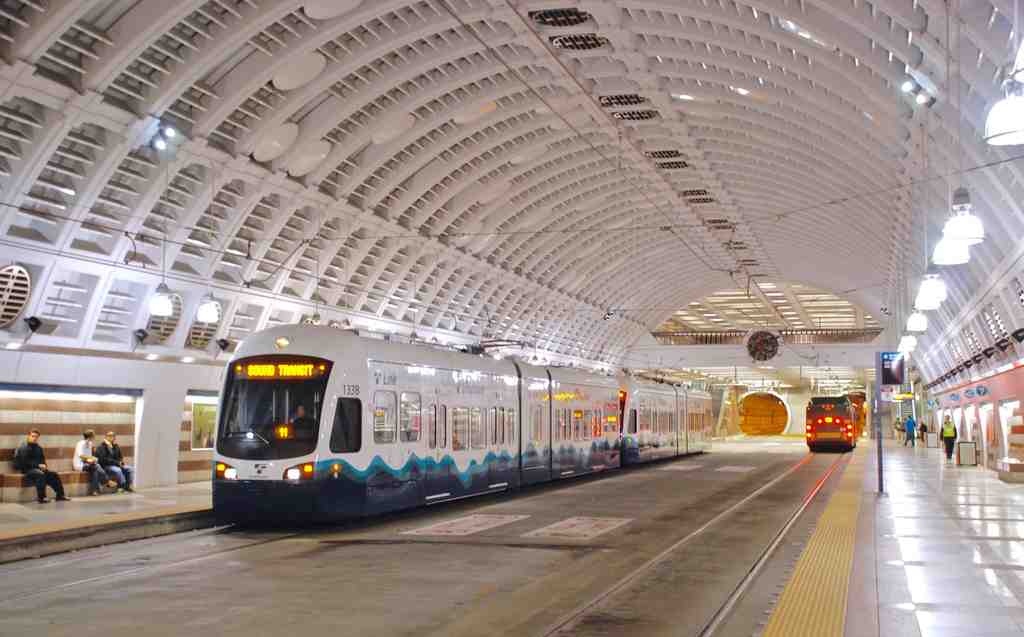
  15. Look for a wide entrance leading down beneath 3rd Avenue-Pioneer Square station stretches out below with its distinctive arched white ceiling and long platforms, bright lights,…阅读更多收起

    Look for a wide entrance leading down beneath 3rd Avenue-Pioneer Square station stretches out below with its distinctive arched white ceiling and long platforms, bright lights, and the steady coming and going of light rail trains and buses. Welcome to Pioneer Square station-the hidden heart of Seattle’s transit history and, some say, a living museum beneath your feet! Imagine yourself standing here, in front of a gateway that leads deep under 3rd Avenue, right where the city itself was born back in the 1850s. If you listen closely, you might just hear the faint echo of old cable cars and the bustling energy of commuters past and present. Picture this: over a century ago, engineers dreamed of a subway under 3rd Avenue, and there were more than a few wild ideas. Plans for an underground railway kept popping up-in 1911, then again in the roaring ‘20s, but Seattle wasn’t quite ready. Fast-forward to the swinging 60s and 70s, when city leaders cooked up a new rapid transit scheme with tunnels under your very feet. Close, but no subway sandwich just yet-after multiple votes, the dreams fizzled out. But Seattle’s spirit isn’t known for quitting! In the 1980s, Metro Transit decided it was time for buses-and, eventually, trains-to zoom beneath downtown. The Pioneer Square station was planned to echo the neighborhood’s old brick and stone charm but with a futuristic twist. Construction wasn’t all smooth sailing; imagine giant tunnel boring machines munching through the earth and-yikes-knocking out the power to City Hall in 1987! The city went dark for a day. At one moment, workers even uncovered a massive 11-foot cable car flywheel-a hidden relic from the Yesler Way line, now on display in the south mezzanine. By 1990, the station was a wonder: it boasted dizzying escalators, the longest and steepest west of the Mississippi, and a striking arched white ceiling, meant to reflect the historic grandeur of Pioneer Square above. But trouble still bubbled up-literally. Water leaks made their mark and left rust stains as a reminder that, down here, you’re closer than ever to Seattle’s watery roots. And don’t miss the art! Hanging from the high vault, you'll spot the mysterious “artifact clocks” built from tools and treasures found during construction. One clock is built from modern bits: granite, steel beams, even old electrical wires. The other is a time capsule of Seattle, with pieces as old as the city-cobblestones, cast-iron pipes, even some of the bricks that built early Seattle. The numbers are made from hand tools and tape measures, a nod to builders past and present. From 1990 until 2009, buses ruled these tunnels, gliding along tracks designed for future trains. But Seattle got ambitious; after years of planning and a $3.9 billion vote in favor of light rail in 1996, the big transformation began. The tunnel closed for a massive renovation, fitting it for shiny new light rail cars. Walls came down, fresh rails went in, and on July 18, 2009, the very first Link light rail train rolled into Pioneer Square. Imagine, through all this, that the area above grew into a busy urban mix-historic buildings, city offices, and glass towers. At rush hour, the station fills with travelers heading for ferries at Colman Dock, office towers like Smith Tower, and the famous Klondike Gold Rush National Historical Park. Modern commuters sprint along the platforms, glancing up at the clocks, perhaps trying to guess whether it’s old Seattle or new Seattle telling the time. Even now, the story isn’t over-construction and upgrades are a constant part of the buzz down here. In 2020, a temporary center platform popped up overnight to help trains and passengers shift around while the city built out new extensions. And changes keep coming as more lines, more stories, and, maybe, a new burst of inspiration shapes what happens beneath the streets of Pioneer Square. So, next time you descend under 3rd Avenue and feel the pulse of Seattle all around, remember: you’re standing in a place where the city’s dreams and determination, frustrations and discoveries, have all been woven together-one train, one bus, and one wild idea at a time!

    打开独立页面 →
  16. Look straight ahead for a grand stone building with tall columns and rows of windows that stand out against the surrounding cityscape-if you spot a skybridge reaching out to the…阅读更多收起

    Look straight ahead for a grand stone building with tall columns and rows of windows that stand out against the surrounding cityscape-if you spot a skybridge reaching out to the left like a giant’s handshake, you’re looking at the King County Courthouse. Welcome to the King County Courthouse, a true heavyweight in the world of city buildings! Standing here, you might feel the echoes of over a century’s worth of drama-some legal, some architectural, and plenty of behind-the-scenes commotion. If these walls could talk, they’d probably ask for a lawyer before telling you their best stories. Imagine Seattle back in 1911, horse-drawn carriages mixing with early cars, judges in classic black robes, and hopeful voters who at first squashed, then finally passed the plan for a brand-new courthouse right here on a patch of land once owned by city founder Henry Yesler. The original design by local architect A. Warren Gould was big-towering, even! Twenty-three stories, they dreamed. In the end, the county commissioners wanted something a little less sky-high, so construction began in stages. By 1916, a five-story blend of steel and concrete was dedicated with all the fanfare of a city determined to make its mark. The buzz in the air must have been as thick as fresh asphalt, as the City-County Building rose over the city. Just when everyone thought it was finished, the building started getting taller-like a child who kept outgrowing their shoes! In the 1930s, architects Bittman and McCauley stacked on six more floors, then even added a three-story “attic” for good measure. Over the decades, more changes followed, like air conditioning in the ‘60s and some bold new looks-though Seattle’s unpredictable weather probably had everyone saying “Thank goodness for that air conditioning upgrade!” Security has been a real concern here, with the area buzzing with activity and courthouse staff, jurors, and folks just looking for justice brushing shoulders outside. Things got so wild at times that in 2019 they closed one of the main entrances for everyone but those truly needing it. But don’t let that drama put you off-the King County Courthouse is a trooper, surviving the 2001 Nisqually earthquake by shoring up its foundations, and even treating itself to new marble floors and murals afterward-a bit like getting a spa day after pulling through a storm! Step close and you might sense the building’s proud endurance. From legal battles to literal building battles, the King County Courthouse is where Seattle’s stories of justice-messy, magnificent, and full of character-continue to unfold every day.

    打开独立页面 →
  17. You’re looking for a cozy, grassy block with a few trees scattered about and a broad open lawn, sitting right in front of a grand old courthouse building-the park is to your…阅读更多收起

    You’re looking for a cozy, grassy block with a few trees scattered about and a broad open lawn, sitting right in front of a grand old courthouse building-the park is to your right, marked by benches and gentle slopes, framed by city streets all around. Welcome to City Hall Park, Seattle’s little patch of green that's seen more drama than a courtroom on a Monday morning. Imagine yourself standing where, long ago, Coast Salish people once gathered beside the water. But in 1856, during the Battle of Seattle, that peaceful spot was shaken by cannon shots and chaos--leaving a scar on the land that would echo through centuries. Fast-forward to 1911: city leaders looked at this spot and said, “Let’s make it official!” The King County Courthouse loomed behind, and City Hall stood right here-albeit quickly slapped together and earning the nickname “Katzenjammer Castle.” (Clearly, government efficiency hasn’t changed much!) Offices bustled until 1962, when city workers packed up their pencils and headed off. This little park has dodged more fate changes than a contestant on a game show. At one point in 1945, someone tried to turn it into a parking lot, but thanks to a few stubborn Parks Board members, it remained “downtown’s only green space.” The 1962 renovation for the Century 21 Exposition added benches, roses, red pavements-and also more laughter and chatter, as locals lounged on the grass. But City Hall Park, lovingly called “Muscatel Meadows,” became a refuge to people needing shelter too, sometimes drawing worry and sometimes compassion. Decades rolled by, with the park “cleaned up” in the 1990s-though, as every Seattleite knows, tidying up downtown is like sweeping leaves in a windstorm. Things reached a boil in 2021, when a large encampment led court officials to call for action--and the park was closed, fenced off, and the future looked uncertain. Proposals to hand it over to King County flew back and forth like a hot potato, but after endless meetings, letters, and maybe a few spilled coffees, City Hall Park stayed with Seattle. Today, it’s back-open since June 2023-freshly restored with green grass and a permanent ranger, and more welcoming than ever. If you come by at night, watch for Craig Walsh’s mysterious “Monuments” art: faces of Coast Salish people appear softly on the trees, their stories glowing in the darkness--reminding everyone this patch of grass holds more than picnics; it holds the memory of a city forever changing.

    打开独立页面 →

常见问题

如何开始导览?

购买后,下载 AudaTours 应用并输入您的兑换码。导览将准备好立即开始--只需点击播放并按照 GPS 引导的路线行驶即可。

导览期间我需要互联网吗?

不需要!开始前下载导览并完全离线享受。只有聊天功能需要互联网。我们建议在 WiFi 下下载以节省移动数据。

这是导游带领的团体游吗?

不是--这是自助语音导览。您按照自己的节奏独立探索,通过手机播放音频解说。没有导游,没有团体,没有时间表。

导览需要多长时间?

大多数导览需要 60-90 分钟才能完成,但您完全控制节奏。随时暂停、跳过站点或休息。

如果我今天无法完成导览怎么办?

没问题!导览具有终身访问权限。随时暂停和恢复--明天、下周或明年。您的进度已保存。

有哪些语言可用?

所有导览均提供 50 多种语言版本。在兑换代码时选择您的首选语言。注意:导览生成后无法更改语言。

购买后我在哪里访问导览?

从 App Store 或 Google Play 下载免费的 AudaTours 应用。输入您的兑换码(通过电子邮件发送),导览将出现在您的资料库中,准备下载并开始。

verified_user
满意保证

如果您不喜欢该导览,我们将退款。请联系我们 [email protected]

安全结账使用

Apple PayGoogle PayVisaMastercardPayPal

AudaTours:语音导览

有趣、经济实惠、自助徒步导览

试用应用 arrow_forward

深受全球旅行者喜爱

format_quote 这次导览是游览这座城市的绝佳方式。故事很有趣,感觉不太照本宣科,我喜欢能够按照自己的节奏探索。
Jess
Jess
starstarstarstarstar
第比利斯导览 arrow_forward
format_quote 这是了解布莱顿的一种可靠方式,感觉不像游客。解说有深度和背景,但并未过度。
Christoph
Christoph
starstarstarstarstar
布莱顿导览 arrow_forward
format_quote 一手拿着羊角面包,零期望地开始了这次导览。这款应用真的很适合你,没有压力,只有你、你的耳机和一些很酷的故事。
John
John
starstarstarstarstar
马赛导览 arrow_forward

无限语音导览

解锁全球每个导览的访问权限

0 导览·0 城市·0 国家
all_inclusive 无限探索