

拉皮德城语音导览:遗迹、铁路与非凡地标
一条秘密的禁酒令时期隧道仍然蜿蜒于拉皮德城历史悠久的市中心下方,回荡着丑闻与生存的低语。 在这趟自助语音导览中,您将逐街探索这座城市层层叠叠的过去,聆听大多数游客从未听过的故事。寻找传说开始的隐秘角落,以及那些逝去时光的痕迹。 在一个风暴肆虐的夜晚,亚历克斯·约翰逊酒店富丽堂皇的墙壁内发生了怎样的政治危机?谁从卡内基图书馆的书架间消失,留下了一个未解之谜?为什么圣母无染原罪教堂附近的钟声每年只在某个特定日期的午夜敲响? 穿越时光,故事从阴影中跃入阳光,戏剧性的秘密在每个角落等待着。用全新的视角审视拉皮德城——它的抱负、心碎和韧性在您的脚下生动地展现。 解锁塑造拉皮德城的隐藏故事。开始您的旅程——追随街道下方的回响。
导览预览
关于此导览
- schedule持续时间 30–50 mins按照自己的节奏
- straighten2.7 公里步行路线跟随引导路径
- location_on
- wifi_off离线工作一次下载,随处使用
- all_inclusive终身访问随时重播,永久有效
- location_on从 甘布里尔仓储大楼 开始
此导览的景点
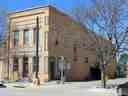
Look for a sturdy two-story yellow-brick warehouse on the corner, with tall rectangular windows and brown brick accents, and the words “GAMBRILL BUILDING” painted along the front.…阅读更多收起
Look for a sturdy two-story yellow-brick warehouse on the corner, with tall rectangular windows and brown brick accents, and the words “GAMBRILL BUILDING” painted along the front. This is the Gambrill Storage Building, put up in 1910 by Horace C. Gambrill in a Renaissance Revival style... which is a fancy way of saying, “even our warehouse should look respectable.” Notice those original, boxy windows topped with arched brick lintels, and the two-toned brickwork on the front-details that have somehow survived every passing trend since the days when mustaches and waistcoats were considered basic work gear. Here’s the fun tension in the story: when the Rapid City Journal wrote about it in 1910, this was reportedly the ONLY dedicated storage warehouse in town. One building trying to hold everyone’s extra stuff-furniture, crates, maybe a few badly packed dreams. In 1984, it earned a place on the National Register of Historic Places, basically getting a long-overdue “you still look great” card. When you’re set, Milwaukee Road Freight House is a 7-minute walk heading east.
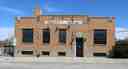
打开独立页面 →On your left, look for a low, tan-brick building with big black-paned windows and a faded sign up top that plainly reads “FREIGHT HOUSE.” This is the Milwaukee Road Freight…阅读更多收起
On your left, look for a low, tan-brick building with big black-paned windows and a faded sign up top that plainly reads “FREIGHT HOUSE.” This is the Milwaukee Road Freight House, built in 1923 when rail was the internet, the interstate, and the delivery app all rolled into one. Back then, the Chicago, Milwaukee, St. Paul and Pacific Railroad-locals just called it the Milwaukee Road-needed a tough, modern place to sort and store goods headed in and out of town. Notice how the building is long and rectangular… offices tucked over at one end, and the rest basically a big warehouse box. Those wide freight doors and loading bays along the sides? That’s where the daily choreography happened: boxcars clanking, workers calling out, and crates sliding across the floor. The Milwaukee Road first reached Rapid City in 1906 to 1907, and when tourism picked up in the late 1910s, freight followed. Then came 1980… the railroad went bankrupt, pulled out of South Dakota, and this place got sold off and reused as offices. Not glamorous, but very American. When you’re set, Hotel Alex Johnson is a 5-minute walk heading south.
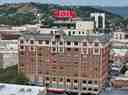
打开独立页面 →On your right, look for the tall brick hotel with Tudor-style gables along the roofline and that big, bright red rooftop sign reading “HOTEL ALEX JOHNSON.” This is the Hotel…阅读更多收起
On your right, look for the tall brick hotel with Tudor-style gables along the roofline and that big, bright red rooftop sign reading “HOTEL ALEX JOHNSON.” This is the Hotel Alex Johnson, and in Rapid City it’s basically our downtown’s exclamation point. It opened in 1928, built by Alex Carlton Johnson… a railroad executive who clearly understood two things: trains bring people, and people need a good place to sleep when they get there. Construction kicked off on August 19, 1927... just one day before work started at Mount Rushmore. Rapid City was in a hurry back then. Chicago architects Oldefest and Williams gave it this Tudor Revival look-brick, decorative stonework, and those storybook roof details-while the interior leaned into Western and Native American-inspired design. Inside, some original touches still hang around: a teepee-shaped chandelier, hand-drawn ceiling designs, and carved wooden figures of Native American chiefs. For early South Dakota, an eight-story hotel was a pretty bold move… and it’s still the tallest building in Rapid City. Around here, that counts as a skyscraper. The name changed hands, too: sold in 1947, folded into Sheraton’s world from 1956, and then eventually reclaimed its original name in 1968. In 2016, they announced about a $7 million restoration-around $9 million today-to modernize the bones without losing the character. And yes… it has a reputation. Guests report footsteps, voices, and the famous “Lady in White” tied to room 812. The hotel even offered ghost-hunting packages with an EMF reader, because why just sleep when you can also be mildly unsettled? When you’re set, Pennington County Courthouse is a 7-minute walk heading south.
打开独立页面 →
再显示 4 个站点显示更少站点expand_moreexpand_less
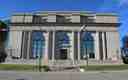
On your right, look for the wide, pale-stone courthouse with a big staircase and a row of tall columns framing three huge arched windows. This is the Pennington County…阅读更多收起
On your right, look for the wide, pale-stone courthouse with a big staircase and a row of tall columns framing three huge arched windows. This is the Pennington County Courthouse at 315 St. Joseph Street, and it’s been the county’s power center since 1922... the place where decisions get made, papers get stamped, and somebody inevitably mutters, “I should’ve read that form.” Democracy: now with more paperwork. Architect W. E. Hulse and Company, out of Hutchinson, Kansas, gave Rapid City a confident Beaux-Arts building-basically the architectural equivalent of standing up straight and speaking clearly. It’s three stories of Indiana limestone with terra cotta accents, and that front entrance puts on a show: four pairs of Ionic columns, three arched windows with crisp muntins, and keystones up top like little stone exclamation points. Near the door, you’ll spot iron grilles and a decorative crest, and above the second story runs a frieze dotted with medallions, capped by a tooth-like cornice. In 1976, it earned a spot on the National Register of Historic Places-official recognition that this place means business. When you’re set, First Congregational Church (Rapid City, South Dakota) is about a 10-minute walk heading west.
打开独立页面 →On your right, look for the sturdy two-story brick church with a wide triangular white-trimmed roofline and a row of tall arched windows glowing blue in the sun. This is First…阅读更多收起
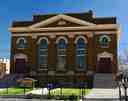
On your right, look for the sturdy two-story brick church with a wide triangular white-trimmed roofline and a row of tall arched windows glowing blue in the sun. This is First Congregational Church… also called The Lord’s Chapel… sitting here at 715 Kansas City Street like it’s been keeping an eye on the neighborhood for a while. And it has. Built in 1914, it comes from a moment when Rapid City was shaking off its rougher edges and betting on permanence: solid masonry, straight lines, and an “I’m not going anywhere” kind of confidence. Step back and you can read its proportions-about 55 by 73 feet-practical, compact, and meant to hold people close when the weather, or life, got loud. Those twin stairways and matching doors feel almost like an invitation and a challenge: come in… and bring your best self. In 1984, it earned a spot on the National Register of Historic Places, basically the official nod that, yes, this place matters. Not bad for a building made of brick and determination. When you’re set, Rapid City Carnegie Library is a 2-minute walk heading south.
打开独立页面 →On your left, look for the low, wide, pale-yellow stone building with a classic temple-style entrance-two columns holding up a little triangular pediment, and “PUBLIC LIBRARY”…阅读更多收起
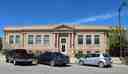
On your left, look for the low, wide, pale-yellow stone building with a classic temple-style entrance-two columns holding up a little triangular pediment, and “PUBLIC LIBRARY” carved up near the roofline. This is the Rapid City Carnegie Library, and it’s got that solid, no-nonsense look because it was built to be a civic promise in stone. One story up top, a raised basement down below-see those shorter windows near the sidewalk? That’s the basement peeking out, like the building is standing on tiptoe. The whole place is dressed in yellow limestone, with a flat roof and a bold trim line running around the top like a tidy hatband. But the real story is how badly Rapid City wanted a library before this ever showed up. Back in 1881, the town’s first public building was called Library Hall. At first it did fine… then people’s attention wandered, as attention does, and it started getting used more as a meeting space and a theater. Eventually, the books got shipped off to the School of Mines. Which is one way to handle overdue returns-just move the whole collection. Still, the idea wouldn’t die. In 1904, locals scraped together a “free library” and shoved a reading room into a corner of the Flormann Building. Then it bounced around-Todden Worth Building in 1909, Elks Building in 1912-like the city’s books were stuck in a long-term housing crisis. The turning point was Andrew Carnegie’s library program. Because Rapid City kept its free library going for two years, the city qualified for a grant. On March 11, 1914, Carnegie’s program offered $12,500-around $400,000 in today’s money-to build a real home for readers. Of course, the town promptly argued about where to put it, and the dispute went all the way to the South Dakota Supreme Court. In the end, Library Hall was demolished, and this building rose in its place, finished in 1915 and opened March 2, 1916-with speeches, and a high school orchestra to make it official. By 1921, there were 4,120 books here. In 1938, during the Works Progress Administration era, the building grew new wings-made to match so well you’d barely notice they’re slightly set back. By 1966, the collection topped 66,000 volumes, with more than 253,000 loans in a single year. That’s a lot of pages turning in a one-story building. Rapid City eventually outgrew it, and a new public library opened in 1971. This old place even did a short stint as police headquarters-because if you’re going to keep order, why not do it surrounded by the ghost of quiet reading? It landed on the National Register of Historic Places in 1981, which is the building equivalent of getting a well-earned gold star. When you’re set, Church of the Immaculate Conception is about an 8-minute walk heading east.
打开独立页面 →On your left, look for the sturdy tan sandstone church with a square tower and a tall gray spire topped by a cross, like a little stone fortress pointing straight into the sky.…阅读更多收起
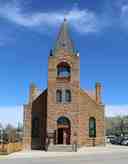
On your left, look for the sturdy tan sandstone church with a square tower and a tall gray spire topped by a cross, like a little stone fortress pointing straight into the sky. This is the Church of the Immaculate Conception… and it’s been quietly reinventing itself for well over a century. The Catholic community here started as St. Mary’s back in 1881, when Rapid City was still very much a grit-under-your-fingernails kind of place. By 1909, they were ready to build something permanent and proud, laying the cornerstone for this Romanesque Revival beauty… thick local stone, rounded arches, and that “we plan to be here awhile” posture. It was dedicated in 1911, and if you run your eyes along the facade, you can almost feel the ambition set into those rock-faced blocks. Look up at the main entrance: the round-arch stained glass above the doors sits like a watchful eye. Higher still, the bell chamber opens in broad arches with a balustrade, and above that, the spire is clad in terneplate, giving it that muted metallic sheen against the sky. In 1930, the big news was ecclesiastical: the Diocese of Lead moved its seat to Rapid City, and this parish church suddenly got promoted to cathedral. Not everyone gets a new title without changing buildings. In 1948, Cardinal Francis Spellman himself came here to install Bishop William McCarty… imagine the street-level buzz that day, robes and all, in a town that still knew the sound of boots on boardwalk. By 1962, the congregation outgrew the space and a new cathedral took over the job, but this building didn’t fade out. It landed on the National Register in 1975, recognized as Rapid City’s best Romanesque Revival survivor… and the city’s last known cut-stone building. Since 1992, it’s served as a chapel with Mass celebrated in Latin, the old syllables echoing off old stone… which, somehow, feels exactly right.
打开独立页面 →
常见问题
如何开始导览?
购买后,下载 AudaTours 应用并输入您的兑换码。导览将准备好立即开始--只需点击播放并按照 GPS 引导的路线行驶即可。
导览期间我需要互联网吗?
不需要!开始前下载导览并完全离线享受。只有聊天功能需要互联网。我们建议在 WiFi 下下载以节省移动数据。
这是导游带领的团体游吗?
不是--这是自助语音导览。您按照自己的节奏独立探索,通过手机播放音频解说。没有导游,没有团体,没有时间表。
导览需要多长时间?
大多数导览需要 60-90 分钟才能完成,但您完全控制节奏。随时暂停、跳过站点或休息。
如果我今天无法完成导览怎么办?
没问题!导览具有终身访问权限。随时暂停和恢复--明天、下周或明年。您的进度已保存。
有哪些语言可用?
所有导览均提供 50 多种语言版本。在兑换代码时选择您的首选语言。注意:导览生成后无法更改语言。
购买后我在哪里访问导览?
从 App Store 或 Google Play 下载免费的 AudaTours 应用。输入您的兑换码(通过电子邮件发送),导览将出现在您的资料库中,准备下载并开始。
如果您不喜欢该导览,我们将退款。请联系我们 [email protected]
安全结账使用 


