
梅肯语音导览:揭秘传说、法律与当地风俗
在梅肯,大理石柱回荡着秘密,几个世纪以来,正义、丑闻和艺术在这里碰撞。这个自助语音导览将深入城市庄严的外表之下,揭示大多数游客从未听过的扣人心弦的故事。 谁在美国地区法院内面对了全国最轰动的审判?为什么关于禁忌联盟的低语萦绕在大歌剧院烛光摇曳的大厅里?在以色列会堂,什么被遗忘的文物就在眼前,等待着一次偶然的触碰,让它的传说重现生机? 让你的脚步追溯法庭对决的戏剧性、后台阴谋的诡计,以及一个被不安的野心塑造的城市的宁静韧性。每一次转弯都会揭示新的发现,并以新的方式看待梅肯的活历史。 按下播放键,走进城市的迴音室,每一个瞬间都充满了不为人知的意义。
导览预览
关于此导览
- schedule持续时间 40–60 mins按照自己的节奏
- straighten3.9 公里步行路线跟随引导路径
- location_on
- wifi_off离线工作一次下载,随处使用
- all_inclusive终身访问随时重播,永久有效
- location_on从 美国佐治亚州中部地区法院 开始
此导览的景点
Right in front of you, rising above the bushes and framed by leafy green trees, you’ll spot a striking bronze statue of a man in a long coat, standing on a tall square granite…阅读更多收起
Right in front of you, rising above the bushes and framed by leafy green trees, you’ll spot a striking bronze statue of a man in a long coat, standing on a tall square granite pedestal-just look straight ahead at the intersection of Mulberry Street and Third Street and you can’t miss him! Let’s meet William Morrill Wadley, the towering figure gazing steadily over Macon. Don’t worry-no matter how serious he looks, he’s not judging your walking speed! Born up in New Hampshire in 1813, William didn’t start out as a Southern railroad giant. In fact, he got his first taste of railroad work after moving all the way to Savannah as a young man. Little did anyone know, this Northern transplant would become the mastermind behind some of the South’s busiest railways. By 1849, he was already a superintendent and, over decades, he climbed the corporate tracks-pun definitely intended. During the Civil War, he got a dramatic promotion: Jefferson Davis, the President of the Confederacy, tapped him to run transportation for the entire Confederate States. Imagine the chaos and the grit required for that job! After the war, Wadley returned to railroading, ultimately rising to president of the Central of Georgia Railroad. His reputation? Smart, tough, fair-and a bit of a railroad wizard. When he died in 1882, his employees felt such gratitude that they pooled together $20,000, a mind-boggling sum at the time, to honor him. Enter Robert Cushing, a New York sculptor renowned for his lifelike figures. Cushing got creative, using old photos and even a face mask to capture Wadley’s stern but kind face in bronze. In 1885, this statue was unveiled right here, deliberately built with granite from Quincy, Massachusetts, so Wadley could stand tall-about 20 feet up, counting the pedestal! You’ll notice Wadley in his double-breasted coat, one hand resting confidently on a round column topped with a railroad map marked with all the lines he managed. The other hand? It’s holding a wide-brimmed hat, as if he’s ready to tip it to friends, or maybe just to cool off after a long day building rail empires. Gather round if you like inscriptions-his whole railyard résumé is etched in granite! Over the years, this statue has seen Macon change, surveyed by preservationists, gathered around by Wadley’s own descendants, and-believe it or not-tagged with some truly strange graffiti. Through it all, Wadley’s bronze gaze remains, a silent reminder of how one person can link together towns, tracks, and people across generations. Not bad for a guy who started out riding the rails!
打开独立页面 →To spot the Hargray Capitol Theatre, look for a shining brown and beige marquee with the word "CAPITOL" in big illuminated letters jutting out above the sidewalk, right on Second…阅读更多收起
To spot the Hargray Capitol Theatre, look for a shining brown and beige marquee with the word "CAPITOL" in big illuminated letters jutting out above the sidewalk, right on Second Street. Now that you’re here, take a moment to stand under this classic marquee and imagine yourself slipping back in time, when people walked through these doors in their finest clothes, excited for a brand-new film or a big night out. This spot wasn’t even a theater at first-it started as a bank in 1897, then Strong Shoe Company stomped in for 15 years, until the magic of movies called in 1917. Back then, this was the first place in town where you could escape the sticky Georgia heat, thanks to the marvel of air conditioning-people might have come just for a cool breeze and a bag of popcorn! For nearly six decades, the Capitol Theatre was at the heart of downtown Macon’s buzz, hosting movie premieres and big musical acts. By the 1930s, after another local theater closed, this place became number one for catching the latest films. Imagine the excitement when renovations in 1946 brought even cooler air and, most importantly, candy bars and fresh popcorn stands. Talk about an upgrade! But just like any good cliffhanger, the story took a turn. By 1975, the crowds thinned and the Capitol closed its doors, falling silent until a Macon dreamer named Tony Long led the charge with a million-dollar renovation and brought it roaring back to life in 2006. Now managed by the Moonhanger Group, it hosts concerts, indie films, and even big events like the Bragg Jam Music Festival. Today, the Capitol isn’t just a theater, but a living tribute to Macon’s everlasting love for music, movies, and a good time. So whether you’re here to catch a concert, a film, or just a glimpse of history, you’re part of a living Macon tradition-go ahead, strike a pose under those vintage lights and soak in a bit of that old-school glamour!
打开独立页面 →
再显示 11 个站点显示更少站点expand_moreexpand_less
Straight ahead, look for a bright yellow and red sign with “Nu-Way Weiners” written big and bold in a retro script-that’s your cue you’ve found one of Macon’s tastiest…阅读更多收起
Straight ahead, look for a bright yellow and red sign with “Nu-Way Weiners” written big and bold in a retro script-that’s your cue you’ve found one of Macon’s tastiest landmarks! Picture it: the year is 1916, Woodrow Wilson is just getting comfy in the White House, and right here in downtown Macon, a Greek immigrant named James Mallis is cooking up a new American dream-bright red hot dogs at his little corner stand, Nu-Way Weiners. From the very start, these “wieners” (or, in classic local style, “weiners”-nobody here seems to mind the spelling!) won Macon’s heart with their snap and signature chili sauce. Not only are their hot dogs famous, but they’ve got a breakfast menu that’ll wake up your tastebuds-egg platters, pancakes, even spicy dog biscuits! And let’s not forget those legendary chili-burgers and Mega-Burgers… you definitely don’t leave here hungry. Decade after decade, people in Macon have “gone a long way for a Nu-Way,” as the old slogan goes. Expansion was quick: by the 1960s, there were a handful of these bright spots around Middle Georgia. But in 2015, disaster struck-a fire destroyed the original Cotton Avenue location. Yet hope wasn’t lost! The beloved neon sign was rescued, dusted off, and now shines on as a symbol of Macon’s resilience. Nu-Way’s legendary status has been celebrated far beyond Macon: Southern Living calls their slaw dog the “king,” and when Oprah Winfrey stopped by, she named Nu-Way one of her favorite things about the city. Featured on the PBS special “A Hot Dog Program” and praised by everyone from Rachael Ray to The Travel Channel, these dogs have become a true Southern food icon. Today, third-generation owners James and Spyros carry on the tradition-still bright red, still delicious, and still a delicious bite of Georgia history!
打开独立页面 →To spot H&H Restaurant, just look for the bright white sign hanging above Forsyth Street with a bold black silhouette of a woman’s head and the big letters that read "H&H…阅读更多收起
To spot H&H Restaurant, just look for the bright white sign hanging above Forsyth Street with a bold black silhouette of a woman’s head and the big letters that read "H&H RESTAURANT" right underneath. Now take a deep breath, because you’re about to step into one of Macon’s most legendary kitchens-welcome to the soul of Southern comfort, the H&H Restaurant! Imagine the sizzle and pop of frying chicken coming from behind the doors, and the gentle hum of voices swapping stories over heaping plates of mac and cheese. H&H has been standing proudly on Forsyth since 1959, when Inez “Mama Hill” Hill and her cousin Louise “Mama Louise” Hudson pooled their warmth, wisdom, and recipes to open a little eatery for hungry locals. It quickly became much more than a place to grab collards-it was a hub where rock legends and regulars alike could shake hands over sweet tea. The Allman Brothers Band, just a ragtag group of broke musicians back in their early days, once wandered in and could only afford two meals between all of them! Mama Louise saw their empty wallets and even emptier bellies, so she brought out full plates for everyone-telling them to pay her back when they made it big. From that moment, H&H was the heart of Macon’s music scene. Gold records started popping up on the walls faster than biscuits in an oven, and soon not just the Allmans, but bands like Molly Hatchet and Wet Willie were H&H regulars. The dining room transformed into a living room of music memories-signed albums, posters, and even treasures from the famous Fillmore East performance. Now, music wasn’t the only reason folks gathered here. In its smoky booths and along its well-worn counters, civil rights activists, NAACP leaders, and even Georgia’s state presidents met for hush-hush meetings, probably with a side of peach cobbler for courage. And speaking of famous faces, one November day in 2007, Oprah Winfrey dropped by. Can you picture the commotion-fans cheering, security bustling, and Oprah laughing with Mama Louise and Mama Inez before dashing out as quickly as she arrived? Even TV royalty couldn’t resist a taste of H&H. On July 8, 2007, the community came together with laughter, tears, and lots of music to celebrate Mama Louise’s birthday. Gregg Allman himself took the stage, sharing wild stories of life on the road and at H&H, and declaring July 26 forevermore “Mama Louise Day” in Macon. When the night ended, a chorus of legends played her favorites, including “Midnight Rider,” and I bet not a single plate of sweet potato pie went unfinished. Years later, the original spirit still fills the dining room, even though ownership changed after a brief closing in 2013-now operated by the Moonhanger Group. The menu remains a roll call of southern classics: "meat and three" with roast beef, fried pork chops, and ribs, with daily vegetables that’d make your grandma call for seconds. If you’re lucky, the scent of peach cobbler will still pull you in, the way it has for over half a century. So as you stand under this famous sign, remember-H&H is not just a restaurant, but a living scrapbook of Macon's soul, where every bite is a story, every dish is a little piece of southern history, and you’re always welcome at the table.
打开独立页面 →Look straight ahead for a charming white Victorian cottage with black window shutters and a long front porch, nestled under leafy trees-just follow the sidewalk and you’ll spot it…阅读更多收起
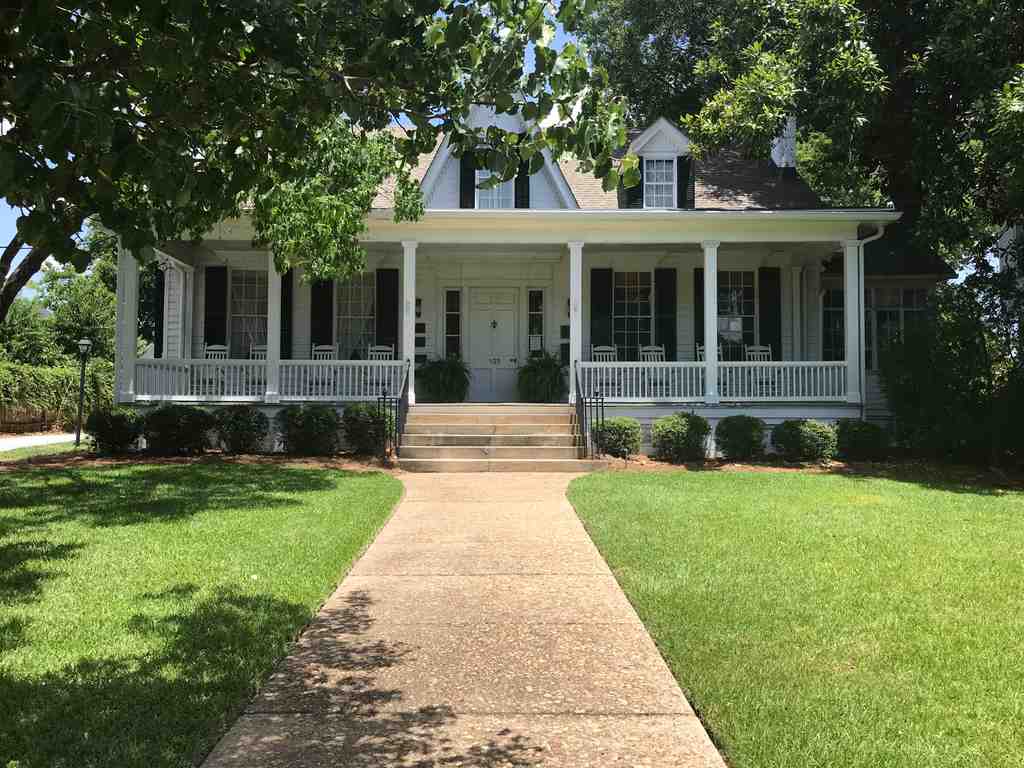
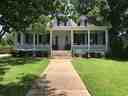
Look straight ahead for a charming white Victorian cottage with black window shutters and a long front porch, nestled under leafy trees-just follow the sidewalk and you’ll spot it right in front of you. Now take a breath and imagine it’s the 1840s, when the hustle of Macon’s dusty streets was interrupted by the soft croon of a lullaby from inside this very house-it’s no wonder, really, because this cottage is the birthplace of Sidney Lanier, who grew up to become one of the South’s most beloved poets! Picture his mother, Mary Jane, leaving her home in Griffin to have her first child here, in her in-laws’ snug home. Originally, this cottage began its journey as just four simple rooms, but as the years rolled on and Lanier’s fame grew, so did the house-two extra upstairs rooms, a grander porch, and, in a dramatic twist fit for poetry, the whole thing was moved fifty feet in 1879. Must have been quite the neighborhood spectacle! By 1880, the cottage donned the elegant Gothic Revival style you see now, with those pointy dormers giving it a bit of literary flair. Imagine the stories hidden in these walls: Lanier’s silver flute (yes, he played for the Baltimore Peabody Orchestra!), first editions of his books, and even his wife Mary Day’s wedding gown all sat on display here when it was a museum starting in the 1970s. It became a magnet for writers, book-lovers, and wedding-goers alike, bustling with events, workshops, and maybe a few secret poet’s dreams. Although today it’s a private home once again, its past glows around you-can you almost hear a line of verse drifting onto the porch? I’d suggest you try, but if you start rhyming in public, don’t blame it on me!
打开独立页面 →Look for a large, white two-story mansion with tall Ionic columns and a striking octagonal cupola right above the front porch, set back behind a black iron fence at the corner of…阅读更多收起
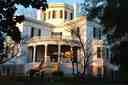
Look for a large, white two-story mansion with tall Ionic columns and a striking octagonal cupola right above the front porch, set back behind a black iron fence at the corner of Georgia Avenue and College Street. Welcome to the grand Carmichael House-look up and you’ll see sunlight glinting off that unusual octagonal tower, almost as if the house itself is keeping an eye on Macon! Built all the way back in 1848 for Judge Cadwalader Raines, this mansion was designed by local builder Elam Alexander, who really knew how to make an entrance-just imagine a carriage rolling up with wheels crunching over the gravel driveway. The mansion was famous for its free-standing spiral staircase that soars right up to the cupola, giving the place a dazzling centerpiece. Alexander went all out here: columned porches, pilasters, and a dentillated cornice make this house the perfect show-off for Greek Revival style. But poor Judge Raines never had kids, so after he passed in 1856, the house changed hands, eventually landing with the Carmichaels in the 20th century. Through all its changes, the mansion has been called “a striking and detailed example” of its style, earning its spot as a National Historic Landmark. Whether you’re a fan of grand entrances, twisty staircases, or just curious about who climbed those stairs before you, the Carmichael House is a Macon must-see!
打开独立页面 →Look just ahead for a striking Neoclassical building with a pointed dome-shaped cupola on the corner, arched windows, and an impressive set of front steps-Temple Beth Israel is…阅读更多收起
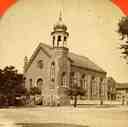
Look just ahead for a striking Neoclassical building with a pointed dome-shaped cupola on the corner, arched windows, and an impressive set of front steps-Temple Beth Israel is right in front of you. Let’s imagine it’s 1902: the sun rises on Cherry Street, and the fresh bricks of Temple Beth Israel glow with promise. You’re at the center of Macon’s Jewish life, where families with German roots gather, chatting in a mix of English and German as they climb the steps for a Sabbath service. Back then, it was the proud new home for a congregation started way back in 1859, when a small but determined group wanted a place to hold fast to their faith in a new country. Their first building was actually a few blocks away, but as the community grew, they moved here, right to the lively corner of Cherry and Spring. Over the years, you’d see this building filled not just with worship, laughter, and song, but also moments of tension-like in June 2023, when hateful voices tried to rattle them, but their spirit stood strong. Today, Rabbi Elizabeth Bahar leads the congregation, carrying on a legacy that’s survived challenge after challenge. This isn’t just a building-it’s where stories of courage, change, and unity come to life, year after year.
打开独立页面 →The Macon City Auditorium is an impressive building with a huge green copper dome and rows of tall limestone columns circling three sides-just look for the grand, temple-like…阅读更多收起
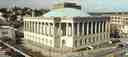
The Macon City Auditorium is an impressive building with a huge green copper dome and rows of tall limestone columns circling three sides-just look for the grand, temple-like structure across from City Hall. Standing here, you're at the foot of Macon's grand stage-a place that's been dazzling crowds since 1925 with its towering Doric columns and an eye-catching copper dome so big that locals claim it’s the largest in the world. Designed by a New Yorker, Egerton Swartwout, the auditorium has hosted everything from concerts to community meetings-imagine the buzz on a night when Otis Redding’s funeral filled these halls, or when Oprah transformed the Great Hall into her very own stage for “Oprah’s Favorite Things.” Inside, 2,688 seats fill the 14,000-square-foot Great Hall, where people have watched history come to life-literally, thanks to a mural above the stage that swirls together stories of conquistadors and early Macon pioneers, painted by Don Carlos Dubois and Wilbur Kurtz. Despite newer neighbors across the river-like the Macon Coliseum-this grand old building thrives, still affectionately known simply as “the Auditorium.” If you hear whispers of the Celtic Women’s songs or echoes from one of its legendary events, don’t be surprised-this place is practically humming with stories.
打开独立页面 →Look up ahead for a towering white church with a tall spire reaching toward the sky-at 185 feet, it’s hard to miss standing proudly on Mulberry Street, its pointed steeple making…阅读更多收起
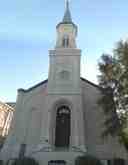
Look up ahead for a towering white church with a tall spire reaching toward the sky-at 185 feet, it’s hard to miss standing proudly on Mulberry Street, its pointed steeple making it one of the tallest landmarks in Macon. Now, as you stand beneath its impressive shadow, imagine Mulberry Street in the 1850s: the sounds of carriage wheels clattering, townsfolk in bonnets and top hats, and everyone craning their necks to marvel at this marvel. First Presbyterian Church is one of Macon’s oldest congregations, dating back to an era when the city was only three years old! Back in 1826, a handful of hopeful souls gathered here, led by traveling preachers like Joseph Stiles and Benjamin Gildersleeve-names that sound straight out of a Dickens novel, don’t they? The first structure for the church was a simpler wooden building, but it didn’t sit still for long. It eventually ended up down the road, becoming the Second Baptist Church after the Baptists decided to give it a little makeover. The brick sanctuary in front of you, finished in 1858, quickly soared above the city’s rooftops, its spire stretching higher than anything in Macon for decades-up until those Catholics across town built Saint Joseph’s. Little did the builders know, a future poet, the one and only Sidney Lanier, would sit among the pews here, perhaps daydreaming about swans and marshes. Today, this spot is bustling with more than a thousand members and some not-so-secret stories. In 1970, the church started First Presbyterian Day School-a move tracked closely by historians, since it came just as Macon’s public schools were ordered to desegregate. Though that chapter digs up some tough questions, it’s a reminder that these grand old buildings hold both the city’s triumphs and its tough truths. So, here you are, shoulder-to-shoulder with history, standing beneath Macon’s original skyscraper!
打开独立页面 →Right in front of you stands a grand, seven-story tan building with rows of blue-tinted windows and a bright marquee that reads “Grand Opera House” just above the entrance-look…阅读更多收起
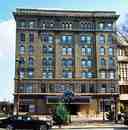
Right in front of you stands a grand, seven-story tan building with rows of blue-tinted windows and a bright marquee that reads “Grand Opera House” just above the entrance-look for the tall, blocky facade with decorative stonework and you can’t miss it! Imagine it’s 1884, and Macon’s population is buzzing with excitement, because the Academy of Music is opening with the largest stage in the Southeast-so big, almost a fifth of the city could squeeze inside! Now picture horses and chariots thundering across that stage for a live production of Ben-Hur in 1908-yes, real horses, right indoors! In 1905, this place got a snazzy facelift and grew into the seven-story landmark you’re seeing now, relaunching as the Grand Opera House. The guest list over the years is a real “who’s who”-Sarah Bernhardt, Will Rogers, Bob Hope, the Allman Brothers Band, even the legendary Ray Charles have graced this stage. There’s even a night in the ‘70s when cameras rolled for a rocking episode of Don Kirshner’s Rock Concert. Local legend tells us that magician Harry Houdini performed here, and trap doors were installed just for him-one remains in use today, mainly popping open during the Nutcracker ballet. When vaudeville faded, the Grand became a movie theater, dazzling folks with Macon's only Hollywood movie premiere. In the 1960s, it nearly got turned into a parking lot (imagine trading this beauty for parking spaces!), but the Macon Arts Council saved the day, holding a gala with the Atlanta Symphony and securing its place on the National Register of Historic Places. Thanks to locals, visionaries, and a lot of hustle, the Grand is now part of Mercer University and shines as Macon's hub for Broadway shows, concerts, and the local Nutcracker-hopefully with only happy endings and no disappearing acts!
打开独立页面 →

常见问题
如何开始导览?
购买后,下载 AudaTours 应用并输入您的兑换码。导览将准备好立即开始--只需点击播放并按照 GPS 引导的路线行驶即可。
导览期间我需要互联网吗?
不需要!开始前下载导览并完全离线享受。只有聊天功能需要互联网。我们建议在 WiFi 下下载以节省移动数据。
这是导游带领的团体游吗?
不是--这是自助语音导览。您按照自己的节奏独立探索,通过手机播放音频解说。没有导游,没有团体,没有时间表。
导览需要多长时间?
大多数导览需要 60-90 分钟才能完成,但您完全控制节奏。随时暂停、跳过站点或休息。
如果我今天无法完成导览怎么办?
没问题!导览具有终身访问权限。随时暂停和恢复--明天、下周或明年。您的进度已保存。
有哪些语言可用?
所有导览均提供 50 多种语言版本。在兑换代码时选择您的首选语言。注意:导览生成后无法更改语言。
购买后我在哪里访问导览?
从 App Store 或 Google Play 下载免费的 AudaTours 应用。输入您的兑换码(通过电子邮件发送),导览将出现在您的资料库中,准备下载并开始。
如果您不喜欢该导览,我们将退款。请联系我们 [email protected]
安全结账使用 


