

诺克斯维尔语音导览:篮球、遗产与隐藏的故事
一个篮球在诺克斯维尔的空中翱翔——这座城市的每个角落都隐藏着传奇,每块砖都回响着反叛与胜利。 这个自助语音导览将带你穿梭于市中心,揭示大多数人错过的未曾讲述的故事和秘密角落。探索标志性景点下的暗流,以及熟悉故事之间的阴影。 在一个暴风雨之夜,谁在市场广场冒着一切风险改变了城市的命运?女子篮球名人堂闪闪发光的奖杯下隐藏着什么秘密?哪场诺克斯维尔战役引发了一场至今仍在街头荡漾的丑闻? 漫步经过纪念碑和壁画,感受过去与现在的碰撞。追随政治、体育和不安野心的戏剧——感受城市在你脚下跳动。每一站都解锁一个新层面,将诺克斯维尔变成一个等待解开的活生生的谜团。 准备好踏上诺克斯维尔的隐藏球场,在历史中扮演你的角色了吗?立即开始你的旅程。
导览预览
关于此导览
- schedule持续时间 30–50 mins按照自己的节奏
- straighten3.8 公里步行路线跟随引导路径
- location_on
- wifi_off离线工作一次下载,随处使用
- all_inclusive终身访问随时重播,永久有效
- location_on从 女子篮球名人堂 开始
此导览的景点
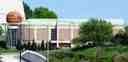
You are looking at a curved, light-brick building topped with a pale green roof, instantly identifiable by the massive, thirty-foot-tall textured basketball perched atop a…阅读更多收起
You are looking at a curved, light-brick building topped with a pale green roof, instantly identifiable by the massive, thirty-foot-tall textured basketball perched atop a glass-enclosed rotunda, which is a large circular room designed to let in natural light. Weighing ten tons, that colossal sphere is affectionately called the Baden Ball. If you are the kind of person who appreciates obsessive attention to detail, you will be pleased to know it features exactly ninety-six thousand dimples to accurately mimic the texture of a real regulation basketball. It is a structural marvel, an engineering puzzle beautifully solved, and a very unsubtle declaration of purpose for this museum. History is rarely a complete picture; it is heavily edited, often leaving the most pivotal architects of our culture as hidden hands working quietly in the margins. For decades, the women who fundamentally shaped the mechanics and popularity of athletics were systematically erased from the mainstream narrative, dismissed as mere novelties rather than true competitors. This facility is a defiant physical anchor against that erasure, demanding that these hidden hands finally receive their proper due. The steady expansion of this permanent footprint was heavily guided by Dana Hart, who grew the museum to nearly thirty impressive exhibits over two decades before announcing her retirement. She leaves behind a modernized institution that refuses to let these hard-fought legacies vanish. Consider the All American Red Heads, a professional exhibition team that played from nineteen thirty-six to nineteen eighty-six. Despite their grueling travel and undeniable talent, they had to navigate hilariously strict gender rules. Players were required to dye their hair red, wear meticulous makeup, and maintain perfectly styled hair while sweating heavily on the court. To make their mostly male audiences comfortable with the terrifying reality of women beating men at a competitive sport, the team deliberately incorporated slapstick comedic routines. A player named Spanky Losier would perform a regular gag where she pretended a man in the crowd had pinched her, wailing dramatically to the referee about a very personal foul. It was a clever, if entirely exhausting, psychological tactic just to survive and compete in a hostile era. The engineering of preservation takes many forms here. At the entrance stands the Eastman Statue, a massive seventeen-foot-tall bronze figure sculpted by Elizabeth MacQueen. MacQueen was a former dancer who studied human anatomy and kinetic form, translating her deep understanding of muscle movement into rigid, unyielding metal. Then you have the Wayland Baptist Flying Queens of the nineteen fifties. While other collegiate teams endured miserable bus rides across the country, the Queens secured a revolutionary sponsorship from a local air service. They traveled to away games in a fleet of private planes. That is a logistical flex that fundamentally altered the prestige of women's sports forever. This entire building is a monument to those who refused to be written out of the record books. But as we reflect on these trailblazers who fought so hard for their rightful recognition, we must acknowledge that Knoxville's landscape holds much darker chapters of deliberate erasure. Our next destination is just a five-minute walk away. We are heading toward the riverfront to a much older structure, the William blunt Mansion. There, the hidden hands who built the early physical foundations of this city were not celebrated athletes, but enslaved individuals whose stories we are only just beginning to honestly uncover.
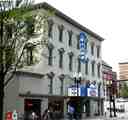
打开独立页面 →Look to your right for a stout brick building featuring a prominent vertical neon sign spelling out B I J O U, perched above a classical marquee. You are standing across from the…阅读更多收起
Look to your right for a stout brick building featuring a prominent vertical neon sign spelling out B I J O U, perched above a classical marquee. You are standing across from the Bijou Theatre. You are also standing on Gay Street. This thoroughfare has always been a living, shifting entity that literally reshaped the architecture along it, forcing buildings to adapt or perish. The front section of the structure you are looking at is actually much older than a movie house. It began in 1817 as the Lamar House Hotel. By 1854, the city decided to macadamize Gay Street. Macadamizing is an early method of paving using compacted layers of broken stone. To make the new grade work, engineers carved the street level down, which completely exposed the hotel's dirt cellar. The owners did not panic. They simply altered their entire facade and converted the newly exposed basement into the grand main entrance you see today. The building survived the Civil War, during which the Union Army commandeered it as a hospital. General William P. Sanders died in the bridal suite in 1863, and theater lore insists his ghost never left. Staff frequently report seeing a phantom in a brass-buttoned uniform wandering the closed-off third-floor balcony. Locals joke the general just likes the music and sticks around for the concerts. By 1908, new owners tore down the rear wings of the hotel to bolt on a theater. They spent 50,000 dollars, which is roughly 1.7 million dollars today. They equipped the Bijou with electric lighting and elaborate classical elements, including reclining muse pediments. A pediment is simply a triangular gable, and these featured statues of lounging Greek goddesses. The Bijou hosted everyone from the Marx Brothers to Houdini. It was also one of the few theaters in the city that admitted Black patrons for general performances, though they were strictly confined to a segregated third-floor gallery with a separate entrance. When the Great Depression hit, audiences dried up. The owners briefly repurposed the massive auditorium floor into an indoor used car lot, and later a fruit stand. You have to admire the sheer logistical desperation of parking automobiles exactly where the Russian ballet used to perform. By the early 1970s, the theater had devolved into a pornographic movie house attached to a hotel that operated as a brothel. In a twist of extreme irony, the property was bequeathed to a local Methodist church. The horrified church leadership quickly sold it off, and by 1974, the historic structure was slated for the wrecking ball. But this site represents another victory in the local battle to save historic landmarks. A grassroots group scrambled to raise funds, successfully buying the theater just before demolition. It faced the brink again in 2005 due to a high-interest mortgage, but two local businessmen bought the note and halted foreclosure until a massive fundraising campaign could repair the water damage and stabilize the venue. It stands today as a monument to stubborn survival. Let us keep moving down Gay Street. Our next stop is the East Tennessee Historical Society, about a three minute walk away, where I must warn you about a time when history simply could not be saved from the flames.
打开独立页面 →
再显示 7 个站点显示更少站点expand_moreexpand_less
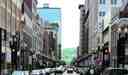
On your right is Gay Street, a long urban corridor framed by multi-story brick and stone facades, lined with rows of black metal streetlamps, and marked by a glowing vertical sign…阅读更多收起
On your right is Gay Street, a long urban corridor framed by multi-story brick and stone facades, lined with rows of black metal streetlamps, and marked by a glowing vertical sign for the Tennessee Theatre. Earlier on our tour, I touched on the wild, often violent history that defined early Knoxville. Well, this is the street he galloped down during his legendary escape, waving at children as he stole the sheriff's favorite horse. Welcome to Gay Street, the undeniable cultural heart of Knoxville. This thoroughfare perfectly captures the city's peculiar habit of losing its own history to disasters and wrecking balls, only to fiercely claw it back from the brink of oblivion. In eighteen fifty-four, Gay Street became Knoxville's first paved road. It was laid down with macadam, which is simply a compacted layer of small broken stones. Before that, you were basically just walking through the mud. By eighteen ninety-seven, those stone streets hosted a colossal fire that started in a hotel basement. The patrol officer on duty officially theorized that rats had chewed on loose matches, igniting the blaze. Because naturally, when an entire city block burns down, you blame the local rodents. The inferno caused a million dollars in damage, which equates to roughly thirty-five million dollars today. Authorities actually had to dynamite a building just to create a fire break. The blaze even claimed the life of a rare albino mule belonging to a visiting circus, sparking a thoroughly bizarre local legend that the animal's ghost cursed the block to perpetual ruin. Yet, Knoxville stubbornly rebuilt the grand brick structures you see today. But the true survival of Gay Street lives in the words of the writers who immortalized it. Take James Agee. In nineteen fifteen, a young Agee walked these very sidewalks with his father to see a movie at the Majestic Theater. He later poured those exact memories into his Pulitzer Prize-winning novel, A Death in the Family. He captured the exhilarating smell of stale tobacco, rank sweat, and perfume in the theater. He vividly recalled the great bright letters of storefront signs, feeling a swell of childhood pride just for knowing how to pronounce the name of the towering stur-kee Brothers furniture building. Those raw, lingering memories of this street were so profoundly evocative they later inspired composer Samuel Barber to create his famous soprano composition, Knoxville Summer of nineteen fifteen. Cormac McCarthy also wandered this corridor, using its mid-century drugstores and grand hotels as the gritty backdrop for his novel Suttree. And speaking of grand hotels, the Andrew Johnson Hotel down the street holds a tragic place in American music history. It was the last place country music legend Hank Williams was seen alive. Facing a heavy financial penalty if he missed a show in Ohio, a severely ill Williams was carried out of the hotel and placed into the back seat of his baby blue Cadillac. He died of heart failure in that car just hours later. From phantom mules to Pulitzer winners to country music ghosts, Gay Street has seen an incredible parade of brilliance and tragedy. Now, let us leave the main thoroughfare behind. We are heading to Market Square, just a three-minute walk away, promising a space where the rigid social lines of the city finally began to blur.
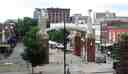
打开独立页面 →You are now arriving at Market Square, which will be on your right, marked by a striking entrance gateway where thick red brick pillars support a sweeping white metal arch topped…阅读更多收起
You are now arriving at Market Square, which will be on your right, marked by a striking entrance gateway where thick red brick pillars support a sweeping white metal arch topped with slender, lantern-like towers. Step into this wide open pedestrian plaza. Take a moment to look down the stretch of storefronts and imagine the sheer volume of wagons that used to park right where you are standing. Established in 1854, Market Square has always been the bustling, equal-footing heart of Knoxville. A local newspaper once called this the most democratic place on earth, where the rich and the poor, the white and the black, jostled each other in perfect equality. That open freedom stands in sharp contrast to the severely confined lives of Hagar and Jack, whom we discussed earlier. While their movements were strictly controlled by the people who claimed to own them, out here in the square, the hidden hands of everyday regional farmers and working folks proved they were the true economic engine of the city. Of course, keeping this square alive has been a constant battle between those who want to bulldoze the past and those who refuse to let it go. The centerpiece of this plaza used to be a massive, century-old Market House. By the 1950s, Knoxville Mayor George Dempster, the very same man who invented the Dempster-Dumpster trash system, decided the old building was a dingy fire hazard that stood in the way of downtown modernization. Preservationists fought fiercely to save it. The debate was ultimately settled by a fourteen-year-old boy named Tommy Hope. In December 1959, Tommy was sneaking a cigarette near his family florist stall inside the Market House. He accidentally ignited a sheaf of tissue paper, causing a spectacular blaze that did $170,000 in damage, or about 1.7 million dollars today. Overwhelmed with guilt as firefighters battled the flames, the teenager eventually confessed, telling police he just could not live with the secret anymore. With the building gutted, the city happily brought in the wrecking balls. In 1961, they replaced the historic structure with a modern open-air mall featuring a series of concrete, mushroom-shaped canopies. The people of Knoxville absolutely hated them. These strange shapes completely stripped the area of its historic character. Traditionalists despised these modernist toadstools so much that Cas Walker, a colorful local politician and regional grocery tycoon, permanently closed his cash store on the square in sheer protest. He loudly declared the new design would fail within five years without the old Market House to anchor it. For decades, the ugly concrete toadstools sat there, a bleak monument to the perils of urban renewal. But the defenders of Knoxville history never stopped pushing back. Finally, in 1986, preservationists won out. The city tore down the canopies and began the long process of restoring the historic pedestrian commercial area you are walking through right now. The original bell from the old Market House was even salvaged and is still displayed at the south end of the square. Our next stop is a ten-minute walk away, heading toward World's Fair Park. As we leave the historic bricks behind, I am going to guide you to a towering golden sphere with a rather mysterious blemish. Follow the path, and I will meet you at the Sunsphere.
打开独立页面 →Look to your right, and you will spot a towering hexagonal steel truss column topped by a massive, gleaming glass sphere layered in twenty-four karat gold dust. This two hundred…阅读更多收起
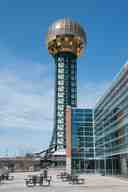
Look to your right, and you will spot a towering hexagonal steel truss column topped by a massive, gleaming glass sphere layered in twenty-four karat gold dust. This two hundred sixty-six-foot monolith is the Sunsphere, affectionately known by some locals as The Lord's Golf Tee. It was built as the focal point for the 1982 World's Fair, an ambitious global exhibition that thrust Knoxville into the international spotlight, though the celebration was rapidly marred by a bizarre and shocking act of vandalism. Finding a manufacturer to produce those gold-colored glass panes was considered nearly impossible, until a company in New Jersey finally took the job. They meticulously cut the glass into seven different shapes to form the seventy-five-foot sphere you see before you. So, naturally, during the early morning hours of May twelfth, 1982, someone stood outside the fairground and fired a single gunshot right into it. The bullet shattered one of those specialized, gold-dusted panels. No one was ever arrested, and the incident cemented itself in local lore. A completely unsolved drive-by shooting against a giant golden ball. Some residents still jokingly call it the perfect crime. Inside the sphere, oblivious fairgoers rode the elevator up to eat Sunburgers and drink a rum cocktail known as the Sunburst. The man who orchestrated this expositional glory was a banking magnate named Jake Butcher. Butcher used his political connections, including a friendship with former President Jimmy Carter, to secure millions in federal subsidies. He practically danced through the fair's closing night as the undisputed king of Knoxville. That reign ended rather abruptly. Just three and a half months later, federal agents raided Butcher's banks, uncovering a staggering web of forged documents and illegal loans. Eight banks failed, wiping out the life savings of many locals. Butcher, the visionary behind the golden sphere, was sentenced to twenty years in prison for federal bank fraud. Quite the hangover from those Sunburst cocktails. Following the collapse of Butcher's empire, the park became choked with weeds. The Sunsphere sat completely abandoned. The tower mirrors a city constantly battling to save its monuments from ruin, refusing to let them fade, choosing instead to hold onto them with stubborn pride. It fell into such disrepair that an episode of The Simpsons later famously mocked it as a dilapidated wig store called the Wigsphere. While that was purely fictional, the real-life maintenance issues were not. The steel truss frame simply became a premium high-altitude toilet for massive flocks of roosting European starlings. The city eventually had to purchase specialized audio equipment that blasted predator noises to scare the birds away. Yet, Knoxville fiercely held onto its golden sphere. It survived the starlings, the scandals, and even the activists. In May 2000, nuclear weapons protesters scaled the tower and hung a massive banner reading Stop the Bombs. They occupied the top for three days. It was a strategic choice, using the city's most recognizable structure as a towering political billboard against nearby atomic research facilities. Eventually, the city poured money into renovations, reopening the observation decks so visitors could once again sway slightly in the high winds while looking out over the Great Smoky Mountains. If you look toward the northern end of the park, you will eventually see an older architectural marvel that dealt with a completely different kind of logistical chaos. But for now, we will leave the golden sphere behind and head toward our next stop at Knoxville station, just a five-minute walk away.
打开独立页面 →On your left, you will spot a grand red brick building anchored by a three-story corner tower with a pitched clay-tile roof and a bright red L-and-N sign jutting out from the…阅读更多收起
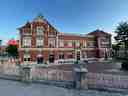
On your left, you will spot a grand red brick building anchored by a three-story corner tower with a pitched clay-tile roof and a bright red L-and-N sign jutting out from the facade. We just walked away from the Sunsphere, a beacon of the 1980s, to stand before a survivor from 1905. The story of this city is an endless wrestling match between the urge to tear the old blocks down and the stubborn will to adapt and protect them. This building, the L and N Station, is a masterclass in survival. It was built by the loo-ee-vuhl and Nashville Railroad after a bitter corporate rivalry. In 1894, L and N executives made a handshake deal with the Southern Railway not to encroach on each other's territory. When Southern broke that agreement, L and N retaliated by building a direct line from Cincinnati to Atlanta, straight through Knoxville. To appreciate what makes this place special, you have to look at the puzzle its chief engineer had to solve. Richard Montfort was an Irish immigrant and a graduate of Dublin's Royal College of Science. It is always worth remembering the hidden hands of immigrant architects and laborers who laid the structural bones of the American railroad. Montfort designed this as a stub-end terminal, which was an absolute operational nightmare. Because trains could not simply pass through the station on a continuous track, they had to pull past, turn around on a remote, Y-shaped section of track, and then carefully back the passenger cars into the unloading area behind the building. When it was time to leave, the train just pulled straight forward. It was a tedious, highly complicated dance of multi-ton steel machines. Montfort gave the station a chateauesque exterior. That is an architectural style designed to mimic grand French manor houses. But inside, the design reflected a much uglier reality. The interior featured a general waiting room and a separate colored waiting room. This was an enforcement of Jim Crow, the harsh legal and social system of racial segregation in the South. Those separate facilities remained rigidly in place until the civil rights movement forced integration. In 1915, author James Agee walked past this very station and wrote that its stained glass smoldered like an exhausted butterfly. By 1968, the last passenger train backed out of that terminal forever. A lot of old depots met the wrecking ball shortly after. But this building refused to be erased. It was renovated to house restaurants for the 1982 World's Fair, and today, after a 5.6 million dollar renovation, it is the L and N STEM Academy, a magnet high school. The students here are incredibly ambitious. A group of them recently designed an experiment using cornstarch to test human waste disposal in space. The first unmanned rocket carrying their project actually exploded six seconds into flight, a massive fireball that students felt from over a mile away. But true to this building's spirit, they rebuilt it, and the second launch was a success. We are leaving the meticulous blueprints of the rail age behind us now. Our next stop is about an 18-minute walk away, where the story shifts to the bloody, chaotic battlegrounds of the Civil War. Let us head toward Fort Sanders.
打开独立页面 →Look to your left for a solid, pale stone block carved with the words FORT SANDERS in crisp, dark lettering, standing like a sentinel beside the paved road that slopes uphill.…阅读更多收起
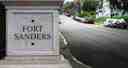
Look to your left for a solid, pale stone block carved with the words FORT SANDERS in crisp, dark lettering, standing like a sentinel beside the paved road that slopes uphill. It is quite a shift from the industrial grit of Knoxville Station earlier. Today, this neighborhood is famous for massive house parties, packed bars, and the occasional burning couch after a major football victory over Alabama. But in the fall of eighteen sixty three, this very landscape was violently transformed into a massive, blood-soaked Union bastion. Deep local divisions meant neighbors often fought neighbors here, creating a desperate need for absolute defensive control. The fort was originally called Fort loud-un, but was renamed to honor General William P. Sanders. Sanders actually bought the vital time needed to construct these very defenses. He sat exposed on a white horse, riding up and down the Union line to delay the advancing Confederate forces. He was mortally wounded by a sharpshooter, but the hours he secured allowed Union engineer Captain Orlando Poe to work a brutal kind of magic. Poe later stated that every spadeful of earth turned in those borrowed hours was worth a thousand men each. I find Poe's methods ruthlessly brilliant. He ordered his men to build towering twelve-foot parapets... which are heavily fortified earthen walls... and reinforced them with cotton bales covered in raw animal hides to extinguish incoming artillery sparks. Poe also ordered telegraph wire to be strung between tree stumps across the open fields. It was an ingenious, near-invisible booby trap designed to trip charging Confederate soldiers. It gets remarkably darker. The night before a major assault, Union defenders poured water down the trench walls, creating a sheer, inescapable sheet of ice. When General Longstreet's Confederate troops charged, they plunged into a freezing ditch they simply could not climb out of. Union soldiers then lit artillery shells with shortened fuses and tossed them by hand into the trapped crowd below. The battle lasted just twenty minutes, but it left a horrific slaughter of over eight hundred Confederate casualties. Decades later, grand Victorian homes were built directly over those filled-in trenches. The earth buried the trauma, but the historical gravity lingered. This neighborhood became the childhood home of James Agee. Following the sudden, devastating loss of his father, Agee used this landscape to process his grief. He immortalized the decaying, overgrown clay ruins of the old fort as a silent witness to his own human tragedy. He wrote vividly of taking walks down these very streets, pausing with his father to listen to the train engines coughing in the valley below. You can see an ongoing, brutal tension playing out here right now. The physical remnants of history are constantly being erased by university expansion. Take the grand Pickle Mansion, built in eighteen eighty nine by a Confederate veteran. It suffered years of neglect, burned to a masonry shell in two thousand and two, and despite a massive decade-long campaign by preservationists to save it, it was ultimately bulldozed for apartments. A fiercely stubborn community keeps fighting to salvage these architectural ghosts, but the bulldozers rarely sleep. As we head to our final stop, just a five-minute stroll away, prepare yourself. I will show you the full scope of the lethal guerrilla tactics that defined the Knoxville campaign.
打开独立页面 →Just five minutes ago, we stood where the brutal assault of Fort Sanders took place. Now, as you look to your right, let's zoom out to examine the larger machine that drove those…阅读更多收起
Just five minutes ago, we stood where the brutal assault of Fort Sanders took place. Now, as you look to your right, let's zoom out to examine the larger machine that drove those men into that trench... the Knoxville campaign. In the fall of eighteen sixty-three, President Abraham Lincoln had his eye on East Tennessee. The region was rich in grain and livestock, but more importantly, it controlled the vital railroad corridor linking the Confederacy east and west. Enter Union Major General Ambrose Burnside. Burnside bypassed heavily defended mountain gaps, marching eighteen thousand troops over rugged roads... sometimes thirty miles a day... to secure the city. Needing a suitable headquarters, Burnside simply commandeered the home of the Croziers, a prominent family of Confederate sympathizers who had fled. He made himself right at home, even taking time to compliment their excellent personal library. When Burnside occupied the city, the Civil War in Knoxville quickly devolved into a vicious, localized guerrilla war. Burnside actively commissioned local Unionist guerrillas to spy on and ambush Confederate forces. This irregular warfare... bushwhacking... turned neighbors against one another. These divided loyalties tore the community apart, plunging the region into a state of absolute lawlessness. Remember J.G.M. Ramsey from our earlier stops? His extensive historical archives were burned to ash during this exact campaign... a bitter casualty of a community destroying its own memory in the name of war. To break Burnside's grip, Confederate General James Longstreet arrived with ten thousand freezing, under-supplied men. Their journey was a spectacular logistical nightmare. The trains were pulled by underpowered locomotives that could not negotiate the steep mountain grades. The engineers had insufficient wood for fuel, forcing the men to stop and dismantle wooden fences along the tracks just to keep the boilers burning. Once they finally arrived, Longstreet commandeered Bleak House, a massive pre-Civil War mansion, using its high tower for sharpshooters. In a tragic twist of irony, the Confederate artillery chief directing that sector was Colonel Edward Porter Alexander. From that tower, a sniper fatally shot Union cavalry chief General William P. Sanders... who happened to be Alexander's former roommate and close friend at West Point, the United States military academy. Fearing the loss of the popular general would crush morale, Burnside ordered the death of Sanders kept a strict secret. His body was hidden inside the Lamar House hotel and buried at midnight with only a few officers in attendance. After the lopsided bloodbath at Fort Sanders... engineered brilliantly by Captain Orlando Poe... Longstreet was out of options. When word arrived that the Union had broken the siege at Chattanooga and General William Tecumseh Sherman was marching twenty-five thousand troops to relieve Knoxville, Longstreet abandoned the siege. He withdrew his troops into the bitter ap-uh-latch-un mountains, leaving Knoxville firmly in Union hands. This campaign left the city battered. Its homes were occupied, its people alienated, and its history reduced to embers. Yet, Knoxville survived. The city you have explored on this tour is defined by this exact struggle... a relentless fight against utter destruction, met always by a stubborn, fierce drive to rebuild and protect its legacy. We have seen it in saved theaters, preserved mansions, and scarred battlegrounds.
打开独立页面 →

常见问题
如何开始导览?
购买后,下载 AudaTours 应用并输入您的兑换码。导览将准备好立即开始--只需点击播放并按照 GPS 引导的路线行驶即可。
导览期间我需要互联网吗?
不需要!开始前下载导览并完全离线享受。只有聊天功能需要互联网。我们建议在 WiFi 下下载以节省移动数据。
这是导游带领的团体游吗?
不是--这是自助语音导览。您按照自己的节奏独立探索,通过手机播放音频解说。没有导游,没有团体,没有时间表。
导览需要多长时间?
大多数导览需要 60-90 分钟才能完成,但您完全控制节奏。随时暂停、跳过站点或休息。
如果我今天无法完成导览怎么办?
没问题!导览具有终身访问权限。随时暂停和恢复--明天、下周或明年。您的进度已保存。
有哪些语言可用?
所有导览均提供 50 多种语言版本。在兑换代码时选择您的首选语言。注意:导览生成后无法更改语言。
购买后我在哪里访问导览?
从 App Store 或 Google Play 下载免费的 AudaTours 应用。输入您的兑换码(通过电子邮件发送),导览将出现在您的资料库中,准备下载并开始。
如果您不喜欢该导览,我们将退款。请联系我们 [email protected]
安全结账使用 


