伦敦语音导览:肯辛顿与切尔西的艺术隐秘之地与贵族故事
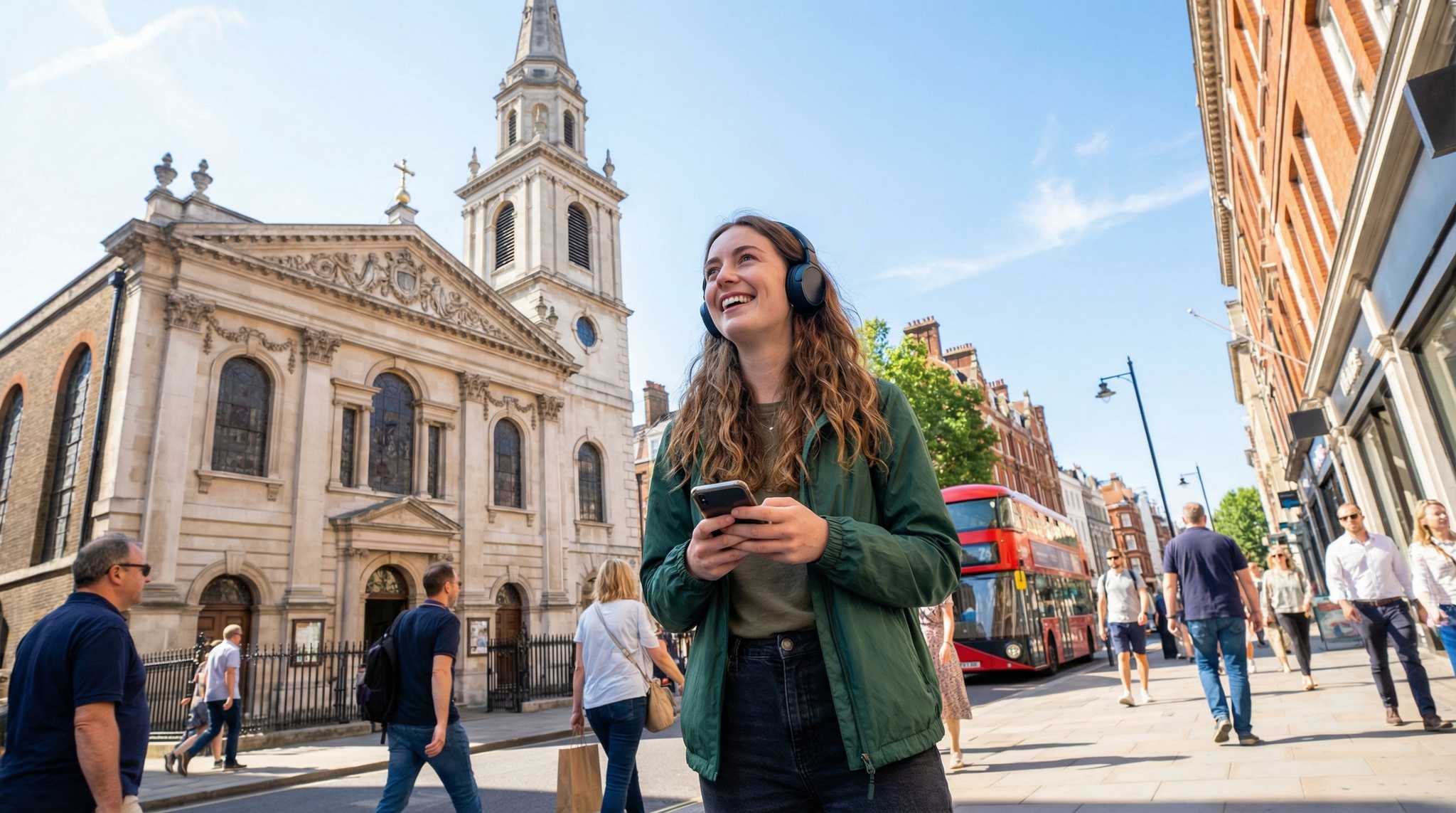
通过这次迷人的旅程,探索肯辛顿与切尔西充满活力的核心。首先参观尖端的萨奇画廊,在那里,当代艺术在令人惊叹的展览中焕发生机。沉浸在皇家宫廷剧院充满活力的氛围中,该剧院以其开创性的表演和新兴人才而闻名。漫步到宁静的斯隆街圣三一教堂,这是一座哥特复兴式建筑的杰作,在城市喧嚣中提供一片宁静的港湾。一路上,您将发现隐藏的瑰宝和迷人的街道,它们体现了伦敦这个标志性行政区的独特魅力。在一次难忘的旅程中体验文化、历史和创造力!
导览预览
关于此导览
- schedule持续时间 40–60 mins按照自己的节奏
- straighten3.5 公里步行路线跟随引导路径
- location_on
- wifi_off离线工作一次下载,随处使用
- all_inclusive终身访问随时重播,永久有效
- location_on从 皇家宫廷剧院 开始
此导览的景点
Have a butcher’s over to your right, my friend - you can’t miss the Royal Court Theatre, with its striking red brick, big bold sign sayin’ “ROYAL COURT,” and a top that looks like…阅读更多收起
Have a butcher’s over to your right, my friend - you can’t miss the Royal Court Theatre, with its striking red brick, big bold sign sayin’ “ROYAL COURT,” and a top that looks like a posh Italianate palace right in the middle of Sloane Square. Welcome to the legendary Royal Court Theatre! It’s not just bricks and mortar, but the beating heart of British drama - the place where angry young writers, daring directors, and the odd Hollywood superstar have made more drama than a London cabbie on a rainy Friday night. Now, the Royal Court’s always looked sharp, but she’s worn a fair few hats since opening her doors in 1870 - first, a converted chapel, would you Adam and Eve it? From a house of worship straight to a home for drama queens... talk about going from prayers to playwrights in sixty seconds! Let’s jump back to the early days - picture carriages clip-clopping past as folks poured in to see Marie Litton’s latest hit, or perhaps a cheeky play by W.S. Gilbert before he paired up with Sullivan for all those topsy-turvy operettas. Scandal and wit was the name of the game, with the likes of The Happy Land raising more eyebrows than a fishmonger on market day. And by 1888, they’d knocked down the old gaff and built this one - all handsome red brick, fancy mouldings, and arched windows - so posh you’d expect the Queen herself to pop by for a cuppa. But don’t let the grandeur fool you, this place has had more twists than a bag of curly fries. There was a bit where it almost went from curtain up to curtains, closed and quietly rotting until the English Stage Company rescued it after the war. Imagine - Sloane Square with no Royal Court - the horror! Once they moved in, the theatre became a cradle for wild new writing. You know what really put it on the map? John Osborne’s “Look Back in Anger” in 1956 - kicked the doors off British theatre, gave birth to the “angry young men,” and showed that the Royal Court was happier shaking things up than sticking with the same old songs and dances. Now, there’s more drama behind these scenes than an EastEnders Christmas special. When the Lord Chamberlain had the nerve to tell the Court what they could and couldn’t put on, the gang went and turned themselves into a private members’ club just so they could show Osborne’s “A Patriot for Me” and Bond’s “Saved.” Cheeky, right? Those stunts helped axe theatre censorship altogether - that’s freedom with a capital F. Over the years, this stage has hosted the big players of British theatre: Pinter, Churchill, Sarah Kane, Jez Butterworth - and yes, even a little known musical called The Rocky Horror Show that had everyone doing the Time Warp in the upstairs studio back in ’73! Every decade’s seen its legends: Sir Laurence Olivier, Alec Guinness, Mark Rylance... the roll call goes on and on. And when the building started to wear out and the leaks were coming in thicker than London fog, they didn’t give up - they got a whacking great lottery grant, rebuilt everything except that lovely street front and the old auditorium, and re-opened in 2000 better than ever. Not all applause and roses, mind - the place has weathered its fair share of controversy. Rows over plays accused of antisemitism, tough safeguarding inquiries... but through it all, the mission’s stayed the same: new voices, bold ideas, challenging old Bill and new. Right now, you’re standing in front of a true London battler, a theatre that’s championed the unheard, the unruly, and the unforgettable for generations. Next time you see the lights aglow, just remember - whether you’re in the stalls or the gods, every show’s a bit of history in the making. Shall we carry on, mate? Sloane Square’s just warming up for us! For further insights on the antisemitism accusations, safeguarding inquiry or the notable productions since the 1950s, feel free to navigate to the chat section below and inquire.
打开独立页面 →Alright, you’re looking straight at a grand building made of golden-brown brick with a shiny white trim, tall windows all lined up neat as a row of bobbies, and-just to your…阅读更多收起
Alright, you’re looking straight at a grand building made of golden-brown brick with a shiny white trim, tall windows all lined up neat as a row of bobbies, and-just to your right-a whopping great portico with four big white columns that make you feel like you’ve wandered onto the set of a Victorian drama-keep your mince pies on those columns, and you won’t miss the banners outside that say “Saatchi Gallery”. Now, let me spin you a yarn about this place-one that’ll keep you grinning from ear to ear, like a kid with a bag of sherbet lemons! Once upon a not-so-distant time, back in 1985, a fella by the name of Charles Saatchi, now there’s a geezer who knew how to make a splash, decided he’d had enough of old paint factories standing idle in St John’s Wood. So what does he do? Turns one into a gallery so big you could lose your dog in it and still have room for a knees-up! That’s where the Saatchi Gallery kicked off, wall-to-wall with American minimalism-think giant Donald Judd cubes, Cy Twombly scribbles, Andy Warhol pop, and sculptures so blimmin’ massive they knocked down the caretaker’s flat just to fit ‘em in. Imagine explaining that to the neighbours! Of course, art world types all flocked in, noses in the air, but little did they know the real show was yet to come. After rubbing elbows with New York’s finest-Koons, Gober, Halley-Saatchi, never one to linger at the buffet when there’s main course to be had, sold up his American collection and turned his beady eye on a bunch of scruffy hopefuls from Goldsmiths and art colleges round London. Damien Hirst was one, and let’s just say-no one thought keeping a cow’s head eaten by flies in a display case would put your name in lights, but there you go. The Young British Artists were off. It wasn’t just shock value, though, mate-behind all the jars, sharks, and sheep, there was a proper daring, a swagger you’d expect from a true Londoner with something to say. By the nineties, it felt like the Saatchi Gallery had single-handedly put Britart on the world stage. Shows like Sensation-now, that was a right knees-up-shook the Royal Academy so hard it made headlines around the globe. Paintings got egged, politicians fainted, and so many people turned up it nearly wore out the floors. Even the Yanks got in a proper flap over Chris Ofili’s Holy Virgin Mary-bit of elephant dung, you see, which got the Mayor so hot under the collar he threatened to cut off the museum’s funding. Never boring, was it? But the drama’s part of the art. By the 2000s, the gallery had set up shop in County Hall on the South Bank, but it all came to a sticky end after a landlord bust-up. Don’t worry though, ‘cause the Saatchi Gallery’s got more lives than a Soho alley cat, and in 2008 it struts into its finest home yet-right here, in Chelsea’s regal Duke of York’s HQ, looking like it was built just for art and a nice spot of afternoon tea. The space-they say-it’s as grand and light and proud as any gallery in London. With its new home, the Saatchi Gallery became a charity in 2019, making sure the doors are flung wide for all and sundry. It’s still taking risks, giving the spotlight to fresh faces-blokes and birds who’d never see their work hanging on posh walls otherwise. During the pandemic, when art graduates had their big day nicked, Saatchi opened up for their shows. You might say, even amongst all the controversy and shock, there’s a proper beating heart in there-helping young minds catch the light. So as you stand soaking it all up, remember-it’s not just a gallery, it’s a whole adventure, full of stories, stunts, rows, and rebels. Only in London, eh? Now, don’t stand gawping too long, there’s more of Chelsea to explore, and I’ve got more tales to tell! Yearning to grasp further insights on the timeline, saatchi online or the controversies? Dive into the chat section below and ask away.
打开独立页面 →Alright, you’ll spot Peter Jones & Partners right across Sloane Square, a massive building with wall-to-wall glass windows curving round the corner, standing out like a stylish…阅读更多收起
Alright, you’ll spot Peter Jones & Partners right across Sloane Square, a massive building with wall-to-wall glass windows curving round the corner, standing out like a stylish lighthouse amidst the classic red-brick neighbours-just look for the big white sign and all that gleaming glass. Ah, here we are, Peter Jones & Partners-where fashion meets fortune and shoppers truly test their stamina! Now, let me paint you a picture. It’s not just any old shop-this beauty takes up a whole city block, a proper Chelsea heavyweight, with glass walls that’d make even the sun pull its shades down. See, back in the day-1877 to be exact-Peter Rees Jones, a Welsh lad with an eye for hats and a nose for business, set up his little fabric nook on King’s Road. Little did London know, he’d build an empire on a lease that’s never gone up in price-999 years, and not a penny more than six grand a year to the Cadogan lot! Now, that’s a deal even your nan would envy. But every empire’s got its wobbly patch. After Jones kicked the bucket, the shop hit rocky waters-only to be snapped up by John Lewis, turning it over to his son, John Spedan Lewis. That move right there? It sparked the famous profit-sharing partnership. Yep, this very spot is the cradle of the employee-owned revolution-think of it as Chelsea’s best-kept open secret. And the building itself? Built in the 1930s, it led the charge with its dazzling glass curtain walls-Grade II* listed, no less! If you stood here in the ’30s, you’d’ve heard jazz wafting from inside and marvelled at the sheer modernity. Royalty shops here too-they’re so posh, their sandwiches have their own postcode. So, if you fancy joining the ghosts of hat-makers and the shadows of bargain-hunting princesses, step inside-who knows, you might leave with a teapot... or a directorship!
打开独立页面 →
再显示 11 个站点显示更少站点expand_moreexpand_less
Welcome, mate, you’ve landed smack in front of one of Chelsea’s crown jewels, Holy Trinity Sloane Street-though, if you wanna impress the locals, you can call it the “Cathedral of…阅读更多收起
Welcome, mate, you’ve landed smack in front of one of Chelsea’s crown jewels, Holy Trinity Sloane Street-though, if you wanna impress the locals, you can call it the “Cathedral of the Arts and Crafts movement” … or, if you’re in a rush to the pub, just Holy Trinity. Now, have a butchers at those big ol’ doors and the glorious red brick and stone. Picture it, 1888, when this grand dame replaced a church only half its size. The old one, built by James Savage-no relation to Randy, unless he knew a thing or two about bricklaying-had a Gothic vibe, big enough for 1,600 souls, though by the end it was about as lively as a rainy Monday on the Thames. But the 5th Earl Cadogan-Chelsea’s very own Daddy Warbucks-wanted something bolder for his patch. In comes John Dando Sedding, a chap with a name posher than a plate of prawn sandwich at afternoon tea, and he says, “We’ll build it WIDE!” Not the longest church in London, mind you, but wider than St Paul's herself by a cheeky 9 inches. Now, that’s what I call keeping up with the neighbours. If you listen closely, you might almost hear Sedding, pencil behind his ear, ordering the city’s finest sculptors and designers around… "Pomeroy, Armstead, Thornycroft-fetch me gargoyles, fetch me angels! And don’t spare the frills!" Sadly, Sedding slipped off this mortal coil before he could finish, but his mate Henry Wilson picked up where he left off. Though between you and me, Wilson might’ve skipped a couple bits-some of that fancy glass and a frieze up near the high windows were left unbothered, and a few carvings are still a work in progress. Step inside, and your eyeballs will get a feast. Stained glass galore, including a whopper of an East window, courtesy of Edward Burne-Jones and William Morris-the Mick and Keith of their day, but with less guitar and more coloured glass. And if that’s not enough, there’s windows by William Blake Richmond, complete with “decadent imagery” (make of that what you will), and Christopher Whall’s work peering down like highbrow bouncers at a nightclub. But, ah, the West window-it’s plain as a pint glass after Friday closing. They had grand plans for it, but life, enemy bombs, and a little forgetfulness left it unfinished. The plain glass bit the dust in the Blitz, and the new window? Still a twinkle in Chelsea’s eye. They do say Holy Trinity is haunted by the ghosts of half-finished projects-and perhaps the odd choirmaster grumbling about lost music sheets. Back in the day, the music was top-notch, too. The organ-massive pipes that’d make even Westminster Abbey jealous-was built big enough for the sort of choirs that could blast your hat right off. Big names on the music scene played here: Edwin Lemare, Sir Walter Alcock (who, cheekily, played organ at *three* coronations), and even John Ireland, though they reckoned he was too green to get the top job, poor fella. This church could’ve been rubble in the ’60s, y’know. The powers-that-be tried to do away with it, swap it for something miserly. But poet John Betjeman and the Victorian Society raised such a stink you’d think someone’d left a jellied eel out in the sun. They saved it-good job too, or I’d have nowhere to spin this yarn! Over the years, all sorts hung about: Liberals like Gladstone (who loved a strut down Sloane Street before service), bohemian artists, poets, and even Oscar Wilde’s mates-what a knees-up that must’ve been! The church is still at it, hosting concerts, festivals, and community dos. Fancy a spot of culture? Wander by when the choir’s belting out a hymn, and you might just get chills. So, as you stand here, under these watchful stones and stained glass eyes, remember you’re not just outside a church. You’re in the heart of a living, breathing bit of London history-where music, scandal, and more than a dash of artistic flair have made this place one of Chelsea’s true treasures. Grand, isn’t it? Now, shall we trot on to see what’s next?
打开独立页面 →You’ll spot the MICA Gallery along this charming row of old brick mews houses-just ahead, keep your eyes on the right side for a tidy building with big bright windows and a punch…阅读更多收起
You’ll spot the MICA Gallery along this charming row of old brick mews houses-just ahead, keep your eyes on the right side for a tidy building with big bright windows and a punch of modern style among all that classic London brick. Right then, welcome to Pavilion Road, where tradition meets a splash of the unexpected-right here at MICA Gallery. The air’s got that mix of turps and Turkish delight, don’t it? MICA, short for Modern Islamic and Contemporary Art, ain’t your average Knightsbridge gallery. No, love, it was the very FIRST one in the whole UK to shine the limelight on modern Islamic art-1,500 square feet of colour, calligraphy, and culture bursting right out of its walls. Founded by Reedah El-Saie, a barrister who swapped legal briefs for paintbrushes, she’s tapped into her British-Pakistani roots, giving a platform to young artists like Nurjan and Maaida Noor-talents you’d never find if you stuck to Oxford Street. But the heart beats strongest when the world comes calling. In 2011, this little spot hosted “From Facebook to Nassbook,” a show dedicated to the Egyptian artist Ahmed Bassiony, whose story ended tragically in the Egyptian revolution. Talk about mixing art and real life, eh? That same year, calligrapher Hamid Ajami dazzled the crowd, his work swirling like the Thames in a March wind. Even the streets round here pause to take it all in. So next time you think “art gallery” means posh silence, remember-at MICA, it’s all about shouting out what matters, as bold as a market hawker at closing time. Let’s wander on, but don’t forget-here, every brushstroke’s got a backstory.
打开独立页面 →Right, here we are-San Domenico House, where luxury meets a dash of Italian flair-right in the heart of Chelsea. Now, take a butcher’s at those two handsome Victorian townhouses…阅读更多收起
Right, here we are-San Domenico House, where luxury meets a dash of Italian flair-right in the heart of Chelsea. Now, take a butcher’s at those two handsome Victorian townhouses in front of you, all red brick and posh as you like. Once upon a time, this place was known as the Sloane Hotel-right up ‘til 2006-so some locals might still use the old name. Goes to show, in London, even the hotels have alter egos! Step inside, and suddenly you’re in a scene from an Agatha Christie-marble underfoot, grand portraits of royalty staring down, and more antiques than your Nan’s attic. The geezer who owns the joint, Aldo Melpignano, has a real eye for taste. It’s part of the San Domenico Hotels group, and if you fancy a holiday in Italy-well, this is the London cousin of the legendary Borgo Egnazia. Now, the interiors - proper lush. There’s neo-classical and Italian decor all wrapped up together, like spaghetti with roast beef, if you catch my drift. Antique cabinets FULL of curios-military medals, fancy evening bags-a regular treasure chest for the nosey parker in all of us. If you sneak into the drawing room, you’ll spot Empire-era clocks and vases, an ormolu chest (don’t ask me what ormolu is, but it sounds posh), and even a walnut tallboy, which, despite the name, is not a tree wearing high heels. The Gallery rooms-six of ‘em-are famous for their mezzanine nooks and silk-canopied four-posters. Fancy a “brown” room, all furry throws and chocolate cushions? That’s suite 104 for you. The newer rooms-pure Italian chic, with mirrors and commodes that’d make even the Queen go “Cor blimey!” No in-house restaurant, but never fear. Room service'll bring up a tray faster than you can say “Full English.” And if you’ve got the nippers with you, the top-floor suites offer games and babysitting. Every room’s got a minibar, too-no booze inside, but ring up, and the staff’ll sort you out with a tipple. So, whether you’re here for a cheeky weekend-or just gawping from the pavement-San Domenico House proves Chelsea’s still got more style than a Savile Row tailor! Go on, have a walk round… see if you spot a ghost of the Sloane Hotel days peeking from behind the curtains.
打开独立页面 →Right, you’re standin’ just outside where Chelsea Manor once stood, proper heart of old Chelsea, yet there ain’t a single turret or timber to be seen today-just streets with a…阅读更多收起
Right, you’re standin’ just outside where Chelsea Manor once stood, proper heart of old Chelsea, yet there ain’t a single turret or timber to be seen today-just streets with a whiff of posh. But close your mince pies-your eyes!-and let’s wind back the clock to the days when this patch was the playground of kings, queens, and a whole parade of nearly-nobles. Now, picture it… the year’s 1536. Henry VIII himself scoops up this fine spot, likely giving it a look and sayin’-, “I’ll ‘ave that for me and the missus, thanks!” But you know Henry, always re-doing his gaffs. He nabs timber from Whitehall, carts it over here, and sets about buildin’ closets left and right-because even royalty needs a place for their bloomers. Maintenance? Oh, they were at it for years, patchin’ and primpin’, with gardeners so busy they probably dreamed about weeds chasin’ ‘em down Sloane Street. Now, imagine the gardens-not just a strip with some taters, mate, but great walled gardens and a posh “privy garden” for the Queen. We’re talkin’ 29 gardeners, six women weeders, and orders for thousands-*thousands*-of plants! Bay, rosemary, lavender, and enough privet to make a hedge-maze you’d lose your nan in. Queen Katherine Parr, she loved her garden like some love a cuppa, and her bloke, John Colman, got eight pence a day-which was big dosh if you weren’t the king. And royalty weren’t shy of a river jaunt, neither. In 1541, Queen Katharine Howard and young Princess Elizabeth-yes, *that* Elizabeth-would take a barge along the Thames, glidin’ to and from Chelsea. Imagine catchin’ them waving as you unload your fruit ‘n veg at Chelsea dock! Chelsea was given to Katherine Parr for life in 1544. She, bless her, spent loads of time here-a widow, then Mrs. Thomas Seymour, and when she passed away, she left all to her final hubby. Even after the queens, Chelsea Manor was a hot-ticket address. You had John Dudley, Duke of Northumberland-held council meetings here, proper business. When he fell from favour (as many did with Henry), his missus Jane asked for a slice, and the Crown said, “Alright, love, take it”-for life! The house passed through hands faster than a Chelsea bun at teatime. Anne of Cleves-the queen who dodged a bullet with Henry-lived and died here. And don’t forget Sir Hans Sloane, Lord Bishops, dukes, earls, viscounts… Chelsea Manor was “Where’s Who” before the red carpet was invented. But like all good stories, it came to an end. By 1825, the third and last manor was knocked down, and the smart Cadogan family paved it over with the swanky streets you see now. So next time you stroll by a manicured hedge or trip on a posh doorstep, remember: you’re walkin’ on royal-and weedy-history!
打开独立页面 →You’ll spot Pont Street by lookin’ for those grand, tall red brick mansions with fancy gables and white-painted balconies, right across the road ahead-like a bit of old London…阅读更多收起
You’ll spot Pont Street by lookin’ for those grand, tall red brick mansions with fancy gables and white-painted balconies, right across the road ahead-like a bit of old London glamour in full view. Now, my mate, you’ve landed on Pont Street-where style, scandal, and sausage dogs have all rubbed shoulders, believe it or not! Take a butcher’s at these towering red brick beauties, built with that classic “Pont Street Dutch” swagger. Osbert Lancaster himself gave the style its name-like London’s own version of a gingerbread house, slapped with a dollop of Queen Anne and Dutch icing for the truly posh. You’re standin’ smack dab on the border of Knightsbridge and Belgravia, somewhere the upper crust have always fancied. Harrods is just round the corner if you fancy a pricey bit of cheese, mind! Pont Street’s always been a magnet for characters with a nose for drama. Lillie Langtry lived just over there at number 21-a proper heartbreaker in her time, actress, mistress to a king, and always dressed to the nines. She moved in 1892, and even when her house became part of the shiny Cadogan Hotel, she kept her old bedroom. That’s loyalty-or a woman who really likes her mattress. But oh! The Cadogan Hotel had other visitors too. Oscar Wilde himself, poet and wit, got himself pinched in room 118, 1895. Can you imagine the scene? Wilde, sashaying about in his velvet jacket, gazing out the window, probably quoting something clever as the bobbies come a-knocking! Never a dull moment round here. Pop down to number 51, and you had Harry Crookshank, an MP who liked his martinis dry as the wit in a London drizzle. There’s also St Columba’s Church a bit further along-a beacon for Scots folk that rose from the ashes after getting walloped in the Blitz. Designed by Sir Edward Maufe, it’s got a spirit as tough as old boots. Oh, it’s not all drama and royalty-Pont Street had an antiques shop called Portmeirion, run by Sam Beazley, where they parked a Liverpool Sailors’ Home railing, just to keep it interesting! So, next time someone asks you about Pont Street, you tell ‘em it’s where London’s posh, poetic, and downright peculiar have made their mark-from Agatha Christie to Oscar Wilde, with a blue plaque or two keepin’ the memories warm, just like a nice cuppa after a rainy stroll.
打开独立页面 →Look just ahead and to your right to spot a long row of grand terraced houses-some painted a crisp white, others left in traditional London brick-all lined up neatly along the…阅读更多收起
Look just ahead and to your right to spot a long row of grand terraced houses-some painted a crisp white, others left in traditional London brick-all lined up neatly along the edge of a leafy iron-fenced garden, with a parade of shiny bicycles waiting for their next riders. Welcome to Cadogan Place, mate-a slice of posh London where, I reckon, even the lampposts’ve got a bit of a swagger! This street, named after Earl Cadogan himself, runs hand-in-hand with Sloane Street, and is posher than a corgi at a tea party. These handsome terraces you see ahead, with their pristine stucco and wrought iron, have seen more silk cravats and whispered secrets than the Savoy cloakroom. Back in 1806, the northern gardens just off here were designed by none other than Humphry Repton-fella knew his onions, and his rosebeds too! He added winding paths, rolling little hills, even dug out enough soil for dips and ridges, though nowadays there’s a car park right underneath. Modern life, eh? But stroll by and if you peek through the railings, you might spot the David Wynne bronze sculpture-two figures in a timeless dance, keeping watch on the blooms. Now, if you think you’ve landed in a millionaire’s playground, you’d be right as rain. Average home value? Over £5 million! Even the tiniest flat would cost more than some folk’s wildest lottery dreams. Foreign buyers fancy it, especially from the Middle East and China-Cadogan’s always been the crown jewel for well-heeled Londoners and savvy investors alike. But, here’s a corker: in 2020, a whopping ten-tonne fatberg-yeah that’s right, a mountain of grease and ‘unflushables’-was found underneath your very shoes! Engineers reckoned it weighed more than an African elephant. Only in London, eh? You get priceless art, aristocratic addresses, and a secret sewer beast. Take a stroll past numbers 44 or 52 and you’re following in the footsteps of legends-abolitionist William Wilberforce drew his last breath here, Harold Macmillan popped out as a nipper next door, and Lord Alfred Douglas, Oscar Wilde’s mate, dreamt up poetry. And let’s not forget the notorious Lady Colin Campbell and her Victorian scandal! Even Dickens had a nibble at Cadogan Place, calling it the “slight bond” between the posh pavements and the wilds of Chelsea. So, next time you see those blue plaques, have a ponder. For all its elegance, these walls have soaked up every kind of London story-glamour, heartbreak, high drama, and even a touch of toilet trouble! Life in the big smoke, eh?
打开独立页面 →To spot Zafferano, keep your peepers peeled to the right side of the street for a white-painted building with a big orange sign reading “ZAFFERANO” above a line of windows, tucked…阅读更多收起
To spot Zafferano, keep your peepers peeled to the right side of the street for a white-painted building with a big orange sign reading “ZAFFERANO” above a line of windows, tucked beside a much taller modern block. Ah, Zafferano, right in the beating heart of Knightsbridge! Now, you might think, “Blimey, that’s a cheeky little spot hiding next to all these grand flats!” But trust me, inside those doors, there’s enough Italian flair to make your taste buds want to break out in a tarantella. Opened by the legendary Giorgio Locatelli back in ‘95-yes, that Locatelli, the Savoy-trained maestro-Zafferano began life in a site that once served up fish suppers and London gossip. Giorgio, not satisfied with just any old menu, named the place after the Italian word for “saffron.” If you ask me, it’s a bit like naming your dog “Diamond”-already promising something lush as soon as you walk in. But don’t be fooled by those posh Knightsbridge vibes. Locatelli’s menu championed Italian peasant fare-none of that poncy butter everywhere nonsense. The only dish allowed a dab was a plate of pappardelle with chicken livers and sage. Word on the street, folks still talk about the tiramisu here, perched inside a crispy tuile like it’s royalty on a pastry throne. The drama? Oh, there’s plenty-a Michelin star twinkled here from ‘99 till 2012, and Locatelli himself earned Outstanding London Chef in 2001, before a row had him heading for the exit. The ownership swapped hands more times than a hot potato after that, and at one point, the bill folders got woven with real saffron. Yeah, saffron! But only the bill covers, mind, as the expense nearly gave ‘em palpitations. Even without the star, Zafferano kept the charm flowing-AA Rosettes, rave reviews, a deli popping up in ‘07, and the sort of strawberries with 60-year-old balsamic vinegar that’ll make you swoon. So next time you’re nibbling a breadstick here, just remember, you’re tasting a slice of London food history, drama and all.
打开独立页面 →Just ahead you’ll spot a tall, white stone building with rows of small balconies lined up all the way to the clouds-look for the impressive 17-story tower rising right next to…阅读更多收起
Just ahead you’ll spot a tall, white stone building with rows of small balconies lined up all the way to the clouds-look for the impressive 17-story tower rising right next to Cadogan Place and you can’t miss it. Alright, mate, settle in and take a butcher’s at The Carlton Tower Jumeirah-now that’s what I call Knightsbridge with a cherry on top! Back in 1961, when the Beatles were barely a twinkle on the charts, this whopper of a hotel opened as The Carlton Tower, lifting the skyline and local spirits. Now, it boasts 186 plush rooms and 88 suites-so posh you’d half expect the pillows to come with their own butler. It’s been run by everyone from the Yanks at Sonesta Hotels-who called it the Sonesta Tower for a quick minute-to our very own Lex Hotels, and then the glitzy Hyatt crew in the ‘80s. Every manager’s had a go-like musical chairs with more room service. These days, it’s the Emirati lads at Jumeirah who keep the chandeliers polished, having given it a snazzy £100 million facelift in 2019. That’s a lotta bob for a new lick of paint, eh? Reopened in 2021, it’s now the Carlton Tower Jumeirah, standing proud right ‘round the corner from Hyde Park, Harrods, and the swanky Knightsbridge shops. Hungry? There’s Al Mare, whipping up Italian nosh under chef Marco Calenzo, and The Chinoiserie for when you fancy a nibble from dawn till dusk. If you’re feeling fit, their Peak Fitness Club & Spa’s got awards coming out its ears-plus a swimming pool long enough to get lost in, and two tennis courts for a cheeky volley. But it ain’t all glitz-there’s been mystery, too. In 2009, local papers had a field day reporting a banker who checked in but, let’s just say, didn’t check out. Even so, the legends, the awards, and that sweeping London view make this hotel a Knightsbridge icon. Go on, give it a wink-as posh as a corgi with a crown!
打开独立页面 →Alright, lovely, stop number twelve’s comin’ right up-Hill House School, standin’ before you like a beacon of youthful chaos and knitted jumpers. Take a look at that building,…阅读更多收起
Alright, lovely, stop number twelve’s comin’ right up-Hill House School, standin’ before you like a beacon of youthful chaos and knitted jumpers. Take a look at that building, full of secrets, ambitions, and, famously, a right peculiar school uniform. You can’t miss ‘em-thick golden cable-knit jumpers, burgundy knickerbockers, a cravat to top it all… I mean, even a pigeon in Hyde Park would do a double take. Now, pull up a chair-in your mind, that is-I’ve got a corker of a tale for ya. Hill House, or as it's poshly known, Hill House International Junior School, started life in 1949. But funnily enough, it weren’t even in Blighty to begin with. It was up a hill in Switzerland-La Colline, they called it. The founder was Lieutenant-Colonel Stuart Townend, known to the kids as “the Colonel.” And, between us, he picked his pupils based on which mums took his fancy. Not your usual headmaster, eh? The Townends set up shop in London by ’51 and expanded all over Kensington and Chelsea quicker than you can say “school run.” And that Swiss connection? Still going strong. Older kids still get sent off to a Swiss chalet in Glion for school trips: geography, art, skiing-you name it. I tell you, when I was a nipper, our school trip was Maltesers out the vending machine, not Lake Geneva. No stone’s unturned here. Hill House is now London's biggest junior school, teaching tots from sixty different countries. Most of ‘em chatter in two or three languages-makes my attempts at French down the chippy sound like a comedy act. Back in 2002, Hill House had more than eleven hundred pupils bustling through these halls-imagine the noise at lunchtime, eh? Oh, the uniform. “Grey school uniforms make for grey minds,” said Beatrice Townend, the Colonel’s missus, who designed it herself-practical as a Swiss Army knife, loud as a market on a Saturday. Golden jumpers, burgundy knickers, a backpack dressed up in British racing green. I tell ya, no chance of losing that lot in the crowd-unless they blend in with a passing Routemaster bus. And here’s a little royal fizz for your ears-Prince Charles himself, now King Charles III, put in his first term ‘ere after a nudge from then-Prime Minister Harold Macmillan. Little did they know he’d be the first heir to get proper schooled with the rest of us civvies, not just stuffy tutors and military types. It was a right royal shake-up, made the papers and all. Don’t think it was all stuffy tradition, though. Hill House was always a bit of a lark-Peter York and Ann Barr stuck it in their Sloane Ranger Handbook, calling it “outdoorsy, musical,” and the place for “energetic extroverts.” Wouldn’t be surprised if you caught a sneaky recorder solo breakin’ out in the corridor. And if you love a telly appearance, the Colonel himself popped up on Wogan, spilling the beans for telly audiences-now that’s star quality, innit? Oh, and don’t forget the documentary: “Knickerbockers in Knightsbridge.” If walls could talk, they’d be full of stories-not just about the Townends, but their famous lot. You’ve got Lily Allen, Anya Taylor-Joy, Mark-Francis from Made in Chelsea, half the Rees-Mogg family… you name it, they polished their apples right here. So, next time you see a golden jumper and burgundy knickerbockers walking down the King’s Road, give ‘em a nod-you never know, you might be looking at the next king, prime minister, or, at the very least, a champion at the school recorder festival. Right, off we pop to our next stop!
打开独立页面 →Right in front of ya, you’ll spot Hans Place by lookin’ for a leafy garden square ringed with those posh red-brick mansion blocks, and a tidy line of motors parked up along the…阅读更多收起
Right in front of ya, you’ll spot Hans Place by lookin’ for a leafy garden square ringed with those posh red-brick mansion blocks, and a tidy line of motors parked up along the street, all under the spindly branches of grand old trees. There you are, mate, Hans Place - don’t let its quiet charm fool ya. You’re standin’ in the very heart of Knightsbridge, right round the corner from Harrods, surrounded by some of the fanciest addresses in all of London. Take a good look at these tall, chocolate box-red buildings, arched windows winkin’, the whole lot wrapped round an octagonal square of green. That shape? Pinched straight from Paris! Old Henry Holland, a clever clogs from the 1770s, leased nearly 90 acres from the Earl Cadogan - thought he’d coughed up enough dosh layin’ out this swanky patch to fund his own gaff. Must’ve worked, ‘cause it’s still the spot for those who fancy a quiet bit of posh just off Sloane Street. Legend has it the name’s a tip of the cap to Sir Hans Sloane, proper lad - a doc, a collector, left his bits and bobs to the nation and, would you believe it, ended up the seed for the British Museum. Not too shabby, eh? But Hans Place isn’t just swish addresses. Oh no! There’s stories everywhere you look. Jane Austen herself lived at Number 23 - yeah, that Jane Austen! Imagine her wanderin’ out to fetch her post. Just next door at Number 22, there’s Letitia Elizabeth Landon, the poet - her pen name were L.E.L., which sounds a bit like you stubbin’ your toe, but trust me, she was all the rage back in the day. And get this, Number 22 was at the centre of all sorts of mischief in 1921 - the Irish Treaty delegates, heavyweights like Michael Collins and Arthur Griffith, holed up inside, sweatin’ over ink and paper, trying to settle the future of Ireland. At 11:15 on a blustery December night, they decided to push the deal through. Can you feel the tension, as if the windows still hold a breath of that argument? By the early hours, they’d signed the Anglo-Irish Treaty, history made while the Square dozed on. But it ain’t all high-brow and high-tea round here - there’s drama too. 1983, Hans Place rattled by the shocking murder of actor Peter Arne. Dark day for these elegant bricks. There’s a school tucked in the south-east corner as well - Number 17, the Main School of Hill House. Prince Charles himself sat there as a nipper, probably daydreamin’ about coronets and corgis. And the square’s not just famous for blue blood - it’s had all sorts, from decorated war heroes to poets and even an ambulance driver who earned medals in Serbia during the First World War. Makes me tired just thinkin’ about it! Look out over the communal garden - see those old plane and chestnut trees, arms stretched wide protectin’ secrets. Nice and peaceful now, but with more stories than a soap opera. Course, you won’t get inside - it’s private as a banker’s vault. That’s part of the magic, innit? Life’s goin’ on behind those closed gates, posh dinners, quiet conversations, history writ in the shadows of the square. Alright, time to move on - but don’t be surprised if you get the urge to pen a novel, solve a mystery, or just nip off for a cream tea!
打开独立页面 →Right, look ahead for a posh red-brick apartment block dressed in crisp white trim, with a little balcony proudly waving the Ecuadorian flag just above eye-level-can’t miss it,…阅读更多收起
Right, look ahead for a posh red-brick apartment block dressed in crisp white trim, with a little balcony proudly waving the Ecuadorian flag just above eye-level-can’t miss it, right at the corner where Hans Crescent gives you a cheeky wink. Well, here we are, mate: number 14, the Embassy of Ecuador in London, and what a corker for our grand finale! Picture it-this ain't your usual embassy with giant gates and blokes in uniforms. No, this one’s squeezed into a proper Knightsbridge block, rubbing elbows with the Embassy of Colombia and a couple of lucky locals living just steps from Harrods. You’re standing outside a classic London mansion block-white stucco bands running ‘round deep red bricks, balconies that seem to call out for a Romeo, or, as fate would have it, a Julian Assange. There’s a bit of drama soaked in these walls that rivals any West End show. See that balcony there? Just imagine a tense summer’s day back in 2012-June it was-when Julian Assange, WikiLeaks boss and world-class newsmaker, dashed inside these doors dodging the Old Bill and, as it turned out, just about everyone else! He’d slipped his bail, skipped the court, and took refuge inside, hidden below those arched windows for not a week, not a month, but close to seven whole years! That’s longer than it takes the District Line to arrive, and that’s sayin’ something! Now, in those early days, word spread through the streets like wildfire. The press flocked, the coppers showed up-costing the Met a jaw-dropping £10 million, mind! Police notes said, “arrest under all circumstances”-maybe even at lunchtime! Protesters waved banners, some even got nicked right out front. Embassy officials on both sides were shuffling press releases like they were dealing blackjack, and somewhere in there, President Rafael Correa was sending angry faxes about international law. Things got so heated, the British government once muttered about storming the place-outrage was global! Ecuador’s foreign minister called it a “clear breach of international law," and outside in the Ecuadorian capital, folks protested at the British embassy. But London? Ah, we were treated to the strangest traffic jam you could imagine: coppers, cameras, activists, and bemused tourists after a Harrods hamper. Every so often, Julian would appear at that balcony for a speech-not quite Evita on the Casa Rosada, but certainly enough to get the press pulse racing. And inside, there was more mystery: for years, an international security crew kept watch, noting every visitor. The place buzzed with rumour and intrigue, stories spinning in every flat and corridor. Finally, in April 2019, after all the pizza deliveries and midnight chess games, Ecuador had had enough. They invited the police inside, and out he came-one of the most famous departures in modern London. Since then, it’s business as usual: passports stamped, forms filled, the odd tourist hoping for a scandal. This embassy links far-off Ecuador to our city, while those years with Assange turned an ordinary red-brick corner into a legend whispered from Knightsbridge to Quito. So, hats off to you for finishing the walk with a bit of real-life spy drama! Fancy a cuppa? After this, I reckon you’ve earned it.
打开独立页面 →
常见问题
如何开始导览?
购买后,下载 AudaTours 应用并输入您的兑换码。导览将准备好立即开始--只需点击播放并按照 GPS 引导的路线行驶即可。
导览期间我需要互联网吗?
不需要!开始前下载导览并完全离线享受。只有聊天功能需要互联网。我们建议在 WiFi 下下载以节省移动数据。
这是导游带领的团体游吗?
不是--这是自助语音导览。您按照自己的节奏独立探索,通过手机播放音频解说。没有导游,没有团体,没有时间表。
导览需要多长时间?
大多数导览需要 60-90 分钟才能完成,但您完全控制节奏。随时暂停、跳过站点或休息。
如果我今天无法完成导览怎么办?
没问题!导览具有终身访问权限。随时暂停和恢复--明天、下周或明年。您的进度已保存。
有哪些语言可用?
所有导览均提供 50 多种语言版本。在兑换代码时选择您的首选语言。注意:导览生成后无法更改语言。
购买后我在哪里访问导览?
从 App Store 或 Google Play 下载免费的 AudaTours 应用。输入您的兑换码(通过电子邮件发送),导览将出现在您的资料库中,准备下载并开始。
如果您不喜欢该导览,我们将退款。请联系我们 [email protected]
安全结账使用