AudaTours logoAudaTours

格兰瑟姆语音导览:穿越时空与遗产之旅

语音指南9 景点

在格兰瑟姆引以为傲的天际线下,秘密在古老的街道中涌动,从堡垒的城墙上回荡。这个自助语音导览将带您深入这座城市躁动不安的心脏,揭示大多数游客从未发现的臭名昭著的丑闻、隐藏的英雄以及大胆反叛的时刻。 为什么一个普通的市中心会成为国王的奖品和皇家戏剧的舞台?在旧兵营的城垛下,涌动着什么——是战争的低语,还是来自被遗忘岁月的陌生回响?又是怎样的疯狂举动,引发了针对玛格丽特·撒切尔雕像的臭名昭著的扔鸡蛋事件,甚至震惊了当地警方? 穿梭于充满百年喧嚣的市集广场,经过庄严的纪念碑和青铜雕像。每一站都充满了发明、辩论和神秘。这段旅程以意想不到的闪光点展开格兰瑟姆的层层故事——邀请您以新的视角和更敏锐的好奇心审视熟悉的景象。 敢于进入格兰瑟姆的活历史。秘密正在等待。按下播放键开始。

导览预览

map

关于此导览

  • schedule
    持续时间 30–50 mins按照自己的节奏
  • straighten
    3.5 公里步行路线跟随引导路径
  • location_on
  • wifi_off
    离线工作一次下载,随处使用
  • all_inclusive
    终身访问随时重播,永久有效
  • location_on
    从 格兰瑟姆 开始

此导览的景点

  1. Look for a row of old brick buildings standing proudly behind a small square with a stone monument rising from the pavement-the heart of Grantham’s bustling centre. Welcome to…阅读更多收起

    Look for a row of old brick buildings standing proudly behind a small square with a stone monument rising from the pavement-the heart of Grantham’s bustling centre. Welcome to Grantham, a town where every step practically crackles with stories from centuries past-so, keep your eyes open, and maybe your ears too! Imagine yourself standing right here nearly a thousand years ago: you’d hear the calls of market stall owners and the wagons rumbling over uneven stones, for Grantham has been a market town for as long as anyone remembers. Here, on the banks of the River Witham, this lively patch of Lincolnshire flourished from humble beginnings. Some say its name means “Granta’s homestead,” while others claim it’s just the “home by the gravel”-not the most glamorous start, but then again, even the best pies begin with a bit of flour and water, don’t they? Back in the days of Queen Edith, before even the Domesday Book put quill to parchment, Grantham was already a royal estate. Later kings handed it out as a mighty reward-like passing down the family crown jewels, but with more sheep and watermills involved. The town became famous for its weekly markets, and by the 13th century, wool merchants here were sending sacks upon sacks of the good stuff down to Boston, bound for buyers as far away as Italy and France. On market days, just imagine the din of traders and the baaing of sheep echoing along these narrow streets! Grantham became so important that its merchants even lent money to the Crown and were invited to counsel the king. The town centre where you’re standing now began as the core of all this hustle-bounded by Westgate, Brook Street, and Castlegate, with the High Street running right through the middle like the spine of an old lion. Every building has a tale or two, from coaching inns that once waited for tired travellers off the Great North Road, to guildhalls and chapels tucked among new and old shops. But Grantham isn’t just about wool and markets. In the medieval era, St Wulfram’s Church-its great spire dominating the skyline not far from here-gathered people from miles around, both for worship and the chance to trade. Grantham’s royal connections led it through wild times: think invasion scares, battles during the Wars of the Roses, and royal charters delivered as rewards for political loyalty. The Great North Road rerouted through here in the 12th century, suddenly turning this market town into the essential stop for travellers journeying north and south. Fast forward to the 1800s and Grantham was swept up in the Industrial Revolution: clanking factories, clouds of steam and smoke, the railway arrives, and suddenly Grantham is connected to London, Nottingham, and beyond. A company called Richard Hornsby & Sons even invented an early version of the diesel engine right here-without them, you might still be pedalling to work! By the 20th century, Grantham’s factories even built tanks for the war, and a badge of innovation earned every time a new contraption rumbled out the gate. Women, too, made a mark on history here. In 1915, Edith Smith became Britain’s very first policewoman with full powers of arrest. Talk about breaking barriers-and probably giving more than one rascal a surprise! Of course, Grantham’s greatest claim to fame was as the birthplace of Margaret Thatcher, the “Iron Lady” herself-and before her, Isaac Newton went to school here, probably already pondering apples and gravity while avoiding the muddy puddles. Every layer of Grantham is tucked into its streets-the sandy soil beneath, the stone monuments that catch the morning sun, the old inns, the proud spires, and the factories that once changed the world. And as you stand here, take a breath and listen: you’re not just in a town centre, you’re in the middle of history, where the ordinary became extraordinary, one market day, one invention, and one remarkable story at a time. Want to explore the etymology, geography or the medieval town in more depth? Join me in the chat section for a detailed discussion.

    打开独立页面 →
  2. Right in front of you is a grand, fortress-like stone building with thick walls and a central entrance tower-just look for the castle-style battlements lining the roof, and you…阅读更多收起

    Right in front of you is a grand, fortress-like stone building with thick walls and a central entrance tower-just look for the castle-style battlements lining the roof, and you can’t miss The Old Barracks! Now, imagine yourself back in the 1850s, when this place wasn’t just a handsome slice of history but the bustling home of the South Lincoln Militia. Designed-probably with a very serious face-by Henry Goddard, The Old Barracks quickly filled up with the stomp of marching boots and the shouts of drill sergeants. Over time, those soldiers became the 4th Battalion, Lincolnshire Regiment, and there was always something happening. If you listen closely, you might almost hear the neighs of horses and the clink of swords from when the Lincolnshire Yeomanry trained here, ready for anything-especially in 1914, when they were shipped off to faraway Salonika, no doubt wishing the British weather had followed them. During the First World War, the barracks transformed once more, this time into an Auxiliary Military Hospital. Picture rows of beds, the soft clatter of nurses’ shoes, and the whispered hopes of recovery. When the military days ended, the echoes of activity didn’t stop. Local bands brought music to these old walls in the '60s and '70s, students filled the halls in the '80s with the hum of Grantham College, and today, busy office workers have swapped bayonets for briefcases. This stone sentinel on Sandon Road has seen drama, laughter, and change-and it’s still standing guard over Grantham’s history!

    打开独立页面 →
  3. Directly in front of you stands a towering bronze figure atop a tall stone base-look up and you’ll see Baroness Margaret Thatcher, robed in her full House of Lords regalia, gazing…阅读更多收起

    Directly in front of you stands a towering bronze figure atop a tall stone base-look up and you’ll see Baroness Margaret Thatcher, robed in her full House of Lords regalia, gazing calmly over the town square. Now, let’s pause for a moment in the crisp Lincolnshire air and take in this rather commanding sight. It’s not every day you see a prime minister standing so still, especially in Grantham! This statue, a whopping ten-and-a-half feet tall-well, unless you’re wearing very high heels-honors Margaret Thatcher, the so-called “Iron Lady.” Picture this: the ceremonial House of Lords robes, every fold and tassel lovingly captured in bronze by sculptor Douglas Jennings. At the base, you’ll find her title and years, forever tying her name to both Grantham and history itself. But here’s where the story gets dramatic. Ever since plans for this statue were announced back in 2013, debate started simmering like a proper British kettle. At first, the statue was meant for near the Houses of Parliament, but Westminster wasn’t keen-too soon, they said, and perhaps too risky for trouble. So the town of Grantham, her birthplace, answered with pride and a little defiance. In 2018, the local heritage association, with a stir of excitement, pitched the idea. By 2022, enough funds-about £300,000-were gathered through local appeals and a charity. And just like that, boom! The statue arrived on St Peter’s Hill Green, literally a stone’s throw from the Grantham Museum. On installation day, folk paused, some snapping photos, others eyeing the plinth skeptically. Within two hours, though, an egg hurled through the spring air-a splat against bronze! The statue barely had a chance to warm up before facing its first protest. The local university swiftly condemned the eggs, police mulled over reports, but no arrests came. A week later, as anticipation for the big unveiling grew, another splash-red paint this time! Volunteers scrubbed at the plinth, and all the while, the statue became the center of even more heated debate. The official unveiling on the 31st of May was a spectacle: a small crowd, a mayor with a speech, and, I kid you not, a lone bagpiper playing in the background. A few protesters hovered about, adding tension to an otherwise proud local event. “Mrs. Thatcher was this country’s first female prime minister,” declared the mayor with a flourish, “the first with a science degree, and the longest-serving prime minister of the 20th century.” Like her politics or not, these facts, he insisted, were unshakable. Yet, the drama continued-paint, words daubed at night, even a… well, let’s call it a very creative online hoax involving a plastic accessory on Mrs. Thatcher’s head. Sometimes, truth is stranger than fiction! Even under the watchful eye of CCTV, cheeky acts of protest have erupted-even into 2024 with more paint and fresh slogans. This spot, then, has become more than just a statue. It’s a conversation-a place where supporters, critics, and the just-plain-curious gather for pictures, passionate debate, or just a quick selfie with history. Local leaders view the statue as a magnet, drawing visitors to Grantham, encouraging them to see where the Iron Lady once walked as a grocer’s daughter and later changed the world. Even her old political rivals, like Neil Kinnock, have asked for one simple thing: respect for the statue, whether you admired her or not. So, as you stand here, listening to the sounds of Grantham-a pigeon flapping overhead, maybe a car passing or a distant laugh-remember, you’re not just in front of a statue. You’re in the middle of living history, where stories are still unfolding, and the debate is as lively as ever. And on we go-to see where today’s history meets yesterday’s legends!

    打开独立页面 →
再显示 6 个站点显示更少站点expand_moreexpand_less
  1. To spot Grantham Guildhall, look for a grand, red-brick building with striking rounded windows, elegant stone columns, and a tall clock tower right in the middle-it's standing…阅读更多收起

    To spot Grantham Guildhall, look for a grand, red-brick building with striking rounded windows, elegant stone columns, and a tall clock tower right in the middle-it's standing proudly on St Peter’s Hill, just ahead of you. Alright, let’s step a little closer-can you hear the quiet buzz of cars and footsteps echoing off that impressive façade? Welcome to Grantham Guildhall, a place that’s been the stage for drama, justice, and even a spot of pantomime over the ages! Picture yourself standing here in the late 1860s: there’s a brand-new, dazzlingly symmetrical building going up, all carved arches and Corinthian columns, with a huge lantern and clock promising never to let anyone in Grantham miss teatime again. But this was no ordinary town hall-it replaced a creaky old jail and guildhall, built on the grounds of a mansion-turned-school called “The Firs.” Imagine the air thick with excitement as workers bustled about, and-here’s a fun tidbit-a statue of Isaac Newton had already been watching this spot since 1858, out-standing in his field, as they say. Behind these grand doors there was once a glittering ballroom where laughter echoed during lavish nights, and a sessions hall where serious decisions echoed like thunder. Oh, and at one point, there was a prison attached! When the prisoners moved out, the cellblocks became home to cigar makers, their spicy, sweet tobacco clouds drifting through the air, and later on, to budding scholars at the technical institute. During World War II, Grantham got a bit of a battering from bombers, and the Guildhall braced itself with sandbags stacked high and blast walls guarding its precious clock. Thankfully, the old girl survived, and after serving as council HQ until 1974, she took on a new life-as a vibrant arts centre, echoing with applause, music, and maybe the odd pirate “Arrrrrr!” in a Christmas panto. If you look around, you might spot a blue plaque for Edith Smith, the UK’s first policewoman with proper arrest powers, and a modern plaque in memory of Eleanor of Castile, whose story goes back to medieval times-her original memorial cross stood near here before it was destroyed in the chaos of the English Civil War. So, whether it’s Newton’s wisdom, a mayor’s proud handshake, or the spangled tights of Jack from the Beanstalk, Grantham Guildhall has witnessed it all-a place where history leaps off the walls and into the hearts of everyone who passes by.

    打开独立页面 →
  2. To spot the Finkin Street Methodist Church, look for a grand, pale stone building with two square towers at the front and striking green doors right ahead of you. Now, as you…阅读更多收起

    To spot the Finkin Street Methodist Church, look for a grand, pale stone building with two square towers at the front and striking green doors right ahead of you. Now, as you stand here, take a moment to imagine yourself walking down this very street in 1840, the clatter of horses’ hooves on cobblestones and the excited voices of locals echoing off the fresh stonework. That’s when this majestic chapel first opened its doors, its tall towers and solemn arches welcoming everyone into its warm embrace. This was not just any chapel-it became the childhood church of one Margaret Thatcher, who’d later earn the nickname “The Iron Lady.” Inside, there’s even a lectern dedicated to her father, Alfred Roberts, a local grocer and passionate preacher whose words must have thundered around the old wooden pews. You can almost imagine a young Margaret, feet barely reaching the floor, eyes wide, perhaps dreaming of changing the world. After more than a century of singing voices and community moments, in 2008, two congregations joined forces. Deciding which beloved building to keep was a nail-biting race, but in the end, these sturdy Finkin Street walls triumphed, and the congregation became ChristChurch, Grantham. So if you hear a faint, joyful hymn drifting by or the creak of old doors swinging open, you’re listening to the echoes of all those lives and decisions-big and small-that shaped this very spot. Now that’s what I call a legacy!

    打开独立页面 →
  3. To spot Westgate Hall, look for a grand, stone building with three large arches along the ground floor, tall windows above, and a balustrade with decorative finials running along…阅读更多收起

    To spot Westgate Hall, look for a grand, stone building with three large arches along the ground floor, tall windows above, and a balustrade with decorative finials running along the roof, directly opposite you on the east side of Westgate. Welcome to Westgate Hall! Imagine standing here in the bustling heart of Victorian Grantham, where the talk of the town was all about wheat, barley, and ambitious businessmen in their top hats. It’s 1852-the building in front of you is brand new, designed by Anthony Salvin, its stone walls gleaming in the sunlight. Listen closely and you might catch the clatter of horse hooves outside, and the lively chatter of traders bartering under the stone arches. Back then, this hall wasn’t just any hall-it was the pride of the Grantham Corn Exchange Company. Inside, grains changed hands in an atmosphere thick with deals and dreams. But the excitement wasn’t just about farming-on a spring evening in 1885, the building was packed for a radically different reason. You’d have seen Gertrude Wilkinson and Florence Balgarnie-two fearless suffragettes-rallying for women’s votes, their words echoing off the high ceilings and stirring the crowd. You can almost feel their energy still lingering in the air. Alas, farming fortunes faded with the Great Depression of British Agriculture, and the grand Corn Exchange became a butter and poultry market, with the bustle replaced by the clucking and aroma of local produce. During World War II, the mood turned somber as it hosted a NAAFI Club-a wartime refuge for soldiers grabbing a cuppa and sharing stories. After the war, the hall let its hair down and transformed into a dance hall, then an auction house, and finally a nightclub, pulsing with music and laughter. Today, after years of neglect and wild nights, the hall’s grandeur is being restored, its stones given a much-needed spa day so it can, once again, be a vibrant landmark in Grantham's story. What tales this building could tell, if walls could talk!

    打开独立页面 →
  4. Directly in front of you is a breathtaking grey stone church with an extremely tall, pointed spire that shoots high into the sky like a giant stone finger-just look up, and you…阅读更多收起

    Directly in front of you is a breathtaking grey stone church with an extremely tall, pointed spire that shoots high into the sky like a giant stone finger-just look up, and you can’t miss it! Welcome to St Wulfram’s Church, Grantham! As you stand here, tilt your head back and take a good, long look at that incredible spire-at 274 feet, it’s basically the skyscraper of medieval Grantham. Some people say the best way to spot St Wulfram’s is to simply scan the skyline for what looks like the world’s fanciest rocket ship. Local author Simon Jenkins famously called this “the finest steeple in England,” and honestly, if spires had a beauty contest, this one would be strutting the catwalk with a gold medal. Imagine the scene back in 1876, when the Reverend William Glaister was in charge here. His sister, Elizabeth, was quite the creative spirit; when people asked what she’d been up to, she’d cheerfully reply: “Oh, just stitching up some celestial embroideries for the church, no big deal!” You can almost picture her with a needle and thread, turning plain cloth into dazzling church treasures-her handiwork still whispers through these ancient stones. But St Wulfram’s isn’t just good looks and fancy embroidery-there’s a touch of drama, too! Over the years, this colossal spire has needed saving, fixing and more saving, drawing the whole community together in 2013 for an epic appeal to make sure it doesn’t topple into local legend instead of staying firmly in reality. Now, if you listen closely, you might still hear the echo of bells that once fell silent for years, only to be joyfully restored in 1877. Picture townsfolk pausing in the street, heads turning to the sweet, bright peals cutting through morning air. The restored clock and chimes, praised by Sir Edmund Beckett himself, became the town’s proud soundtrack-imagine getting your time check from one of England’s best clocks! Wander around to the side, and you might catch the muffled thunder of the grand organ, built way back in 1735 and lovingly rebuilt for centuries. Each note spills out like a river, drawing goosebumps and awe from every listener. Even its rugged old case found new life, now guarding the choir vestry, keeping secrets from centuries of Grantham singers. So whether you’re awestruck by the soaring stonework, the whispers of embroidered threads, or the mighty pulse of its music, St Wulfram’s Church is more than just a landmark-it’s living history, humming with spirit, wit, and plenty of local pride. And look out: if the wind’s just right, you might leave humming a tune yourself!

    打开独立页面 →
  5. Look for a creamy stone building with a tall square tower topped by a neat clock and a golden cross, nestled right on the corner with a bold green door-if you spot the statue…阅读更多收起

    Look for a creamy stone building with a tall square tower topped by a neat clock and a golden cross, nestled right on the corner with a bold green door-if you spot the statue above the entrance, you’ve found St Mary’s Church. Now that you’re standing here, let’s imagine stepping back in time-picture the year 1830, carts rattling past on muddy roads, and a determined man named Thomas Tempest quietly pockets a set of keys to this very corner of Grantham. Most people bought bread, but Thomas? He bought a whole plot and decided, “Let’s build a church!” By 1831, locals gathered here to watch the very first stone being laid-imagine the dust, the excitement, and perhaps a few grumpy chickens being shooed away. In just two short years, the church was ready for its first Mass. Designed by E.J. Willson, the original building had the look of a grand classical temple, with tall pillars and a real sense of purpose. Sunday after Sunday, local children would tumble down the steps to attend a school built alongside the church. The laughter carried across the street, and so did the occasional groan from kids who’d rather have been outside! Over the decades, the church kept growing-new apse here, a rebuilt school there, and by the time the 1960s rolled around, things got a modern twist. Architect Gerard Goalen stretched the building northwards, blending cool, sharp lines with the classic design. Even the entrance moved-so if you’re wondering what it would have felt like to walk through those doors in the 1800s, you’d actually be taking a different path than today! Now, St Mary’s stands as a welcoming home to its parish, holding Mass every Saturday evening and Sunday morning. It’s seen nearly 200 years of prayers, laughter, and even the occasional snooze during a long sermon, but through it all, this church has stayed right at the heart of its community.

    打开独立页面 →
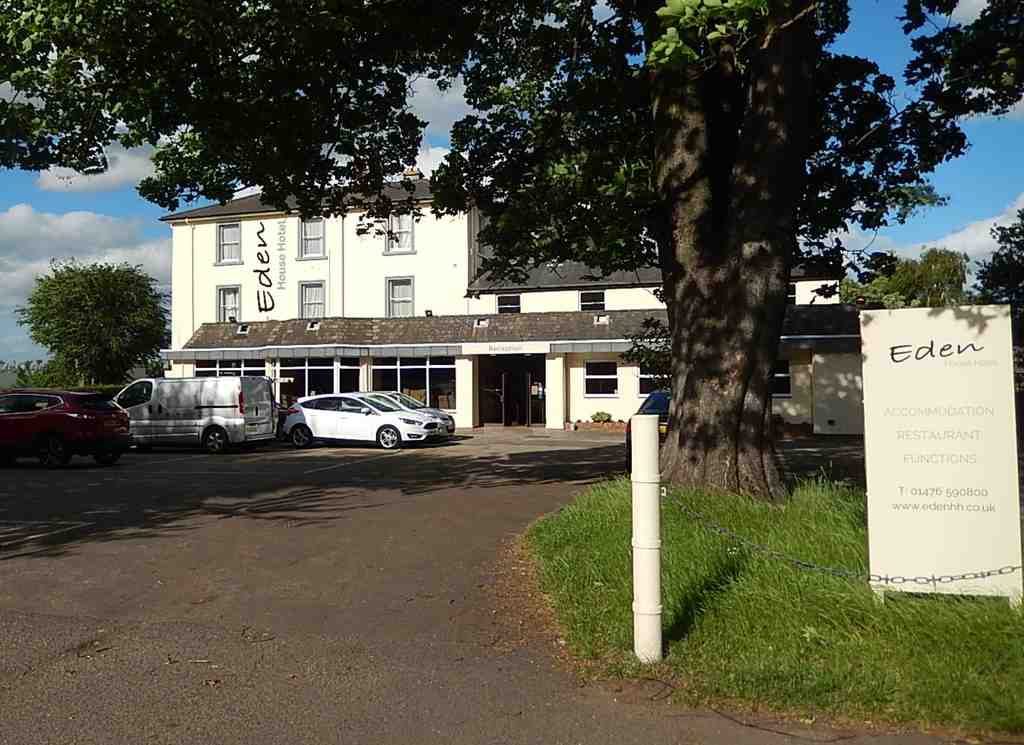
  6. Just up ahead, keep your eyes peeled for a large, cream-colored building with big windows and the words “Eden House Hotel” proudly written on the front-you’ll spot it just behind…阅读更多收起

    Just up ahead, keep your eyes peeled for a large, cream-colored building with big windows and the words “Eden House Hotel” proudly written on the front-you’ll spot it just behind those leafy trees and the row of parked cars. Now, imagine stepping back to the year 1850. The road is quieter, and the air is filled with the steady clip-clop of horses’ hooves. Instead of a hotel bustling with guests, you’d see a grand private mansion, known then as Little Gonerby House. The very first person to call this place home was Edward Montague Browne, a local schoolteacher with big plans and, fortunately, a big house to match. After all, what better way to fill cavernous, echoing halls than with a handful of lively boarders from the Grantham Grammar School? Browne must have spent many a night listening to schoolboy shenanigans echoing from upstairs, perhaps wondering if he’d ever find a quiet moment. A few decades later, there was a touch of glamour introduced to the house by Madame and Monsieur Couturie. Monsieur Henri Couturie, a true gentleman of the hunt, brought French style and a taste for adventure to Grantham. He’d sweep through these doors after a day riding with the Belvoir Hunt, muddy boots and all, but always full of tales from the countryside. When Henri inherited a vast fortune and a grand chateau back in France, he couldn’t resist the call of his homeland’s green pastures (not to mention those fancy French horses!), and off he went, leaving Little Gonerby House-and its new name, Diana Lodge-behind. But don’t get too comfortable, because next comes Maurice Gifford, a British officer with a few wild stories of his own. Maurice survived dangerous campaigns in South Africa and even lost his right arm to a bullet-but let’s face it, who needs two arms when you’ve got enough bravery for ten men and a stately home in Lincolnshire? Alongside his wife Marguerite, Maurice enjoyed the dual life of country tranquility here and grand entertaining at nearby Boothby Hall. When his adventures came to an end, the house passed once again into new hands. Enter Herbert Guy Snowden, a barrister whose life was less about adventure and more about reasoned arguments, and then Harvey William Warren, a clever draper who quickly realized the house’s true calling: hospitality. In 1927, with a flurry of renovation and a keen businessman’s eye, Warren transformed the place into “Hotel Diana.” Suddenly, the echo of children’s laughter was replaced by the murmur of guests checking in and the clatter of cutlery in the elegant dining room-if you had been lucky, you might have enjoyed tea looking out a bay window onto the sports field, or perhaps caught a glimpse of the billiard room in action, or the fresh paint gleaming under the chandeliers. Today, as you stand in front of Eden House Hotel, take a deep breath and imagine all those lives layered one upon another, each one leaving a little something behind-whether it’s the spirit of adventure, the whiff of fresh paint, or simply the timeless invitation to come inside, relax, and rest your feet. And who knows-maybe, somewhere in the hotel, a ghostly schoolboy is still sneaking biscuits from the kitchen!

    打开独立页面 →

常见问题

如何开始导览?

购买后,下载 AudaTours 应用并输入您的兑换码。导览将准备好立即开始--只需点击播放并按照 GPS 引导的路线行驶即可。

导览期间我需要互联网吗?

不需要!开始前下载导览并完全离线享受。只有聊天功能需要互联网。我们建议在 WiFi 下下载以节省移动数据。

这是导游带领的团体游吗?

不是--这是自助语音导览。您按照自己的节奏独立探索,通过手机播放音频解说。没有导游,没有团体,没有时间表。

导览需要多长时间?

大多数导览需要 60-90 分钟才能完成,但您完全控制节奏。随时暂停、跳过站点或休息。

如果我今天无法完成导览怎么办?

没问题!导览具有终身访问权限。随时暂停和恢复--明天、下周或明年。您的进度已保存。

有哪些语言可用?

所有导览均提供 50 多种语言版本。在兑换代码时选择您的首选语言。注意:导览生成后无法更改语言。

购买后我在哪里访问导览?

从 App Store 或 Google Play 下载免费的 AudaTours 应用。输入您的兑换码(通过电子邮件发送),导览将出现在您的资料库中,准备下载并开始。

verified_user
满意保证

如果您不喜欢该导览,我们将退款。请联系我们 [email protected]

安全结账使用

Apple PayGoogle PayVisaMastercardPayPal

AudaTours:语音导览

有趣、经济实惠、自助徒步导览

试用应用 arrow_forward

深受全球旅行者喜爱

format_quote 这次导览是游览这座城市的绝佳方式。故事很有趣,感觉不太照本宣科,我喜欢能够按照自己的节奏探索。
Jess
Jess
starstarstarstarstar
第比利斯导览 arrow_forward
format_quote 这是了解布莱顿的一种可靠方式,感觉不像游客。解说有深度和背景,但并未过度。
Christoph
Christoph
starstarstarstarstar
布莱顿导览 arrow_forward
format_quote 一手拿着羊角面包,零期望地开始了这次导览。这款应用真的很适合你,没有压力,只有你、你的耳机和一些很酷的故事。
John
John
starstarstarstarstar
马赛导览 arrow_forward

无限语音导览

解锁全球每个导览的访问权限

0 导览·0 城市·0 国家
all_inclusive 无限探索