盖茨黑德语音导览:泰恩河畔的桥梁、节奏与波罗的海故事
盖茨黑德繁华的天际线之下,河畔的秘密沉睡着——这里曾弥漫着蒸汽、柴油和发明的气息,如今新的城市节奏在石块和钢铁间回荡。 这个自助语音导览邀请您按照自己的节奏,揭开盖茨黑德和纽卡斯尔的历史,从传奇的机车库到巧妙的活动桥梁,发现隐藏在眼前的故事。沿着无形的轨迹,走向被遗忘的戏剧边缘。 是怎样的火车场丑闻,迫使工程师们在夜幕掩护下,用巨型机车进行即兴创作?哪次皇家开幕式差点未能按计划进行?在一个宁静的夜晚,当突然的火灾在旋转桥下爆发时,又是谁冒着一切风险? 漫步过河,穿梭于工业阴影之中,追溯几个世纪以来的竞争、反叛、辉煌突破和顽强幸存者。感受城市在您身边蜕变——从煤灰沾染的雄心壮志到灯火辉煌的桥梁——每一步都带来新的视角。 走近一点,开始您的旅程,回到泰恩河上曾烟雾缭绕的地方——盖茨黑德的真正核心等待您的发现。
导览预览
关于此导览
- schedule持续时间 30–50 mins按照自己的节奏
- straighten6.5 公里步行路线跟随引导路径
- location_on
- wifi_off离线工作一次下载,随处使用
- all_inclusive终身访问随时重播,永久有效
- location_on从 盖茨黑德机车段 开始
此导览的景点
To spot the site of Gateshead TMD, look for the historic stone buildings with arched windows and rows of old railway tracks nearby-right now, the place is modern housing, but if…阅读更多收起
To spot the site of Gateshead TMD, look for the historic stone buildings with arched windows and rows of old railway tracks nearby-right now, the place is modern housing, but if you imagine standing in the past, you’d have seen sheds, giant fuel tanks, and trains waiting for their next job. Welcome to the site of what was once Gateshead TMD-the heart and hustle of railway power in Gateshead! Picture yourself back in the age when the air was thick with the scent of coal and oil, and the clang of metal echoed across the yard. This was no ordinary train shed; it was the HQ of railway magic, a place buzzing with adventure, invention, and more than a fair share of steam and diesel drama. It all began on land once owned by a Mr. Greene-hence the area’s old nickname, Greenesfield. Here, the North Eastern Railway hammered, chugged, and tooted its way into history. Trainspotters had to keep an eye on all the shed codes; first it was 52A, then later GD, but really, everyone just called it Gateshead. At its peak, the depot ruled over the region-all the little sub-sheds dotted around Tyneside, Wearside, and Northumberland were like chess pieces, with Gateshead calling the moves. Every type of locomotive, from passenger puffers to heavy-duty mineral haulers, came here for rest, repairs, and plenty of TLC. Now, get this: inside those huge stone-lined sheds were four massive turntables. Need a laugh? In the early days, the turntables weren’t big enough for the ever-growing steam monsters, so they sometimes had to give them a spin using nearby triangular railway junctions-yeah, doing a three-point turn in a locomotive. Imagine trying to squeeze an elephant into a Mini Cooper, and you’re on the right track! By the 1920s, things got seriously impressive. The arrival of the mighty 4-6-2 “Pacific” locomotives made everyone nervous since even the giant turntables weren’t enough; they had to convert nearby workshops just to accommodate these iron giants. Eventually, they managed to fit in bigger 70-foot turntables, but as always in life, just when they were ready, the world switched over to diesel! When the age of steam finally chuffed to an end in 1965, the railway scene didn’t go quiet; it just changed gears. The coaling stages and water towers were swapped out for fuel tanks, and instead of the whistle of steam, you’d hear the low rumble of diesel engines. Still, one stubborn water tower hung on till the end-sitting like an old bird at the corner of the building, probably thrilled to outlast the coal. And about those trains! The sidings and sheds here hosted dozens and dozens of iron horses, from little 0-6-0 tank engines dashing up and down the Dunston Staithes, to the massive 9F locos, and even the top-secret “hush-hush” experimental engine. Think of it as Hogwarts for trains, with engines coming and going, each with its own backstory, from quiet branch-line duties to thundering iron ore drags. But time, much like an impatient stationmaster, waits for no one. By 1991, the depot closed and the locomotives moved on, either to new sheds at places like Heaton, or to that big railway in the sky. The last resident diesel, number 08 618, stuck around like a loyal guard dog until it too made its final journey in 2001. Now, all that railway clatter has given way to the peaceful hum of Ochre Yards housing. But the history hasn’t moved out completely; look at the street names around you-Worsdell Drive and Fletcher Road are named after the old North Eastern Railway’s superstar engineers. And if you fancy a local tipple, the old railway club across the road, or The Central bar, have memorabilia to remind you of those greasy, glorious days. Although most of the original sheds were demolished by 2002, a few riverside buildings linger, now converted to stylish apartments-probably quieter, unless you count the ghosts of the old steam drivers, still arguing about who was quickest across the Tyne. So, as you stand here, just imagine: instead of parked cars and joggers, this once was a rattling web of tracks, clangs, laughter, and the echoing hope of every railwayman who passed through the mighty Gateshead TMD. To expand your understanding of the engine shed and infrastructure, locomotives or the gateshead railway works, feel free to engage with me in the chat section below.
打开独立页面 →Look up ahead and to your left and you’ll spot the Queen Elizabeth II Bridge-an eye-catching, steel-blue structure stretching across the River Tyne, standing tall and proud above…阅读更多收起
Look up ahead and to your left and you’ll spot the Queen Elizabeth II Bridge-an eye-catching, steel-blue structure stretching across the River Tyne, standing tall and proud above the water like a giant’s playground. Now, let’s step back in time for a moment and set the scene: the late 1970s. The Tyne and Wear Metro dream was bubbling away, and the city needed a way to carry its super-fast trains over the Tyne. This wasn’t just any old bridge-no, no! This one had to be strong enough to carry trains and clever enough to join two separate tunnel systems together without blinking an eye. So, the mighty minds at W. A. Fairhurst & Partners got sketching, and the bridge began emerging from both sides of the river like two arms reaching for a handshake. Suspense built with every bolt and beam, until-bingo!-the two halves met in the middle in August 1978. I can only imagine the cheers ringing out over the Tyne as steel kissed steel. But the grand curtain didn’t rise just yet. Oh no! The bridge had to wait until November 1981, when Queen Elizabeth II herself turned up for the royal grand opening, just days before the first Metro carriages would roll over. I’d say the bridge was starstruck-after all, it bears her name! For a twist, it has a cousin-the Byker Viaduct-which you’ll find leaping over the Ouseburn valley, both built just for the Metro. But what about a bit of modern magic? In 2006, the bridge got its own dazzling makeover. Artist Nayan Kulkarni splashed it with two shades of blue and set up a system so that, come nightfall, the bridge glimmered with ever-changing colours inspired by photos from local people. Imagine, a bridge that wears the imagination of an entire community! Sadly, as of now, the lights aren’t twinkling-turns out, running a light show costs a few quid. Still, when you stand here and look at the Queen Elizabeth II Bridge, you’re seeing more than metal and bolts; you’re witnessing a slice of Tyneside’s history and a spark of its artistry and spirit-one a royal would be proud of!
打开独立页面 →To spot the Swing Bridge, just look ahead for a striking red and white structure stretching low and wide across the River Tyne, with a central blue-topped control hut-it's right…阅读更多收起
To spot the Swing Bridge, just look ahead for a striking red and white structure stretching low and wide across the River Tyne, with a central blue-topped control hut-it's right between the taller bridges on either side. Right in front of you is the Swing Bridge, one of Tyne's marvels with a trick up its sleeve! Imagine standing here in the late 1800s: instead of city traffic and bustling river views, you’d hear the clang of hammers and the shouts of workers building a bridge that could do something almost magical-turn around in a complete circle to let ships glide past. Before this masterpiece, two older bridges stood here, and even a Roman bridge-probably where Roman soldiers once marched, eyes sharp for trouble. But by 1868, those ancient bridges had to step aside. The ships heading to Armstrong’s massive works were getting too big, so William Armstrong, an inventor extraordinaire, dreamed up something no one here had ever seen: a bridge powered by hydraulic force! He paid for it all himself, and, starting in 1873, the work began. It wasn’t quick-or cheap. By the time the Swing Bridge opened in 1876, it had cost a whopping £240,000 (imagine how many cups of tea you could buy with that back then!). Its mechanism was so clever-an 85-metre long iron arm, balancing on a central pivot, able to swing 360 degrees. But here’s the best part: the same machinery Armstrong installed is still beneath your feet today. Picture engineers deep in a shaft 60 feet down, checking the hydraulic pumps. When the time came to move, water would shoot through pipes under pressure, turning the whole bridge out of the way. Back in 1924, you’d barely have time to blink-the bridge swung open 6,000 times that year! These days, it only turns for the occasional yacht, or on the first Wednesday of each month, just to keep everything in tip-top shape. Of course, even clever machines have their off days. In 2016, a fire erupted beneath the bridge, sending smoke billowing up and giving the fire crews plenty to do. In 2018, it had a fancy £200,000 renovation, complete with 10,000 new screws! And, just to keep life interesting, when they reopened it in 2021, a technical hiccup stopped it from swinging at all-talk about stage fright! So next time you’re walking by and hear that low rumbling, just know you’re standing by a bridge with more stories to tell than most people-and probably better dance moves too!
打开独立页面 →
再显示 8 个站点显示更少站点expand_moreexpand_less
Look ahead for a long, dark metal bridge stretching over the River Tyne, supported by tall, solid stone pillars with cutaway arches-just follow the sound of trains rumbling…阅读更多收起
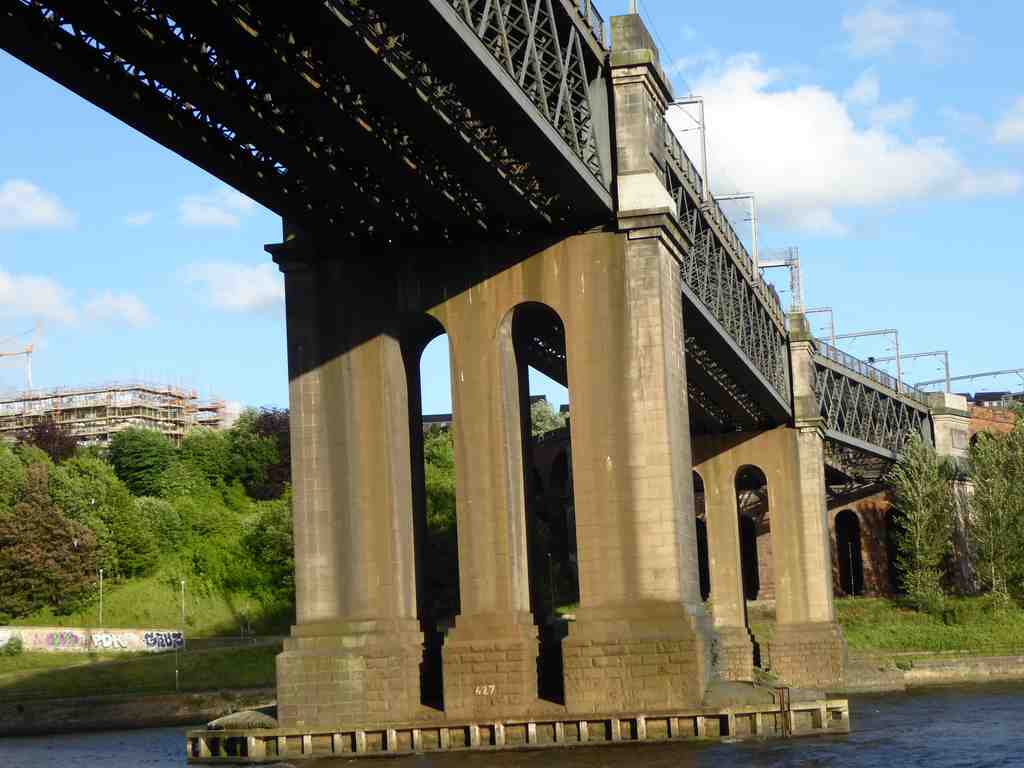
Look ahead for a long, dark metal bridge stretching over the River Tyne, supported by tall, solid stone pillars with cutaway arches-just follow the sound of trains rumbling overhead and you’ll spot it directly in front of you. Let’s take a moment to stand here and imagine you’re back in the early 1900s, when crossing the Tyne wasn’t just as easy as strolling over-oh no, it was a major feat of imagination, engineering, and, let’s be honest, a bit of sweaty grit. The King Edward VII Bridge wasn’t just the latest railway crossing; it was hailed as Britain’s last great railway bridge. Standing here now, the four giant steel lattice spans above us look almost elegant, but picture dozens of workers in flat caps and suspenders, tools clanging, rain splattering off steel-a time when building something like this was as exciting as launching the latest smartphone is today. Back in the day, the High Level Bridge-just up the river-was the only way for trains to get to Newcastle station. But here’s the thing: trains had to reverse out, like a stagecoach stuck on a one-way street. By the 1890s, this became such a headache that if you listened closely, you might’ve heard stationmasters pulling their hair out in frustration. With up to 800 train and engine movements each day, that old bridge was groaning under the pressure. Something had to be done before the whole of Newcastle’s rail traffic ground to a halt! Enter Charles A. Harrison, chief engineer of the North Eastern Railway. Now, Harrison had bridges in his blood-his uncle, Thomas Elliot Harrison, had helped design the High Level Bridge itself, so you could say bridge building ran in the family like a well-worn railway track. Harrison dreamed up a new bridge right here, but as with all good dramas, he quickly discovered an obstacle: abandoned coal workings at both ends of the proposed span. It’s like laying your picnic rug down, then finding there’s a mole under it… only the mole is a shaft that could swallow half the city. No matter-Harrison adapted, and what you see before you is the result: four mighty steel spans carried on muscular sandstone and granite piers, each decorated with arches that practically dared the Tyne to ever flood again. The northern approach even hid a row of workshops in its arches-because, why waste good space? Now, the construction! Picture this: February 1902, dozens of workers from Cleveland Bridge & Engineering Company in Darlington get cracking. Down at the foundations, things get really intense. The river’s depths are explored by brave divers lowering themselves into huge watertight chambers called caissons, working under compressed air. Only older, weathered men could handle that job-no one under 40 allowed! And you can imagine, the pressure was so great, even the bravest sometimes fell ill, and one unfortunate fellow didn’t make it out. But you can’t keep a determined team down. Blasting and digging inside the caissons, they hauled out rock, filled the cavities with 28,000-plus tonnes of concrete and stacked the piers high. Then, steel lattice spans were assembled right above the river, sometimes shutting off half its width so nothing could float underneath. Adding to the spectacle, an enormous cableway-the largest in the world back then-swung overhead, carrying more than 23,000 tonnes of materials across the river. Imagine that sight! The cable was so sturdy, it was recycled after the bridge was done to help launch the legendary ocean liner, RMS Mauretania. Talk about a bridge with a legacy that travels. Finally, 10 July 1906 arrived. The bridge wasn’t quite ready, but with a royal flourish, King Edward VII and Queen Alexandra swept in for the opening ceremony on a temporary platform at the Gateshead end. What’s a few missing rivets among friends, right? Once the bridge opened for general traffic, the stuffy old reversing dances at Newcastle station were history. Trains could glide straight through; congestion dropped and passengers got a smoother ride. Not all was perfect-when the bridge was load-tested, they drove ten locomotives, nose to tail, across its length at a stately walking speed. You can almost feel the steel beams holding their breath, just for a second! Over the next century, this bridge saw all sorts. It got electrified rails in the 1970s, survived storms and shifting tides, and finally earned itself Grade II listed status in 1994. But through it all, it stood the test of time just as Harrison imagined. So next time you watch a train zip across those lattice girders, remember: it took courage underwater, royal applause, and one immense cableway in the sky to let it happen. And if you ever feel like you’re stuck reversing out of life’s train station, just think of King Edward VII Bridge, showing you there’s always room for another way forwards.
打开独立页面 →To spot the High Level Bridge, just look straight ahead for a tall, grand bridge with sturdy stone columns and a double deck of iron arches stretching high above the street-it’s…阅读更多收起
To spot the High Level Bridge, just look straight ahead for a tall, grand bridge with sturdy stone columns and a double deck of iron arches stretching high above the street-it’s the one towering over the road and parking lot right in front of you, with trains and cars using separate levels. Alright, as you stand here, let’s wind back the clock-picture the air humming with noise, steam hissing, and crowds gathered for the grand arrival. This isn’t just any bridge. This is the mighty High Level Bridge, a true iron giant crossing the River Tyne, born from a vision that united Newcastle and Gateshead. Back in the 1840s, the riverbanks buzzed with industry, and folks dreamed of connecting England’s growing railways up north towards Scotland. But it wasn’t as easy as plonking some planks and hoping for the best-no, sir! The river was tricky, the ground beneath shifty, and ambitious plans bounced around like a lively game of marbles. Imagine a chorus of hammers, saws, and shouting engineers as the Hawks family, local ironmasters, hauled in over 5,000 tons of iron to construct these colossal arches. The bridge stands so high because the Brandling Junction Railway in Gateshead ran at that level-necessitating epic ironwork nearly 120 feet above the water. Archways, massive columns, and two levels-one just for rumbling trains, the other for horse-drawn carriages and, later, buses, trams, and you guessed it, lots of pedestrians clutching their hats against the wind. Can you smell the coal smoke and feel the anticipation? The last iron key, hammered in by George Hawks, Mayor of Gateshead, in 1849, was celebrated with a parade, music, and cheers from a crowd packed along the riversides. Then came a royal visitor-Queen Victoria herself! Her train, decked out in festive banners, rolled onto the bridge as the crowds erupted in applause. She declared this mighty span officially open, forever linking the north and south, and cementing Newcastle and Gateshead as thriving railway towns. But this bridge wasn’t just a feather in the cap for engineers and the Queen. It was built with grit and innovation, designed by none other than Robert Stephenson, son of George Stephenson-the famous railway legend. Instead of relying on good old brick, they opted for cast-iron bowstring arches and wrought-iron ties, as the ground wouldn’t hold a heavy masonry bridge. Every detail was meticulously calculated, from the iron ribs to the clever tie bars that stop the arches from pushing outwards. Of course, there were moments of real drama-such as in 1866, when a fire from a nearby corn mill leapt onto the bridge’s wooden road deck. Heroic workers scrambled to hack holes through the carriageway to douse the flames with water-imagine the tension as smoke billowed and beams sizzled, a race against disaster. Trains were stopped, workmen dangled over the river by ropes, and buckets sloshed... but the bridge survived with little more than scorch marks and quite a story to tell. Over the years the bridge answered the call of progress-a tramway was added in the 1920s, weight limits shuffled up and down as vehicles grew heavier, and engineers replaced parts as new steel and building techniques arrived. By the 20th and 21st centuries, the bridge had survived fires, traffic jams, and countless upgrades. These days, the upper rail deck still rattles with trains, while buses and taxis cross the lower road, and pedestrians-just like you-still enjoy the walk and the sweeping views. The High Level Bridge is now a Grade I listed monument, a testament to ingenuity, perseverance, and the steady march of progress. Touch its stonework or iron rail, and you brush history-echoing with the energy of every train, parade, and passing queen. So if you hear a distant whistle or feel the bridge tremble under a train, just remember: you’re standing at the very heart of the Tyne’s industrial story, where iron met ambition and history was forged, one rivet at a time. Interested in knowing more about the first bridge proposals, definite plans or the design
打开独立页面 →To spot St Joseph’s Church, just look for the grand stone building with tall, pointed arched windows and a steep slate roof, standing proudly behind its lush green garden, right…阅读更多收起
To spot St Joseph’s Church, just look for the grand stone building with tall, pointed arched windows and a steep slate roof, standing proudly behind its lush green garden, right by the main road. Now, imagine you’re standing here in Gateshead, not in the hum of buses and chatter, but back in time-hundreds of years ago-when things were a little... let’s say, less lively. Gateshead was once home to the Venerable Bede, an ancient scholar who actually mentions a bustling monastery right around here, led by Abbot Utta. Back then, the only crowds would have been monks in cold cloaks instead of folks in business suits. Flash forward to the days after the monasteries were dissolved, and the land belonged to the Riddell family. Picture secret masses, whispered prayers, and candlelight flickering inside a private chapel, where priests risked their lives to serve the hidden Catholic community. One such brave soul was Rev. John Ingram, who, in a twist worthy of a detective novel, was caught and martyred for his faith just up the street in 1594. If these stone walls could talk, I bet they’d whisper stories of both bold devotion and wild escapes. But history wasn’t always kind: in 1746, angry crowds pillaged and burned the Riddells' mansion and the chapel along with it. And for a whole century after, not a single Catholic church or priest was to be found in Gateshead. It must’ve been a bit like a football match without any fans-quiet, disheartening, and missing something big. That all changed in 1850, when Bishop Hogarth sent Father Betham with a mission: gather the flock, and-crucially-raise enough money to build a church. So, Father Betham did what any clever person would: he wrote a heartfelt letter, inviting the “faithful Catholics of Gateshead” to support him. And no, he didn’t start a fundraising page-this is the 1850s, after all! He also moved into 51 St. Catherine Terrace and set up a makeshift chapel in the top floor of a warehouse on Hillgate. At first, the parish was called Our Lady and St. Wilfrid’s. When Father Betham moved on, other priests stepped in, and after a dramatic fire in 1854, Masses were held in the Assembly Rooms above the Queen’s Head Hotel-talk about a movable feast! It wasn’t until 1858 that the foundation stone for this very church you’re now standing in front of was laid by Bishop Hogarth. Picture the scene: stone dust in the air, Bishop in his best robes, surrounded by excited townsfolk, important clergy, consuls, and even a few nobles. When St. Joseph’s was completed just a year later, there was no shortage of celebration-bells ringing, candles glowing, and the whole community turning up to admire the new church, designed by Archibald Dunn and built by Mr. Hogg, who hopefully didn’t hog all the credit. The church didn’t stop growing-just five years later, St. Joseph’s School opened nearby. Over the decades, priest after priest added their own chapter to St. Joseph’s story: building the presbytery, founding schools, helping the poor, and deepening the faith of their people. Back when the parish began, there were just 3,000 Catholics in town. By St. Joseph’s 100th birthday in 1959, there were seven parishes and over 21,000 Catholics! So next time you hear the church bells or see that sun glinting on the old stone, imagine the secret prayers, the burnt chapels, the determined fundraisers, and the joy of a community finally coming home to worship together-right here where you stand. And perhaps, if you listen closely, you’ll hear a faint “Amen!” floating on the Gateshead breeze.
打开独立页面 →Right in front of you is a tall, grey, rectangular building with lots of rows of windows and sharp, boxy edges-it’s hard to miss as it stands proudly by the road where the Tyne…阅读更多收起
Right in front of you is a tall, grey, rectangular building with lots of rows of windows and sharp, boxy edges-it’s hard to miss as it stands proudly by the road where the Tyne Bridge touches down in Gateshead. Now, close your eyes for a moment (not too long though-we don’t want you bumping into a lamppost) and imagine the 1960s. The world was filled with bold ideas and new buildings popping up, like the Tyne Bridge Tower. Back then, this 13-floor giant rose above Gateshead like the stern librarian of architecture-neat, sensible, and not particularly flashy, but always watching. For decades, it was home to the Inland Revenue, where people scurried in and out with paperwork, pens behind their ears, all making sure the taxman kept track of every penny. But then, in June 2005, the last drawer slammed shut and the building went silent. Imagine the sound of echoing footsteps in empty halls, the dust settling on desks, and the secret dreams of past workers drifting away in the breeze off the Tyne. What happened next? Well, the Tower became a bit of a mystery-locals would pass by and wonder, “Will it ever come back to life?” The answer arrived with a bang, quite literally, in 2011. The demolition gang swooped in, funded by One North East, and for just over half a million pounds, the tower finally said its last goodbye and crumbled to memory. Today, you’re standing where stories were made, lost, and cleared away-just don’t try mailing your taxes here, or you’ll have a real vanishing act on your hands!
打开独立页面 →To spot The Glasshouse, just look across the river for a gigantic shining shell made from curved glass and silver metal - it almost looks like an enormous, futuristic slug basking…阅读更多收起
To spot The Glasshouse, just look across the river for a gigantic shining shell made from curved glass and silver metal - it almost looks like an enormous, futuristic slug basking in the Gateshead sunlight! Now, as you stand here with the sunlight bouncing off those sweeping glass curves, imagine the sound of an orchestra tuning up inside - violins, cellos, a hint of jazz sax. It’s almost like the building itself is humming with anticipation. But before all this shine and song, let’s hop back to the early 1990s, when Gateshead had a wild dream: why not create a place where every type of music could feel at home? Back then, the Royal Northern Sinfonia, an orchestra with big ambitions and even bigger hearts, banded together with Northern Arts and local folk music heroes, Folkworks. Picture a meeting room packed with people arguing over whether fiddles or electric guitars make better neighbours! But these music lovers had a shared vision: a home big enough for string quartets, folk trios, raging rock bands, hip-hop crews, jazz legends, and choirs that could raise the roof. And for that, they needed a building that was as striking as the music inside. So, after much dreaming and doodling (and, let’s be honest, some late-night debates that surely needed strong tea), these folks set out to raise more than £70 million, mostly from National Lottery grants and generous patrons. Among them was The Sage Group, a bunch of accountants you wouldn’t expect at a mosh pit. They gave so much support, they got the naming rights for two whole decades! But, you’re probably wondering, “Who dared to design this alien pod on the Tyne?” Enter Foster and Partners, world-famous architects who beat over 100 competitors from all over the world in a fierce competition. When their design was finally chosen, everyone in the room apparently agreed at once-which, as anyone who’s ever worked with artists knows, is almost as rare as a quiet kazoo. The result? A building made of nine thousand silver panels, swooping over three separate halls-themselves insulated from each other so that every concert, from a gentle folk tune to the wildest rock show, sounds perfect. Walk around inside, and you’ll notice gaps between these halls, a sign of the care taken to stop sound (or bouncy dance beats) from seeping next door. They even used a special spongy concrete, which is basically the musical equivalent of memory foam mattresses! The Glasshouse opened its doors on a chilly December weekend in 2004 and has dazzled everyone since. Everyone from James Brown to Nick Cave, Blondie, De La Soul, and even the Pet Shop Boys has wowed crowds here. As for the Royal Northern Sinfonia, they’re still the heart and soul of the place, charming audiences in what’s considered one of Britain’s best chamber orchestra homes. Even The Guardian admits they can’t be beaten-how’s that for a local claim to fame? Want something even weirder? The main concert hall, Sage One, can change its entire sound with magic panels and hidden curtains. One moment, it’s echoey and grand like Vienna’s Musikverein, the next, cozy and intimate, as if you’re jamming in your mate’s living room. Besides the music, The Glasshouse is the beating heart of the community. You’ll see children lugging enormous cellos through the doors, schools piling in for sing-alongs, and everyone from pensioners to pop stars taking music classes. They even hosted Labour and Lib Dem party conferences, plus the National Union of Students-imagine politicians trying to outdo each other in a sing-off. Even the building itself loves praise. RIBA Inclusive Design Award, Local Authority Building of the Year, Civic Trust Award, and many more-it’s picked up more trophies than most of us have coffee mugs. A little mystery for you: In 2022, The Sage Group decided to sponsor another massive venue next door, also called The Sage. It’s all very confusing-two Sages, side by side, like musical twins. So in September 2023, this building got its shiny new name: The Glasshouse International Centre for Music. As you gaze at those shining steel ribs and gaze through curving glass at the glowing Tyne, imagine the thunder of the orchestra, the rumble of a bass during a rock concert, and the quiet laughter of amateur musicians finding their first notes. This is Gateshead’s glassy heart, always open to everyone. They say the best music halls should sound as lovely empty as they do full, and The Glasshouse? Well, let’s just say it’s never short of song. Want to explore the building, concerts or the awards in more depth? Join me in the chat section for a detailed discussion.
打开独立页面 →To spot HMS Calliope, look just ahead toward the riverside - you’ll see a modest, modern building with pale walls and a flagpole standing proudly in front, nestled right at the…阅读更多收起
To spot HMS Calliope, look just ahead toward the riverside - you’ll see a modest, modern building with pale walls and a flagpole standing proudly in front, nestled right at the water’s edge before the iconic Gateshead Millennium Bridge. Now that you’re standing outside HMS Calliope, let’s dive into its story - and don’t worry, you don’t need a life jacket where we’re going! Picture the year as 1905: the Tyne is alive with the sounds of ship horns and salty sea stories, and the Royal Naval Reserve decides they need a place to train up the next generation of sailors. But instead of a simple building, they used an actual ship! The first HMS Calliope was a grand old cruiser, bobbing here on the water as men marched her decks and practiced for adventures at sea. Imagine early morning drills, boots thudding in rhythm, and the chatter of sailors from all walks of life, from seasoned sea dogs to nervy new recruits-everyone united by a love of adventure and perhaps the odd biscuit ration. The original ship might be gone-sent off to the great scrapheap in 1951-but her spirit lives on in every brick and board of the Calliope you see before you. When her first replacement, HMS Falmouth, also joined the scrapyard ranks, the reserve moved ashore, setting up this modern base but keeping the legendary name. And what a name! HMS Calliope is now the heart of naval training for North and North East England-about 150 reservists call her home, and every November you’ll spot them at parades and ceremonies, looking sharp and proud as punch. Over the years, a couple of famous ships, like HMS Orwell and HMS Example, have popped by to lend a hand (and maybe swap ghost stories). But Calliope isn’t just for sailors; students from local universities, school cadets, and military hopefuls all train here, learning the ropes-literally! So, standing here, you’re not just facing a building; you’re witnessing a living legacy, always ready for action, just like the Tyne water flowing beside it!
打开独立页面 →To spot the Baltic Centre for Contemporary Art, look for a tall, industrial building made of brick and glass, with huge vertical banners in red letters reading “BALTIC CENTRE FOR…阅读更多收起
To spot the Baltic Centre for Contemporary Art, look for a tall, industrial building made of brick and glass, with huge vertical banners in red letters reading “BALTIC CENTRE FOR CONTEMPORARY ART”-it’s the one that looks a bit like a giant modern factory with an inviting glass-walled entrance directly ahead. Alright, welcome to one of the most iconic destinations on the River Tyne! Picture yourself standing in front of this striking building, its old brickwork echoing Tyneside’s industrial past, and its modern glass shining in the sunlight. But did you know that this arts hub once reverberated with a very different kind of energy-not from paint and sculpture, but from the grinding and humming of flour mills? Cast your imagination back to the late 1930s, when work began on the Baltic Flour Mills, designed by architects Gelder and Kitchen for the ambitious Joseph Rank. Amid the buzz of hard hats and the shouts of workers, sturdy concrete silos rose up, able to store a whopping 22,000 tons of grain. But then, World War II hit, and construction fell silent, leaving an unfinished promise overlooking the river. Finally, in 1950, the building sprang to life, employing 300 people and earning its local nickname: “the pride of Tyneside.” Wheat was cleaned and stored here, and the aroma of fresh flour sometimes drifted down to the riverside, while workers at the Blue Cross Mill next door processed animal feed. In 1976, disaster struck-a fire forced the mills to close down, and by 1984, the last grain in the silos had been shipped away. For years, the mill stood empty-a dormant giant, battered by wind and the passage of time, while other mills along the Tyne disappeared one by one. The site could easily have become another relic lost to history, but the 1990s brought a new vision for Gateshead’s riverbanks. As the Sage and the Millennium Bridge were dreamt up, local leaders and the Arts Council hatched a plan: why not transform this proud old factory into a bubbling centre for contemporary art? Ah, but not everyone believed you could turn grain dust into gallery glitter! In 1994, Gateshead Council launched a competition for architects, receiving 140 imaginative entries from all over. The winners? Dominic Williams, barely three years into his career, and his father’s firm, Ellis Williams Architects. Their goal: honour the historic spirit while embracing an unpredictable, modern style. Builders performed an architectural high-wire act-they removed the grain silos, leaving the tall brick sides hanging in midair, and slid in a steel skeleton weighing 1,000 tonnes, all while keeping the building’s famous “BALTIC FLOUR MILLS” lettering in place. They added glass-walled galleries, rooftop viewing platforms, and-if you peek up-a restaurant with sweeping views. Ride the glass elevators, and you’ll enjoy panoramas of Newcastle, Gateshead, and the shimmering Tyne far below. The BALTIC opened in spectacular style on a midnight in July 2002, with crowds lining up to peer into the brand-new galleries. The anticipation outside matched the buzz within as visitors encountered not staid paintings, but playful wonders: a Meccano Tyne Bridge, rooms full of gongs, and even bread being handed out in honor of the building’s nourishing past-seriously, you’ll never look at toast the same way again. No permanent exhibitions here-every visit is a surprise. Over the years, the BALTIC has welcomed bold new art from across the globe, including dazzling events like the 2011 Turner Prize, which drew nearly 150,000 visitors-a record, and all for free. Some exhibitions have sparked headlines, like Nan Goldin’s controversial “Thanksgiving” installation, which saw police and press swarm the gallery, proving that art can still stir up as much excitement as any riverbank drama. Beyond the excitement, the BALTIC cares deeply about its community: it has partnered with local universities, supported emerging artists, and transformed quiet days into festivals of creativity. Annual events fill the halls with everything from zines to wild workshops, and its distinctive typeface-designed just for this site-carries the echo of flour mill days into the modern world. Today, as you look up at its proud towers and modern glass, you’re seeing not just a museum, but a building that’s been reinvented, again and again. A place where the ghostly rattling of grain silos has given way to the chatter of creative minds-and the occasional cheerful gasp from a visitor discovering something totally unexpected. So go on-step inside, and add your own story to the BALTIC’s ever-changing canvas! Fascinated by the development, architecture or the management? Let's chat about it
打开独立页面 →Look right in front of you-it's not a giant working power station today, but imagine this place a hundred years ago. The air would have been thick with the smell of coal smoke,…阅读更多收起
Look right in front of you-it's not a giant working power station today, but imagine this place a hundred years ago. The air would have been thick with the smell of coal smoke, big chimneys puffing out plumes so heavy you might lose your hat if you weren’t careful. The hum of machinery and the clatter of workers would fill your ears, all thanks to the South Shore Road power station. Built by the Durham Electrical Power Distribution Company, this coal-powered giant was the heart and spark of Gateshead. It kept the lights on, the kettles boiling, and probably triggered a few complaints about the electricity bill! In 1932, the Durham company handed its keys over to the Newcastle upon Tyne Electric Supply Company. New bosses, same buzzing energy-quite literally! Even during the Second World War, this place was a hive of activity. The power station became a warden post, so in addition to running the turbines, people were busy keeping watch for air raids. Imagine uniformed wardens peering past the turbines, ready to sound the alarm-it was all very dramatic. Now, the coal’s long gone, the power station cleared away, and a swanky new office is springing up. But next time you switch on a light, give a little nod to the ghosts of South Shore Road-those kettle-boiling, hat-losing, ever-watchful folk who powered Gateshead’s past!
打开独立页面 →
常见问题
如何开始导览?
购买后,下载 AudaTours 应用并输入您的兑换码。导览将准备好立即开始--只需点击播放并按照 GPS 引导的路线行驶即可。
导览期间我需要互联网吗?
不需要!开始前下载导览并完全离线享受。只有聊天功能需要互联网。我们建议在 WiFi 下下载以节省移动数据。
这是导游带领的团体游吗?
不是--这是自助语音导览。您按照自己的节奏独立探索,通过手机播放音频解说。没有导游,没有团体,没有时间表。
导览需要多长时间?
大多数导览需要 60-90 分钟才能完成,但您完全控制节奏。随时暂停、跳过站点或休息。
如果我今天无法完成导览怎么办?
没问题!导览具有终身访问权限。随时暂停和恢复--明天、下周或明年。您的进度已保存。
有哪些语言可用?
所有导览均提供 50 多种语言版本。在兑换代码时选择您的首选语言。注意:导览生成后无法更改语言。
购买后我在哪里访问导览?
从 App Store 或 Google Play 下载免费的 AudaTours 应用。输入您的兑换码(通过电子邮件发送),导览将出现在您的资料库中,准备下载并开始。
如果您不喜欢该导览,我们将退款。请联系我们 [email protected]
安全结账使用