

剑桥语音导览:学者、古迹与科学奇迹的回响
在剑桥学术尖塔之下,隐藏的戏剧和百年秘密在表面之下闪烁。踏上自助语音导览之旅,穿梭于蜿蜒小巷和历史悠久的庭院,发掘大多数游客从未注意到的角落。 伊丽莎白一世女王为何向伊曼纽尔学院的创始人发出神秘警告?哪场百年宿怨几乎将唐宁广场联合归正教堂一分为二?为什么鸭子主宰着池塘,而一个古老的游泳池却悄然对抗着时间的流逝? 漫步于反叛、联盟和复兴的时刻,从中古修道院的石头走向现代拱廊的喧嚣,自行车在那里与古老的幽灵赛跑。每一步都让剑桥的精神变得更丰富、更奇特、更鲜活。 好奇心已将您带到这里——让它将您进一步拉入剑桥最伟大谜团的中心。立即开始您的旅程,揭开他人尚未发现的秘密。
导览预览
关于此导览
- schedule持续时间 50–70 mins按照自己的节奏
- straighten3.1 公里步行路线跟随引导路径
- location_on
- wifi_off离线工作一次下载,随处使用
- all_inclusive终身访问随时重播,永久有效
- location_on从 剑桥伊曼纽尔学院 开始
此导览的景点
To spot Emmanuel College, look for a grand, sand-coloured building with tall arched walkways, a neat green lawn, and a central clock tower topped by a white dome-right ahead of…阅读更多收起
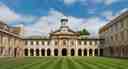
To spot Emmanuel College, look for a grand, sand-coloured building with tall arched walkways, a neat green lawn, and a central clock tower topped by a white dome-right ahead of you. Welcome to Emmanuel College, or “Emma” as locals sometimes call it-yes, she answers to nicknames, but don’t expect her to make you a cup of tea! Imagine standing here in the late 1500s: the air smells faintly of damp stone and old books, and there’s a distant, solemn hush, as if you can still hear the footsteps of the Dominican monks who once called this place home. If you were here back then, the site might have hummed with the prayers of friars, whose priory was transformed in 1584 when Sir Walter Mildmay, spymaster and serious Elizabethan bigwig, decided to found a college. According to legend, Queen Elizabeth I herself gave Sir Walter a mischievous grilling about his ‘puritan foundation.’ He fired back, saying he’d only planted an acorn-what would grow, only time and maybe a good gardener could tell! Fast-forward to today, and Emmanuel College has grown into one of Cambridge’s largest and liveliest communities, with nearly 500 undergrads bustling through nearly every subject you can find under the scholarly sun, plus 200 postgrads puzzling over the mysteries of life, the universe, and everything in between. You might even feel their energy now as the wind rustles through the ancient trees, and the college pond glimmers in the distance, a duck or two taking their morning swim. That pond, by the way, is no ordinary garden feature-it’s a relic from the monastery days, still busy with ducks centuries after the friars bade farewell. But that’s not Emmanuel’s only watery tale! Hidden away in the Fellows’ Garden is an outdoor swimming pool so old, it just might have been the scene of the friars sneaking in a chilly dip-nowadays, it’s a favorite sunning spot when the British summer feels generous. Rumor has it it’s the oldest outdoor pool in the country that’s been in continuous use, making every swim a little splash into the past. The college’s buildings tell a layered story as well. When it all kicked off in the 1580s, the first architect, Ralph Symons, made clever use of the old priory’s bones: the monks’ old dining hall became the college’s first chapel, and the priory’s own chapel turned into the rumbunctious College dining hall-yes, centuries of students have raised a toast where friars once mumbled their prayers. In the late 1600s, Emmanuel decided it was time for something a little fancier. Enter Sir Christopher Wren, architect genius, who left behind a brand-new chapel-one of only three Wren masterpieces in Cambridge. And of course, wherever there are students, there are societies and adventures! Emmanuel has its own cricket, rugby, music, and even board games clubs, and every student is a member of either the ECSU (the undergraduate union) or the MCR (the postgraduate society)-each putting on lively events, formal dinners, and the occasional wild debate about whether ducks or squirrels make the best pond guardians. If you look up, you’ll spot the college clock, keeping generations of students honest-or at least trying. And somewhere, perhaps behind those sturdy walls, the college’s secret weapon lies: its famous library. Though it started out in the old chapel, it eventually burst its bookish seams and moved in 1930 to a grander, more spacious home in South Court-a haven for serious scholars and caffeine-fueled procrastinators alike. Let’s not forget Emmanuel’s dazzling alumni. Ever heard of John Harvard? He gave his name (and probably his sense of academic style) to Harvard University over in the USA, and was an Emmanuel man first. There have even been Nobel Prize winners: Ronald Norrish and George Porter for Chemistry, Frederick Hopkins for Medicine. Not to mention more off-beat talents, like Graham Chapman of Monty Python-imagine the sketches those cloisters have inspired! Fictional adventurers like Lemuel Gulliver were “educated” here, and even Doctor Who once roamed these courts (on TV, of course). Stand here and soak in the college, with its centuries of laughter, learning, and the ever-present sense that beneath each stone or fluttering leaf, a story-or even just a stray duck-might be waiting to surprise you. Ready for the next magical stop? For a more comprehensive understanding of the buildings and grounds, student life or the people associated with emmanuel, engage with me in the chat section below.
打开独立页面 →Look for a wide, modern entrance with bold metal letters spelling “GRAND ARCADE” above it, right at street level with busy crowds often gathered in front-like a grand gateway to…阅读更多收起
Look for a wide, modern entrance with bold metal letters spelling “GRAND ARCADE” above it, right at street level with busy crowds often gathered in front-like a grand gateway to shopping paradise! Welcome to the Grand Arcade, Cambridge’s answer to the age-old question: “Where can I buy everything and still find a great coffee?” Imagine yourself standing at this bustling entrance, where the excitement of shoppers fills the air and reflections from vast glass windows make the whole scene shimmer like a treasure trove. Not so long ago, this spot saw the rebirth of the grand John Lewis & Partners store-once known as Robert Sayle-reopening in 2007 with the rest of the Arcade following in 2008. The whispers of construction dust turned into a symphony of shopkeepers greeting new faces, aromas of fresh pastries floating from cafés, and the gentle click-click of bicycle wheels. Speaking of bicycles, here’s a twist: the Grand Arcade is home to the UK’s very first shopping centre cycle park, offering over 500 spaces and a dedicated shop for two-wheeled commuters. Some locals raised their eyebrows at the removal of street bike parking, but now this spot hums with the energy of cycling culture! As you wander in, you’ll find more than 60 shops, enticing restaurants, and even the city’s Magistrates’ Court-so watch your step or you might just end up shopping and serving jury duty! This is a modern temple of consumer delights, blending everyday adventure with a dash of Cambridge history, all under one sparkling roof.
打开独立页面 →

再显示 15 个站点显示更少站点expand_moreexpand_less
Look for a bright, bold orange sign with the words “Lion Yard” and the outline of a lion’s head-keep your eyes open along St Andrew's Street and you'll spot the entrance right…阅读更多收起
Look for a bright, bold orange sign with the words “Lion Yard” and the outline of a lion’s head-keep your eyes open along St Andrew's Street and you'll spot the entrance right ahead! Now, as you stand in front of Lion Yard, imagine the buzz that once filled this ordinary corner of Cambridge over fifty years ago. The year was 1970, and the city was transforming-goodbye to the old Red Lion pub (a favorite haunt) and hello to a new era. Construction workers hammered away, dreaming up a modern covered shopping paradise, complete with a library, a multi-storey car park, and even a magistrates' court. Shoppers soon rushed in, drawn by the bright lights and the promise of “everything under one roof.” Before the days of sprawling malls on the city edge, this place was the beating heart of retail. But here’s where it gets quirky-imagine a grand white pillar rising from the center of the atrium, topped by a red lion so majestic he could almost roar. For years, shoppers enjoyed his watchful gaze-unless, of course, you fancied climbing up to pet him (if only that pillar wasn’t so tall!). That lion wasn’t just a mascot. He was a lasting tribute to both the old Red Lion pub and the red lion symbol that stands boldly in the University of Cambridge’s emblem. But, just like any good student after graduation, the lion eventually found a new home, moving to the rugby club’s ground where he could keep an eye on the games. Today, Lion Yard stands connected to the glitzier Grand Arcade, smaller in size but bursting with character. The air is filled with the rustle of shopping bags, the chatter of friends, and somewhere above, the soft hum of books in the city’s seventh busiest library. Whether you’re popping to a high-street store or feeling the pull of Cambridge’s history, just remember: in Lion Yard, the mighty red lion spirit is never too far away… Would you have the nerve to climb that pillar for a selfie? Don’t worry-I won’t tell!
打开独立页面 →Take a good look at the walls before you-you're standing before Corpus Christi College, or “Corpus,” as the locals like to call it. If these stones could talk, they'd probably ask…阅读更多收起
Take a good look at the walls before you-you're standing before Corpus Christi College, or “Corpus,” as the locals like to call it. If these stones could talk, they'd probably ask for a cup of tea and then share tales stretching back nearly seven centuries. Picture Cambridge in 1352. The Black Death had just swept through, and three local townsfolk-William, Henry, and John-had an idea: Why not build a college as a sign of hope? Unlike most Cambridge colleges, Corpus wasn’t founded by a king, a bishop, or the odd wealthy knight, but by ordinary people from the town. That's right-a real community effort! If that isn’t a powerful beginning, I don’t know what is. Back then, the college was known as “St Benet’s College,” thanks to the neighboring St Bene’t's Church. The original college buildings were rather modest, but the idea behind them was anything but. Old Court, which huddles close by, became the heart of student life-students have called it home continuously since the 1350s, making it the oldest lived-in courtyard in all of Britain, unless you ask that rival in Oxford (but let’s not start a debate here!). Let’s add some drama. In 1381, during the Peasants’ Revolt, a mob-probably thinking they were the stars of a medieval action movie-stormed the college. They burned the founding charter, ransacked everything in sight, and made off with the college silver. Talk about a rough alumni reunion! Even today, Corpus is famous for its treasure trove of silver, partly because the founders, and later a clever master named Matthew Parker, made sure it could never be sold or melted down without forfeiting the whole collection to rival colleges. That’s some serious “hands off my stuff” lawyering. Speaking of Matthew Parker-our next star-he became Master of Corpus during the wild days of the Reformation. A real bookworm (some say the term "Nosey Parker" was coined for him), Parker stacked the college library with priceless medieval manuscripts. His collection, the Parker Library, even includes the St Augustine Gospels, brought to England way back in 598 AD. Just imagine: a book that’s seen more English history than most castles! The college’s past saw its fair share of eccentric characters too. Christopher Marlowe, the playwright and alleged government spy, studied here. So if you ever feel someone’s watching you from a window, it might just be Marlowe’s spirit pondering his next drama. Corpus was also at the heart of religion-devoutly clerical for centuries, the fellows couldn’t even get married until the late 1800s, after which, to everyone’s great excitement, marital bliss swept through the staff rooms! Corpus has always been fiercely protective of its treasures, especially during wild historical times. During the English Civil War, while other colleges melted their silver to fund their chosen side, Corpus hid theirs. Legend says the silver was handed out to the fellows to keep it safe-imagine a group of professors dashing around Cambridge in a campus-wide game of hide-and-seek, precious cups in hand. Fast-forward a bit, and Corpus enters the age of science. Just nearby, in the old Cavendish Laboratory, Watson and Crick celebrated uncovering the structure of DNA, and where did they toast their triumph? At The Eagle, a pub owned by Corpus. Now that’s what I call the secret of life: a pint at the local! But while the college treasures silver and books, it’s not short of generosity. Not long ago, Corpus expanded its spaces and offered new scholarships, reaching out across continents to invite students from under-represented backgrounds and even New Zealand (imagine that flight!). When it comes to buildings, Corpus blends the old with the new. From ancient sills that once held oil-soaked linen in Old Court, to gleaming modern libraries filled with digitized medieval manuscripts, the place is a journey through time. Even the college clock, the famous Chronophage or “Time Eater,” munches away at the minutes right outside-though it’s only accurate once every five. Students might be few, but when it matters, Corpus shines. It was ranked first overall in the university in 2024 for graduating finalists-the brightest and best, all fueled by a tradition of grand feasts, daring history, and an impressive stash of locked-down valuables. Not bad for a college started by some townsfolk and a spot of optimism after the plague! So, as you take in the medieval walls and the echo of generations, remember: at Corpus Christi, every stone hides a story, every window watched someone grow, and somewhere deep within-steady as a hidden treasure-history quietly ticks on. Want to explore the buildings, student life or the traditions and anecdotes in more depth? Join me in the chat section for a detailed discussion.
打开独立页面 →To spot Peterhouse, look for an elegant courtyard with a stone building at its head, featuring arched entryways, a grand wooden door, and a central clock tower flanked by old…阅读更多收起
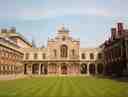
To spot Peterhouse, look for an elegant courtyard with a stone building at its head, featuring arched entryways, a grand wooden door, and a central clock tower flanked by old brick and flower-boxed windows. Welcome to Peterhouse, the oldest college in all of Cambridge-founded way back in 1284 by Bishop Hugh de Balsham. Legend has it that when Peterhouse started, students actually lived in a hospital! “Not exactly the kind of place you’d want to bring a date back to,” as one of their more mischievous alumni liked to say. The Bishop soon moved his scholars just outside the city gate, and what began as two houses and a tiny church eventually blossomed into this impressive, peaceful courtyard before you-the heart of Cambridge’s oldest academic family. Now, imagine the years rolling by, from medieval monks trailing their robes over cobblestones, to Victorian scientists hurrying to lectures. The buildings you see have grown up alongside centuries of scholars-some almost burned down in 1420, but the college survived and thrived. Look to the chapel, built in the 1600s with a beautiful ceiling painted with golden suns, and picture candles flickering as Latin prayers rise in the air. Fancy a bit of dinner theatre? At Peterhouse, students gather for communal meals known as Hall-think Harry Potter banquets, but with more Latin graces and a little less magic (unless you count the candlelight and the gongs). During Formal Hall, a gong rings, the students stand respectfully as fellows in academic gowns glide in, and grace is sung. Not bad for a Wednesday night! Over the centuries, Peterhouse has played host to some of the world’s brightest minds. Imagine Lord Kelvin inventing new laws of physics, Charles Babbage dreaming up the world’s first computer, and James Clerk Maxwell laying the foundations for electricity. Five Nobel prize winners in science studied here, and even more amazing, Peterhouse was the first place in Cambridge to have electric lighting installed-thanks to Lord Kelvin. Just picture the awe as light bulbs first flickered over centuries-old stone, the second place in the whole country after the Palace of Westminster to get such a shockingly modern upgrade! Of course, Peterhouse has seen plenty of drama over the ages. In the 1980s, it was the scene of legendary academic brawls-no, not in the wrestling sense, but in heated debates between eccentric professors. Some were said to fancy parties in odd costumes, others believed in fierce political philosophies, and one daring master even admitted women in 1983. Not everyone was happy about these changes, leading to epic staff-room showdowns. If these walls could talk, I’m sure they’d gossip about more than just Latin conjugations and scientific discoveries! The college grounds also contain the charmingly named "Deer Park" (which once held England’s smallest herd of deer, though now not even a squirrel in sight), plus towers and courts named for generous benefactors and world-changing scholars. The gardens are peaceful now, but they've seen everything from deer parades to brisk walks from late students. Peterhouse traditions still echo today. Communal dinners, lavish white-tie balls, and ancient library books handed down by eccentric masters all create a magical, time-traveling atmosphere. And with around 300 undergrads and 175 grad students, it's just the right size for everyone to know each other's secrets-or at least spot who’s late to Hall. As you stand here, you’re surrounded by centuries of ambition, cleverness, and the occasional prank. So take a deep breath, listen for the whispers of those who came before, and maybe-just maybe-you’ll feel inspired to change the world too. Onward, explorer! Eager to learn more about the buildings and grounds, arms or the grace? Simply drop your inquiries in the chat section and I'll provide the details you need.
打开独立页面 →To spot St Catharine’s College, look for a stately, open courtyard framed by long rows of elegant red-brick buildings with neat sash windows and a perfectly kept square of green…阅读更多收起
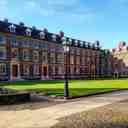
To spot St Catharine’s College, look for a stately, open courtyard framed by long rows of elegant red-brick buildings with neat sash windows and a perfectly kept square of green lawn in the center, right across from Corpus Christi College on Trumpington Street. Ah, welcome to St Catharine’s College-or as the cool folks of Cambridge like to call it, “Catz”! Right in front of you, the college stretches out with its unique open court, inviting sunlight in rather than closing it off with four strict walls. Most Cambridge courts are like castles keeping secrets, but “Catz” throws its arms wide to the world, as if to say, “Come in! Have a look around!” Pretty friendly for a 550-year-old place, don’t you think? Now, let’s step back in time to 1473. The city’s bustling market streets were filled with horses and traders, mud underfoot… and a certain Robert Woodlark, a big dreamer with empty pockets, was busy snapping up bits of land for his new college. He drained his own savings-some folks whispered maybe a bit of King’s College’s money too-to make his vision real. At first, the college was tiny: three fellows, studying nothing but theology and philosophy. Undergrads? Not a chance! For years, the college was like a club for grown-up thinkers, not a lively student hub. But by 1550, juniors began to poke their heads in, and Catz gradually became a true college. Imagine those first awkward undergrads, nervously shuffling through this very court. The college’s patron saint, Catherine of Alexandria, brought her symbolic spiked wheel-the “Catharine wheel”-which you can spot on the college arms if you get close enough. The place was officially born on St Catherine’s Day, November 25th, so you could say this whole college starts its story with a birthday party! Jump forward a couple centuries, and Catz was ready for a glow-up. In the 1600s, its old buildings were falling apart-timbers creaking, walls leaning… So from 1675 to 1757, the college rebuilt itself bit by bit into the striking three-sided court you see today. Since they never entirely boxed in that fourth side, the space always feels more inviting than imposing-like a hug with one arm left open. But it wasn’t always smooth sailing. In 1861, when it came time to pick a new Master, there was a juicy little drama. Two fellows, Charles Kirkby Robinson and Francis Jameson, stood for election. Instead of voting for himself, Jameson gallantly supported Robinson-who, less romantically, voted for himself and won the top seat by his own hand! Let that be a lesson: at Catz, you make your own luck (and maybe your own rulebook too). As centuries rolled on, the college kept growing with the times. In the 1970s, they built a chunky modern block called St Chad’s-the rooms are octagonal to echo the famous Catharine wheel. They were such trendsetters that their playful rivalry with Robinson College sprang from competing new buildings! The 21st century brought even more change: the first female students arrived in 1979, and the college finally welcomed Dame Jean Thomas as its first woman Master in 2006. In 2015, Catz became the first college in Cambridge to introduce a gender-neutral dress code for formal dinners. No stuffy traditions here-just progress and a dash of style. Even more recently, during the 2020 pandemic, St Catharine’s opened its doors to women fleeing domestic violence, giving them a safe place to stay as the city streets fell silent and uncertain. On a lighter note, plenty of laughter echoed through the centuries here-just imagine the excitement as students dream up silly names for new spaces, like the “Catzebo,” their temporary tented hall that popped up in 2020. The energy inside Catz is always buzzing. The college is famed for sports-its legendary football team dominated the late ‘70s, winning four Cuppers cups in a row. There are grass tennis courts too-imagine the soft thud of a ball, cheers drifting on the breeze-and even a students’ girls’ choir, the first of its kind at a UK university, their voices lifting over the rooftops. Today, more than 1,000 fellows, students, and staff call “Catz” home, led by their Master, Sir John Benger. The governing body meets in these same historic spaces, with decisions echoing down stone corridors, sometimes more thrilling than an episode of Cambridge’s favorite drama series! So as you stand here, take a deep breath-imagine centuries of scholars, pranksters, poets, and pioneers. Catz has always been open to the future, open to change, and, well… open to the street! Yearning to grasp further insights on the buildings, academics or the student life? Dive into the chat section below and ask away.
打开独立页面 →Directly ahead, you’ll spot a huge round shimmering golden disc set into a glass window, with a strange, spiky metal grasshopper perched aggressively on top-just look for the…阅读更多收起
Directly ahead, you’ll spot a huge round shimmering golden disc set into a glass window, with a strange, spiky metal grasshopper perched aggressively on top-just look for the creature with a sinister grin right above the glowing blue lights. Ah, welcome to the legendary Corpus Clock-quite possibly the most unsettling way to check if you’re late for lunch in Cambridge! Picture this: you’re standing outside the Taylor Library, right at the edge of an old bank-turned-library, and towering before you is a clock unlike any other. Forget numbers or hands; instead, a 24-carat gold-plated disc, about the size of a large round table, ripples with light, shining and shifting with every catch of the sun and passing cloud. Look closer and you’ll notice three glowing blue rings of light marking out the hours, minutes, and seconds-but don’t stare too hard, or you might get hypnotized! But what really grabs your attention is the strange, fearsome creature boldly sitting on top-a huge metal grasshopper, its legs clutching the top of the clock with a fierce hunger in its eyes. This is the Chronophage, the “Time Eater.” Every second, it slowly “chomps” its way around, its mouth clicking open and shut, as if it just can’t get enough of swallowing up time. And every now and then-blink and you might miss it-it actually blinks with golden eyelids, like it’s eyeing up its next tasty minute! John Taylor, the mastermind behind all this, didn’t want your average clock. No napping in boring lectures for him-he poured five years and a million pounds into bringing it to life, harnessing every trick in the book: engineers, sculptors, jewelers, and scientists all working together. Even the shiny disc was shaped using actual explosives in a secret Dutch lab-now that’s a clock-making party I wouldn’t want to miss. The whole idea was to show off a type of clock mechanism called the “grasshopper escapement,” dreamed up by John Harrison back in the 1700s. Taylor thought, why hide the clever bits? So he made them massive and put them right at the front with that gloomy grasshopper, both beautiful and a little bit terrifying-sort of like realizing you’ve missed your train by one minute! This isn’t just a pretty face-oh no! The Corpus Clock loudly lets you know the hour by clanking a chain into a hidden wooden coffin behind it. Not exactly Big Ben’s proud chimes, but you’ll definitely remember this one. And as if the blinking chrono-monster wasn’t enough, just below you’ll spot a Latin inscription, mundus transit et concupiscentia eius, which means “the world passeth away, and the lust thereof.” Nothing like a little existential dread with your sightseeing, eh? Here’s the kicker: this clock is purposefully a bit wild. It shows the right time only once every five minutes, leaping ahead or falling behind whenever it feels like, a wriggling reminder that life has its own unpredictable rhythm. Taylor himself wanted to make a clock that wasn’t comforting or easy; he wanted “terrifying”-a constant, gleaming, chomping grasshopper to remind us all that time waits for no one, and it’s always hungry for more. The Corpus Clock captured the imagination of the whole world when physicist Stephen Hawking himself pulled back the curtain in 2008 and officially set the Chronophage loose on Cambridge. Since then, it’s popped up in movies, TV series from India to China, and even a novel where it’s got a starring role-not bad for a slightly sinister timepiece. Every part of this clock was an adventure to create, from the weird and wonderful escapement, to the golden glow made by secret military science, to features never seen before in clockmaking like the semi-random blink and that a pendulum, powered by age-old spring winds, quietly keeps the Chronophage’s mouth snapping for decades to come. You’re not just looking at a clock; you’re witnessing centuries of craftsmanship, a tangle of tradition and rebellion, all coiled up in one unforgettable golden spectacle. So next time you catch your reflection in all that gold and hear the chain clank, remember: you’re standing in front of Cambridge’s wildest reminder that, no matter where you’re headed, time is always ready to take a bite out of your day! Interested in knowing more about the appearance, mechanics of the clock or the funding and realisation
打开独立页面 →To spot Bowes & Bowes, look for a handsome, tall corner building with light brown bricks, rows of big white-trimmed windows, and arched shopfront windows on the ground floor…阅读更多收起
To spot Bowes & Bowes, look for a handsome, tall corner building with light brown bricks, rows of big white-trimmed windows, and arched shopfront windows on the ground floor displaying books-right where St Mary's Street meets Trinity Street. Now, let’s wander back in time, right here on this famous corner! You’re not just looking at any old bookshop-Bowes & Bowes is practically a legend in the world of books. Imagine the smell of old paper and the creak of wooden floors as students, professors, and curious townsfolk walked through its doors over centuries. Books have been sold right here since 1581-longer than most shoes have lasted in Cambridge’s rainy weather! Back then, you might have found candlelit shelves and whispers of secret societies between the stacks. The adventure began with Robert Bowes, a determined book lover, who kept the family tradition alive and grew this shop into a hub of knowledge with his son, George Brimley Bowes. Business boomed-stories spread through the city faster than a fire in the library (don’t worry, no books were harmed)-until eventually, W H Smith came along and said, “We want in on this action!” But even after being bought out in 1953, the shop kept its name and its magic until 1986, when it became Sherratt & Hughes, another bookish name in the saga. Mystery and excitement buzzed in the air, with famous writers like Erich Heller on the shelves, and rumors that somewhere on these well-trodden floors, a scholar dropped his sandwich and started the first lunch-and-learn! And even after Sherratt & Hughes closed in 1992, the spirit of learning lingered. These windows became the home for the Cambridge University Press bookshop, picking up the story where Bowes & Bowes left off. So take a deep breath-maybe, just maybe, you can still catch a whiff of ink and genius in the air. All right, onward to our next stop!
打开独立页面 →To spot the Church of St Mary the Great, look just ahead for a grand, creamy-yellow stone building with a tall, square tower and battlements at the top, right at the north end of…阅读更多收起
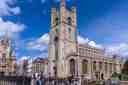
To spot the Church of St Mary the Great, look just ahead for a grand, creamy-yellow stone building with a tall, square tower and battlements at the top, right at the north end of King's Parade. Welcome to Great St Mary’s, the heart and soul of Cambridge’s city centre! You’re standing in front of a building that’s been through more drama than a reality TV show, with a tower stretching confidently over King’s Parade-as if it’s keeping a close watch on all of Cambridge’s secrets. If you listen closely, you might hear the bells preparing to ring out their famous “Cambridge Quarters,” a sound so iconic that Big Ben himself borrowed the tune. But how did this magnificent church get here? Let’s stroll back through time, past bustling market stalls and curious students, to the days of King John in 1205. Imagine a more ancient stone church, its earliest foundations possibly from around 1010, which survived for almost 300 years-until the flames arrived in 1290. In the aftermath, the townsfolk blamed the city’s Jewish community and closed the synagogue, a dark chapter in the city’s history. Fast forward through the centuries and you’ll find Great St Mary’s serving not just as a parish church but as the official university church. If you’ve ever wondered why Cambridge students don’t stray too far, thank this church! University officers can’t live further than 20 miles, and undergraduates can’t go more than three miles from here. It’s as if the church casts a medieval “stay close” spell on everyone. In the Middle Ages, Great St Mary’s wasn’t just for prayers-it was also the main gathering place for fiery university debates and major decisions. Imagine the chatter echoing off those Late Perpendicular stone walls. The patrons of the church have changed hats a few times, too-going from the crown to King’s Hall, and then to Trinity College, where the right to name its leader still rests. Now, picture the year 1381: the Peasants’ Revolt erupts across the country, and angry townsfolk storm the church. Official charters, bulls, even university title deeds went up in flames right here, leaving officials scrambling to pick up the pieces. The building you see now-its present, stately form-began to rise in 1478, towering anew by 1519 and finished off with that iconic tower in 1608, thanks to the likes of Richard III and Henry VII. Clearly, the kings couldn’t agree on much, but they did agree on the importance of Great St Mary’s! Step inside (in your mind’s eye for now): the sunlight glimmers warmly through stained glass windows, the work of Hardman, added in the late 1800s. The font dates from 1632, and, behind the high altar, you’ll find a sculpture of Christ in Majesty-an impressive work by Alan Durst from 1960 that almost seems to watch over the congregation. And then there’s the sound! The bells were first housed outdoors, but by 1515 they proudly rang from the tower. The Society of Cambridge Youths-one of the oldest bellringing groups in Britain-has kept those bells resonating for centuries. Some of the original bells still chime today, joined by new ones, ringing in all their pealing glory. There’s also a hint of musical rivalry. Great St Mary’s has not one, but two pipe organs: the Parish Organ for the locals and the grand University Organ-originally crafted by the legendary “Father” Bernard Smith in 1698 and rebuilt over the years to suit changing musical tastes. You can picture fingers flying across the keys during a rousing University Service or a solemn sermon. Greats from history have stood where you stand. Erasmus, Martin Bucer, and more-some even buried here (though, in Bucer’s case, his remains had a rather dramatic journey involving burning, dust, and final rest under a brass plate). More recently, the ashes of Stephen Hawking were honoured here before being laid to rest in Westminster Abbey. Today, Great St Mary’s is known for its open, inclusive spirit. As the bells ring and sunlight dances on stone, know you’re part of a centuries-old story-a story filled with fire, faith, debate, judgement, and the occasional Cambridge student still trying to live within three miles of the action. Quite the landmark, isn’t it? To delve deeper into the architecture and features, list of vicars or the burials and funerals, simply drop your query in the chat section and I'll provide more information.
打开独立页面 →To spot the landmark, look ahead for a huge, majestic stone building with soaring vertical lines, tall spires along the roof, and an enormous arched window-trust me, it’s hard to…阅读更多收起
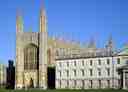
To spot the landmark, look ahead for a huge, majestic stone building with soaring vertical lines, tall spires along the roof, and an enormous arched window-trust me, it’s hard to miss! Welcome to King’s College Chapel, the crown jewel of Cambridge, and quite possibly the most dramatic stone showstopper you’ll see all day. Stretch out your neck and take in those dizzying towers and the gigantic stained glass-some say the window-cleaning bill here would make even a royal weep. But let me take you back in time… It’s the 1400s. Henry VI, who was still a teenager (not even old enough to rent a chariot!), dreamed up a chapel to rival all others-a counterpart to Eton College, but, in his words, “bigger and better.” The king himself laid the very first stone right here on July 25, 1446, and that was just the beginning. Imagine the clang of hammers and the shouts of builders as craftsmen were carefully chosen, and the architect Reginald Ely kept watchful eyes on every carved detail. Sometimes it seemed like building this chapel was as slow as British queueing-especially since construction was interrupted by the Wars of the Roses, which meant battling monarchs, a few dramatic pauses for sword fights, and, of course, lots of waiting. Yet, against all odds and armed with plenty of patience, each king added his mark. Henry VII dropped by in 1506, opening his wallet wide so the work could go on. But by the time Henry VIII’s turn came around in 1515, though the building was finally finished, it was missing its most colorful parts. Let’s talk about what makes this place truly special. Look up and imagine the world's largest fan vault, stretching high above your head, like stone lacework holding up the sky. No one had ever seen anything like it-if Hogwarts had ceilings like these, even the ghosts would get dizzy. The stained glass windows, completed by 1531, are masterpieces in themselves: 24 windows in all, plus majestic east and west ends, telling colorful stories and flooding the chapel with kaleidoscopic light when the sun shines through. Along came teams of Flemish artists and English craftsmen, weaving together scenes that have survived centuries-take that, modern double glazing! Now, at the heart of the chapel, there’s a painting with its own scandalous past-The Adoration of the Magi by Rubens. When it arrived in 1968, critics squabbled about where to put it. The painting’s wild colors clashed with the glass, making it look tiny in comparison, as if the Rubens was trying its best to stand up to the big kids in the window department. Cue one clever architect, Sir Martyn Beckett, who turned controversy into compromise by framing the painting with plain shutters-a bit like putting an expensive stamp on a very fanciful letter. Meanwhile, the builders, digging under the altar, stumbled upon lead coffins that had been hidden for centuries. Ghost stories, anyone? During the Civil War, Parliamentarian troops were stationed in Cambridge, and the chapel was used as a training ground! Fortunately, the building was mostly spared, thanks to the intervention-some say-of Oliver Cromwell himself, a former Cambridge student. If you look carefully near the altar, you might still find graffiti from those rowdy soldiers. And during World War II, to protect the fragile stained glass, it was all carefully packed up and stored away-a move that spared these windows for future generations. Today, King’s College Chapel rings with music. The world-famous Choir of King’s College, beloved by millions, practices and performs here, filling the vaults with heavenly sound. Every Christmas Eve, their voices drift out to homes everywhere, as the BBC broadcasts “Nine Lessons and Carols” from within these ancient walls. Can you imagine the notes swirling up into the fan vault and dancing through the air? So whether you’re marveling at the dizzying heights, the sparkling glass, or simply standing on the same ground as kings, rebels, artists, musicians, and a few mischievous students, you’re looking at more than a chapel. You’re standing in the heart of Cambridge’s legacy-and maybe, if you listen closely, you’ll hear the echo of history in every stone. Curious about the construction, great windows or the rood screen? Don't hesitate to reach out in the chat section for additional details.
打开独立页面 →




评论
常见问题
如何开始导览?
购买后,下载 AudaTours 应用并输入您的兑换码。导览将准备好立即开始--只需点击播放并按照 GPS 引导的路线行驶即可。
导览期间我需要互联网吗?
不需要!开始前下载导览并完全离线享受。只有聊天功能需要互联网。我们建议在 WiFi 下下载以节省移动数据。
这是导游带领的团体游吗?
不是--这是自助语音导览。您按照自己的节奏独立探索,通过手机播放音频解说。没有导游,没有团体,没有时间表。
导览需要多长时间?
大多数导览需要 60-90 分钟才能完成,但您完全控制节奏。随时暂停、跳过站点或休息。
如果我今天无法完成导览怎么办?
没问题!导览具有终身访问权限。随时暂停和恢复--明天、下周或明年。您的进度已保存。
有哪些语言可用?
所有导览均提供 50 多种语言版本。在兑换代码时选择您的首选语言。注意:导览生成后无法更改语言。
购买后我在哪里访问导览?
从 App Store 或 Google Play 下载免费的 AudaTours 应用。输入您的兑换码(通过电子邮件发送),导览将出现在您的资料库中,准备下载并开始。
如果您不喜欢该导览,我们将退款。请联系我们 [email protected]
安全结账使用 


