斯德哥尔摩语音导览:漫步斯德哥尔摩历史中心
在斯德哥尔摩井然有序的表象之下,隐藏着一座充满阴谋和无声反抗的百年古城。穿过国会桥,走进回响着历史的瑞典议会大厦,漫步于圣灵岛层叠的土地上——每个地标都承载着大多数路人从未听过的故事。 这个自助语音导览邀请您以自己的节奏,揭开瑞典首都核心的戏剧性事件、丑闻和权力斗争。 哪条秘密运河曾一度威胁要淹没议会精心策划的方案?谁曾在一掷硬币之间赌上了瑞典的政府?为什么斯德哥尔摩人将他们崭新的桥梁昵称为“捕鼠器”? 跨越塑造命运的河流,触及几乎颠覆帝国的辩论,发现希望、混乱和传统在石头与水之间交织的地方。见证斯德哥尔摩的蜕变——充满着国王、激进分子和意想不到的革命的低语。 准备好深入挖掘明信片般的美景之下了吗?真实的历史就在您的脚下等待。立即开始您的旅程吧。
导览预览
关于此导览
- schedule持续时间 40–60 mins按照自己的节奏
- straighten2.7 公里步行路线跟随引导路径
- location_on
- wifi_off离线工作一次下载,随处使用
- all_inclusive终身访问随时重播,永久有效
- location_on从 国会桥 开始
此导览的景点
To spot Riksbron, look for a single, elegantly curved concrete bridge stretching low over the water, just next to the enormous stone building with pillars-the Swedish…阅读更多收起
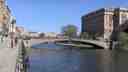
To spot Riksbron, look for a single, elegantly curved concrete bridge stretching low over the water, just next to the enormous stone building with pillars-the Swedish Parliament. Now that you’re here at the celebrated Riksbron, imagine standing where the pulse of Swedish history has crossed the water for centuries. Picture a chilly morning, the city busy with the sounds of footsteps echoing off cobblestone, the wind swirling scents of coffee and pastries from nearby cafés, and the Parliament’s stately shadow stretching across the water. Today, it might seem like just another walkway, but Riksbron has been at the very heart of big plans and curious mishaps. Long ago, in 1712, King Charles XII-camped far away in Bender, probably with more worry lines than sleep-decided his beautiful city needed a royal bridge to connect the bustling Drottninggatan across to Helgeandsholmen, where Sweden’s powerhouses are nestled. Imagine the excitement! He sent his clever architect, Nicodemus Tessin the Younger, to draw up bold plans. But here’s where the story gets spicy-Sweden was busy with a not-so-neighborly scrap with Russia. Money and manpower had decided to vacation elsewhere, and the king’s grand idea was shelved among the kingdom’s “maybe laters.” But Stockholmers don’t give up easily! Through the centuries, a parade of architects tried their luck. In 1794, Erik Palmstedt gave it a go-no dice. Fast forward to 1907, and the city finally built a sort of “bridge,” which locals cheekily nicknamed Råttfällan-the Mousetrap-because, well, it was narrow, creaky, and maybe a bit hair-raising to cross. Imagine marching across in your finest hat, praying you’d make it with both dignity and hat intact. By 1931, after many false starts and eyebrow-raising proposals (Would you like a big bridge or a little one? Maybe both?), engineer Thorleif Aronsson and his team gave Stockholm the sleek, single-span bridge you see today-modern concrete, central hinge, just wide enough for everyone. But wait: beneath your feet, silent and secret, lies a sluice gate taming the mighty waters of Lake Mälaren, holding nature’s power just in check. And so, each time you walk this bridge, you’re tracing a dream centuries in the making, connecting past hopes to today’s busy lives. Who knew a bridge could be so dramatic? Don’t worry-no mousetraps here, just a perfect spot to watch Stockholm flow by.
打开独立页面 →The Riksdag, or as the Swedes might say after a cup of strong coffee, “riksdåååg,” is not just any parliament. It’s the supreme decision-making body of the Kingdom of Sweden. It’s…阅读更多收起
The Riksdag, or as the Swedes might say after a cup of strong coffee, “riksdåååg,” is not just any parliament. It’s the supreme decision-making body of the Kingdom of Sweden. It’s the place where the country’s future is charted-often over 66-hour workweeks, fueled by determination, passion, and perhaps the occasional cinnamon bun, or “kanelbulle,” because who can legislate on an empty stomach? But before things became as they are today, imagine the year is 1435. Not a single electronic voting button in sight-only a handful of Sweden’s nobility, clergy, and burghers gathered in Arboga. Back then, the idea of democracy was less about equality and more about who wore the fanciest hat. The monarchs were powerful, but Gustav Vasa changed that in 1527 by including everyone-from the high and mighty to the everyday yeoman farmer. Suddenly, the “diet of the realm” wasn’t just for the rich; it was for the people, or at least the people with a good pair of shoes to travel to Sweden’s first living democracy. Fast forward a few centuries and you get the drama of 1866. Sweden, influenced by the Industrial Revolution, decided to shake things up. The old way-a parliament of estates-was tossed aside, no more “my estate is fancier than yours” squabbles. Instead, a bicameral parliament appeared: two chambers, one indirectly elected, the other directly elected by the people. But wait, there’s more! In 1970, reform fever struck again, and the Riksdag became a single, mighty chamber of 350 seats. But here’s the twist-the 1973 elections were so close that government and opposition found themselves tied at 175 seats each. Imagine lawmakers resorting to flipping coins to break a deadlock. And if you think that sounds too random, you’re right! They quickly changed the number to 349 to avoid any more “heads or tails” style lawmaking. The Riksdag isn’t just a place for serious suits and whispered lobbying, though. Swedish democracy is alive and surprisingly diverse-nearly half the members are women, and five parties even claim a majority of female MPs. Members often juggle marathon workweeks, balancing debates, emails, and side responsibilities with just enough sleep to dream of new tax laws or maybe just a quiet nap on the benches. Standing before this grand building, paint yourself a picture of what goes on inside. Fifteen lively committees dissect every societal issue you can imagine-from climate change to coffee quality (okay, maybe not coffee, but it’s definitely discussed over coffee). The Speaker-no, not a loudspeaker, but the leader of the Riksdag-carries the heavy responsibility of nominating the Prime Minister. And here’s a quirky bit: the Speaker doesn’t actually vote on anything. Perhaps they’re just too busy making sure no one tries to sneak an extra cinnamon bun during a session. Since 1974, the power to appoint a government no longer rests with royalty but resides right here in the Riksdag. The Monarch’s job these days is mostly ceremonial-which is probably a relief, as selecting a Prime Minister is harder than picking a winner at an Ikea meatball contest. And if the Prime Minister or a cabinet minister fails to impress? A vote of no confidence can send them packing, just like an unsold flat-pack chair. Coalitions and alliances constantly shift. Since 1968, no single party has won a majority, so you get colorfully named alliances-like the Red-Greens and the conservative Alliance-trying to outmaneuver each other, always just short of a full house. Elections happen every four years, and any party with at least 4% of the vote enters the parliamentary dance. There’s always a chance for surprises-sometimes a new party sneaks in, sometimes old rivals find themselves awkwardly sharing coffee. So, as you stand here, picture centuries worth of ideas, arguments, and aspirations echoing through these walls. This isn’t just a building-it’s where Sweden’s stories are written, debated, sung, and, occasionally, decided by the luck of the draw. Let’s continue-perhaps the next time you vote, you’ll remember the seat that was once decided by the flip of a coin! Seeking more information about the name, powers and structure or the membership? Ask away in the chat section and I'll fill you in.
打开独立页面 →Directly ahead of you, rising above the water, you’ll spot a striking round-cornered building of pinkish stone and glass-this is the famed Riksdag, perfectly framed by trees and…阅读更多收起
Directly ahead of you, rising above the water, you’ll spot a striking round-cornered building of pinkish stone and glass-this is the famed Riksdag, perfectly framed by trees and perched at the very edge of the small island of Helgeandsholmen, surrounded by shimmering reflections in the river. Welcome to Helgeandsholmen, the small-but-mighty heart of Stockholm-an island that’s a little like the Swiss Army knife of Swedish history! Imagine, just 700 years ago, instead of one island, you’d be tiptoeing across three wobbly little islets, perhaps dodging the local tanner tossing buckets of bark, the brewer rolling barrels, or the butcher... well, let’s just say you’d want to keep your shoes clean! That’s right, this tiny patch of land was once a wild jumble called "Islet of the Holy Spirit," a name first scribbled in a Latin letter from 1320. But folks here didn’t just rest on their holy laurels; they built a Helgeandshuset-a House of the Holy Spirit-that helped the sick, the poor, the old, and foreigners, all packed together in a bustling charity hospital surrounded by churches, graveyards, and, no doubt, a lot of good stories. Fast forward a little, and suddenly you’re standing in the middle of one of the most important places in Sweden-the very spot where Parliament shapes the country’s future! Before it was home to the Riksdag, Helgeandsholmen saw swinging drawbridges-useful if there was ever a medieval siege (the closest thing they had to a traffic jam), and city gates guarded by watchful towers. Picture Stockholm’s early bridge, Norrbro, stretching across these waters, first in wobbly wood and later, after a few medieval engineering face-palms, as one of the city’s first stone bridges. The width of the street once zigzagged wildly before city planners in the 17th century cracked out their rulers and made everything nice and straight-Credit to Governor Klas Fleming for probably having the neatest driveway in town. On the east side of the island, Strömparterren-the city’s first park-welcomed tourists and locals alike by the 1830s, hosting bookstalls, pavilions, and even the odd snoozing poet, I’d imagine. The park’s beginnings were humble: it started as a storage space for fishermen and only later transformed into an urban oasis where you could snack at the café and watch the sunlight glint off the water. But don’t get too comfortable-by the 1930s, the area got so shabby it needed a makeover, which would happen again after some major archaeological digging in the 1970s. Now, the western edge you see lining the water with its solid granite quay once wrapped around the official central bank-Sveriges Riksbank-making it a hotspot for coins, secrets, and possibly some seriously intense ledgers! On either side of the grand Parliament building, you’ll find the Norra and Södra Helgeandstrappan-the North and South Holy Spirit Steps-charmingly named in 1925 but echoing centuries of feet, hooves, and thundering ceremonial processions. Behind you in history, Helgeandsholmen was also home to royal stables, with horses clopping up and down the island from the 1500s onward. The stables were rebuilt and relocated so many times, you’d think the horses had unionized for better views! In the early 1600s, you’d also find palatial homes popping up for well-connected Swedes-like the Fleming and Brahe houses, whose fates included fires, royal requisitions, and, ultimately, demolition to make way for Stockholm’s ever-evolving future. And don’t forget the mysterious canals-imagine springtime, roaring water flooding the island, sweeping everyone’s plans aside. The canals needed to be dug and filled several times until they finally disappeared with the rise of new buildings, especially when the Parliament and Riksbank moved in by the early 1900s. So, as you stand here, you’re looking at layers upon layers of Swedish life: from charity for the weary, through bustling banks, stable shenanigans, to political debates that echo down to this very day. Helgeandsholmen-small in size, huge in story! And if you hear a little splash or neigh, maybe it’s just the island’s history whispering hello.
打开独立页面 →
再显示 10 个站点显示更少站点expand_moreexpand_less
To spot the site of the Siege of Tre Kronor, look for a grand old fortress with several towers rising above the surrounding rooftops right by the water’s edge-this was once…阅读更多收起
To spot the site of the Siege of Tre Kronor, look for a grand old fortress with several towers rising above the surrounding rooftops right by the water’s edge-this was once Stockholm’s mighty Tre Kronor Castle. Now, let’s travel back to the year 1501, when Stockholm looked quite different from today. The wind is howling cold off the water, and you can almost hear the clatter of wooden carts and the anxious murmurs of townsfolk. Right before you, the great Tre Kronor Castle stands as a lonely island of power-its high stone walls and watchful towers surrounded by ice-choked water and a shivering city on edge. It’s October, and a strange tension fills the air. Swedish rebels, led by Sten Sture the Elder, have just encircled Stockholm, hungry for a taste of independence from Danish rule and the tight grip of the Kalmar Union. Inside the castle, Queen Christina of Saxony braces herself for the coming storm. Imagine her peering out over the battlements, a thousand defenders at her command-Germans, Danes, and loyal Swedes, clutching swords, running low on hope…and on food. Suddenly, chaos erupts in the city. A violent fire breaks out in the midst of all this turmoil, devouring nearly a quarter of Stockholm’s wooden homes and filling the sky with smoke and fear. While the city itself surrenders in a matter of days, the old castle, proud and stubborn, refuses to yield. Listen for the distant thud of cannons-Queen Christina’s men have a mighty piece named “Ingeborg,” which they use to blast at Storkyrkan’s church gate, shaking both earth and faith. On the other side, thousands of Swedish peasants and a fierce bishop named Hemming Gadh prepare to storm the castle. Their breath clouds the cold air as they wait for backup-1,400 Dalarian shooters are marching to join the siege. But nothing goes as planned. Queen Christina’s desperate request to visit the city is rejected, and her hope lies with King John of Denmark. He’s cut off by the icy sea, writing anxious letters from Denmark, promising, “Every day we endeavor with the help of God to go to Stockholm as soon as the waters are free.” But the winter drags on, and so does the siege. Down by the water, the Swedes build a blockade to stop the Danish rescue ships, but the heavy current stubbornly sweeps their efforts away. Inside the castle, tension rises with every empty barrel. Each week, the stockpiles grow lower. Hunger gnaws at the soldiers-and at your imagination, if you let it. On April 29, 1502, after months of fighting, the Swedish forces storm the castle’s bailey. Cannons roar, swords clash, and the stone walls echo with the cries of the wounded. One hundred defenders perish-bombardment and famine claiming even more. The air is heavy with smoke, stone dust, and desperation. Outnumbered, starved, and battered, the defenders send five envoys out to negotiate a surrender in the great Storkyrkan. On May 5, a hard decision is struck: the queen, her closest supporters, and general staff may leave for a city monastery while the fate of so many hangs in the balance. All knights and soldiers who survived must stay as prisoners-unless someone pays their ransom. When Queen Christina and her followers finally step out of the battered castle on May 9, only a handful-just 70 out of the 1,000 original defenders-are left alive. Three days later, a Danish fleet arrives too late, turning away at the sight of Swedish banners above the ramparts. Queen Christina spends another year and a half in Stockholm as a not-so-willing guest, until she’s eventually escorted to freedom and her men trickle home. The stone-cold echo of cannon fire and the memory of burning rooftops remain. So as you stand here today, picture the panic and the pride, the hunger and the hope, and remember: a little bit of rebellion and a lot of stubbornness have always run through Stockholm’s veins. And if you ever thought your neighbors were unruly, just be glad you missed a siege! If you're curious about the background, siege or the negotiations, the chat section below is the perfect place to seek clarification.
打开独立页面 →To spot the Supreme Court of Sweden, look for a stately building with a grand old-world presence, and above the entrance, keep your eyes out for a large bronze and gold emblem…阅读更多收起
To spot the Supreme Court of Sweden, look for a stately building with a grand old-world presence, and above the entrance, keep your eyes out for a large bronze and gold emblem featuring a crowned shield with three crowns-just like the one in front of you now. Now, pause for a moment in front of the Supreme Court, or as the Swedes call it, Högsta domstolen. Imagine you’re standing where centuries of tension, intrigue, and even a bit of royal drama have played out. Take a deep breath-can you almost smell the old parchment, the polished wood, and feel the weight of decisions made here? Welcome to one of Sweden’s most powerful and respected institutions, where justice has been handed out like carefully weighed gold coins-never too much, never too little. Here’s how it all began: Back in the days of kings, swords, and rather uncomfortable pants, the Swedish monarch called all the shots in matters of law. If you had a grievance, it was off to the king you’d go, petition in hand, hoping you’d catch him in a good mood. In 1614, King Gustavus Adolphus took pity on his people (or maybe just got tired of handing out judgments between banquets) and set up the Svea Court of Appeal. But, and here’s the twist, if folks still weren’t happy, they could appeal directly to the king. Imagine the lines at the royal mailbox. Fast forward to the late 18th century-King Gustav III, a fan of big hats and even bigger changes, shook things up in 1789. He suspended the powerful Privy Council of nobles and, with a flourish, introduced the King’s Supreme Court. Here’s where it gets interesting: there were twelve judges, always an equal mix of nobles and commoners, because apparently, nobody likes a lopsided dinner party. And if ever there was a tie in a decision, the king held not one but two votes-and, just in case you thought he’d abuse this power, legend has it he only cast his deciding vote for fun on the court’s 100th birthday! With time, stern faces in wigs gave way to sharp-minded civil servants, and by 1809, the judges were given the fancy-sounding title of Councillor of Justice. Gone were the days of noble exclusivity-now anyone, noble or commoner, could rise to judge. The politics continued to evolve, and in 1844, the rule about equal numbers of nobles and commoners was dropped, leaving more room for clever shoe salesmen to sneak into the judiciary…just kidding. Queen Victoria-wait, no-the Supreme Court also got two siblings in 1909: the Supreme Administrative Court, taking care of administrative squabbles, and the Council on Legislation for those “is-this-legal?” moments. At that point, the monarch’s grip was truly loosened from the scales of justice, and the court was free to rule without royal interference. Now, not just anyone can get a case heard here-you need leave to appeal, which is often only granted if your case could set a precedent. Think of it as the ‘VIP entrance’ to Sweden’s legal world. And when you stand here today, remember that since 1949, the Supreme Court has been based in the elegant Bonde Palace, away from the Royal Palace, giving it a cozy but distinguished home of its own. Today, 16 razor-sharp justices-appointed by the government, but fiercely independent-sit inside deciding the big cases that shape Swedish law. Since 2018, Anders Eka has been the court’s chairman, holding a gavel that surely echoes the wisdom (and maybe a little mischief) of centuries past. So, as you gaze at the coat of arms, imagine all the debates, the weighty decisions, and just a few royal dramas that have unfolded behind these grand walls. Dare I say it, this is one courtroom where you don’t want to object lightly!
打开独立页面 →To spot the House of Nobility, look for a grand, rectangular brick building with a green copper roof, tall windows in perfect symmetry, and statues looking down from the…阅读更多收起
To spot the House of Nobility, look for a grand, rectangular brick building with a green copper roof, tall windows in perfect symmetry, and statues looking down from the rooftop-right in front of you, with a proud bronze statue and tall Swedish flags leading the way. Welcome to the majestic House of Nobility-Riddarhuset! Imagine you’re stepping back in time to the age of powdered wigs, flowing capes, and tales that swirl like the Swedish winter wind. This isn’t just a building; it’s where the blue bloods of Sweden once gathered, making grand decisions and, perhaps, sneaking in a bit of gossip about who had the fanciest horse-drawn carriage. The name Riddarhuset literally means “House of Knights.” Now, before you draw your sword and swear allegiance, keep in mind-knights in Sweden didn’t joust for fun, they handled the weighty business of the realm alongside counts (Greve) and barons (friherre). Even untitled nobles had their place here-think of it as Sweden’s own VIP club, with a guest list reaching back to the Middle Ages. Take a good look at that statue in front-Gustav Vasa, the king who founded modern Sweden, keeps a stern watch on everyone coming and going. The House of Nobility was built in the 17th century, but not without a story worthy of a drama! The French architect Simon de la Vallée started the plans, only to meet his end at the hands of a Swedish nobleman in 1642. Not to worry-his son Jean picked up the plans and finished the building in 1660. Let’s hear it for family business, right? But the action here wasn’t just in politics. From the 18th century, this hall filled with the sweep of violins and the applause of distinguished guests, as the building doubled as a concert venue. Stars like Elisabeth Olin likely debuted here, their voices bouncing off these gilded walls. Imagine the echo of Italian opera, visiting artists, and nobles trying to look unimpressed-while secretly loving every note. Inside, the Assembly of Nobles convened every three years-a grand meeting of noble families to decide their future rules and traditions. Heads of noble houses, and sometimes their deputies, would debate, vote, and shape the life of Sweden’s aristocracy. Afterwards, a Directorate carried out those decisions, making sure no one tried to sneak in with a fake family tree. The House of Nobility was once part of the Swedish parliament, and after 1866, the parliament was restructured, and Riddarhuset found a new life acting as the keeper of the nobility’s heritage. Today, it doesn’t govern, but it keeps centuries of records and represents noble families-now a proud tradition more than a political power. And techies, listen up! The halls have gone digital: records of genealogies stretching back to the 1600s are now digitized for future generations. So, take a deep breath-smell the historic air, feel the elegant chill, and imagine the secrets and decisions whispered underneath those giant statues. If these walls could talk, I bet they’d start with, “Let’s have a ball!” To expand your understanding of the name, organization or the building, feel free to engage with me in the chat section below.
打开独立页面 →Directly in front of you is the Centralbron, a wide, modern bridge of smooth gray concrete and busy traffic stretching across the water, linking the city’s northern and southern…阅读更多收起
Directly in front of you is the Centralbron, a wide, modern bridge of smooth gray concrete and busy traffic stretching across the water, linking the city’s northern and southern districts-just follow the stream of cars to spot it. Take a moment to watch the tide of vehicles and maybe even catch a whiff of engines; Centralbron is the pulsing artery of Stockholm! Now, let’s rewind time and discover how this mighty bridge came to be. Imagine yourself standing here almost a hundred years ago, when Stockholm was juggling ideas on how to cross this bustling spot. Back then, bridge proposals were swirling around like pigeons in a bread factory, with over twenty wild ideas scrapped before the plan of 1928 finally stuck. But wait! As the city’s traffic blossomed and choked like a garden gone wild in the 1930s, planners built Västerbron to the west and a clover-shaped junction known as Slussen, which meant the pressure for a ‘central bridge’ faded a little. Instead, locals made do with a patchwork solution called Slingerbultsleden-the Dodge Route! This maze of makeshift streets and two temporary bridges created a zigzag path through Gamla stan, before ending rather ungraciously at Vasabron. Fast forward to the 1950s. Stockholm needed something bigger and bolder. While the city’s brand-new metro was plotting its underground course, the clever Swedes built a quirky pontoon bridge as a temporary fix, bobbing atop the water, barely managing the daily grind of 20,000 cars. I can almost hear it creaking under the weight! World War II slowed everything down, but by 1947, the city finally rolled up its sleeves and started building for real. The southern part of Centralbron began to take shape in 1950. It stretched across Söderström, with strong concrete pillars anchored deep into the earth. Six proud spans, sturdy as a Swedish moose, carried cars and bikes alike, while two more little spans stretched southward over Söder Mälarstrand, finally handing the road off to Söderledstunneln, the tunnel below. By 1959, they finished it-with a committee giving it an optimistic name, ‘Centralbron,’ and cheerfully assuming an ‘Eastern Bridge’ was just around the corner. Guess what? There still isn’t one, because the Royal City National Park to the east has put its big leafy foot down. So, Centralbron stays central! But we’re not done yet! The city wanted the northern end to match up, but congestion at the notorious Tegelbacken intersection-known as the ‘Tegelbacken misery’-blocked the way. The only thing worse than Swedish winter is a Stockholm traffic jam, right? In 1967, they finally finished the northern bridge, connecting everything up in dramatic fashion. The sharp turn north carried commuters over thundering railway lines and onto Klarastrandsleden, replacing a painful old level crossing that kept locals stewing in their cars every day. Even so, not everyone was a fan. With so many road and rail tracks-seven trains, six lanes-it’s a regular jungle gym for engineers and a jarring sight for lovers of old town charm. Some people dream of hiding all these lanes away in a tunnel, but the price tag for such a magic trick would bring tears to any accountant’s eyes. A new rail tunnel, Citybanan, did arrive in 2017, easing some pressure, but cars and trains above still rule the scene. So, as you stand here, close your eyes and picture the roar of engines, the groan of old pontoon bridges, and the shuffle of history beneath your feet. Centralbron isn't just a route-it's a living memory of Stockholm’s endless battle between old elegance and modern motion. Now, which way to the next adventure? Wondering about the background, the southern bridge or the the northern bridge? Feel free to discuss it further in the chat section below.
打开独立页面 →If you’re on the lookout for Järntorget, turn your gaze toward the cobbled square alive with outdoor cafés, a classic cast-iron well at its heart, and elegant buildings closely…阅读更多收起
If you’re on the lookout for Järntorget, turn your gaze toward the cobbled square alive with outdoor cafés, a classic cast-iron well at its heart, and elegant buildings closely packed around-just follow the hum of voices and the scent of coffee, and you’ve arrived! Welcome to Järntorget, the “Iron Square”-and no, it’s not because Iron Man lives here, though with its mighty past, he might want to! As you stand in this cozy corner of Gamla stan, imagine it teeming with people from centuries ago, not just today’s coffee drinkers but bustling merchants, sailors, wagon drivers, and perhaps the odd thief or two (watch your pockets, just in case their ghosts are still around!). It all started way back around the year 1300, on a bluff formed by the old boulder ridge of Brunkebergsåsen. Once, the shores of Lake Mälaren licked the very edge of this square, with ships docking at Grain Harbour and Merchant Ship’s Harbour on either side. Can you picture it? Boxes of barley, chests of iron, barrels of salted herring clattering across the stones--and the shouts of traders in Swedish, German, English, and languages from even farther afield. At first, this was called Korntorget, or “Grain Square,” but soon enough, iron became more valuable than bread, and by 1489, the new name stuck. The city’s official scales-think massive medieval weighing machines-were set up right here, where taxes could be counted and the king’s coin purse kept healthy. Iron, copper, and silver poured out from Sweden, while ships returned heavy with salt, cloth, barrels of beer and wine, spices, and glass-ah, the buzzing energy must have been electric! In the Middle Ages, the iron trade brought foreign faces and fortunes. No wonder the square was much larger than what you see today. Not only did tall city walls rise around its edges, but German traders built their warehouses here, their voices echoing until French, Dutch, and British deals evened the odds. Sheds crept up along the eastern side in the 16th century, probably creaking with every gust of Baltic wind. Fast forward to the booming 1600s, and things get even livelier. Imagine glancing around and seeing tavern signs like The Blue Eagle, The Lion, The Moon, or The Scales, each promising a different flavor of Stockholm entertainment. Sadly, the city’s big scales packed up and rolled to Södermalm in 1662, and the area saw a glam-up-the king wanted his capital to dazzle! Medieval cottages made way for tall, stately buildings, and the imposing Södra Bankohuset-the oldest national bank building in the world-rose on the eastern side, its facade still strutting an Italian-inspired Renaissance style. The motto above: “Hinc Robur et Securitas”-“Hence Stability and Reliability.” Well, except maybe after too many late nights at the tavern. Not to brag, but that bank building even outlasted the city’s romantic poets and nefarious plotters alike. Wander past Number 84, and you’re walking with history. Its portal is modeled after an Italian villa, even though I doubt they ever served meatballs in Caprarola. Now, you might notice-standing right out front-a statue of Evert Taube, Sweden’s beloved troubadour, bronze beret and sunglasses on, as if he just stepped off the train looking for a new adventure. Created in 1985, the sculpture sits directly on the pavement, so it feels like Taube himself might saunter over to Sundbergs konditori (just there on Number 83), grab a pastry, and break out in song. You’re never far from music on Järntorget! Take a good look up at the surrounding buildings. That plainer white facade atop Number 85 isn’t so plain-a crane still points skyward, a silent salute to the days when goods were hoisted up to attic storerooms. And if you stroll by Number 80, with its Art Nouveau face and cast-iron columns, imagine the bustle of the old ironmongery, or the flashbulbs of the famous Jacoby photo studio, snapping portraits that Swedes still seek today. Even the well at the center-cast iron, naturally-was donated by the bank in 1829 and modeled on a British prototype. Imagine how many weary hands and thirsty mouths paused here after unloading their cargo, or one of the greengrocers calling out the price of apples during the market days of the 1800s. Järntorget has shrunk since medieval days, but every stone shouts with stories-of trade, transformation, music, and maybe a bit of good-natured mischief. So pause, sip your coffee, and let the echoes of seven centuries swirl around you
打开独立页面 →Österlånggatan is a narrow, cobblestone street flanked by tall, ochre and beige stone buildings, with galleries, cozy benches, and vintage signs leading you forward in the soft…阅读更多收起
Österlånggatan is a narrow, cobblestone street flanked by tall, ochre and beige stone buildings, with galleries, cozy benches, and vintage signs leading you forward in the soft daylight; to spot it, look ahead for a charming, winding lane tucked between rows of old sandstone facades just off the main path. Now, as you stand at the entrance to Österlånggatan, imagine the gentle rumble of cart wheels on cobblestones and the cheerful clamor of merchants selling their wares centuries ago. This street, whose name means “Eastern Long Street,” was once the beating heart of Stockholm’s old town buzz-the kind of place where sailors shared rowdy jokes, deals were struck over ale, and the air shimmered with the smells of tavern stews and salty wind from the harbor. Stretching from the royal Slottsbacken down to Järntorget, Österlånggatan parallels its twin, Västerlånggatan, but while its western sibling is lively and bustling today, Österlånggatan has settled down into a quieter, more contemplative mood. But don’t let its current peace fool you! Walk just a few paces, and each doorway will whisper stories of wild nights and colorful characters. In the 13th century, you’d have found nothing here but the lapping waters of the shoreline, with a muddy path beaten down by busy feet nearly three meters below today’s pavement. As the city grew, gravel and rubbish pushed the land outward, and by the 14th century, Österlånggatan was soaring above the original shore-home to workshops, merchant homes, and daring new businesses. German merchants clustered at Järntorget, while Swedish traders from the mining north found their places along this very street. Back then, not many noble families moved in, though Gunilla Johansdotter Bese-who lived in the alley now named Fru Gunillas Gränd-was a notable exception. If you pause near Numbers 43 and 45, imagine the sound of her footsteps echoing off these walls centuries ago. The rest of the neighborhood belonged to the working class: barrel-makers, sailors, market vendors, and the odd lawbreaking innkeeper, since this was once the backyard of the busy dock district. The taverns here had the best names: The Gilded Dragon, The Three Kings, The Swedish Arms, and The Star. These days, Den Gyldene Freden at Number 51 stands as the only survivor of these old watering holes. It’s not just a great place for a herring sandwich; it’s listed in the Guinness Book of Records for keeping its interior unaltered since 1722! So, if you step inside, you’re breathing the same air as poets and painters from centuries past-let’s just hope the scent of 1700s Stockholm has cleared out by now. As you walk down the lane, glance up at the facades-some dating back to the 17th century, others carefully restored. Each building has a story. Some had doors swapped with windows and back again (talk about indecisive architecture!), others leaned ever so slightly toward the water over centuries as the land beneath them shifted and settled. One house here even had a Renaissance frieze, a Baroque portal, and flirted with all the architectural styles like an 18th-century fashionista. Keep an eye out for the statue of Saint George and the Dragon on Köpmanbrinken, and the mysterious “Pig Alley”-Ferkens Gränd-named after the German for pig, not the best-smelling part of town, I’d wager. And if you’re in the mood for legends, remember the tale of Maria Kristina Kiellström, the infamous model for Bellman’s Ulla Winblad. She was so well known from the bawdy songs that when she returned to Number 47, everyone in Stockholm took notice-though she might have preferred a little less fame, considering the lyrics! There’s more history under your feet than above your head-archaeologists have found everything from city walls and churchyards to the remains of taverns that once filled these alleys with laughter and song. Even the foundations tell a story: old piles sunk fifteen meters deep, now leaning ever so slightly after hundreds of years. One block even contained a churchyard that Gustav Vasa himself raided for saltpeter, just to make gunpowder for his cannons. Talk about digging up the past-literally. And if you find yourself getting hungry for poetry, Den Gyldene Freden is more than just a meal: it’s a place where the spirit of Sweden’s most famous bard, Carl Michael Bellman, still lingers. When the restaurant almost closed a century after Bellman’s day, Swedish painter Anders Zorn saved it, leaving it to the Swedish Academy on condition that they reward a poet each year-the Bellman Prize. So you see, on Österlånggatan, art hangs as thick in the air as the old cooking smells. Before you wander on, take in the echoes of the past-ghostly taverns, narrow alleys named for forgotten trades, and tales that still linger in the air. Österlånggatan may feel quiet now, but listen closely, and you’ll hear centuries of stories, laughter, and the clink of glasses still ringing down this Eastern Long Street.
打开独立页面 →Look for a stately, light yellow baroque mansion with grand windows, elegant stonework, and a decorative white entrance perched right in front of you, facing the open…阅读更多收起
Look for a stately, light yellow baroque mansion with grand windows, elegant stonework, and a decorative white entrance perched right in front of you, facing the open square. Step up and imagine Stockholm in the late 1600s: powdery wigs, swirling cloaks, horses clip-clopping over the cobblestones, and... oh, the smell of bread baking somewhere nearby! Now, right here, Nicodemus Tessin the Younger, a master architect with a flair for drama, watched his dream palace rise brick by brick from 1694 to 1700. This wasn’t just a home-it was a baroque masterpiece, a kind of “look at me!” statement for the entire city. Picture Tessin, perhaps with ink-stained fingers and a slightly crooked periwig, sketching bold lines late into the night. It must've felt like pure magic seeing it all come to life. But, just as the paint dried, fate added some suspense: the palace ended up with Tessin’s son, Carl Gustaf, who unfortunately had a knack for spending more money than he had. In 1755, with a heavy heart (and probably a lighter pocket), Carl had to sell this beautiful mansion. The king swooped in, and soon enough, the palace became the official nest for Stockholm’s governors. Today, the Tessin Palace stands as a testament to grand ambition, family drama, and a touch of royal mystery-don’t worry, though, the only ghosts here are of old architects muttering about window symmetry!
打开独立页面 →To spot the Museum of Medieval Stockholm, look for an arched stone entrance set into a sturdy, old stone wall, with big black signs on either side that read "Medeltidsmuseet"-you…阅读更多收起
To spot the Museum of Medieval Stockholm, look for an arched stone entrance set into a sturdy, old stone wall, with big black signs on either side that read "Medeltidsmuseet"-you really can’t miss it if you glance just ahead! Alright, adventurer, take a deep breath and picture where you are: right on the edge of mystery, time travel, and... well, a little bit of medieval dirt. You’re standing in front of the Museum of Medieval Stockholm, built directly into the ground where long-lost secrets lay hidden for centuries. Back in the late 1970s, someone planned to dig a fancy underground parking garage here-because in Stockholm, everyone needs a parking spot, even the ghosts! But as they dug, workers stumbled on something much cooler than a car park: parts of Stockholm’s ancient city wall, dating all the way back to the early 1500s. Jackpot! With this astonishing find, plans quickly shifted. Instead of parking, they gave us something even better-a museum built around real medieval ruins. When it opened in 1986, this place was anything but old-fashioned: thanks to the creative dream team behind it, the museum won the European Museum of the Year award. Not bad for a spot that almost ended up smelling like exhaust fumes! Close your eyes and imagine what’s down below: dark brick houses crowding narrow streets, blacksmiths hammering away, market stalls packed with wild smells and even wilder stories. You’ll find workshops buzzing, a bustling harbor nearby, and-yikes!-even the legendary gallows standing tall. In here, history is not behind glass. It wraps itself around you, thick as fog rising from the waterfront. And if you hear a grumpy voice, it’s probably Birger Jarl-the man who founded Stockholm-muttering because his reconstructed face went on display here in 2010. But just between us, I think he likes the attention. Oh, and here’s a twist fit for a medieval ballad: this legendary museum has packed up to move into the Old Town, as the Parliament needs this spot. No one knows exactly when the “new” museum will open its doors, but hey, a little mystery keeps the medieval spirit alive. For now, stand tall-lightly dust off your shoes-and know you’re on truly historic ground. Ready to march to our next stop?
打开独立页面 →In front of you, Västerlånggatan appears as a charming, gently winding street lined with tall, narrow golden and terra-cotta buildings tightly packed together, their shopfronts…阅读更多收起
In front of you, Västerlånggatan appears as a charming, gently winding street lined with tall, narrow golden and terra-cotta buildings tightly packed together, their shopfronts and colorful flags drawing your eyes down the bustling, cobblestone path. Now, let your imagination carry you back some 800 years, as the echoes of horse hooves and merchants' cries bounce off these old stones. Västerlånggatan, “the Western Long Street,” was once the outer edge of Stockholm’s medieval city-picture it then, just a scraggly path hugging the shoreline beyond a huge, stone city wall, with the smell of the Baltic Sea and maybe a whiff of horses and ironwork in the air. Today's street runs straight where Stockholm’s defensive wall once loomed, so if you feel a slight chill, maybe it's just a medieval draft finding its way through time! If you look at the street closely, you might notice the long, skinny buildings stacked together, like books on a library shelf, their colors glowing. The blocks on the left run lengthwise, while those on the right stack up crosswise-an architectural trick to fit more shops, secrets, and, no doubt, centuries of gossip. Only four blocks stand on the eastern side, while nearly twenty fill out the western half, with many doors tucked away down alleys and quieter lanes-making this the perfect place for an adventurous game of hide and seek! Västerlånggatan was Stockholm’s main artery, a busy thoroughfare long before you could buy an “I heart Stockholm” t-shirt. In the 15th century, Swedes simply called it “The Long Street” or “The Common Street,” probably because if you lost your way, you only had two major choices-head west on Västerlånggatan or east on Österlånggatan. Life bustled here: at the north end, blacksmiths hammered iron and mended horse shoes, sparks flying day and night-giving it the old name “City’s Smith’s Street.” Later, goldsmiths took over, raising the street’s social profile. By the Middle Ages, influential merchants made their homes closer to Järntorget, the square to the south; the whispers of their fortunes and rivalries may yet linger by these shopfronts. But fashions change, and so did Västerlånggatan. When Stockholm’s commercial pulse shifted north in the 1800s, this old street could have withered. Yet, unlike some neighbors, Västerlånggatan kept its chin up and its shop windows shining, especially after the grand bridge Riksbron connected it to new districts in 1907. Facades, once medieval and fortress-like, were jazzed up with German iron columns and plaster ornaments-the latest trend, like getting a haircut to stay young. Peek inside, and you’ll find well-preserved 19th-century interiors, even though those walls might keep medieval secrets behind fancy wallpaper. For centuries, lively boutiques and cafés flourished here. Imagine, at the turn of the 20th century, up to 30 coat shops all in a stretch, hats and gloves in every window! Some shops survived two world wars, some were born and disappeared in a single generation, replaced now by buzzing souvenir stands. Speaking of buzz, you’re not the only one mingling on Västerlånggatan: this has always been a street of musicians, street artists, hurried locals, and-let’s be honest-loud late-night pub-goers stumbling home, just as they did in the days of Carl Michael Bellman, Stockholm’s famous singing jokester. But beneath all this, the deeper magic stirs. Imagine the medieval pharmacy, Apoteket Korpen, where medicine once meant frogs, snakes, or even, legend says, the dust of mummies-no wonder Stockholmers did their best to stay healthy! Or the rainbow-flagged café where the oldest ironmonger’s shop in the world once stood, selling everything from nails to swords for over 300 years. And don’t miss the alleyways with names like “Axe Blacksmith’s Lane” and “Alley of Hell”-either because it bordered the “Kingdom of the Dead” or just had the city’s executioner lurking nearby. Pull up a modern café chair and you’re sitting mere feet above Viking-age ground, with layers of cobbles and history right below. So as you wander along Västerlånggatan, imagine the clang of blacksmiths, the chatter of merchants haggling over wool or iron, the swish of silk dresses and fantastic hats in the shop windows, and a swirl of stories around every gabled doorway. This street has seen it all-from plague and fire to the glint of goldsmiths and the signature of history’s hand. Maybe, as you pass by, you’ll hear the faintest echo of a horse’s hoof, the laughter of a troubadour, or just the living heart of Stockholm, right beneath your feet. Interested in knowing more about the origin of the name, a walk north to south or the gallery
打开独立页面 →To spot Gamla Stan, look for the tightly-packed maze of colorful, winding medieval buildings and cobblestone streets just ahead of you, framed by the waterfront and the sprawling…阅读更多收起
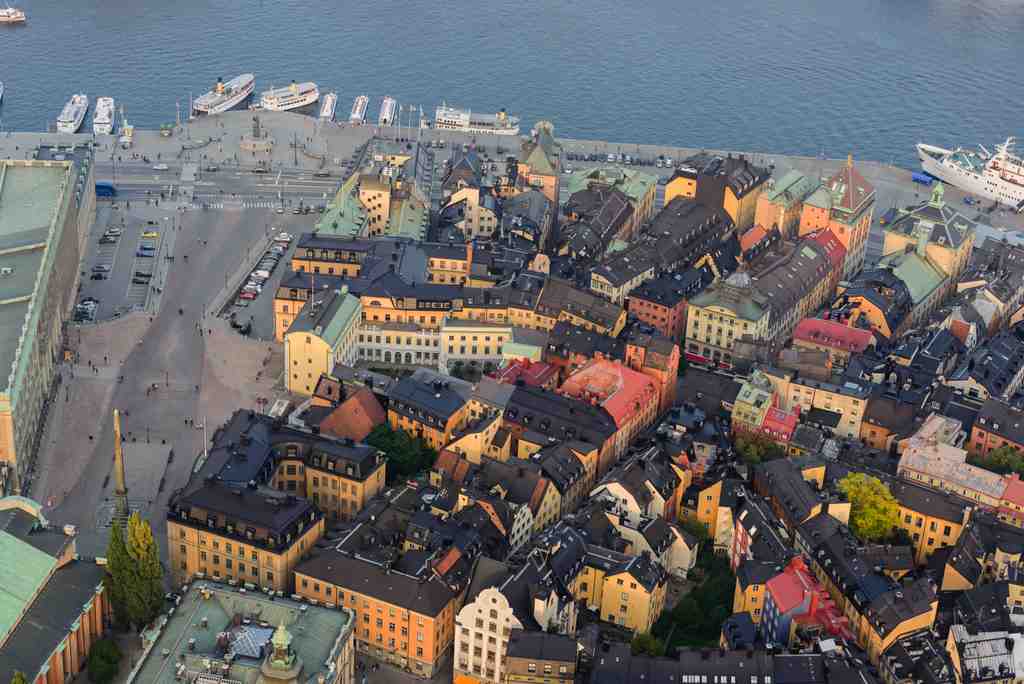
To spot Gamla Stan, look for the tightly-packed maze of colorful, winding medieval buildings and cobblestone streets just ahead of you, framed by the waterfront and the sprawling Royal Palace to one side. Welcome to Gamla Stan-the beating, bustling heart of old Stockholm! Right where you’re standing, you’re about to step back in time-imagine narrow alleyways twisting between tall, painted houses in sun-faded golds, reds, and oxides, as if the city itself were caught in a never-ending sunrise. Close your eyes for a second and listen-can you hear the? That’s the sound that echoed here centuries ago, when merchants carried news and goods from every corner of Europe. Gamla Stan, literally “The Old Town,” sits mostly on the island of Stadsholmen, hugging the shores where Lake Mälaren meets the Baltic. It has been at the heart of Swedish life since the 13th century, long before Instagram made cobbled streets cool again. The old town was once known as “The Town Between the Bridges,” because it really is an island fortress-protected by water and bridges, and once, by towering walls. If you could peel back the centuries, you’d see swarms of merchants crowding into Stortorget-still the main square, just up ahead-trading fish, grain, gossip, and probably more than a few bad jokes. Those old homes with their gabled roofs were often built right atop the city’s medieval walls. Alleys are so narrow, you could stretch out your arms and almost touch both sides. Window bays once jutted out, displaying wares to passersby, and the air was full of a... let’s call it “historic aroma”-leather, spices, and sometimes, let’s be honest, less pleasant things tossed out the windows! No fancy plumbing here, and the city’s “fly meetings” (aka public latrine dumps) could sometimes darken the air with insects-a buzzing medieval chorus for every summertime stroll. Not exactly a modern perfume, but it sure added to the atmosphere! Under your feet, the layers of history are real: dig down a meter or two, and you’ll find wooden planks from streets nearly 800 years old-Sweden’s first footpaths, paved with logs and later with chunky stones to survive the Swedish winters. When night fell in Gamla Stan, darkness reigned-the only light came from fire watchers’ torches and the occasional party of night wanderers. No street signs, just locals who had to know where “the alley behind the merchant’s cousin’s workshop” was-good luck finding your way home after a night out at Den Gyldene Freden, the world’s oldest restaurant, serving guests here since the 18th century (and probably still trying to get the smell of pickled herring out of the tables). The grandeur you see in Baroque and Renaissance palaces-like Tessin Palace or the towering Royal Palace-came later, shaped by the genius of architects like Nicodemus Tessin and Carl Hårleman. But the true soul of Gamla Stan is older and rougher, with shadows of kings and rebels alike. Legend has it, the city was born when a log filled with gold floated down from besieged Sigtuna to these shores-a wooden Trojan horse, if you like, except instead of soldiers, Stockholm got the makings of a capital city. This square-Stortorget-once witnessed the grimmest of tales. In 1520, the air rang with the clatter of swords, as Danish king Christian II ordered the infamous Stockholm Bloodbath, executing Swedish nobles and leaving a scar in the city’s memory. But the square here is also where the Nobel Museum now sits, and where people gather in laughter, swapping stories and sharing in the same spirit that’s always kept Gamla Stan alive. Look for the smallest citizen of Gamla Stan-a little iron statue of a boy, Järnpojken, tucked in a quiet courtyard. And if you sense the spirits of medieval Stockholm watching you from the shadows, don’t worry-they’re probably just wondering where all the horses have gone! Soak it in-the charm, the legends, the old stones under your feet-because Gamla Stan isn’t just old. It’s immortal. And now, you’re part of its living story.
打开独立页面 →
常见问题
如何开始导览?
购买后,下载 AudaTours 应用并输入您的兑换码。导览将准备好立即开始--只需点击播放并按照 GPS 引导的路线行驶即可。
导览期间我需要互联网吗?
不需要!开始前下载导览并完全离线享受。只有聊天功能需要互联网。我们建议在 WiFi 下下载以节省移动数据。
这是导游带领的团体游吗?
不是--这是自助语音导览。您按照自己的节奏独立探索,通过手机播放音频解说。没有导游,没有团体,没有时间表。
导览需要多长时间?
大多数导览需要 60-90 分钟才能完成,但您完全控制节奏。随时暂停、跳过站点或休息。
如果我今天无法完成导览怎么办?
没问题!导览具有终身访问权限。随时暂停和恢复--明天、下周或明年。您的进度已保存。
有哪些语言可用?
所有导览均提供 50 多种语言版本。在兑换代码时选择您的首选语言。注意:导览生成后无法更改语言。
购买后我在哪里访问导览?
从 App Store 或 Google Play 下载免费的 AudaTours 应用。输入您的兑换码(通过电子邮件发送),导览将出现在您的资料库中,准备下载并开始。
如果您不喜欢该导览,我们将退款。请联系我们 [email protected]
安全结账使用