AudaTours logoAudaTours

科伦坡语音导览:肉桂花园引人入胜的漫步

语音指南8 景点

在科伦坡繁华的街道和霓虹闪烁的天际线之下,隐藏的故事在每个角落跳动——会议室、板球场和殖民时期的庭院低语着胜利与动荡的秘密。这个自助语音导览将带您超越明信片般的风景,揭示大多数游客匆匆而过的传奇和被遗忘的戏剧。国家商业管理学院的哪场学术竞争差点演变成一场全市丑闻?谁的神秘信号曾一度中止了僧伽罗体育俱乐部板球场上那场扣人心弦的比赛?独立广场拱廊顶部的时钟为何在某些特定日期的午夜拒绝报时? 从创新中心到翠绿的球场,再到建筑奇迹,科伦坡将展现其精神——这是一段交织着雄心、反叛、奇闻异事和穿越时空回荡的笑声的旅程。准备好挑战你对斯里兰卡首都的固有认知吧。这座城市的下一章正在等待。开始你的冒险——揭开科伦坡光鲜表面下的脉动。

导览预览

map

关于此导览

  • schedule
    持续时间 30–50 mins按照自己的节奏
  • straighten
    4.2 公里步行路线跟随引导路径
  • location_on
  • wifi_off
    离线工作一次下载,随处使用
  • all_inclusive
    终身访问随时重播,永久有效
  • location_on
    从 国家商业管理学院(斯里兰卡) 开始

此导览的景点

  1. Look for a big, striking blue sign with a bold, modern logo and the name “National Institute of Business Management” clearly written above the entrance - it's hard to miss if…阅读更多收起

    Look for a big, striking blue sign with a bold, modern logo and the name “National Institute of Business Management” clearly written above the entrance - it's hard to miss if you’re facing one of Colombo’s busier stretches! Welcome to the very first stop on our tour - and it’s no ordinary building you’re standing in front of! Right here, at the National Institute of Business Management, or NIBM for those who don’t love a mouthful, you’re gazing at a buzzing hub for business brainpower and Sri Lankan innovation. Can you imagine it’s been training leaders since 1968? Back then, the country had a problem: too many businesses, not enough managers. It was almost like trying to run a cricket match with no team captain! So with the United Nations Development Programme and the International Labour Organisation tipping their hats and lending a hand, the island’s first ever management training institute was born. Now, picture Colombo in the late 1960s. There’s the scent of fresh rain on the city streets and everyone is racing to modernize. Inside this institute, hopeful students in crisp uniforms are eagerly soaking in knowledge, studying late into the night under humming fluorescent lights. At first, it was called MDPC-Management Development & Productivity Centre-but, much like a business that never stops reinventing itself, soon the name changed to the National Institute of Management. The very first diploma in Business Management launched in 1975. Legend has it that students would nervously line up in the hallways, clutching their papers, dreaming of one day running banks, companies, maybe even the country. By 1976, NIBM was officially enshrined in law-no small feat! But they didn’t stop at business skills. Just as fashions change, so did their offerings. In 1980, NIBM brought computer system design into the classroom-a bold leap into the age of technology. The first ever Bachelor’s in Management Information Systems in partnership with Dublin’s University College arrived in 1996. Not only did this bring a whiff of Irish wisdom to Colombo, but it also sent a signal: NIBM students would soon be as savvy with computers as with cash flow sheets. The institute’s journey didn’t stop there. Today, thousands of students charge through its corridors every year, with classrooms buzzing thanks to their flagship MBA, executive courses, and international ties with Coventry University in the UK and Malaysia’s Limkokwing University. Talk about making friends in high places! But let’s make it a bit livelier, shall we? You can almost hear the echoes of graduation ceremonies, heartfelt speeches, and the click of camera shutters. The proudest moments? The institute’s very first convocation in 1999, when longtime dreams finally turned to reality in the form of caps, gowns, and diplomas waving through the air. Dig a little deeper, and you’ll discover the different “schools” housed under NIBM’s roof. There’s the School of Business, the grand architect behind practically every manager in town. They host courses in everything from Human Resources to Logistics-plus, they’ve got a consulting division, ready to solve any corporate conundrum with the snap of a spreadsheet. Just down the hall, the School of Computing and Engineering carries the torch for tech. Their students don’t just use computers-they build the software that makes the world hum. The Software Development Unit, founded back in the 1980s, develops real-world solutions for big companies, and offers eager students their first taste of working on the cutting edge. Creative types shouldn’t feel left out, either! At the National Innovation Centre, art meets science in fields like fashion design, broadcasting, data science, and even foreign languages-Japanese, French, German, you name it. Just imagine a classroom filled with would-be designers, their sewing machines sewing dreams into reality, while next door, a group of language learners stumbles over French pronunciation and giggles. And if you thought this was all just for city dwellers, NIBM has always believed in education for all. Over the years, they’ve set up regional campuses in Galle, Kandy, Kurunegala, and Matara. So whether you’re in bustling Colombo or near the southern coast, you can find a little pocket of learning. Leadership here is a relay-one director hands the baton to another-but the passion for progress never flickers. The place is currently led by Chairman V. K. Choksy and Director General Dr. D. M. A. Kulasooriya, ensuring that the spirit of innovation is always alive. As you stand outside, remember: some of the country’s sharpest minds started their journeys right behind these walls. In fact, you might be walking among future CEOs right now. And if you listen closely, you might just hear the whispers of ambition in the breeze.

    打开独立页面 →
  2. To spot the Singhalese Sports Club Cricket Ground, look straight ahead for a wide, green field ringed by grandstands, big advertisement boards, and a towering scoreboard on your…阅读更多收起

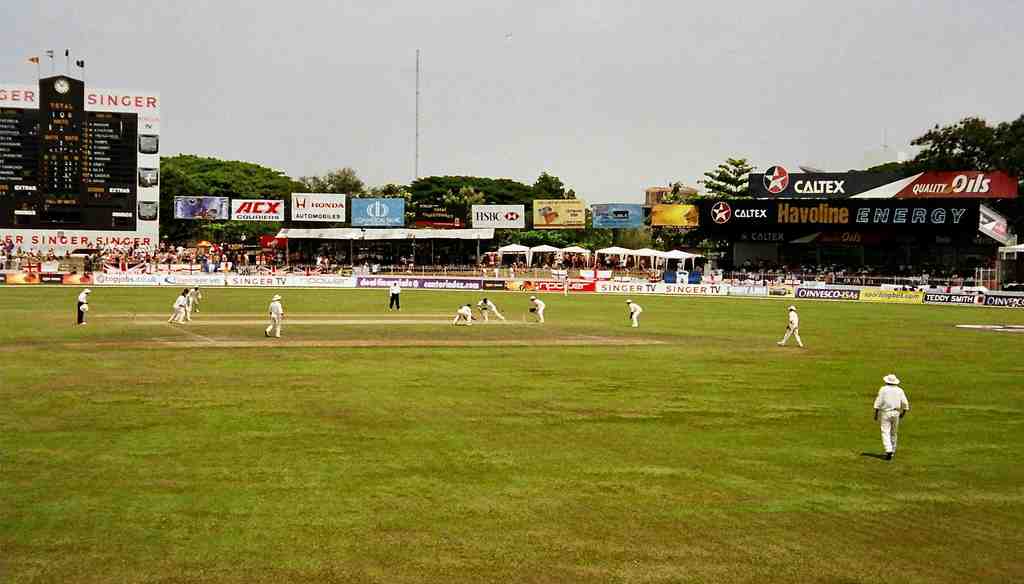
    To spot the Singhalese Sports Club Cricket Ground, look straight ahead for a wide, green field ringed by grandstands, big advertisement boards, and a towering scoreboard on your left-it’s hard to miss with all the excitement! Now, as you stand here outside the legendary SSC Cricket Ground, take a deep breath and listen-the energy of heroes past and present is practically buzzing through the air. This is not just any patch of grass; this is the “Lord’s of Sri Lanka,” a sacred ground where legends swing, bowl, and sometimes dance awkwardly after a wicket. Fun fact: the Sri Lanka Cricket headquarters are right here, so you’re standing at the very nerve center of the nation’s cricketing might. The story begins back in 1899, when a band of young schoolboys-mostly from Royal College, S. Thomas’, and Wesley College-pulled off a nail-biting win by just one run. Fired up and riding high, they decided Sri Lankan cricket needed a club of its very own, and boom! The Singhalese Sports Club was born. The earliest pitch was nothing fancy-just sandy soil and cinnamon trees, which probably spiced up the odd cricket ball or two. But that wasn’t enough. By 1952, the club had its eyes on this spot-twenty glorious acres that once felt the wheels and propellers of World War II airplanes! Just imagine the roar of engines back then before it all quieted down for the crack of the bat. Fast forward to 1956 and the famous pavilion rises, thanks to a nightclub mogul named Donovan Andree-now, that's a sponsorship deal, right? In the decades that followed came the mammoth scoreboard, modern commentary boxes where broadcasters try not to lose their voices, and stands sponsored by everyone from banks to telecom giants. There’s even grassy embankments for shouting, cheering, and-yes-napping under the Colombo sun. The memories made here are jaw-dropping. In 1992, Sri Lanka faced Australia and lost by just 16 runs after needing only 181 to win-one of the narrowest defeats ever. Shane Warne, not yet the spinning superstar, stepped up and began his legendary streak by grabbing three wickets in thirteen balls. Then there’s little Mohammed Ashraful of Bangladesh, who became the youngest to score a Test century-one day shy of 17! And talk about explosive: Chaminda Vaas took 8 wickets for 19 runs here, sending Zimbabwe packing for just 38, a record low in One Day International cricket. You’re also standing on the spot of the highest partnership ever in Test history-Kumar Sangakkara and Mahela Jayawardene put on 624 runs, a number as long as a cricket season itself. The SSC is where domestic finals, World Cup clashes, and the 2002 ICC Champions Trophy unfolded, keeping the scoreboard ticking and the island’s hopes high. So look around: every blade of grass, every seat, and every echo of applause tells a piece of Sri Lanka’s cricketing soul. If you listen closely, you might just hear the next legend’s story beginning right now. Fascinated by the ground, highlights or the ground figures? Let's chat about it

    打开独立页面 →
  3. To spot the Arcade Independence Square, just look ahead for a grand, bright white building with a shiny silver clock tower rising from its center and elegant rows of arched…阅读更多收起

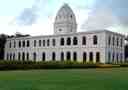
    To spot the Arcade Independence Square, just look ahead for a grand, bright white building with a shiny silver clock tower rising from its center and elegant rows of arched windows-it's impossible to miss against the lush green lawn in front of you. Now, as you stand here with the Arcade Independence Square right before you, imagine yourself walking through the misty morning of old Colombo in the late 1800s. Picture a cluster of brand new brick buildings, walls still smelling of fresh plaster, not a hint of shopping or cinema magic yet in sight! Instead, in 1889 this place started its life as the Jawatta Lunatic Asylum-yes, believe it or not, people used to come here for a little rest and, well, a different kind of retail therapy. Back then, the city was buzzing with debate. The old mental hospital in Borella was more like a club for pigeons and termites, so Governor Sir William Gregory decided it was time for an upgrade. Of course, as with any good construction project, there was endless fussing over the location and design-as if building a grand hospital was like picking the flavor of the year for ice cream! When they finally finished, it wasn’t fancy: rows of plain, one-story buildings, with nothing ornamental except, as the governor said, “a short, ungraceful, and inexpensive tower” over the entrance… which, amusingly, is now the proud centerpiece with its clock keeping time for modern shoppers and moviegoers. Imagine the sounds from over a century ago: the echo of footsteps down wide corridors, the chatter and comings and goings of caretakers and the daily buzz of those living inside. Very soon, though, the building was overflowing-designed for 400, but squashing in over 500, a bit like trying to fit all your souvenirs into one suitcase. With the opening of a larger hospital at Angoda in 1917, the last patient left by 1926, and this proud box of bricks was ready for its next adventure. And what an adventure! University students filled these halls with their hopes and hurried footsteps, then the pulse of radio as Sri Lanka Broadcasting Corporation took over. Imagine the whiff of paper from the Public Administration, journalists dashing through for stories, dusty files piling up in the Auditor General and Government Analyst offices. Fast forward to 2012-cue the hard hats and dust! Soldiers worked day and night, stripping away layers, peeling back time itself, determined to let the old beauty of the buildings shine again. All the grand architecture was lovingly restored, but now with the sparkle of new shops, welcoming cafes, and Sri Lanka’s first-ever boutique cinema, ‘The Empire Cineplex.’ So next time you’re sipping coffee or catching a film here, smile to yourself-you’re enjoying a moment in a building with more plot twists than your average blockbuster.

    打开独立页面 →
再显示 5 个站点显示更少站点expand_moreexpand_less
  1. Look straight ahead for a grand stone building with a striking red-tiled roof and bold stone lions guarding its wide steps-trust me, you can’t miss it! Welcome to Independence…阅读更多收起

    Look straight ahead for a grand stone building with a striking red-tiled roof and bold stone lions guarding its wide steps-trust me, you can’t miss it! Welcome to Independence Memorial Hall! Imagine you’re standing in the very spot where, on a bright morning in 1948, crowds gathered as the air buzzed with excitement and hope. British rule was ending, and Sri Lanka-then called Ceylon-was about to regain its freedom. Picture dignitaries in colorful attire, the sound of distant drums echoing across the square, and a sea of joyful faces watching as the first parliament opened with Prince Henry in attendance, marking a brand new chapter. The monument before you was built right here at Independence Square as a tribute to that historic day, and believe it or not, the design is inspired by the ancient Magul Maduwa, the royal audience hall in the Kingdom of Kandy-so you’re looking at a piece of living history, carved in stone! Up at the head of the monument, you’ll spot a statue of Don Stephen Senanayake, the “Father of the Nation,” who helped lead the country to freedom. He’s been through a lot, standing watch through national celebrations, moving speeches, and, well, several very important funerals (it’s almost like this place is Colombo’s version of the red carpet!). But Independence Memorial Hall is more than just a pretty building-it’s where senators used to gather, and where every year, on February 4th, the square fills with music, laughter, and Sri Lankan pride. Over the years, it’s even become a bit of a TV star, making cameos in international shows like The Amazing Race. And if you listen closely, you might still catch the echo of patriotic cheers, swirling through the pillars whenever a proud Sri Lankan strolls by. So go ahead, soak it all in-after all, you’re standing on the very ground where history was made!

    打开独立页面 →
  2. To spot the Department of National Archives in front of you, look out for a sleek, modern building along Reid Avenue-you might notice its unique logo outside, which looks like an…阅读更多收起

    To spot the Department of National Archives in front of you, look out for a sleek, modern building along Reid Avenue-you might notice its unique logo outside, which looks like an open book with vertical lines and “SLNA” rising from its pages. Welcome to the keeper of Sri Lanka’s deepest secrets and stories-the Department of National Archives! If you listen very closely, you might just hear the whispers of ancient scribes or the hurried footsteps of a colonial clerk running late with a batch of royal proclamations! But don’t worry, today’s archivists are a bit less dramatic, and the only sound you’re likely to hear is the gentle hum of air-conditioning and fluttering pages. Believe it or not, the roots of archiving on this island stretch all the way back to the time of the kings, over two thousand years ago! Back then, there were special officers appointed just to guard the secrets of the royal courts, documenting the victories, treaties, and daily drama of ancient Sri Lankan monarchs. Fast forward to the colonial era, and you’ll find that even the Dutch couldn’t resist cataloguing every grain tax and land grant, setting up some of the earliest organized archives down in Galle. But here’s where it gets exciting: the Department as you see it now began its official journey in the early 1900s. Picture a mustachioed English gentleman, R.G. Anthonisz, shuffling through piles of parchment under the skeptical gaze of the colonial Chief Secretary. It wasn’t exactly a glamorous job-the only royal robes in sight were gathering dust-but these early archivists were on a real-life treasure hunt: preserving the birth certificates of nations, squinting at faded maps, and puzzling over mysterious letters from Dutch governors and British officers. Inside, the records are like a map to the country’s memory-thousands of documents stretching from the Portuguese and Dutch eras right through to independence in 1948, stuffed with stories of crown grants, tax squabbles, and feisty council debates. You’ll even find the Bandaranaike family’s library, grainy Times of Ceylon newspapers, and Buddhist temple writings, all bundled together like a giant national scrapbook! Even now, people from all over come here to unravel family mysteries or brush up on obscure colonial laws. Think of it as a detective’s lair where everyone is invited-minus the secret handshake and magnifying glass. So, as you stand here, imagine the Department as a giant, patient elephant-quietly storing every step Sri Lanka has ever taken, one careful page at a time. And who knows? Maybe there’s a story in there with your name on it, too!

    打开独立页面 →
  3. To spot Cinnamon Gardens, look for elegant white-washed buildings with tall columns lining the left side of the street and leafy green trees arching over the road ahead-if you see…阅读更多收起

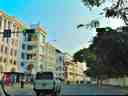
    To spot Cinnamon Gardens, look for elegant white-washed buildings with tall columns lining the left side of the street and leafy green trees arching over the road ahead-if you see a cluster of stately architecture and lush foliage, you’re in the right place! Welcome to Cinnamon Gardens-the fanciest patch of Colombo, where the trees are almost as grand as the houses, and the air just might smell of old secrets and maybe, if you use your imagination, a faint hint of sweet cinnamon. Close your eyes for just a moment and picture this: the year is 1789, and instead of car horns or bus stops, all you’d hear are the whispers of the wind through row after row of cinnamon trees. Back then, this entire area, nearly 300 acres, was a sprawling cinnamon plantation, shading the ground and scenting the breeze-frankly, it made the air smell good enough to eat. But time has a funny way of changing things. Fast forward to today, and Cinnamon Gardens is the most elegant, posh neighborhood you’ll find in Colombo. Walk the wide streets, and you’ll see impressive diplomatic buildings and embassies-each one as grand as the next, standing like chess pieces on a rich man’s board. The Prime Minister’s Office stands nearby along with the graceful Independence Hall and the white Turin-inspired façade of the National Museum. It’s not just government and glitter here, though-Cinnamon Gardens is also home to the University of Colombo and rows of prestigious schools like Royal College and Ladies’ College, where future Sri Lankan leaders hustle between lessons dreaming of making history. Now, don’t let the high society fool you-Cinnamon Gardens keeps its feet on the ground through its mix of people. Here, Sinhalese and Tamils live next door to Burghers, Moors, and families of all religions-Buddhist, Hindu, Muslim, Christian, you name it. The patchwork of voices, clothing, and cultures makes these leafy avenues lively and colorful. Even the sporty folks have found a place among the cinnamon ghosts-there are cricket grounds, rugby fields, and even the odd racecourse for a dash of adrenaline. And if you’re looking to relax, Viharamahadevi Park offers a green escape, while theaters, art galleries, and World War memorials dot the area, each with its own tale. So, as you stand here, remember: you are surrounded by stories. This ground has seen cinnamon, statesmen, students, and sports stars-a place where Sri Lanka’s past and present mingle in the shade of old trees and modern ambition. And no matter which way you walk, you’re never far from a little magic, a little history, and maybe, just maybe, a whiff of cinnamon in the air. To expand your understanding of the demographic, schools or the places of interest, feel free to engage with me in the chat section below.

    打开独立页面 →

  4. Directly ahead, you’ll spot an impressive, grand white building in classic Italian style, with tall arched windows, a broad central entrance, and sculpted pillars gleaming in the…阅读更多收起

    Directly ahead, you’ll spot an impressive, grand white building in classic Italian style, with tall arched windows, a broad central entrance, and sculpted pillars gleaming in the sun-just follow the neat garden path until you reach its majestic steps. So, you’ve arrived at the Colombo National Museum-Sri Lanka’s proudest treasure chest! Now, close your eyes for a moment and picture the scene on a bright January day back in 1877. There’s the grand façade, just as you see it now, but in front of you a crowd gathers, dressed in their finest, chattering with excitement. Sir William Henry Gregory, the British Governor, stands at the entrance, ready to declare the new museum open. All of this-complete with a little suspense-came to be because a group of passionate scholars from the Royal Asiatic Society had convinced Gregory of the urgent need for a public museum. You can almost hear the crowd murmuring in anticipation. Now, the museum’s magnificent look is all thanks to James George Smither, the government architect, who sketched its elegant Italianate style. But here’s a twist-while Smither provided the plans, it was Arasi Marikar Wapchie Marikar who oversaw the building’s rise, stone by stone. He belonged to the Sheiq Fareed family, whose roots stretched all the way back to the year 1060, an exotic touch in Colombo’s growing cityscape. Marikar’s resume would make any builder jealous: imagine him dashing from the Galle Face Hotel, to the General Post Office, to the Town Hall, raising Colombo’s finest icons one after another. Oh, and he built the Old Town Hall in Pettah for the grand sum of 689 Pounds-a bargain these days, unless you’re just buying a fancy coffee! Opening day was more than just a cut-ribbon affair. Governor Gregory, grateful for the efforts of both Marikar and the master carpenter S. M. Perera, asked them how they’d like to be honored for their work. Marikar’s request? That the museum close on Fridays, the Muslim sabbath-an entirely unique tradition, kept for decades. Perera asked for a local rank and received it. I bet neither of them expected their impact would echo through history every time someone admired the museum’s carved woodwork and grand corridors. Sometimes, a good favor makes you famous for centuries! Over the years, this building became a living storybook. The museum expanded, with new wings blossoming under visionaries like Dr. Arthur Willey, Dr. Joseph Pearson, and Dr. P. E. P. Deraniyagala. Picture Colombo’s skyline changing, the old streets filling with the smells and sounds of progress, as each new wing rose-auditorium, natural history collections, ethnology galleries-one after another adding to the curiosity and wonder held within these walls. Inside, secrets of Sri Lanka wait patiently to be discovered, from the royal regalia of the last kings of Kandy to a copy of the Statue of Tara so magnificent the British Museum keeps the original. There are the crown jewels, the golden throne, and treasures the British finally returned-strange to think, a king’s throne crossing the seas only to find its way home, guarded now behind glass but never forgotten. Even the galleries are arranged for an adventure-downstairs, take an epic walk through history; upstairs, get lost in the stories of Sri Lanka’s culture and nature. And there’s more. The museum’s library, born on the very same day as the museum itself in 1877, gathered every printed word from around the island-from colorful folktales to serious scientific discoveries. Since 1885, by law, every document printed in Sri Lanka finds its way here, a silent army of knowledge lined up on shelves. The library was the unofficial national library for ages and still treats every scrap of Sri Lankan life as a treasure. The museum even saw a bit of history herself-In 1982, Dr. Thelma Gunawardena became its first woman director, leading its way toward the future, and Prof. Pandula Andagama worked here for decades, weaving new stories into the museum’s rich tapestry. So, as you stand before these grand white walls, you’re not just facing a building-you’re gazing at a living monument to curiosity, resilience, and a nation’s memory. Who knows, maybe if you’d lived a hundred years ago, you’d have gathered at these steps, too, joining the laughter and excitement of a city welcoming its greatest storyteller. And remember, every creak of those old wooden floors inside holds a secret-waiting, perhaps, just for you.

    打开独立页面 →
  5. This place was officially born in 1998, but its roots go back to 1970, when the country realized libraries weren’t just buildings full of dusty books, but portals to adventure,…阅读更多收起

    This place was officially born in 1998, but its roots go back to 1970, when the country realized libraries weren’t just buildings full of dusty books, but portals to adventure, learning, and - let’s be honest - a great place to hide from Colombo’s afternoon heat. The board here is made up of 11 wise folks, guided by a full-time Chairman and a Director General, who’s kind of like the Gandalf of librarians: wise, organized, and probably never late to a meeting. But here's the fun twist: their job isn’t just to keep the books safe like dragons guarding treasure. They listen to communities all over Sri Lanka to figure out what people want to read, what kind of information they need, and - most importantly - how libraries can be more fun and useful. Imagine them as detectives, finding out what stories need to be told and making sure everyone from little kids to university professors can dive into a good book. They also help other libraries out, encourage locals to write and publish books, and are always looking for new ways to use technology to make reading and research even more exciting. And if you’ve ever wondered why libraries in Sri Lanka feel so connected, it’s because this board organizes, supports, and helps them all - making sure everyone, no matter where they are, can get their hands on a great story. So go ahead, breathe in that bookish air, and imagine the thousands of stories swirling around you. This isn't just a library’s HQ - it’s a secret lair for every bookworm, researcher, and curious mind in the country. And you got to stand at its gates!

    打开独立页面 →

常见问题

如何开始导览?

购买后,下载 AudaTours 应用并输入您的兑换码。导览将准备好立即开始--只需点击播放并按照 GPS 引导的路线行驶即可。

导览期间我需要互联网吗?

不需要!开始前下载导览并完全离线享受。只有聊天功能需要互联网。我们建议在 WiFi 下下载以节省移动数据。

这是导游带领的团体游吗?

不是--这是自助语音导览。您按照自己的节奏独立探索,通过手机播放音频解说。没有导游,没有团体,没有时间表。

导览需要多长时间?

大多数导览需要 60-90 分钟才能完成,但您完全控制节奏。随时暂停、跳过站点或休息。

如果我今天无法完成导览怎么办?

没问题!导览具有终身访问权限。随时暂停和恢复--明天、下周或明年。您的进度已保存。

有哪些语言可用?

所有导览均提供 50 多种语言版本。在兑换代码时选择您的首选语言。注意:导览生成后无法更改语言。

购买后我在哪里访问导览?

从 App Store 或 Google Play 下载免费的 AudaTours 应用。输入您的兑换码(通过电子邮件发送),导览将出现在您的资料库中,准备下载并开始。

verified_user
满意保证

如果您不喜欢该导览,我们将退款。请联系我们 [email protected]

安全结账使用

Apple PayGoogle PayVisaMastercardPayPal

AudaTours:语音导览

有趣、经济实惠、自助徒步导览

试用应用 arrow_forward

深受全球旅行者喜爱

format_quote 这次导览是游览这座城市的绝佳方式。故事很有趣,感觉不太照本宣科,我喜欢能够按照自己的节奏探索。
Jess
Jess
starstarstarstarstar
第比利斯导览 arrow_forward
format_quote 这是了解布莱顿的一种可靠方式,感觉不像游客。解说有深度和背景,但并未过度。
Christoph
Christoph
starstarstarstarstar
布莱顿导览 arrow_forward
format_quote 一手拿着羊角面包,零期望地开始了这次导览。这款应用真的很适合你,没有压力,只有你、你的耳机和一些很酷的故事。
John
John
starstarstarstarstar
马赛导览 arrow_forward

无限语音导览

解锁全球每个导览的访问权限

0 导览·0 城市·0 国家
all_inclusive 无限探索