AudaTours logoAudaTours

兹沃勒语音导览:历史悠久的内城的艺术、传说与隐藏的瑰宝

语音指南14 景点

一只鹰栖息在丰达蒂博物馆的屋顶上,它的翅膀在兹沃勒古老的心脏上空展开——每一块砖下都隐藏着几个世纪的秘密和丑闻。 在这趟语音导览中,您可以按照自己的节奏漫步于蜿蜒的小巷和宏伟的广场,解锁那些连当地人也擦肩而过却不曾留意到的隐藏故事。在您的脚下和头顶上方,上演着大多数游客从未想象过的戏剧。 谁在大市场古老立面的阴影下策划了背叛?哪份失传的手稿曾让德利布里耶神圣的殿堂震动?哪种奇怪的菜单选择差点让一位强大的贵族在此地失势? 从充满活力的公共空间走向宁静的走廊,追随叛乱、失落杰作和窃窃私语的阴谋的回响。每一次转弯都预示着新的启示,每一个停靠点都将永远改变您看待兹沃勒的方式。 准备好追随鹰的目光,揭开下面的谜团了吗?按下播放键,开始吧。

导览预览

map

关于此导览

  • schedule
    持续时间 40–60 mins按照自己的节奏
  • straighten
    2.8 公里步行路线跟随引导路径
  • location_on
  • wifi_off
    离线工作一次下载,随处使用
  • all_inclusive
    终身访问随时重播,永久有效
  • location_on
    从 波特吉特辛格尔 开始

此导览的景点

  1. To spot the Potgietersingel, just look for the lush green park with leafy trees and an open grassy area right by the water-see if you can find people lounging around or a dash of…阅读更多收起

    To spot the Potgietersingel, just look for the lush green park with leafy trees and an open grassy area right by the water-see if you can find people lounging around or a dash of red from the small pavilion. Standing here, you’re in one of Zwolle’s liveliest green spaces, but the Potgietersingel wasn’t always this peaceful-it was once the city’s defensive stronghold back in the 1600s. Imagine the boom of cannons and the clatter of armor, now replaced by laughter and the rustling of picnic blankets. In the early 1800s, visionaries decided the old fortress deserved a gentler role, and so the park was planted-probably surprising the original defenders who would have expected less daffodils and more danger! It’s named for Zwolle-born writer Everhardus Johannes Potgieter, who probably would have loved to pen poems from one of these shady benches. You’re walking across history that’s only 1.2 hectares big but is the third busiest park in all of Zwolle, attracting a mosaic of locals and visitors alike. Notice how the west side wraps you in dense greenery, while the east invites you onto open lawns-a design refresh from 2006 brought extra romance, as if even the trees developed a soft spot for city strolls. And take a peek through the leaves-those grand old buildings along the edge, like the former courthouse and the stately Villa Suikerberg, still keep an eye on park life, as they have for over a century.

    打开独立页面 →
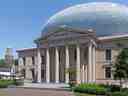
  2. To spot Museum de Fundatie, just look ahead for a grand cream-colored building with towering columns straight out of an ancient Greek drama - and if the enormous shimmering “egg”…阅读更多收起

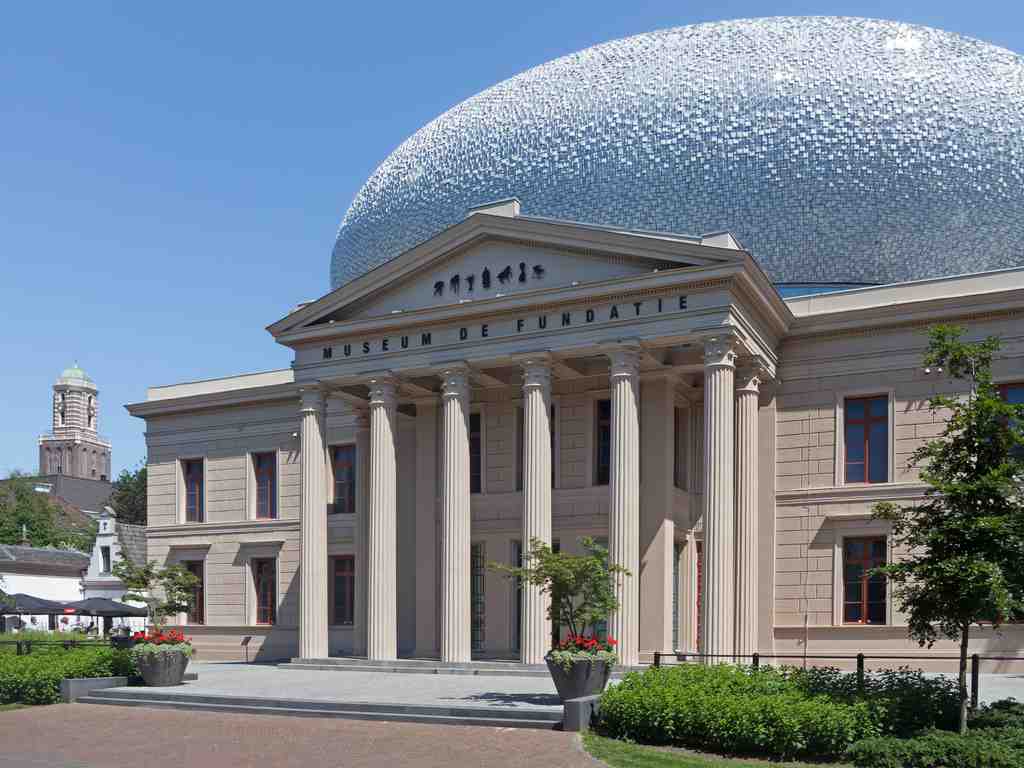
    To spot Museum de Fundatie, just look ahead for a grand cream-colored building with towering columns straight out of an ancient Greek drama - and if the enormous shimmering “egg” on the roof doesn’t catch your eye, you might actually need an art museum! Welcome to Museum de Fundatie, where tradition and imagination join forces in the heart of Zwolle! Picture yourself here almost two centuries ago - this was a palace of justice, echoing with the shuffle of judge’s robes and the click of lawyers’ shoes on stone floors. Back then, Eduard Louis de Coninck designed this palace in a stately neo-classical style, which still stands today like a very serious cake with a very unusual topping. The ancient-looking façade and grand columns give a sense of old-world power… but then, just tilt your head up, and BAM! You’re greeted by that silver, egg-shaped rooftop extension, gleaming in the sun like an alien spaceship landed smack in the middle of Zwolle. That modern marvel was added in 2013 by Bierman Henket architects - and let’s be honest, it’s almost impossible not to stare. Art lovers from around the world flock here, and not just to marvel at the architecture! The museum is home to a dazzling collection of visual art, curated by Dirk Hannema, a man so passionate about art he practically collected masterpieces in his sleep. Imagine wandering through halls filled with everything from the mystery of Marc Chagall to wild splashes of Karel Appel and even a genuine Vincent van Gogh. In fact, in 2010, the museum’s very own Van Gogh painting, The blute-fin mill, was officially authenticated - talk about finding treasure in your attic! But the story doesn’t stop with paintings. This building has been transformed again and again: from a palace of justice to the headquarters of the national planning service, to a museum for naïve and outsider art, and finally to today’s visual arts wonderland. Every three months, the museum shakes things up with new and surprising exhibitions, rattling the imagination of over 300,000 visitors a year - quite a crowd for a former courthouse! And like any great institution, it’s not without a dash of drama. The museum once held a 17th-century painting by Bernardo Strozzi that sparked an international art mystery and a call for justice. After years of debate on art restitution, the museum eventually agreed to negotiate compensation with the family of Richard Semmel, whose collection had been seized during a dark chapter of history. It’s a reminder that museums are not just about pretty pictures - they're homes to stories, secrets, and sometimes, a little controversy. Whether you’re here for the ancient, the modern, or the oddly shaped - just remember, in Museum de Fundatie, looking up is highly encouraged, and sometimes the best art is right over your head! Interested in a deeper dive into the locations, collection or the administration? Join me in the chat section for an insightful conversation.

    打开独立页面 →
  3. Look straight ahead-the Sassenpoort rises high with its two sturdy round towers, pointed slate roofs, and a tall clock-topped spire, standing proudly at the end of the street like…阅读更多收起

    Look straight ahead-the Sassenpoort rises high with its two sturdy round towers, pointed slate roofs, and a tall clock-topped spire, standing proudly at the end of the street like a fairytale castle gate. Here you are, standing before the mighty Sassenpoort! Imagine yourself here around the year 1400, when merchants in cloaks and clattering cart wheels would rumble past you, and this grand gate kept a close watch over everyone entering Zwolle. Back in those booming Hanseatic days, the city was flush with wealth, and this huge gate was proof-like the medieval way of flashing a fancy sports car! Built mostly from volcanic stone, with tough trachyte and tuff blocks, the Sassenpoort was a fortress meant to show off and defend. Now, inhale deeply-the thick walls once held the tang of boiling pitch, ready to pour down on any unlucky invader from the mezekouw above. Not so welcoming, right? The architect’s name might be lost to history, but their work sure isn’t: see the towers, restored in the 1890s, with those quirky dormers and the neo-Gothic spire glinting with the clock. If you squint up at the stained-glass windows, you’ll spot thirteen colorful shields-each for a city or region. There’s room for one more, but legend says the fourteenth shield, for Ridderschap Overijssel, ended up in someone’s kitchen. Maybe they traded it for a better soup! Over the years, the Sassenpoort stored the Dutch national archives, became an official monument, and even starred on a Dutch stamp. It’s so special, cars can’t even drive underneath anymore-just you and fellow travelers on foot. In a touching moment, a sapling from the Anne Frank tree was planted here in 2021, reminding us history is always growing new branches. So give the old gate a little nod-after all it’s been through, it certainly deserves it!

    打开独立页面 →
再显示 11 个站点显示更少站点expand_moreexpand_less
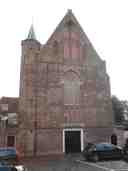
  1. To spot the Walloon Church, look for a tall, narrow brick building with a steep triangular roof and a quirky little octagonal tower on the left side-it’s completely wedged between…阅读更多收起

    To spot the Walloon Church, look for a tall, narrow brick building with a steep triangular roof and a quirky little octagonal tower on the left side-it’s completely wedged between other buildings right on Schoutenstraat. Welcome to the Walloon Church-no, you’re not seeing double, the front is lopsided because of that charming turret! Imagine the year is 1504: you’d be standing in front of the brand-new chapel of the Sisters of the Common Life, dedicated to Saint Gertrude, with whispers of prayer and the rustle of habits all around. Fast-forward to 1686, and this chapel transforms into a spiritual home for the French-speaking Reformed community-who still hold French services today! Tucked away so snugly between the city’s old walls, some locals say only the most curious ever find it. Now, don’t miss the story of the small but mighty pipe organ inside, which began its journey in a church in Groningen in 1821, crossed several towns, and finally landed here-imagine organ-makers with their tools, expanding and restoring it over decades. These walls have witnessed everything, from secret sisterhoods to elegant French psalms. Be glad you’re just visiting-you don’t have to dust centuries of history off the pews!

    打开独立页面 →
  2. In its early days, the monastery was more than just a quiet retreat; it managed lands all around Zwolle, with the refectory-built by 1350-serving as its financial nerve center.…阅读更多收起

    In its early days, the monastery was more than just a quiet retreat; it managed lands all around Zwolle, with the refectory-built by 1350-serving as its financial nerve center. Picture monks, ledger books, and maybe some nervous coin counters, all dashing about. But wait, this refectory didn’t stick to one job: after the Reformation, suddenly it was hosting city councilors, silk merchants, theater performances, even French soldiers in 1812-imagine the echo of boots and laughter! It later became a museum, a business school, and even the local tourism office. Restored with love in 1915-17, today this building is a proud national monument. Every stone here tells a different chapter; I guess you could say Monastery Bethlehem has had more careers than most of us!

    打开独立页面 →
  3. Koningsplein is a narrow alleyway just ahead, with colorful graffiti on one wall and a cozy line of bikes parked along the pavement, making it stand out from the quieter white…阅读更多收起

    Koningsplein is a narrow alleyway just ahead, with colorful graffiti on one wall and a cozy line of bikes parked along the pavement, making it stand out from the quieter white building beside it. Welcome to Koningsplein, where every stone has a quirky story to tell and maybe a splash of spray paint! Imagine, hundreds of years ago, you’d be standing next to the Heilige Geest Gasthuis, a place founded in 1306-it was a shelter for travelers, a hospital for the poor, and a retirement home all rolled into one. Most of the old gasthuis was lost to a fire in 1851, but bits of its ancient soul survived-pop your head up to the second floor to spot beams from the 1500s, or peek inside the little courtyard to spy church windows bricked up long ago. Across the way, if you wander towards the end of the alley, you’ll see an iron balcony with playful dolphins twisted into its rails, watching over the Old Fish Market, possibly dreaming of nobler times. These days, though, Koningsplein doesn’t show off-shopfronts, a few friendly cafés, even a student flat are tucked in here. And you know you’re somewhere special when the city lets graffiti artists go wild on the walls; what started as a controversy back in 2006 is now a living, changing gallery. So, next time someone calls this alley unremarkable, you’ll know it’s anything but!

    打开独立页面 →
  4. The Grote Markt has always been a true stage for city life, and not just for swaps at the Saturday market. Picture the scene centuries back: crowds gasp as a judge ascends a…阅读更多收起

    The Grote Markt has always been a true stage for city life, and not just for swaps at the Saturday market. Picture the scene centuries back: crowds gasp as a judge ascends a platform by the main guardhouse, the infamous pillory shining in the sunlight. Public punishments took place right here-villains were whipped, branded, or worse. The last hanging on this spot happened in 1837, when Albert Wetterman met his fate for murder. Talk about an event you wouldn’t want on your social calendar! Life wasn’t always so grim. After church each Sunday, townsfolk would cluster around to hear the latest "kerkespraak"-announcements of sales and auctions for the week ahead. Imagine the crier’s voice echoing across cobblestones as people leaned in for the town’s hottest gossip. And on quieter days in the 1800s, the air would warm with the scent of fresh milk-dairy vendors lined up along De Harmonie’s grand facade, their shouts of “fresh milk!” bouncing off the old stone. Local council finally decided, “Let’s keep the milk orderly!”-and so the tradition carried on until 1909. Everywhere you look, the historic buildings have their own stories. Grote Markt 9 was once the renowned Waanders Bookshop, its name still proudly written on the front. Look for Grote Markt 11, adorned with a sundial from 1754, the namesake of the restaurant “La Meridiana.” Someone should tell them it’s always lunchtime here! And Grote Markt 15 carries a nickname-’t Untien. After a fire in 1998, wags dubbed it “Fikkie and Hot Dog.” Even house names here come with a wink and a nod. Don’t miss the striking green “Glass Angel” in the center. Saint Michael, Zwolle’s patron and part-time dragon-slayer, gazes fiercely ahead, his 3.5-meter form made from 350 layers of glass. He’s been keeping watch since 2010. I heard he’s unbreakable, but let's not test that theory. So soak in the sound, sights, and stories-you’re standing on centuries of city secrets, all swirling just beneath your feet.

    打开独立页面 →
  5. Standing here at the imposing front of the Basilica of Our Lady of the Assumption, you can’t help but feel dwarfed by centuries of stories. Imagine the year is 1394. Craftsmen…阅读更多收起

    Standing here at the imposing front of the Basilica of Our Lady of the Assumption, you can’t help but feel dwarfed by centuries of stories. Imagine the year is 1394. Craftsmen rush about, hammering the first stones of the choir into place. Over the next hundred years, the church sprouts wings with its transept and, finally, the nave. By 1540, the tower stood tall, but something was missing. Instead of a grand crown, it bore only a modest lantern-talk about a bad hair day! It took until 1727 for the famous onion-shaped dome to appear, a feature that earned the tower its local nickname: the Peperbus, or "Pepper Shaker." But drama came calling in 1815-a lightning bolt struck the tower, setting it ablaze. Repairs dragged on for over a decade, proving, once again, that even the holiest places have to deal with construction delays. The church, once a mere chapel tied to St. Michael’s Church, has worn many hats; from housing Catholics to storing…well, whatever the town needed between 1580 and 1810! Only in 1809 did it return to its roots, packed with neo-classical flair and a later, dramatic gothic makeover. Look up-the apostles stare back from the grand beam, while the painted vaults tell the tale of Christ’s sufferings. Listen out for Maria’s festival in August when the beautiful silver statue of Mary and child, made by Hellner, goes parade-style around the church before a stately eucharist. And deep inside, the relics of Thomas a Kempis now rest, moved from their old home to lend a touch of serenity. And, guarding it all, a statue of St. Michael-the city’s own protector-reminds Zwolle who’s boss. Bet you didn’t expect a simple pepper shaker could hold this many secrets!

    打开独立页面 →
  6. Imagine yourself standing here hundreds of years ago - but watch your step, because right in front of you flowed the mighty Grote Aa! This wasn’t just any stream; it was Zwolle’s…阅读更多收起

    Imagine yourself standing here hundreds of years ago - but watch your step, because right in front of you flowed the mighty Grote Aa! This wasn’t just any stream; it was Zwolle’s watery heartbeat, slicing through the city wall and connecting the bustling life inside to the Zwarte Water beyond. Back in 1441, city workers rolled up their sleeves and dug the Aa deeper, turning it into a busy highway for ships. Picture small boats slipping under the Waterpoort, their cargo bound for the Waag, where eager traders waited. You could almost hear the shouts and the slosh of water echoing under the arches. But it wasn’t all smooth sailing. As the city grew, the Aa sometimes carried more than just ships - let’s just say hygiene was a bit of a “sinking” situation. When the river started sneaking beneath Melkmarkt and Gasthuisplein, it also snuck in some dirty secrets. In the 19th century, tainted water sparked a cholera outbreak that swept through the city. The solution? Cover the river up! By 1887, builders closed off the last piece at the Zwarte Water, forever hiding the old waterway. So next time you walk these stone streets, remember: you might be walking over history’s hidden river, the mysterious, watery ghost of Zwolle!

    打开独立页面 →
  7. Right in front of you once stood the mighty Red Tower, a proud sentinel embedded in Zwolle’s old city walls. Picture the scene centuries ago: the morning mist swirling around…阅读更多收起

    Right in front of you once stood the mighty Red Tower, a proud sentinel embedded in Zwolle’s old city walls. Picture the scene centuries ago: the morning mist swirling around sturdy bricks, guards in clinking armor at the gate, eyes sharp for newcomers wanting to access the busy harbor square stretching out toward the Zwarte Water river. Ships creaked with cargo and gossip as traders shuffled past, hoping the guards had a soft spot for a bribe-or maybe a pie. Though the Red Tower is long gone, its memory lingers here in the name of this lively square, Rodetorenplein, and the nearby Rodetorenbrug bridge. It’s as if Zwolle never wanted to let go of its red guardian! Nowadays, instead of knights, you might spot music fans or radio hosts-this is where the Serious Request charity event for 3FM took over in 2024. The square buzzed with excitement and generosity as people raised funds for the Metakids Foundation, proving that even without a tower, this spot is still a gateway to community spirit. Imagine, from stone and swords to DJs and donation jars-the Red Tower’s legacy is anything but dull!

    打开独立页面 →
  8. Take a look around you and try to picture this spot over a century ago. Imagine the tall, striking silhouette of St. Michael’s Church, its 79-meter tower stretching up to the sky,…阅读更多收起

    Take a look around you and try to picture this spot over a century ago. Imagine the tall, striking silhouette of St. Michael’s Church, its 79-meter tower stretching up to the sky, capped by an octagonal lantern and a slender spire that must have made nearby birds rethink their flight paths. You’re standing where Zwolle’s growing Catholic community once gathered in awe, surrounded by the scents of candles and the echo of prayers under soaring cross-ribbed vaults. But the story of St. Michael’s is as dramatic as any soap opera. The very first St. Michael’s Church was Catholic, but when the Reformation stormed through, the Protestants took over. Catholics were forced to worship in hidden “schuilkerken”-secret churches, because praying openly was frowned upon. Fast forward to 1841, and a new church finally opened its doors. But tell a Catholic community they can’t stop growing and, sure enough, by the late 1800s it was getting rather ‘cozy’ in there. So, in 1890, architect Nicolaas Molenaar Sr. designed a magnificent neo-Gothic hall church, which made everyone forget about ‘cozy’ and start thinking ‘cathedral!’ The pride of the church was the glorious relic shrine of Thomas à Kempis, housed in a breathtaking eight-meter-high monument crafted by the firm F.W. Mengelberg. And in 1926, the air began to vibrate with the deep notes of Joseph Adema’s organ from Amsterdam. Sadly, modernity marched in. By 1963, churches were out, shopping centers were in. Despite the protests (and let’s face it, some heroic attempts to save the iconic tower), it was demolished in 1965. Today, shops sit where the faithful once sang-though the space is currently empty, as even Hudson’s Bay has departed. But legends never disappear. The organ plays on, now in Raalte, and the Thomas à Kempis shrine found shelter in Zwolle's Basilica of Our Lady. This corner of Roggenstraat may look different, but if you listen closely-well, you just might hear echoes of celestial music in the wind.

    打开独立页面 →
  9. Look for a sturdy old building with red bricks, tall narrow windows, and dark wooden shutters, set right next to the little square-you can’t miss its medieval look under the leafy…阅读更多收起

    Look for a sturdy old building with red bricks, tall narrow windows, and dark wooden shutters, set right next to the little square-you can’t miss its medieval look under the leafy trees. Alright, imagine yourself standing here in Zwolle nearly 600 years ago, but watch out-you’re by the Pestengasthuis, the “Plague Guesthouse!” Back in the 1450s, this building stood on the edge of the city, outside the medieval city wall, well away from healthy citizens. If you were unfortunate enough to catch the plague, this was the place you’d end up. The old brick walls around you must have heard plenty of coughs and creaks at night. But the city didn’t stop growing and soon, the wall moved, bringing the Pestengasthuis inside the city-a bit like a surprise houseguest you can’t get rid of! When the plague finally packed its bags and left town (thankfully!), the building took up a new job-first as a hospital for soldiers, and later as a meeting spot for the local weavers’ guild. In fact, the square right outside is still called Weversgildeplein, a reminder of all those busy hands and noisy looms! Over the years, the hospital became many things, but today it welcomes you as a restaurant. So, if you hear mysterious footsteps or the playful ghost of a weaver, just blame it on the centuries-old brickwork… or maybe the lunch menu!

    打开独立页面 →
  10. Directly in front of you is the Broerenkerk, a large brick building with tall pointed windows and a steeply pitched roof, easily spotted behind the trees just off…阅读更多收起

    Directly in front of you is the Broerenkerk, a large brick building with tall pointed windows and a steeply pitched roof, easily spotted behind the trees just off Broerenkerkplein. Welcome to Broerenkerk, where monks, books, and even a secret or two have shared the same walls! Picture yourself in 1465: the quiet shuffle of Dominican monks’ sandals on cold stone floors, the air scented with candle wax and old parchment. This place was once a thriving monastery, and while the monks eventually moved out in 1580, the story kept rolling. The church switched teams to the Protestants in 1640, and by the 1760s, the Jewish community was lighting the lamps in part of the convent-talk about sharing! Fast forward, and after church services paused in 1983, a restoration project uncovered some dazzling hidden ceiling paintings. Imagine restoration workers gasping as vibrant art reappeared after centuries out of sight! The mighty organ above, built in 1824 and lovingly maintained, still fills the space with music. Today, instead of quiet prayers, you’ll hear the rustle of pages and the soft clink of coffee cups, as Broerenkerk is now a beloved bookshop and cultural hub. Stroll inside if you wish, and you might even spot the ceiling paintings that once hid above the monks’ heads.

    打开独立页面 →
  11. To spot De Librije, look for the grand brick building glowing with warm light behind its many square windows, with an ornate, statue-topped entrance right in front of…阅读更多收起

    To spot De Librije, look for the grand brick building glowing with warm light behind its many square windows, with an ornate, statue-topped entrance right in front of you. Welcome to De Librije-an unforgettable fusion of centuries-old history and some of the world’s most celebrated cuisine. Picture this: you’re standing where monks once pored over ancient manuscripts in a 15th-century Dominican abbey. Fast forward to the 1990s, and this peaceful former library began to fill with the delightful clatter of cutlery and the dreamy aromas of dishes created by Jonnie Boer and Thérèse Boer-Tausch. Since 1993, their restaurant has racked up not just one, but three Michelin stars-imagine the pressure in the kitchen when those inspectors visit! In 2004, De Librije hit the culinary jackpot with its third star and never looked back. Even the Gault Millau crowned it Restaurant of the Year, and critics around the world drooled over its modern Dutch masterpieces. In 2015, De Librije packed up its pans and moved to this elegant spot you see now, trading library shelves for the buzz of food lovers from across the globe. Not bad for a place that started with a few cookbooks and a lot of guts!

    打开独立页面 →
常见问题

如何开始导览?

购买后,下载 AudaTours 应用并输入您的兑换码。导览将准备好立即开始--只需点击播放并按照 GPS 引导的路线行驶即可。

导览期间我需要互联网吗?

不需要!开始前下载导览并完全离线享受。只有聊天功能需要互联网。我们建议在 WiFi 下下载以节省移动数据。

这是导游带领的团体游吗?

不是--这是自助语音导览。您按照自己的节奏独立探索,通过手机播放音频解说。没有导游,没有团体,没有时间表。

导览需要多长时间?

大多数导览需要 60-90 分钟才能完成,但您完全控制节奏。随时暂停、跳过站点或休息。

如果我今天无法完成导览怎么办?

没问题!导览具有终身访问权限。随时暂停和恢复--明天、下周或明年。您的进度已保存。

有哪些语言可用?

所有导览均提供 50 多种语言版本。在兑换代码时选择您的首选语言。注意:导览生成后无法更改语言。

购买后我在哪里访问导览?

从 App Store 或 Google Play 下载免费的 AudaTours 应用。输入您的兑换码(通过电子邮件发送),导览将出现在您的资料库中,准备下载并开始。

verified_user
满意保证

如果您不喜欢该导览,我们将退款。请联系我们 [email protected]

安全结账使用

Apple PayGoogle PayVisaMastercardPayPal

AudaTours:语音导览

有趣、经济实惠、自助徒步导览

试用应用 arrow_forward

深受全球旅行者喜爱

format_quote 这次导览是游览这座城市的绝佳方式。故事很有趣,感觉不太照本宣科,我喜欢能够按照自己的节奏探索。
Jess
Jess
starstarstarstarstar
第比利斯导览 arrow_forward
format_quote 这是了解布莱顿的一种可靠方式,感觉不像游客。解说有深度和背景,但并未过度。
Christoph
Christoph
starstarstarstarstar
布莱顿导览 arrow_forward
format_quote 一手拿着羊角面包,零期望地开始了这次导览。这款应用真的很适合你,没有压力,只有你、你的耳机和一些很酷的故事。
John
John
starstarstarstarstar
马赛导览 arrow_forward

无限语音导览

解锁全球每个导览的访问权限

0 导览·0 城市·0 国家
all_inclusive 无限探索