AudaTours logoAudaTours

佛罗伦萨语音导览:佛罗伦萨永恒辉煌的盛大之旅

语音指南15 景点

曾经,一场篝火在佛罗伦萨的心脏熊熊燃烧,它吞噬的不仅仅是木材,还点燃了至今仍在闷烧的激烈辩论。 在这场自助语音导览中,沿着那场大火的阴影,穿梭于回荡着反叛、远见和奇观的街道。揭开大多数人匆匆路过的纪念碑和拱门背后隐藏的故事。 是什么驱使萨伏那罗拉如此猛烈地挑战一个城市的灵魂,以至于历史本身似乎都在颤抖?每晚,当革命悄然逼近时,谁又在凯旋门后默默注视?在一个几乎没有游客逗留的广场上,又发生了什么不同寻常的仪式? 一步一步,解开佛罗伦萨狂热与骄傲、丑闻与被遗忘的勇气的错综复杂之网。当你从传奇的动荡走向宁静的角落时,宏伟的拱门和寂静的雕像将跳动着意想不到的秘密。 让好奇心的第一缕火花引领你的道路——佛罗伦萨等待着那些敢于超越表面的人。开始行走吧。

导览预览

map

关于此导览

  • schedule
    持续时间 40–60 mins按照自己的节奏
  • straighten
    3.0 公里步行路线跟随引导路径
  • location_on
  • wifi_off
    离线工作一次下载,随处使用
  • all_inclusive
    终身访问随时重播,永久有效
  • location_on
    从 瓦萨里广场 开始

此导览的景点

  1. To spot Piazza Vasari, look for two small, square white buildings with sturdy stone corners, positioned across from each other right at the edge of a leafy park and along a busy…阅读更多收起

    To spot Piazza Vasari, look for two small, square white buildings with sturdy stone corners, positioned across from each other right at the edge of a leafy park and along a busy street intersection-these are your historic clues that you're standing in the right place! Welcome to Piazza Vasari, where a simple plaza hides layers of Florence’s ever-changing story. Picture yourself a century ago, standing right where the city once drew its line between “in” and “out”-this was the edge of Florence, with a customs barrier blocking the way. Imagine the clang of carts arriving, officials in their uniforms checking wagons, city life bustling as people paid their dues to pass through. Those two twin little buildings you see? They were once the nerve center for all things customs-one handling the orderly paperwork as part of the local government, and the other, today, welcoming artists of the vibrant Donatello Group. But this square never stands still-transforming with the times, it blossomed in 1911, when Florence finally threw open its arms and took in even more neighborhoods. The old customs barrier was gone, and suddenly, the plaza pulsed with movement, step by step, day by day. Traffic roars through now, buses and Vespas zipping past as if racing the ghosts of the past. Look across the street and your eyes land on a splash of green: this public garden, today dedicated to the civilian victims of war, holds its own surprise. In its heart is a gleaming red marble basin-home to Mario Moschi’s playful “Fontana dei Puttini.” This isn’t your usual serious sculpture! Picture four giggling bronze children clambering over the back of a turtle, piled up like it’s recess time, all holding up a shallow water basin. The inspiration? Moschi watched his niece crawling around the house and a family turtle gliding beside her-proving once and for all that art sometimes springs from simple, joyful moments at home. Renovations and new benches tell you this square keeps getting a little love, decade by decade. So, next time you spot two quirky twin houses, think of borders, tumbling children, and the echo of laughter-because Piazza Vasari has always been a gateway for stories old and new.

    打开独立页面 →
  2. To spot the Misericordia Cemetery, look ahead for a pale, slightly weathered stone wall with a large arched entryway right on the corner, flanked by empty sculpted niches and…阅读更多收起

    To spot the Misericordia Cemetery, look ahead for a pale, slightly weathered stone wall with a large arched entryway right on the corner, flanked by empty sculpted niches and topped with old Florentine crests. Welcome to the Misericordia Cemetery, or as the locals used to call it, "Cemetery of the Pinti"-a place whose walls have many secrets, and not just the six-feet-under kind! Back in 1747, picture this area as empty countryside just outside the ancient Porta a Pinti. Instead of cars honking by, imagine the air filled with birdsong and the distant clang of a bell from Florence. This cemetery began as a quiet retreat for the departed from the Santa Maria Nuova hospital-especially the unknown or unclaimed, whose bones sometimes ended up teaching young surgeons a thing or two about anatomy. When city rules of 1784 banned burials inside Florence, the Misericordia needed a new home for its “brotherhood” members-sorry ladies, membership back then was men-only, so here’s where you’ll find only male tombs under your feet! In 1824, Grand Duke Leopold II lent a hand, giving this spot to the brotherhood. At first, two graveyards stood awkwardly side by side, separated by a wall like two neighbors who just can’t agree on the best gelato flavor. Eventually, the Misericordia took over, expanding and giving the cemetery its grand, monument-like look. In the late 1830s, city engineer Paolo Veraci crafted these elegant semicircular loggias and joined them with a chapel to the Immaculate Conception-reserved for the city’s distinguished dead. Later, architect Michelangelo Maiorfi finished the job, adding two side wings and the grand façade you see before you. The last burial? That was in June 1898-a certain Emilio Lapi, the final guest at this exclusive permanent party. Among the guests buried here are many notable Florentines, like Vincenzo Batelli and Emilio De Fabris, their stories now part of the hush that lingers here. It’s a place where history, science, and some very Florentine stubbornness meet-soak it in, and watch out: you might just learn something grave!

    打开独立页面 →
  3. In front of you is Via dei Della Robbia-a long, narrow street lined with elegant villas and low-rise buildings, stretching out toward the distant hills, framed by a mix of stone,…阅读更多收起

    In front of you is Via dei Della Robbia-a long, narrow street lined with elegant villas and low-rise buildings, stretching out toward the distant hills, framed by a mix of stone, stucco, and iron fences on both sides. Now, right here on Via dei Della Robbia, let’s take a little stroll through history-and you won’t even need to break a sweat! Imagine it’s the late 1800s, and Florence is buzzing with the excitement of transformation. After a stint as Italy’s capital, the city was bursting out of its old medieval shell. Picture a young city planner named Giuseppe Poggi, spinning grand dreams and demolishing ancient walls to make way for modern boulevards, almost like Florence was trying out a Parisian outfit for the first time. This street popped up as part of those bold plans in 1884, its path winding from Piazza Savonarola to Viale Giuseppe Mazzini. It became the fashionable address for the city’s upper crust, who snapped up the new villas and mansions, eager to enjoy a bit of Art Nouveau flair ("Liberty style," as the locals called it). But it wasn’t all high society and posh mattresses-just behind Piazzale Donatello, artists flocked here, forming the lively Gruppo Donatello. Imagine walking past and catching heated debates about art, or maybe someone painting the next masterpiece right before your eyes. As you walk past number 50, you’ll spot a plaque celebrating the birth of the magazine "La Voce," which stirred up literary storms in early 20th-century Florence. And at number 68, another plaque and a little bust remember the historian Robert Davidsohn-his solemn profile keeps watch over the hustle and bustle. So, next time you pass the Chinese consulate or any of these graceful villas, remember: this street isn’t just a shortcut through the city-it’s a living storybook, packed with the drama and dreams of over a century of Florentine ambition!

    打开独立页面 →
再显示 12 个站点显示更少站点expand_moreexpand_less
  1. Take a moment to close your eyes and imagine yourself back in the 13th century, just outside old Porta a Pinti. In front of you stands the Convent of San Giusto alle Mura, once…阅读更多收起

    Take a moment to close your eyes and imagine yourself back in the 13th century, just outside old Porta a Pinti. In front of you stands the Convent of San Giusto alle Mura, once home to the legendary Ingesuati friars. These were no ordinary monks-they were master glassmakers, so good that it’s rumored the very name of Borgo Pinti comes from them, “pintori” meaning painters of stained glass. If Florence ever had superheroes, it was these guys, armed with colored glass and sacred art! Inside, the church was a treasure trove. Picture works by famous artists-Vasari remembered Benedetto da Maiano’s dramatic sculpted Crucifixion above the door, Perugino’s moving scenes, Ghirlandaio’s Madonna and saints, and even a Madonna by Andrea del Sarto, all glowing in the colored light. Some of these masterpieces now live at the Uffizi, but you would’ve seen them right here! The church was dedicated to Saint Justus of Lyon, whose actual arm was kept as a relic-yes, you heard right, a holy arm, gifted from nuns in France! But every good story has a plot twist. In 1529, during the siege of Florence, the convent was destroyed-leaving nothing but memories and a few scattered masterpieces. The friars picked up what they could and moved to a new church across the city. So, while the stones may be gone, the spirit of San Giusto’s art and legend still flicker here in Florence-almost like a ray of stained glass sunlight, even on a cloudy day.

    打开独立页面 →
  2. Look straight ahead for a wide avenue lined by leafy green trees and grand stone buildings, bordered by a central concrete barrier-iconic Viale Giacomo Matteotti stretches out…阅读更多收起

    Look straight ahead for a wide avenue lined by leafy green trees and grand stone buildings, bordered by a central concrete barrier-iconic Viale Giacomo Matteotti stretches out before you. Take a deep breath-can you feel the energy of Florence’s great boulevard? Imagine yourself a Florentine in the late 1800s, standing on what used to be the city’s tough old walls, but is now this elegant, tree-shaded avenue. At first, this street was named for a royal-Viale Principe Amedeo, to honor good ol’ Amedeo di Savoia. But after 1947, it gained a new, very different namesake: Giacomo Matteotti, a brave politician who stood up to fascists and paid dearly for it. A reminder that Florence’s broad avenues can tell big stories if you listen closely. Now, picture huge crowds and horse-drawn carriages clip-clopping past as the city buzzes with excitement in the 1860s-Florence had just become the capital of Italy! You might see the renowned architect Giuseppe Poggi pacing here, blueprints in hand and his mustache bristling with ideas. Poggi had a dream: knock down the northern walls and unite the old city with the new, wrapping Florence in a grand ring of boulevards and beautiful squares like Piazza della Libertà and Piazza Beccaria. But it wasn’t always easy. After Florence lost capital status, construction slowed. The street lost lush gardens to bombing during World War II, and in the 1950s and ‘60s, stately villas with flower-filled gardens gave way to bigger apartment blocks as Florence’s people needed places to live. Even the lovely hedges that once separated traffic lanes disappeared-replaced by no-nonsense concrete dividers. It’s not quite what dreamy Poggi imagined for the “high-bourgeois” neighborhoods! As you stand here, notice the huge, impressive doorways on some old buildings-these were inspired by the wide Parisian boulevards. At number 22 hides the Enriques Capponi elementary school. If you pass number 54, tip your hat to Enrico Barfucci, a local legend who once lived here. Don’t miss the modern tabernacle at the corner with Via Benivieni, sheltering a delicate Madonna sculpted in 1954 by Ezio Giovannozzi-a little touch of faith in a fast-moving world. So whether you’re dodging scooters or just strolling under the shade of the tall plane trees, remember: this lively avenue has survived bombs, bulldozers, and even city planners with very big dreams. Welcome to the living heart of Florence-onward to our next stop!

    打开独立页面 →
  3. To spot the Rinaldo Carnielo Gallery, look for a grand stone building with a decorative, curving central pediment, blue-trimmed windows, and grand sculptural flourishes stretching…阅读更多收起

    To spot the Rinaldo Carnielo Gallery, look for a grand stone building with a decorative, curving central pediment, blue-trimmed windows, and grand sculptural flourishes stretching almost the entire length of the piazza, right in front of you. Now, imagine Florence at the end of the 1800s-artists busily brushing paint, sculptors hammering stone, and the stylish Liberty (Art Nouveau) architecture setting the scene for a city buzzing with creativity. Here you stand, facing the magnificent Galleria Rinaldo Carnielo, a place where the spirit of Florence’s artistic golden age still lingers in the air. Picture the solid mass of this building, its imposing presence closing off nearly the whole southern side of Piazza Savonarola. The façade ahead of you isn’t shy; it’s divided into two grand wings and a taller, central part. The top is crowned by a curving pediment, rising above heavy, scroll-like brackets-if only architectural flourishes could flex their muscles, these would be showing off. If you look closely, in the very center, there’s a bronze plaque with the proud name “Rinaldo Carnielo.” Just beneath it, a sculpted bust of Carnielo himself keeps watch, along with a Latin inscription-“NON OMNIS MORIAR,” meaning, “I shall not completely die.” Dramatic, right? Florence wouldn’t have it any other way. Back in the 1870s, young Rinaldo Carnielo journeyed here from Treviso, eager to find the spark Florence gave to artists. He quickly made this city not just his home, but his studio, his school, and his stage for displaying his finest works. This building, partly designed in his honor, became a monument to his life and craft. Despite rumors that Carnielo himself drew the initial plans, the final grand transformation-especially the whimsical, secessionist style details-came after his death in 1910, with architect Enrico Lusini taking the reins. Push forward to the early 20th century, and this area was humming with the energy of artists. The neighborhood itself sprang up as part of a bold new plan to redevelop Florence in its brief years as the capital of Italy, thanks to architect Giuseppe Poggi. Carnielo’s house and gallery weren’t just another part of the scenery-they marked an artistic crossroads! Suppose you had visited around 1912, you’d have seen sculptors wandering in and out, maybe even catch a glimpse of the young Carnielo at work on his great plaster studies. But time moves on. In 1958, Carnielo’s descendants decided to hand his treasure trove of sculptures to the city of Florence, turning private passion into public heritage. The left wing of this very building was opened as a museum in 1965 after the city inherited it from Carnielo’s own son. Imagine stepping inside, the rooms laid out with over 200 pieces-bronze, marble, and terracotta, from delicate Renaissance-inspired reliefs to bold, verist masterpieces like the “Dying Mozart” and the “Angel of Death.” In between grand works, you’d spot whimsical fire tongs and vases-Carnielo never missed a chance to add a little fun. The gallery’s seen its share of adventures and mishaps. Since 1989, restoration work has waxed and waned, with the building’s striking façade unveiled again only in 2020 after a long makeover. Out back, you’ll find a sleek stonework wall, while on the Via Benivieni side, marble plaques announce the Carnielo family motto: “Per Aspera ad Astra”-“Through hardships to the stars.” As you look up at the grand windows and baubles on the rooftop, you can almost sense Florence’s love for artistry and detail-where even a simple entryway carries ancient wisdom: “Honor the art, which is the life of life.” With the Accademia delle Arti del Disegno poised to take over, this splendid building seems ready for its next chapter. Alright, time to savor this moment! Don’t forget to gaze up and read Carnielo’s daring mottoes-they are bound to give your walk a spark of artistic courage! Onwards to our next stop.

    打开独立页面 →
  4. To spot the Monument to Girolamo Savonarola, just look ahead in the middle of Piazza Savonarola-it's a tall, weathered stone pedestal with a marble statue of a robed man holding a…阅读更多收起

    To spot the Monument to Girolamo Savonarola, just look ahead in the middle of Piazza Savonarola-it's a tall, weathered stone pedestal with a marble statue of a robed man holding a cross high in his right hand, while his left rests protectively on a stone lion. Now, while we take in the scene, let me whisk you back to the 19th century, where the story behind this monument is as dramatic as a Florentine opera. Imagine dusty studios filled with marble chips and the quiet intensity of an artist at work. Our story begins with Enrico Pazzi, a sculptor from Ravenna, who, in 1861-without any commission-started shaping his vision of Girolamo Savonarola, the fiery friar famous for preaching reform and challenging the Pope himself. With nobody clamoring to buy his statue, poor Pazzi’s marble monk simply stood unfinished, waiting for a moment in history to break the silence. As the years crept by, tensions between church and state flared like the summer sun on Florentine rooftops, and Savonarola’s reputation as an anti-papal hero made him a perfect symbol. Two rival committees formed in Florence, squabbling over who should sculpt their man: the conciliatory camp picked Giovanni Dupré, who was, awkwardly enough, Pazzi’s old teacher. Meanwhile, Pazzi’s supporters wanted their monk-shaped vision to take center stage, but the city was in political and financial chaos as the Italian capital shuffled off to Rome. The statue of Savonarola by Dupré was the first to actually find a home-in a much smaller, humbler form, tucked away as a plaque in the monk’s own tiny cell at San Marco, in 1873. Pazzi’s grand marble Savonarola, though, remained in artistic exile, gathering dust for years. It wasn’t until 1875, after the entire neighborhood had probably changed its hair style twice, that Pazzi’s statue was finally finished. But just as you think his work is about to bask in glory, disaster strikes-the city takes back its offer to put the monument at San Marco. Ouch! Not one to give up, Pazzi and his supporters donate the statue to the city, where it sits-unveiled, unfunded, and probably a bit miffed-in Pazzi’s studio, till he’s finally allowed to set it up in the magnificent Salone dei Cinquecento in 1882. But wait-plot twist! After World War I, victory celebrations demand a new centerpiece, and Michelangelo’s sculpture is chosen instead. So, in 1921, Pazzi’s monument is shifted once more, this time outside, right where you’re now standing. Just imagine: after all that drama, accidental detours, and a city’s worth of debates, Savonarola arrives here, gazing out with his cross held high, and his hand firmly guarding the Marzocco, the stone lion-a symbol of Florence’s republican freedom. So next time you’re having a rough day, remember: even statues can spend decades waiting for their moment to shine. And if someone tells you to “take your show on the road,” just look at Pazzi’s Savonarola-the ultimate traveling statue of Florence.

    打开独立页面 →
  5. Right in front of you, you’ll see a striking cream-colored building with three grand floors, arched upper windows, and a long stone balcony facing the square-just look for the…阅读更多收起

    Right in front of you, you’ll see a striking cream-colored building with three grand floors, arched upper windows, and a long stone balcony facing the square-just look for the elegant palazzo at the corner, where rows of scooters are usually parked right in front. Welcome to the former home of the Department of Italian Studies of the University of Florence! Imagine Florence in the late 1800s, the city buzzing with desires for grandeur when it briefly became the capital of Italy. The architect Enrico Guidotti, eager to make his mark, picked this plot after an urban expansion plan by Giuseppe Poggi, and built a stately palazzo packed with character-just picture the echo of horses’ hooves, and elegant residents strolling under these arched windows. Fast forward to the 1970s and picture students rushing up the grand entrance, ducking into large halls and a spectacular corridor, its vaulted ceiling bursting with grottesque paintings by Tuscan artists. Overhead, intricate frescoes tell silent stories-one hall even has an image of the Assumption, and there’s a dazzling White Room that once welcomed scholars, later filled with the rustling of pages in the library. But wait, the story doesn’t end in academia. In recent years, real estate dreams swept in! In 2023, this building caught the eye of Palazzini Corporate S.r.l., who set out to turn it into luxury residences, branding it as “Palazzo Savonarola”-their crowdfunding campaign roared to life, as 375 hopeful investors poured in 1.4 million euros in just six days. But if you listen closely, you might just hear whispers of suspense-despite all the excitement, by 2024, nothing had happened, not a single hammer swing. Investors grew worried, waiting for news that never seemed to come. So as you stand outside, you’re part of a living story, full of ambition, art, tension, and maybe, a fresh new chapter just around the corner!

    打开独立页面 →
  6. Directly ahead, you'll see a striking modern building with long, horizontal bands of windows and sharp lines, its concrete facade broken up by tall rectangular windows with hints…阅读更多收起

    Directly ahead, you'll see a striking modern building with long, horizontal bands of windows and sharp lines, its concrete facade broken up by tall rectangular windows with hints of bold red shutters-just keep an eye out for the Italian flag waving near the entrance! Alright, time for a story wrapped in stone, steel, and a dash of drama. Picture yourself walking along Via Giacomini in the late 1960s, Florence is buzzing with change, the air is full of big ideas and… the sound of lots of construction drills. Right here, the famous Codignola family-imagine them as the literary royalty of the city-decided to give their publishing house, “La Nuova Italia,” a home that would turn modern architecture into poetry. Commissioned to design this palace was Edoardo Detti, a man who had the mathematical genius of an architect and the creative flair of an artist. Detti knew he had to do something special; not just build a box, but create a landmark. He joined forces with Carlo Scarpa, a legend himself, along with Luigi Caldarelli, Gianfranco Dallerba, and Paolo Donati. Four years of tinkering, sketching, and arguing over coffee, and voilà-the masterpiece was finished in 1972! The building is like two siblings: one faces Via Giacomini with six towering floors, while the other stands on Via Fattori, a little more compact at three levels, but holding its own. If you look up, you’ll notice how the lines of cream-colored concrete stretch across, almost like musical notes running the length of the facade. At street level, the chunky stone base and open, semi-transparent portico invite you closer, and if you peek through the pillars, you get a sneaky preview of the peaceful garden court hiding inside. Now, here’s where things get poetic. There’s a cedar of Lebanon smack in the middle of the courtyard, a tree much older than the building itself-so old, it probably remembers when Wi-Fi sounded like science fiction. Detti was so inspired by this grand tree that he made the whole design embrace it, keeping the building’s center open so the cedar could reign. Gardening meets masterminding! But, back on Via Giacomini, the building reveals its architectural tricks: jutting out and tucking in with every floor, windows marching in a quirky, offbeat rhythm, and flashes of crimson aluminum framing. At the back, there’s a semicircular staircase with lozenge-shaped windows, a playful wink from Detti and Scarpa-who, by the way, were as famous for their bold ideas as for their habit of arguing over whether a window should be this big, or that big. After its turn as a literary hub, rumor has it IBM took over for a while-imagine old computers humming and typewriters clacking where books once ruled. Today, the building houses the offices of the prefecture. Some say if you listen closely, the halls still whisper secrets of the city’s most passionate publishers and the cautious steps of stern bureaucrats. Even though some architecture buffs overlooked Detti’s brilliance, those who truly looked praised the way he matured his style here-mixing hard concrete, plush gardens, bold color, and a lot of character. If this building could talk, I bet it would have some fantastic tales about old Florence, literary squabbles, and maybe even wild parties under that legendary cedar. So, as you stand before this slice of modern Florence, take a breath and soak up a piece of the city’s soul, caught between old stories, strong stone, and a stubbornly magnificent tree! Want to explore the urban context, architecture or the the internal garden in more depth? Join me in the chat section for a detailed discussion.

    打开独立页面 →
  7. Right ahead, you’ll spot a cream-colored church with tall arched windows and a simple triangular pediment, quietly tucked behind the line of leafless trees along the busy Viale…阅读更多收起

    Right ahead, you’ll spot a cream-colored church with tall arched windows and a simple triangular pediment, quietly tucked behind the line of leafless trees along the busy Viale Don Minzoni. Now, as the city buzzes around you, imagine the steady footsteps of Jesuit priests heading inside, past the neoclassical façade and through the big wooden doors-maybe dodging the occasional Vespa, too! For years, this church has been a peaceful hub for the Jesuits, who still have their institute just around the corner on Via Silvio Spaventa. If you step inside, you’ll notice a single, grand hall where sunlight sometimes slips across the benches. Tucked to your left at the end of the nave, there’s a striking painting: the Circumcision by Filippo Bellini, a treasure with a mysterious journey from Renaissance Urbino. The high altar is crowned with a colorful ceramic Madonna and Child from 1957-made by the famous Richard-Ginori porcelain makers, adding just a pinch of modern zest to all this history. And hey, just up the street, the scientific Niels Stensen Institute was founded in 1964, right where a marble plaque also recalls sculptor Dante Sodini, whose hands brought to life kings, queens, and even a blind man feeling his way to faith. So as you stand here, you’re surrounded by more than traffic-you’re at a timeless crossroads of art, science, and a dash of Florentine humor.

    打开独立页面 →
  8. To spot the Church of the Madonna della Tosse, look for a pale Baroque facade topped with a triangular pediment and a large arched window, framed by an elegant stone portico with…阅读更多收起

    To spot the Church of the Madonna della Tosse, look for a pale Baroque facade topped with a triangular pediment and a large arched window, framed by an elegant stone portico with three arches and Tuscan columns right at the front. Now as you stand here, take in the gentle echo of footsteps and the low hum of traffic that breezes by-the same spot has welcomed worshippers, curious passersby, and miracle-seekers for centuries. The church’s story begins with a painting: the Madonna and Child, found nestled among the ruined stones of the old San Gallo convent, a survivor from just before Florence’s great siege. Folk legend swept through the city like a midsummer breeze-parents would bring their coughing children here, hoping the Madonna would cure whooping cough. Soon, so many prayers were offered that the church got its unusual nickname, Madonna della Tosse-the Madonna of the Cough! Yes, in Florence, even saints help you with a tickly throat. Even the powerful grand duchess, Cristina of Lorraine, became part of this tale. After her own children were cured, she had an oratory built in 1595 around the miraculous image, offering thanks in stone and mortar. The oratory grew into the very church standing before you, thanks to architect Gherardo Mechini and later on, the Eremitani Agostiniani monks. In 1640, the lavish open-air portico was added-imagine a Venetian nobleman, Fabrizio Colloredo, tossing coins to sponsor it, perhaps dreaming of Florence’s bright skies outshining Venice’s fog. Step beneath the arches and you’ll find the stories multiply. The church’s neo-Renaissance interior was shaped in the 1800s, filled with art, some now vanished, some tucked in distant chapels: grand altarpieces, mysterious unsigned paintings, all echoing the faith and artistry that’s pulsed through these walls. Special mention goes to local legend Don Angelo Chiaroni, parish priest from 1954 for nearly half a century, who turned this church into a meeting ground for progressive Catholics. You might well spot members of Florence’s most forward-thinking circles deep in conversation here-or spot their faces in the gleaming stained glass windows up above. Listen closely, and perhaps you’ll catch the gentle murmur of evening mass or the sudden toll of the church bell-reminding you that this beloved landmark is very much alive, surrounded by the laughter of children and the prayers of generations.

    打开独立页面 →
  9. In front of you is a low, stone bridge stretching gracefully over a grassy, tree-lined canal-just look directly ahead and you can't miss its simple arch and sturdy sides. Now,…阅读更多收起

    In front of you is a low, stone bridge stretching gracefully over a grassy, tree-lined canal-just look directly ahead and you can't miss its simple arch and sturdy sides. Now, imagine yourself standing here centuries ago, hearing the lively clatter of hooves and wheels. This is the legendary Ponte Rosso, named after an ancient red-brick bridge that once stood where this one does now. The original was so famous for its fiery color that everyone called it the “Red Bridge”-though now, in trusty stone, you’ll have to imagine the red with your mind’s eye. In 1765, this bridge echoed with the triumphant cheers of crowds as Grand Duke Pietro Leopoldo himself swept in from Vienna, entering Florence through this very spot. Fast forward to World War II and the Ponte Rosso had a pretty dramatic moment-while explosives took out many of the city’s bridges, this tough old fellow managed to hold on just enough that locals could still sneak across from Via Bolognese to the big city boulevards. Designed by the architect Tribolo in the early 1500s, it got a makeover in 1784, just in time to keep up with Florence’s hustle and bustle. More than just a pretty face, the Ponte Rosso has always been vital for city life-roads splay out from here in every direction, connecting ancient roots all the way to Rome, the mountains, and beyond. And all this time, the bridge has seen generations come and go, always holding up under their stories-and, these days, a whole lot of traffic!

    打开独立页面 →
  10. Directly in front of you, you’ll spot the Parterre as a wide open plaza, with reddish-orange buildings set on either side and a sweeping paved area that opens up towards a grand…阅读更多收起

    Directly in front of you, you’ll spot the Parterre as a wide open plaza, with reddish-orange buildings set on either side and a sweeping paved area that opens up towards a grand entrance way peeking out in the background-just walk ahead and you can’t miss the unique low, modern structures with big windows. Now, let me take you back into the whirlwind history of Florence’s Parterre! Picture this: it was the 1700s, and the Grand Duke Pietro Leopoldo, eager to add a touch of French flair to Florence, decided this patch of land should bloom as an elegant French-style garden. You can almost hear the rustle of silk dresses and the whispers of noble plans as locals strolled through neatly trimmed hedges. Time marched onward, and by the 19th century, architect Giuseppe Poggi swooped in with redesigns for the whole area but left the Parterre alone-maybe even Poggi was afraid to meddle with perfection! Fast-forward to 1937, and things got grand again. Sirio Pastorini, an architect with big ideas and no small amount of concrete, built the grand Palazzo delle Esposizioni right here. This was the beating heart of Florence’s fairs, the place where inventions, crafts, and new-fangled ideas dazzled the crowds-until, of course, a new kid called the Spadolini Pavilion stole the spotlight at the Fortezza da Basso. Like any drama-worthy landmark, the Parterre saw its ups and downs. Many of the old structures were torn down in the fifties, and it fell into a bit of ruin. But wait! In 1990, as Italy buzzed with World Cup excitement, the area was reborn-a brand new underground parking lot, hanging gardens, metal walkways, and a sparkling facelift for Pastorini’s round structure. Now it’s a lively hub for concerts, open-air films, and book readings. Don’t be surprised if you hear laughter or music drifting on the winter air-or maybe even the swish of skates from the seasonal ice rink! The Parterre has always been a place where Florence’s history meets its future, with just a touch of French charm hiding in every corner.

    打开独立页面 →
  11. To spot Piazza della Libertà, look slightly to your left where you'll see an open elliptical space lined with trees and impressive porticoed buildings, with a grand stone arch and…阅读更多收起

    To spot Piazza della Libertà, look slightly to your left where you'll see an open elliptical space lined with trees and impressive porticoed buildings, with a grand stone arch and garden visible in the middle of the traffic circle. Now, let’s step into the story of Florence’s grand northern doorway! Imagine yourself here hundreds of years ago, not in the heart of a modern city, but beside a narrow, muddy clearing surrounded by defensive moats and medieval stone walls. This spot was once the small, tense piazza of Porta San Gallo, a checkpoint where no one sneaked past without a solid excuse or a good cloak! Fast forward to 1738, when the ruling Medici family faded away, making space for the powerful new Lorena dynasty to arrive with a splash-as any good rulers would-through their own gigantic triumphal arch that still stands proudly in the center. But the real transformation came in the 1800s. Picture a flurry of horse-drawn carts, workmen with dusty coats, and the famous architect Giuseppe Poggi waving blueprints as he orders the demolition of the old walls. Florence wanted something modern and stylish, so Poggi designed this elegant, oval-shaped plaza, dressing it up with twins of stately palaces around the edge, all with dignified arches. The garden in the middle became the city’s green jewel-complete with the old Porta and that victorious arch, separated by a sparkling fountain and pond where ducks probably dreamed of ruling Florence themselves. This plaza has worn many names-Cavour, Costanzo Ciano, Ettore Muti-each echoing a different chapter of Italian history. After Liberation in 1944, it became Piazza della Libertà, celebrating freedom. On the far side, the Parterre garden waited quietly, turning from a French-style noble pleasure ground to a bustling exhibition center and today, a lively hub for culture. So, whether it’s world rulers or a bunch of ducks, everyone wants a little bit of glory here at Florence’s northern stage!

    打开独立页面 →
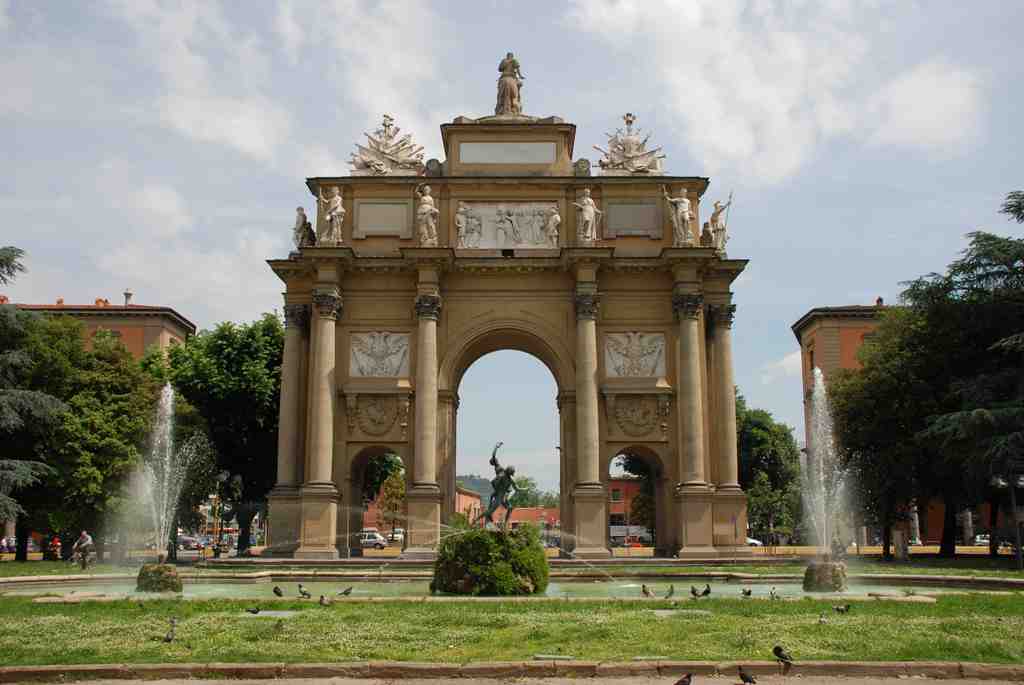
  12. If you’re searching for the Triumphal Arch of the Lorraine, just look straight ahead for a grand stone arch with three passageways and rows of statues and columns, rising from the…阅读更多收起

    If you’re searching for the Triumphal Arch of the Lorraine, just look straight ahead for a grand stone arch with three passageways and rows of statues and columns, rising from the middle of a park surrounded by elegant porticoed buildings-pretty hard to miss with fountains and sculptures greeting you right out front! Take a moment where you stand, surrounded by the gentle spray from the fountains and the rustling leaves -because you’ve just arrived at one of Florence’s most dramatic stages of history. Imagine it’s the chilly January of 1739, and Florence is buzzing with anticipation. Banners flutter, tapestries hang from every balcony along Via San Gallo, and the air is thick with the sound of horses and marching feet. Out from the north rides Francis Stephen, soon to be Holy Roman Emperor, making his grand entrance under this very arch-his new dynasty, the Habsburg-Lorraînes, about to begin its chapter in Florence. The arch itself was designed by a newly arrived Frenchman, Jean Nicolas Jadot, eager to show off with dramatic flair. Its ten soaring Corinthian columns, reliefs of imperial flags and weapons, and layers of local statuary all proclaim a grand entrance fit for an emperor. But the story doesn’t stay so triumphant. Not long after, Francis Stephen hightailed it to Vienna to grab the emperor’s crown, leaving Florence behind like a half-finished love song. Years later, his son Leopold sweeps in with his Spanish wife-one of those rare moments when Tuscany gets a dose of Viennese and Spanish drama all at once! If you look up, you’ll see an equestrian statue said to be Francis Stephen himself, caught eternally marching out-or maybe, sneaking away from all the tense family reunions? Around him, a cast of almost besieged mythological figures seem to be holding the fort, their stony faces watching traffic swirl below as if guarding the last bit of imperial dignity in a world that’s rushed right past them. In 1859, when Duke Leopold II fled through this very arch on his way to exile, the crowd even called him “Baby Leopold”-surely, the arch has seen kings arrive in glory, and leave in something a little less than royal style. So as you stand under the stone gaze of emperors and eagles, surrounded by splashing fountains and spinning city life, picture the park alive with banners, secret politics, and comic royal exits. After all, when Florence throws a welcome party, nobody ever truly forgets the way you came-or the way you left!

    打开独立页面 →

常见问题

如何开始导览?

购买后,下载 AudaTours 应用并输入您的兑换码。导览将准备好立即开始--只需点击播放并按照 GPS 引导的路线行驶即可。

导览期间我需要互联网吗?

不需要!开始前下载导览并完全离线享受。只有聊天功能需要互联网。我们建议在 WiFi 下下载以节省移动数据。

这是导游带领的团体游吗?

不是--这是自助语音导览。您按照自己的节奏独立探索,通过手机播放音频解说。没有导游,没有团体,没有时间表。

导览需要多长时间?

大多数导览需要 60-90 分钟才能完成,但您完全控制节奏。随时暂停、跳过站点或休息。

如果我今天无法完成导览怎么办?

没问题!导览具有终身访问权限。随时暂停和恢复--明天、下周或明年。您的进度已保存。

有哪些语言可用?

所有导览均提供 50 多种语言版本。在兑换代码时选择您的首选语言。注意:导览生成后无法更改语言。

购买后我在哪里访问导览?

从 App Store 或 Google Play 下载免费的 AudaTours 应用。输入您的兑换码(通过电子邮件发送),导览将出现在您的资料库中,准备下载并开始。

verified_user
满意保证

如果您不喜欢该导览,我们将退款。请联系我们 [email protected]

安全结账使用

Apple PayGoogle PayVisaMastercardPayPal

AudaTours:语音导览

有趣、经济实惠、自助徒步导览

试用应用 arrow_forward

深受全球旅行者喜爱

format_quote 这次导览是游览这座城市的绝佳方式。故事很有趣,感觉不太照本宣科,我喜欢能够按照自己的节奏探索。
Jess
Jess
starstarstarstarstar
第比利斯导览 arrow_forward
format_quote 这是了解布莱顿的一种可靠方式,感觉不像游客。解说有深度和背景,但并未过度。
Christoph
Christoph
starstarstarstarstar
布莱顿导览 arrow_forward
format_quote 一手拿着羊角面包,零期望地开始了这次导览。这款应用真的很适合你,没有压力,只有你、你的耳机和一些很酷的故事。
John
John
starstarstarstarstar
马赛导览 arrow_forward

无限语音导览

解锁全球每个导览的访问权限

0 导览·0 城市·0 国家
all_inclusive 无限探索

