弗伦斯堡语音导览:尤尔根斯比隐藏瑰宝的烈酒、水手与故事
一口百年老钟曾响彻弗伦斯堡,在尤尔根斯比蜿蜒的街道上,它既预示着和平,也预示着骚乱。在圣玛丽教堂华丽的塔楼和圣灵教堂寂静的石墙下,隐藏着大多数人从未察觉的秘密。 这个自助语音导览将带您穿梭于隐秘的小巷,漫步于历史悠久的船桥,那里无数的传说和丑闻为每一块鹅卵石注入了生命。揭开连当地人也只在夜幕降临后才窃窃私语的故事。 在一个决定性的夜晚,当教堂钟声恐慌地敲响时,是谁点燃了这座城市的希望之火?为什么一顶失踪的王冠曾在这神圣的殿堂中引发一场疯狂的搜寻?究竟是什么东西通过旧港口走私,永远改变了弗伦斯堡? 从阴影滑向阳光。在永恒的庭院中重温戏剧。感受尤尔根斯比充满故事的心脏,随着埋藏的记忆和新的觉醒而跳动。 戴上您的耳机。钟声即将再次响起。
导览预览
关于此导览
- schedule持续时间 40–60 mins按照自己的节奏
- straighten1.7 公里步行路线跟随引导路径
- location_on
- wifi_off离线工作一次下载,随处使用
- all_inclusive终身访问随时重播,永久有效
- location_on从 埃克纳故居 开始
此导览的景点
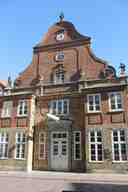
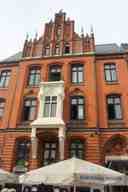
To spot the Eckener House, look for a striking, red-brick building with an ornate stepped gable and three small statues sitting on the roof-each one representing a different…阅读更多收起
To spot the Eckener House, look for a striking, red-brick building with an ornate stepped gable and three small statues sitting on the roof-each one representing a different season-with decorative white-framed windows and a zeppelin-shaped sign above the door on Norderstraße. You’re now standing before the grand old Eckener House, a place where Flensburg’s centuries swirl together like the perfect cup of spiced tea-you just might catch a whiff of history blending in with the salty Baltic air. Imagine this spot in the 16th century, when workers stacked brick upon brick, building these thick walls during misty autumn mornings. The house’s distinctive late Gothic gable stands proudly, but if you look closely at the two-storey façade, you’ll see it got an elegant Baroque makeover in the middle of the 1700s. On either side of the doorway are cozy little window alcoves-a sure sign of a local hotspot, even back then. Now tilt your head skyward and spot the trio of funny little stone putti perched on the rooftop-the Winter, looking rather bundled up on your left, Autumn showing off in the center, and Summer basking on the right. Their journey is just as interesting as the house’s own. In the mid-1800s, they came waddling-okay, probably “carted”-over from a garden at Gottorf Castle. Every season has made itself at home on top of this house. In 1867, while Prussia was forging new provinces and the streets of Flensburg buzzed with the sounds of industry and expansion, a Bremen merchant named Johann Christoph Eckener arrived here. He married the local cobbler’s daughter and opened up shop in this very building, selling cigars and spices-imagine the warm, peppery aroma swirling through the hallways. His children, Hugo and Alexander, were born upstairs; Hugo would one day soar to fame as a pioneer of airships. The house became known as the “birthplace” of greatness-and I’m not only talking about Hugo’s explosive first diaper. Jump ahead to 1914, and the building gets a stylish renovation, transformed into a cultural monument and restaurant called “Old Flensburg House.” Local history buffs dined with antiques from nearby museums, surrounded by bits and pieces salvaged from other historical buildings of Flensburg. For decades, it was the city’s living room-a place for stories and a symbol on the local tourism logo. Yet, fame couldn’t fix the leaky pipes or pay the rising heating bills, and by 2008, the restaurant had closed, leaving the building silent. Lately, people have talked about reviving the house as a museum that captures Flensburg’s more recent history, but plans keep changing-just like the weather. Even now, as it waits for a new purpose, the Eckener House stands stubbornly proud, its quirky statues watching over the street. With every brick and creak, it dares you to imagine what’s next.
打开独立页面 →Now, Johannsen isn’t just surviving-it’s thriving, offering everything from classic rums to quirky local favorites. Their product lineup could fill a small ship: liqueurs,…阅读更多收起
Now, Johannsen isn’t just surviving-it’s thriving, offering everything from classic rums to quirky local favorites. Their product lineup could fill a small ship: liqueurs, aquavit, even a licorice-flavored drink called Swattes Swien-named after the “black pig” from a local legend. Each year for the Rum Regatta, they release the prized Regatta Rum, making every sailor wish for a trophy! And if you fancy something historic, their oldest blend, simply called 1878, delivers a direct taste of the company’s founding year. In a world dominated by big brands, Johannsen stands proud-still a little rebellious, still family-run, and forever full of Flensburg spirit. Now, should we toast to that, or keep going?
打开独立页面 →To spot the Kaufmannshaus Hansen, just look for a striking three-story building of red brick with dramatic pointed arches and quirky green accents, crowned by a row of tall,…阅读更多收起
To spot the Kaufmannshaus Hansen, just look for a striking three-story building of red brick with dramatic pointed arches and quirky green accents, crowned by a row of tall, narrow windows and decorative spires-it towers boldly above the umbrellas in Nordermarkt. Now, close your eyes for a second-well, not too long, or you might bump into a pigeon! Imagine it’s 1869, right after the Deutsch-Danish War. Flensburg’s architecture was changing faster than a summer thunderstorm. Suddenly, in the place of two old, humble gabled houses, Christian Cicolai Hansen-an ambitious merchant and mill owner-decided to make a statement. He asked architect Johannes Otzen to design his home and office-a palace fit for both business and family, built from honest brick with wild gothic windows that looked ready to leap into a fairy tale. Step inside in your imagination: below your feet is the Börsenkeller restaurant, still lively today, while above, people pose for photos in the upstairs studio and families live where merchants once plotted their next big deal. But wait, the story gets even jollier at Christmas. Every year, children of Flensburg gather right out front as part of the city’s holiday market for the 'Waking of Santa Claus'-you can almost hear their laughter echoing through the brick corridors. This building marks a turning point for the city; Hansens' house inspired waves of brick Gothic buildings, like a fever that swept all the way to the grand Red Castle of Mürwik. And mystery lovers, here’s a secret: behind this building lies the hidden Neptunhof-one more layer to this urban onion. Restoration started in 2013, peeling back years to reveal stunning old murals and reawakening the grand old dining hall upstairs. Standing here, you’re not just outside some walls and windows-you’re standing at the crossroad of Flensburg’s fortunes, where history gets a fresh coat of paint every day.
打开独立页面 →
再显示 11 个站点显示更少站点expand_moreexpand_less
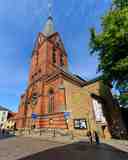
Towering before you is the striking St. Mary’s Church, with its tall, pointed neo-Gothic spire reaching for the sky above warm red and pale yellow bricks-just look straight ahead…阅读更多收起
Towering before you is the striking St. Mary’s Church, with its tall, pointed neo-Gothic spire reaching for the sky above warm red and pale yellow bricks-just look straight ahead and you can’t miss its ornate tower and rose windows. Now, while you catch your breath here at the foot of this impressive church, let me whisk you into a story that swirls with centuries of drama, devotion, and just a hint of rivalry! Imagine the year is around 1165 (give or take a decade or two-medieval memory isn’t what it used to be), and a sturdy Romanesque stone church is standing on this very site, probably built under King Valdemar I of Denmark. But disaster strikes! In 1248, during a royal family feud-let’s call it “Game of Thrones: The Danish Edition”-the church is obliterated, leaving only a lone bronze lion behind, which, by the way, now lounges in a museum in Hamburg. But Flensburg folk aren’t easily discouraged. Fast forward to 1284. The townspeople, hatching a bold plan, begin constructing this very church. Picture the clatter and calls of masons, bricks rising into the sky as a grand Gothic hall church takes shape. The location? Right here, next to the Nordermarkt-so, if you feel a sudden urge to buy a herring sandwich, that’s the market’s legacy! Over time, St. Mary’s grew larger and fancier, with chapels popping up on the flanks and windows multiplying like rabbits. By 1526, here came the Reformation, bringing change faster than a squirrel on espresso. Priests cleared out the old altars, and in 1598, a magnificent late Renaissance high altar-still there today-was installed, funded by the mayor himself. It’s huge, full of twisting columns, golden paintings, and a parade of saints and symbols. If you ever visit inside, look for paintings of apostle Peter clutching the keys to heaven and Paul wielding a sword that means business. The tower you see was crafted over several transformations. The original church had just a humble roof turret. But in the 1700s they put up a whopping great tower-topped with a stylish baroque cap. A century later, they swapped that for a sharper neo-Gothic spire, the one looming over you now like a well-dressed chess piece. World War II swept through the region, but St. Mary’s stood firm, untouched by bombing raids. In the chaos of May 1945, German troops even camped out here, which meant Sunday worship moved next door for a bit. Then a nearby munitions blast shattered the windows, and postwar artists like Käte Lassen and Hans Gottfried von Stockhausen began crafting beautiful stained-glass replacements-just think of bursts of color glowing in the sunlight, telling tales from Christmas to the Last Judgment. So, what about mystery and drama? In 1967, St. Mary’s became the stage for an uproarious monument dispute-pastors versus politicians, statues being evicted, letters to the editor flying faster than a choirboy late for practice. Some say the fuss in Flensburg was a spark for the youth protests that swept all of Germany by the late ’60s. Step inside and you’ll find more art than a well-stocked treasure chest: a pulpit carved in 1579, a baptismal font hoisted by four bronze evangelists, a Madonna with moon and child, and even a crucifix that only recently returned to the church after a long museum vacation. Medieval frescoes curl above your head with scenes of saints, bears, wild dancers-and even a man prying open a lion’s jaws (don’t try this at home). Oh, and keep an ear out for the famous bells-old “Dicke Maria” (the Big Mary) has been tolling here since 1698. Legend says her voice once called sailors and fishermen home. Today, it’s your turn to soak in the sights and maybe imagine the hustle and commotion of centuries swirling in the bricks before you. St. Mary’s is more than just a church; she’s Flensburg’s oldest city-center church and, clearly, the best candidate for a starring role in any historical soap opera!
打开独立页面 →To spot the Company Gate, look straight ahead for a large, brick building with a tall gabled roof and a big archway right in the middle-kind of like an old brick tunnel inviting…阅读更多收起
To spot the Company Gate, look straight ahead for a large, brick building with a tall gabled roof and a big archway right in the middle-kind of like an old brick tunnel inviting you to step into history. Alright, welcome to one of Flensburg’s true portals to the past-the famous Kompagnietor! Take a deep breath. Can you smell the salty harbor air mixed with the faint aroma of centuries-old brick? That’s history lingering around you, my friend. This gate isn’t just any doorway: it was once part of Flensburg’s old city wall back when knights and merchants shared the streets. The original "Company Gate" dates all the way back to the 15th century, but no one knows exactly what the first one looked like-mystery alert! In 1602, the building you see now rose from the ground thanks to a builder named Dirick Lindingk, like a medieval party planner who threw legendary get-togethers for ship captains. Imagine arriving at the harbor back then. Maybe you were a sea captain, boots still damp from the spray, entering through that big stone archway. Above you gleamed the crest of Flensburg, with wise old words carved in stone: “Be fair and moderate at all times-with God’s help, great profit follows.” Hope those captains paid attention! The gate’s walls tell their own stories, too: flood marks from monstrous storms in 1694, 1835, and 1872 are etched into the brick, reminders that the sea once made this area tremble. Peek at the gable and you’ll spot the royal arms of King Christian IV and Queen Anna Katharina-talk about VIPs at the door. Inside, there’s even a hall with Dutch tiles that sparkle like sea-glass in the afternoon sun. And today? Instead of salty sailors or bustling merchants, the Kompagnietor is home to the European Centre for Minority Issues, keeping the tradition of lively meetings alive-maybe with a little less rum, though!
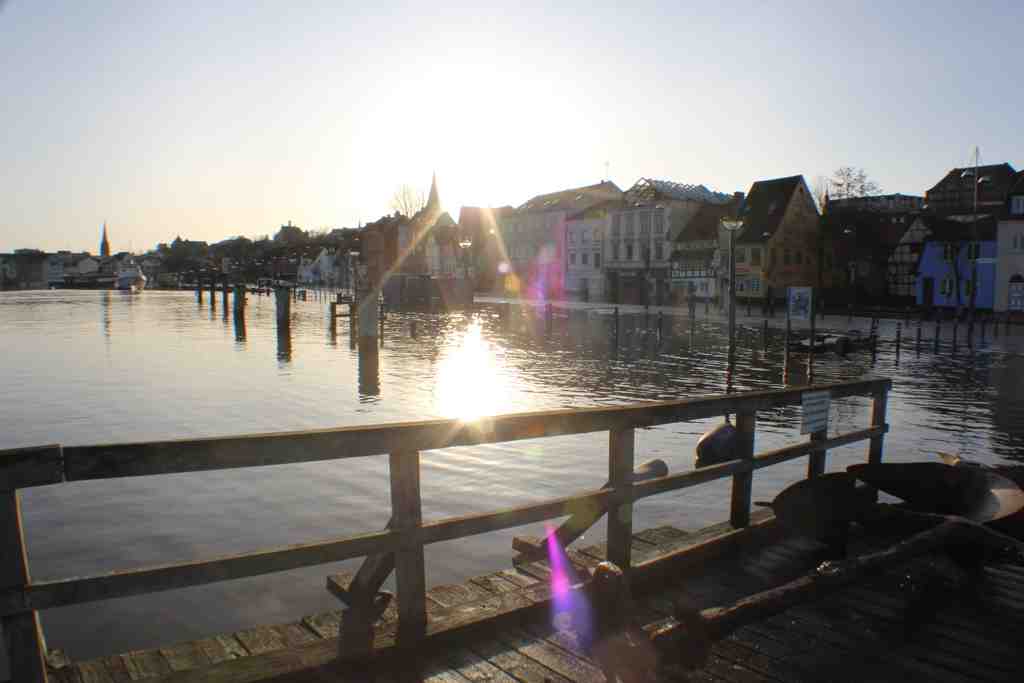
打开独立页面 →Directly ahead, you’ll see the shimmering waterfront lined with wooden posts and a rustic timber railing, with historic houses stretched along the harbor-just look toward the…阅读更多收起
Directly ahead, you’ll see the shimmering waterfront lined with wooden posts and a rustic timber railing, with historic houses stretched along the harbor-just look toward the sparkling water and you can’t miss the heart of the Schiffbrücke. Welcome to one of Flensburg’s liveliest and most legendary spots-Schiffbrücke! If you listen carefully, you might hear the echoes of laughter, clinking glasses, and the distant creak of wooden ships. So, let’s travel back through time and imagine how this area has always been buzzing with life. Back in the Middle Ages, this very strip of waterfront was the city’s bustling harbor zone. Merchants shouted about their goods, fishermen hauled in their daily catch, and boats from distant lands tied up right where you’re standing. Schiffbrücke-its earliest mention goes all the way back to 1408-was never actually a bridge as the name might suggest, but rather a paved quay where all the action happened. Here, dockworkers unloaded timber, coal, and even tropical treasures like ginger, rum, and bright blue indigo dye. With all that rum, it’s no wonder Flensburg built up its reputation as Germany’s “Rum City”-imagine the aroma of wood casks and the punchy scent of fresh-spilled spirit in the air! As time rolled on, a patchwork of intriguing characters and businesses sprang up. Shipbuilders hammered away at wooden hulls just up the road, and the Kompagnietor, an old city gate, stood guard while seafarers gathered to swap tales bigger than their boats. In the 1800s, steamships started to dominate, puffing clouds over the old harbor. There was even a ferry here that could whisk you all the way to Copenhagen-assuming you didn’t get too distracted by the smell of fresh Gyros Pita wafting from Papas Imbiss, possibly the narrowest pita factory in all Flensburg. With the arrival of the Flensburg Harbor Railway in 1854, the clatter of train wheels and the blast of steam whistles became part of Schiffbrücke’s soundtrack. Out went the dominance of old trading giants, and in came a vibrant patchwork of medium businesses and modern factories. Yet the port kept its old magic-a place where fortunes were made, wild storms sometimes flooded the quay, and everyone spoke about “going to the coast,” meaning right here for some nightlife, not the distant beaches. Which brings us to the fun part-Schiffbrücke’s very own party mile! From the 1970s onwards, as the waterfront transformed, a dazzling jumble of pubs, jazz bars, discos, and-at times-rather risqué establishments popped up. The legendary “Küste” or “Goldküste” earned a reputation worth gold among Flensburg’s night owls (and maybe a warning sticker for light sleepers). Maybe you too can imagine the music thumping from the old Mirage disco, laughter spilling onto the quay, and students wandering between clubs and concerts. Of course, life here wasn’t all parties and pints. The street saw tough times, too. Wars, high waters, bouts of wild storms: in 1872, the infamous Baltic Sea storm devastated the harbor. But the city kept rebuilding, modernizing the quay again and again. Today, with the new harbor hotels, concert venues, and the old steamship Alexandra still moored here like an old friend, Schiffbrücke remains a gathering place for everyone. So, as you stand on these planks and gaze out across the shimmering water, you’re sharing a view with centuries of sailors, traders, and dancers-each one adding their own echo to the vibrant, ever-changing tune of Schiffbrücke. Keep an ear out when the wind blows; you might just hear a chorus of old sea songs and laughter drifting across the harbor.
打开独立页面 →Let’s rewind to 1866, when the first paddle steamers puffed up and down the Flensburg Fjord. Fast forward to 1935: a group of bold Flensburg merchants saw their local ferry…阅读更多收起
Let’s rewind to 1866, when the first paddle steamers puffed up and down the Flensburg Fjord. Fast forward to 1935: a group of bold Flensburg merchants saw their local ferry service facing troubled waters-quite literally. In a move that would leave any superhero jealous, these folks swooped in to found the Förde Reederei GmbH, ensuring trips-complete with hissing steam and the scent of engine oil-could continue on the Flensburger Förde. Now, if you’d been here in the 1950s, you’d have witnessed the golden age of “Butterfahrten”-cheese-lovers, rejoice! These weren’t just scenic day trips to Denmark-they almost caused stampedes to the on-board shops for tax-free treats. Rumor has it, people returned with enough butter and cheese to supply a small army. It was so popular, they had to build bigger and bigger ships: in the 1970s, the fleet included passenger vessels carrying up to 1,200 people each, all eager for a good bargain-and maybe a sneaky schnapps. Competition only pushed our heroes to grow. In 1958, another major player appeared: KG Seetouristik GmbH & Co. KG, diving into ferry services and, by the ‘80s, running the famous “Wappen von Hamburg” for trips to Helgoland. These two firms, each with their own epic tales of turbulent seas and roaring crowds, ultimately joined forces in 1991 to form what we know as FRS. And why did they merge, you ask? Well, in 1999, the glory of duty-free shopping was set to vanish. Panic! Mayhem! Security guards everywhere bracing for impact! Okay, maybe not quite that dramatic, but it was certainly a big deal. To weather the coming storm, they combined strengths, evolving into a powerhouse with a worldwide reach. From then on, FRS wasn’t content with just local waters. They conquered new realms: acquiring companies like the Weiße Flotte in Stralsund, setting up high-speed catamarans in the Gibraltar Strait, supporting offshore wind parks, and even linking Miami with the sun-drenched Bahamas. They did it all. By 2016, they went intercontinental, operating ferries from Seattle across to Canada and taking over Caribbean routes. Their Finnish, Portuguese, and Albanian branches brought the brand to even more exotic harbors. Just imagine the new languages echoing through the corridors here! Yet, while FRS sailed into global waters, it never forgot its Flensburg roots. The company is half-owned by the local Dethleffsen family-descendants of the legendary Flensburg rum dynasty. Who would have thought shipping and spirits had so much in common? It’s the only place where you can lose your luggage and your inhibitions at the same time! Today, FRS’s fleet is as diverse as a Mediterranean deli: everything from classic ferries and super-fast catamarans to solar-powered vessels and even, believe it or not, a rowing boat called Paule III in Berlin. With 59 ships and more than 1,500 crew members, they carry nearly 6 million passengers and 1.5 million vehicles every year. Their expertise doesn’t stop at transport-they manage harbors, supply offshore platforms, match crews, and even offer maritime consulting. So next time you see an FRS vessel gliding across the water, remember, you’re witnessing over a century’s worth of ambition, innovation, and the stubborn spirit of merchants who simply refused to let ferry travel sink. Now, if only their ships came with free ice cream-now that would be a real maritime miracle!
打开独立页面 →To spot the Brasseriehof, look for a striking, reddish-orange, two-story building with many white-framed windows and a deep archway right in the middle, located along the lively…阅读更多收起
To spot the Brasseriehof, look for a striking, reddish-orange, two-story building with many white-framed windows and a deep archway right in the middle, located along the lively Große Straße. Now, step closer and imagine yourself traveling back in time, just for a moment. The Brasseriehof might look peaceful today, with its inviting passage promising something mysterious just beyond. Back in the 17th to 19th centuries, though, this place buzzed with the chatter of merchants, the rumble of carts, and the clatter of wooden shoes on cobblestone. Imagine two separate houses that somehow decided they liked each other so much, they joined together to form this mansion you see now-with each side still owning its own address, number 42 on the south and 44 on the north. The building’s vibrant face is modern, but behind it hides the old soul of timber beams and loads of stories. A famous German writer, Theodor Storm, was so charmed by its lifting bays and attic doors that he set part of his novella "Im Nachbarhause links" right here in 1875. Storm must have been quite the real estate fan! For decades, number 42 proudly hosted a sizzling fast-food spot-imagine hurried lunches in the busy 1970s. Shops have come and gone, but the heart of Brasseriehof is the courtyard, where timber-framed wings and storied warehouses from as early as 1840 surround you, and if you’re lucky, you might feel the history echo off the old stone. In the 1980s, the Brasseriehof got a spruce-up and soon filled with new life-cafés, music, laughter. For years, a place called “Napoleon & da Vinci” drew thirsty crowds, and these days, it’s all about bringing people together for culture, coffee, and conversation at the Kulturhof Café. It’s not just a postcard-perfect courtyard-Brasseriehof is protected as a city monument, a living, breathing thread in Flensburg’s rich tapestry. Who knows, perhaps if you listen close enough, you’ll still hear the old merchants debating prices over a pint... or maybe just someone ordering another slice of cake!
打开独立页面 →Look just to your left at the Grand White Rococo Facade with the big “1788” and “Zur Börse” sign above its windows-the building with playful shapes and little decorative details,…阅读更多收起
Look just to your left at the Grand White Rococo Facade with the big “1788” and “Zur Börse” sign above its windows-the building with playful shapes and little decorative details, right at Große Straße 65. Welcome to “Zur Börse”-and don’t worry, you haven’t wandered onto the set of a stock market drama! The only trade that happened here was the exchange of good stories, hearty laughter, and perhaps a few too many mugs of beer. Picture the 18th century: cobblestone streets buzzing, horses clopping by, and in the middle of it all, this very building. Despite what the name suggests, it was never actually a stock exchange-it was a famous old restaurant, home to city folk seeking food, fun, and maybe some friendly gossip. Its grand, ornate front from 1788, with those eye-catching flourishes and swirly decorations, was lovingly kept even after the heart of the building was replaced. Now, here’s a twist worthy of a detective novel: in the late 1800s, a clever master mason named Chr. Henningsen decided to give the old lady a facelift. He expanded the front, absorbed a once-hidden courtyard entrance, and even threw in a side balustrade for a dash of Southern charm. Fast forward 100 years: Flensburg started changing all around, nearby houses disappeared, and new neighbors moved in, like the insurance company and that ever-popular Cafe Extrablatt. In the 1990s, the building got a total makeover again. Roof off, walls out-but wait! The city wouldn’t let them touch that beautiful facade. So what you see is part brand new, part 18th-century magic. Ah, and for many years afterwards, the bottom floor was ruled not by bankers, but by Gandalf-yes, really-a fantasy shop where you could buy anything from comic books to plastic dragons. Today, there’s a ballet school above, a shoe store below, and if you peek around, you might even spot a secret passage to the Catholic Church nearby. So next time someone tells you buildings can’t have character, just show them Zur Börse and watch their jaws drop!
打开独立页面 →Right in front of you, the Church of the Holy Spirit stands out with its brick façade squeezed tightly between modern shops, topped with a slender, green copper spire rising high…阅读更多收起
Right in front of you, the Church of the Holy Spirit stands out with its brick façade squeezed tightly between modern shops, topped with a slender, green copper spire rising high above the street-just look for the old clock and the pointed tower. Welcome to the Church of the Holy Spirit, a place that’s seen more drama than a soap opera! Imagine it’s the year 1386: the air is thick with the smell of wood smoke, the street outside is busy with merchants-no Starbucks in sight, unless you count a medieval cup of questionable ale. This church was built as part of a hospital complex, not for broken bones from tripping on the cobblestones, but to care for the sick and elderly. Funded by generous Flensburg citizens, this hospital became a powerhouse, owning land and exercising its own local justice. I’m not saying they had their own Game of Thrones, but… well, people did come under their rule if they donated enough property! Let’s jump ahead to the time of the Reformation in the 16th century. Suddenly, church services switched from Latin to German-which was a bit awkward for Danish speakers around here. Plenty of folks must’ve shown up on Sunday looking confused, hoping for inspiration and getting a language lesson instead. The city’s leaders found a clever fix: they made this church a branch of the big St. Mary’s Church and designated it specifically for Danish-language services. So, since 1588, if you wanted to pray in Danish, you’d come here, creating a little bubble of home for the Danish community. Over the centuries, this church took on many more roles. After the Jürgensby community split off in 1895, they used this very space before getting a church of their own. Meanwhile, Germany was busy reshuffling its borders and faiths, especially after the war with Denmark. Even the new Catholic community started out here, celebrating Mass until they could build the St. Mary’s Sorrowful Mother just uphill. Fast forward to May 1945, at the very end of the Second World War. German troops took over the much larger St. Mary’s Church down the street, meaning German-language services were squeezed back into this smaller space. Imagine the clash of tension and hope as Flensburg’s people gathered here, desperate for a sense of peace. Architecturally, you’re standing in front of a Gothic twin-nave hall-think of it as a medieval version of a loft, with the southern central nave almost twice as wide as its northern neighbor. Look closely inside for the marvels: fragments of 14th-century frescoes, hidden under layers of plaster until the 1920s. There’s one scene of the Last Judgment, Christ in glory wearing a bold red robe while saints plead for mercy, his mouth sending out both a sword (for justice) and a lily (for mercy). You’ll also find two fantastic ship models dangling inside. One is the mighty Tordenskjold, named for a daredevil naval hero nobody would want to challenge in a game of Battleship. The other, Daria, is a simpler ship model. Ships in churches? Around here, sailors believed hanging model ships brought good luck-a bit like having a lucky rabbit’s foot, just more nautical and less fluffy. The church is home to a granite font that’s survived plagues, reformations, and probably a fair few teething toddlers. And don’t miss the late-Baroque altar with its slightly chunky, but heroic, carvings representing bravery and hope-plus, above it all, a dove-shaped Holy Spirit that looks ready to take flight. If you’re lucky enough to enter, check the north wall: three glowing glass windows by artist Bjørn Nørgaard, each telling a New Testament story, shimmer with color. Nearby, a bronze sculpture hints at the Tower of Babel and, if you sneak a peek in the mirror installed behind it, maybe you’ll find yourself among the wonders of Pentecost-to be honest, it’s a bit trippy, but what’s church art for if not to get you thinking? No church would be complete without an organ, and this one’s got pipes that could wake the whole street. Installed in 1975 with 26 registers, it’s been shaking the roof ever since. So take a good look, because every corner of this place has a story-sometimes in Danish, sometimes German, sometimes with a dash of seafaring bravado. And, most importantly, always with a whole lot of spirit!
打开独立页面 →To spot St. Mary's Sorrowful Mother Church, look for the tall, pointed spire and bright red brick facade with arched windows and a round rose window on the front, just up on your…阅读更多收起
To spot St. Mary's Sorrowful Mother Church, look for the tall, pointed spire and bright red brick facade with arched windows and a round rose window on the front, just up on your left above the street. Now, let’s imagine it’s a chilly evening around the turn of the 20th century, and the city is buzzing with anticipation-there’s a sense of hope in the air, mixed with the stubborn scent of clay and fresh-cut timber. Right in front of you stands the St. Mary's Sorrowful Mother, but getting from dream to reality wasn’t easy! You see, after the Reformation, Flensburg was staunchly Protestant and the Catholic community, for centuries, lived almost in the shadows. When Catholics finally began to gather here after the German-Danish War, imagine them squeezing into a tiny house on this very spot just to pray together. Picture it: There were so many of them by Christmas 1897 that half of the congregation had to shiver outside in the winter cold just to catch a few words of the service. I bet there were more cold feet than in a penguin parade that night! But the community was determined. Letters were written-thousands of them, pleading for support. Coins were collected, and finally, in 1898, construction began. Here comes the plot twist: when they started digging, they discovered the city moat right beneath the ground-it was more mud and mush than anything else! Not exactly the best foundation for a church, but somehow, with grit and perhaps some divine luck, they managed. And so, in 1899, the cornerstone was laid, and by early 1900, the church was finally consecrated. But for a while there, instead of a grand spire, the tower only sported a rather unimpressive flat roof-talk about a church with a bad hair day! It wasn’t until 1909 that the impressive spire you see now pierced the Flensburg sky. A walk around reveals even more fascinating details: the church’s sweeping red-brick walls and Neo-Gothic arches, its stained glass, and a spectacular rose window on the south side that glows with the morning sun. Step closer and imagine the inside: an airy hall with cross-ribbed vaults overhead, old wooden pews, and carvings of saints standing watch. The air smells faintly of polished wood and candle wax. During World War II, life here was far from peaceful. Right next door was a school turned into an air defense training center, blocking the main entrance. In the postwar years, that building was demolished, bringing sunlight and space back to the churchyard-now replaced by a parking lot. The church didn’t just survive the tough times; it grew stronger, with renovations and celebrations marking each new chapter. Today, this church anchors a thriving parish that stretches from Flensburg all the way to Kappeln, with lively services and a community that spans generations. The organ, by the way, is modern and mighty, built in 2001-so even if you’re musically inclined, you’d need two keyboards, lots of skill, and maybe ten fingers on each hand just to play it! So, as you stand here outside, listen for a breeze, perhaps the faint echo of past hymns, and know you’re looking at a living chapter of Flensburg’s spirited story.
打开独立页面 →To spot the West India Warehouse, look for a tall, pale yellow building with a steep roof and rows of brown wooden shutters running up its face, standing proudly by the cobbled…阅读更多收起
To spot the West India Warehouse, look for a tall, pale yellow building with a steep roof and rows of brown wooden shutters running up its face, standing proudly by the cobbled street. Now, just imagine the busy port of Flensburg in 1789-sailors shouting, barrels thumping, the scent of rum and exotic spices wafting through the air. This building, the West India Warehouse, was the ultimate storage fortress of its day. It wasn’t just big; it was a giant, towering over its neighbors like a proper show-off. Andreas Christiansen, a daring Danish merchant and shipowner, built this place at the peak of the Enlightenment. Back then, this warehouse was a gateway to the Caribbean-and a treasure chest for rum, raw sugar, tobacco, cocoa, tea, and spices from islands like Saint Croix and Saint Thomas. Imagine the heavy oaken barrels being hoisted, creaking and groaning, up to the top floors with the help of that impressive old crane up on the gable-it’s still there today, watching like a retired dockworker. The warehouse yard wasn’t just all rum and sugar: the nearby houses were homes and offices, and, rumor has it, there was even a sugar refinery sizzling away, producing sweet gold for the city. Christiansen’s fortune was so legendary, there’s a plaque here begging for blessings on all these works. But nothing lasts forever. Economic crisis hit, and new owners took over, most memorably a colonial goods dealer and, later, a spirited liquor company. By the 1970s, the old warehouse was almost lost to history-until a magical transformation in the 1980s gave it new life. Today, the West India Warehouse is filled with quirky apartments and busy offices. It’s a postcard star, a celebrity stop on Flensburg’s Captain’s Walk, and a living reminder of wild tales from the age of sail-just without the sticky floors and spilled rum.
打开独立页面 →By 1847, Große Straße had taken its present shape, stretching from Rathausstraße up to the lively Nordermarkt. The Flensburg address book from the very same year already lists…阅读更多收起
By 1847, Große Straße had taken its present shape, stretching from Rathausstraße up to the lively Nordermarkt. The Flensburg address book from the very same year already lists this street, granting every building its place in history. In 1881, the city went a bit number-crazy and reorganized every building’s number, though the old City Hall at number 1 clung to its spot like a stubborn grandfather to his favorite armchair. Now, pay attention to the “groschen side” and the “5-pfennig side”-no, not characters from a buddy-cop movie, but the two very different halves of the street. On the east, closer to the harbor, you’d find the grand merchant houses, warehouses, and gardens-imagine elegant courtyards where deals happened over schnapps, and ambitious businessmen eyed the ships unloading at the docks. This was the expensive side, the “groschen side”-it cost a whole groschen to live here! On the west, up the steeper slope and further from the harbor buzz, sat the smaller houses and workshops, home to craftsmen and coachmen. It was good, honest work, but only worth 5 pfennigs-hence the name. Flensburg’s own real estate game, in black and white. Fast-forward to the early 1900s: trams rattled down the street, and families ran for bargains between the tracks. By the 1970s, the trams vanished, making way for the pedestrian zone. In 2007 and 2008, the street got a proper makeover with new granite paving stones from distant Shandong province in China. Today, benches and lamps line the stroll, just waiting for tired shoppers or starry-eyed romantics. Große Straße is a collection of stories tucked into each doorway. At number 2, you’ll find the old Union Bank, the birthplace of the DRK tracing service after World War II-a gathering point of hope for families ripped apart by chaos. By number 4, desperate folks once read war telegrams posted in boxes, crowds pressing for the latest news regardless of rain or chill. Step along to number 16, the former Lion Pharmacy, now a bank-talk about changing your prescription to a mortgage. At number 58 stands the Shrangen, a two-story brick building from 1595 with arched arcades-so old it would probably ask for a senior discount if it could! Some houses here have seen joy and anguish. Number 15-19 bears a Stolperstein remembering Heinrich Lazarus, while number 54 commemorates Arnold Bastian, persecuted in another dark chapter of history. Others bring quirky legends-like number 34, where the unsavory mayor Peter Pomerering supposedly haunts the city as a dog. You might want to be extra nice to any stray pups you meet! Then there’s number 56, the old Hotel Rasch, where actual royalty and authors-the likes of Hans Christian Andersen and King Christian IX-once fluffed their pillows. Number 75 hides a rooftop with beams from the 1430s, making it the oldest “hat” in Flensburg. Keep strolling to the north and you’ll hit the Neptunhof of number 77-home to the city’s own mini Neptune fountain, where locals and tourists alike hope for a little extra luck. Imagine the excited chatter of Christmas shoppers at the annual Santa “awakening” here, as festive bells ring. Große Straße isn’t just a street; it’s a living treasure chest, overflowing with tales of everyday people, feats of courage, legendary mishaps, and a few souls who decided to stick around long after their time. Whether you prefer heroic deeds or a bit of scandal, this street offers both-and unlike the old days, you can find more than a groschen’s worth of adventure on either side.
打开独立页面 →Picture the city long ago, before smartphones, before coffee shops-even before a town hall! Back then, Flensburg was a small but lively place with just 2,000 people. In the center…阅读更多收起
Picture the city long ago, before smartphones, before coffee shops-even before a town hall! Back then, Flensburg was a small but lively place with just 2,000 people. In the center of everything, right about where we stand now, two mighty parishes-St. Nikolai and St. Marien-touched borders. This was, undeniably, the sweet spot, the perfect compromise. No local could whine that the meeting place was too far from home. I suppose even medieval citizens enjoyed a good debate about location-some things never change! Now imagine the scene: Citizens gathering under open sky, a burble of voices rising as important news-and the all-important Stadtrecht, or city law-was read aloud on market days. There was no microphone, so the city’s crier had to be sure his lungs were as strong as his opinions. The Thingplatz probably stretched from today’s Große Straße 1 toward where the city theatre now stands, flanked by the old course of a babbling brook called Rutebek. Sweet music for anyone who wanted to sneak away mid-meeting, I’m sure. Here is where the Allmannsthing-the mighty assembly of citizens-debated taxes, big plans for the city, even whether Flensburg should finally get a proper Rathaus, or town hall. It was on this very ground the council decided, in 1443, to build that new city hall. The buzz must have been enormous. Imagine the noise as hammers pounded bricks and roofs were raised, ultimately squeezing the old Thingplatz a bit tighter as Flensburg outgrew its simple past. When that first town hall was finished in 1445, it became the pride of the city, a sturdy, brick two-story wonder. The bottom floor housed hardworking staff and the ever-important wine cellar (you heard right-your city government with built-in refreshment). Upstairs, a grand hall hosted not only council meetings, but also weddings, farmers’ reunions, and the occasional traveling theater troupe. Even in medieval times, everyone loved a bit of entertainment after all those heavy debates. Of course, as the centuries rolled on, things changed. By 1766, houses finally got numbers, starting right here at the Rathaus. The street name morphed from Herscopstrate to today’s Große Straße. And when the town needed a bigger jail and then a new playhouse, they built them nearby, stacking new chapters right on top of old ones. Flensburg’s first town hall here lasted into the late 1800s. But as the city ballooned, so did its ambition. With more people came more paperwork and the need for a grander administration. By 1883, the beloved old Rathaus was knocked down, along with the ancient jail and the playhouse. A new theatre sprang up, and the city’s heart shifted just a bit. The Thingplatz faded, but if you stand quietly, you might sense the lingering buzz of a centuries-old debate about potholes, probably. Flash forward: in 1964, the city hall finally left this place for good, resettling above St. Nikolai. No assembly, no central council-just the aftertaste of all those centuries of decisions, triumphs, and no doubt, a fair share of lively arguments about who had to bring the snacks. Today, the Thingplatz’s exact edges are a bit mysterious. But Flensburg honors this historic spot with a special marker in the pavement on Große Straße-the so-called “historical center of the city”. Created by Dietmar Gördes, it’s made of stone and bronze, cleverly positioned by artist Marianne Schreckenberger in 1989 as a wink to the city’s ever-shifting heart. If you stroll over there, you’ll find a tribute not only to the old councils, but to every citizen who’s ever had an opinion-so, all of them. As you finish your journey, remember: modern councils meet behind closed doors, but back here, democracy was open-air and sometimes open for interpretation. One last fun fact: the only Thing you’d find here now is a lively shopping crowd-and, occasionally, a smartphone tour guide who loves a good assembly. That’s it for our tour-thank you for walking Flensburg’s history with me!
打开独立页面 →
常见问题
如何开始导览?
购买后,下载 AudaTours 应用并输入您的兑换码。导览将准备好立即开始--只需点击播放并按照 GPS 引导的路线行驶即可。
导览期间我需要互联网吗?
不需要!开始前下载导览并完全离线享受。只有聊天功能需要互联网。我们建议在 WiFi 下下载以节省移动数据。
这是导游带领的团体游吗?
不是--这是自助语音导览。您按照自己的节奏独立探索,通过手机播放音频解说。没有导游,没有团体,没有时间表。
导览需要多长时间?
大多数导览需要 60-90 分钟才能完成,但您完全控制节奏。随时暂停、跳过站点或休息。
如果我今天无法完成导览怎么办?
没问题!导览具有终身访问权限。随时暂停和恢复--明天、下周或明年。您的进度已保存。
有哪些语言可用?
所有导览均提供 50 多种语言版本。在兑换代码时选择您的首选语言。注意:导览生成后无法更改语言。
购买后我在哪里访问导览?
从 App Store 或 Google Play 下载免费的 AudaTours 应用。输入您的兑换码(通过电子邮件发送),导览将出现在您的资料库中,准备下载并开始。
如果您不喜欢该导览,我们将退款。请联系我们 [email protected]
安全结账使用