AudaTours logoAudaTours

第比利斯语音导览:一次语音导览

starstarstarstarstar
4.52 评论
语音指南12 景点

千年秘密在第比利斯地表下闪烁,等待着给那些超越明信片风景的探寻者带来惊喜。在这里,玻璃和钢铁在和平桥上如波光粼粼的波浪般蜿蜒,而锡安大教堂的古老石块仍在回响着国王和革命者的反抗。 踏上这次自助语音导览,揭开隐藏在小巷中、低语在河畔悬崖间的往事——那些匆忙游客常常错过的故事。 和平桥为何在受人喜爱之前曾引发众怒?当帝国冲突时,谁在锡安大教堂内冒着一切风险?在一个寂静的叛乱之夜,梅特希的守卫者遭遇了怎样的神秘命运? 当你漫步于蜿蜒的小巷和宽阔的河岸时,追溯每一桩丑闻、奇迹和战役。每一步,都以鲜活的新色彩重新发现第比利斯——在这里,每个阴影都隐藏着另一个篇章。 让好奇心引导你迈出探索这座城市跳动心脏的第一步。

导览预览

map

关于此导览

  • schedule
    持续时间 40–60 mins按照自己的节奏
  • straighten
    4.3 公里步行路线跟随引导路径
  • location_on
  • wifi_off
    离线工作一次下载,随处使用
  • all_inclusive
    终身访问随时重播,永久有效
  • location_on
    从 和平桥 开始

此导览的景点

  1. As you approach the Bridge of Peace, look out for a curvy, bow-shaped structure gleaming over the Kura River. It’s a striking sight, especially when it’s illuminated at night. The…阅读更多收起

    As you approach the Bridge of Peace, look out for a curvy, bow-shaped structure gleaming over the Kura River. It’s a striking sight, especially when it’s illuminated at night. The bridge's canopy, made of glass and steel, resembles a graceful marine creature sparkling under the city lights. You'll find it connecting the modern Rike Park to the historical old town of Tbilisi. Now, let me give you the scoop on this fascinating landmark: The Bridge of Peace (Georgian: მშვიდობის ხიდი, mshvidobis khidi) is like a contemporary jewel in Tbilisi’s crown, stretching 150 meters (or 490 feet if you prefer) over the Kura River. It opened its gates-or rather, its walkway-on May 6, 2010. This pedestrian bridge was designed by Italian architect Michele De Lucchi and illuminated thanks to French lighting designer Philippe Martinaud. The structure was built in Italy and then brought to Tbilisi in 200 trucks! Talk about a travel story. It's not just about getting from point A to point B; it’s an experience by itself. The bridge was introduced to bring together Tbilisi’s old charm with its new, vibrant self. Now let’s talk about those lights! The canopy is adorned with 1,208 custom LED fixtures that create a dazzling display. It’s got four different lighting programs that make the bridge twinkle, wave, and even send messages in Morse code celebrating life and peace. But wait, there’s more. As you stroll across, the LEDs in the handrail glass panels light up, seemingly welcoming each step you take. It’s like the bridge is throwing a little party just for you! Though some folks thought it a bit too modern for such a historical area, the bridge has become a beloved part of Tbilisi. And if you hear anyone call it the "Always Ultra" bridge, well, they’re just referencing its rather unique shape! Whether you cross it during the day or night, this bridge offers stunning views of landmarks such as the Metekhi Church, the statue of Vakhtang Gorgasali (Tbilisi’s founder), and the Narikala Fortress on one end and the Baraatashvili Bridge and the Ceremonial Palace of Georgia on the other. Plus, the walking experience itself is brimming with interactive light displays. So go on, enjoy the sparkly and curvy wonder that is Tbilisi’s Bridge of Peace!

    打开独立页面 →
  2. Great! You’re almost there. As you approach the Tbilisi Sioni Cathedral, look to your left. You’ll see a grand and majestic structure with tall, elegant walls, giving it a…阅读更多收起

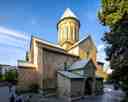
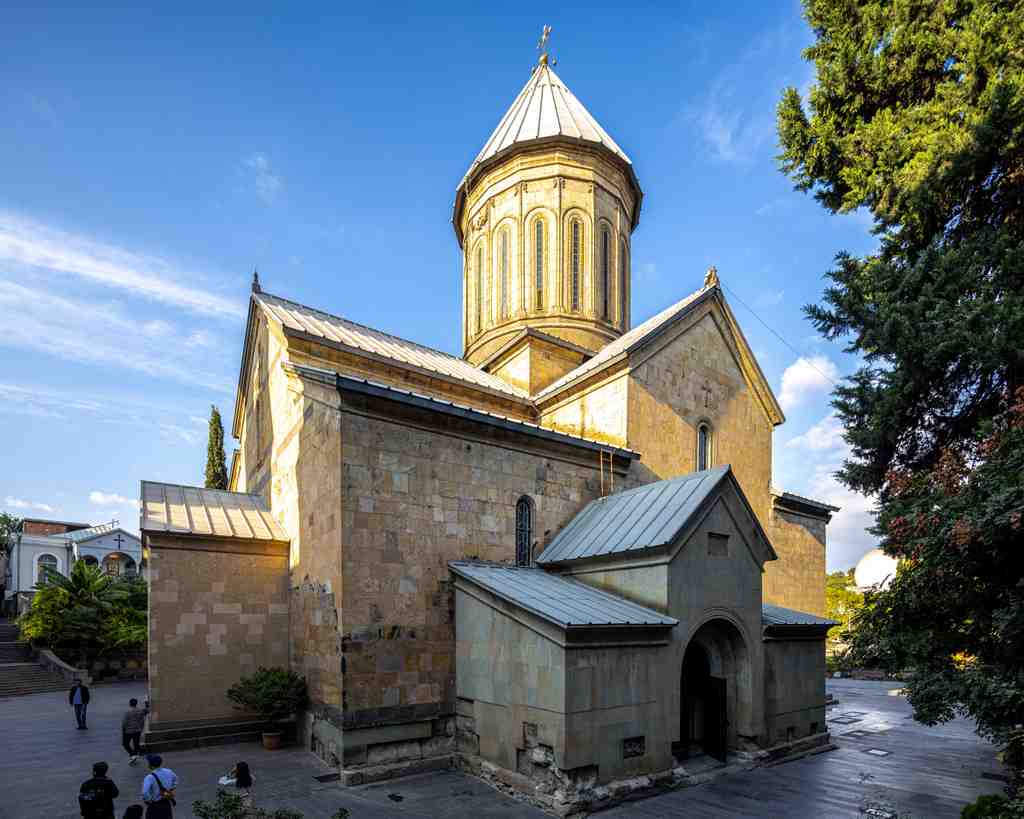
    Great! You’re almost there. As you approach the Tbilisi Sioni Cathedral, look to your left. You’ll see a grand and majestic structure with tall, elegant walls, giving it a commanding presence against the backdrop of the cityscape. The cathedral's dome and impressive cross should help you spot it easily. The eastern façade, fronting the right bank of the Kura River, is particularly striking with its beautiful stonework and architectural details. The Sioni Cathedral of the Dormition, or simply "Tbilisi Sioni," is an enduring symbol of Georgia’s rich history and spiritual heritage. It has a name as significant as it is grand, honoring Mount Zion in Jerusalem. This Georgian Orthodox cathedral was originally built way back in the 6th and 7th centuries. Talk about aging gracefully, huh? Despite its ancient origins, the cathedral you see today mainly dates back to the 13th century. Like a cat with nine lives, this structure has been rebuilt several times over the centuries after being destroyed by foreign invaders, earthquakes, and other calamities. Each reconstruction blended old and new, resulting in a mesmerizing mix of architectural styles. Legend has it that King Vakhtang Gorgasali first initiated the construction of a church on this site in the 5th century. The cathedral has been a silent witness to Tbilisi's dynamic history, including the time when it was commandeered for a grand announcement of Georgia's annexation by Russia in 1802. Inside, don't miss the venerated Grapevine cross, said to have been forged by Saint Nino, the woman who brought Christianity to Georgia in the early 4th century. It's not just a religious relic but also a tangible link to the nation’s spiritual roots. So, as you stand outside this resilient cathedral, think of all the stories it could tell. Each scar and repair is a chapter in Georgia’s history, making Sioni not just a cathedral but a living museum of Tbilisi's past. Now, how’s that for a riveting history lesson?

    打开独立页面 →
  3. Ah, you've almost reached one of Tbilisi’s most iconic spots-Metekhi! To spot the landmark, glance to your right. You'll see an elevated cliff that proudly overlooks the beautiful…阅读更多收起

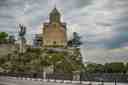
    Ah, you've almost reached one of Tbilisi’s most iconic spots-Metekhi! To spot the landmark, glance to your right. You'll see an elevated cliff that proudly overlooks the beautiful Mtkvari River. Perched atop this cliff is the striking Metekhi Church of Assumption, and in front of the church, you'll notice the imposing equestrian statue of King Vakhtang I Gorgasali. Can't miss it! Now, let me tell you why this place is so special and worth every step! Metekhi is a historic neighborhood that goes way, way back. We're talking ancient times, as it was one of the earliest inhabited areas in Tbilisi. King Vakhtang I Gorgasali, whose statue you see, originally built a church and a fort here-not too shabby for the 5th century, huh? The name "Metekhi" actually means “the area around the palace,” though the original structures didn’t survive the Mongol invasion of 1235. What you see today is the Metekhi Church of Assumption, built around the late 1200s by King St Demetrius II. It’s a pretty unique example of a Georgian Orthodox church with its dome and its combination of brick and dressed stone. Over the years, Metekhi has seen quite a bit action. It was fortified by the Persians, turned into barracks by the Russians, and even used as a jail at one point. Under Soviet rule, it served a stint as a theater-talk about versatile real estate! As dramatic as that history sounds, Metekhi’s real hero moment may have been when Lavrenti Beria wanted to demolish it during the Great Purges. Thanks to some resilient Georgian intellectuals led by the painter Dimitri Shevardnadze, the church still stands today. Shevardnadze’s refusal to comply even landed him in prison, ultimately saving Metekhi. Fast forward to the late 1980s, patriots managed to get the church reinstated to the Georgian Patriarchate. Pretty cool comeback story for a building, right? So, take a moment to appreciate those historic walls and the smooth facade with its decorative windows and horizontal bands. Imagine the tales these stones could tell! And say hello to King Vakhtang’s statue while you're there. He’s been keeping an eye on this city for centuries. Did you know the cliff is also a legendary site of martyrdom for Habo, Tbilisi’s patron saint? Just a little extra historical sprinkle on your tour. Soak in the view and then let’s embark on our next adventure!

    打开独立页面 →
再显示 9 个站点显示更少站点expand_moreexpand_less
  1. Ah, welcome to the marvelous Saint George's Church in Tbilisi! If you look to your right, you'll spot it easily: a striking building with a conical blue dome standing tall among…阅读更多收起

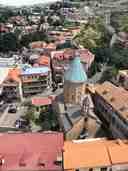
    Ah, welcome to the marvelous Saint George's Church in Tbilisi! If you look to your right, you'll spot it easily: a striking building with a conical blue dome standing tall among the surrounding rooftops. The church’s brick structure and distinctive dome make it stand out in the picturesque landscape of Tbilisi. It's right there, nestled among the other charming buildings, kissed by the Georgian sun. Now, imagine stepping back into the 13th century. This isn't your average ancient church. The Saint George's Church, known in Armenian as Surb Gevorg, and in Georgian as sur′pgevork′i, is an Armenian cathedral that’s bursting with history. Legend has it, this church was founded way back in 1251, based on an inscription on a khachkar (that's a carved Armenian cross-stone) found over the western door of the church yard. But wait, that's not all - our beloved Armenian historians Hovsep Orbeli and Levon Melikset-Bek argue it was built by Prince Umek of Karin (Erzurum). According to these tales, Umek wasn't just any prince; he was a merchant who hit the jackpot and married into royalty. Talk about a rags-to-riches story! Then again, the Diocese of the Armenian Apostolic Church in Georgia believes that it might have been founded as early as 631 AD. So, who knows, it might have been serving the faithful since before your great-great-great-great (add a few more 'greats') grandfather was born. The church has had quite the adventure. It was captured by Persian forces in 1616, but later restored to the Armenian community in 1748. In 1795, it was burnt when Persians sacked Tbilisi, but that didn't stop it. Like a phoenix, it rose from the ashes with multiple restorations in the 17th century, then in 1832 and 1881. Its most recent facelift started in 2012, thanks to a fundraising effort that gathered around $3.5 million. Donors included some big names, and the church was reconsecrated in 2015 with a huge ceremony attended by VIPs. Inside, the church is adorned with frescoes and paintings, including works by the 18th-century artist Hovnatan Hovnatanian and early 20th-century painter Gevorg Bashinjaghian. The interior decorations tell stories of faith and history that have been cherished by generations of congregants. In the courtyard, you'll find the graves of notable figures like Sayat-Nova, a poet and musician celebrated in Georgian and Armenian heritage. The church's rich history is also marked by the resting places of various Russian generals of Armenian heritage. So, soak in the history, the culture, and the sheer resilience of Saint George's Church, Tbilisi's gem that has stood the test of time and trials, continuing to be a beacon of faith and community. Enjoy your time here, and don't forget to snap a few pictures!

    打开独立页面 →
  2. Fantastic! You are now standing in front of Abanotubani, the ancient bath district of Tbilisi. To spot it, look for a cluster of dome-shaped roofs that appear to rise out of the…阅读更多收起

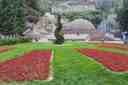
    Fantastic! You are now standing in front of Abanotubani, the ancient bath district of Tbilisi. To spot it, look for a cluster of dome-shaped roofs that appear to rise out of the ground. These domes are scattered amidst colorful flower beds and vibrant green shrubbery, giving off an old-world charm. The domed roofs are made of brick and naturally, they stand out due to their distinctly patterned tiles. Now, here’s a bit of fun history for you: Abanotubani, literally meaning "bath district," is famous for its sulphuric baths. Legend has it that King Vakhtang Gorgasali was out hunting with his falcon when the bird landed in a hot spring, leading to the discovery of these hot waters. He was so impressed that he decided to establish a new capital right here, setting the stage for the birth of Tbilisi. Talk about finding a hot spot! By the late 13th century, there were as many as 65 baths recorded in Tbilisi, and impressively, the baths were free for Muslim residents at the time. Standing here, you’re actually soaking in centuries of history, culture, and a generous sprinkle of legend. So, why not take a deep breath and imagine the soothing warmth of these ancient sulphur baths? Surely, the king’s falcon had an eye-and a feather-for luxury! Enjoy the rest of your tour!

    打开独立页面 →
  3. Alright! As you're approaching stop number 8, Narikala, it will be on your right. Look for an impressive ancient fortress perched on a steep hill. You can't miss its formidable…阅读更多收起

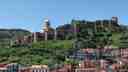
    Alright! As you're approaching stop number 8, Narikala, it will be on your right. Look for an impressive ancient fortress perched on a steep hill. You can't miss its formidable walls and towers that stretch across the green hillside. There's also a charming domed church within the walls, with a distinctive cross on top. Now, let's dive into the story of this cool landmark! Narikala (Georgian: ნარიყალა) is an ancient fortress overlooking Tbilisi, the capital of Georgia, and the Mtkvari (Kura) River. The fortress consists of two walled sections on a steep hill between the sulfur baths and the botanical gardens of Tbilisi. On the lower court, you’ll see the recently restored St. Nicholas Church. Built in the 1996-1997 period, it replaced the original 13th-century church that sadly went up in flames. The new church follows a "prescribed cross" type layout and boasts doors on three sides. Inside, the walls come alive with frescoes showing scenes from both the Bible and the history of Georgia. Legend has it that the fortress was constructed by King Vakhtang I Gorgasali of the ancient Kingdom of Iberia. Archaeological findings suggest that folks were hanging around the Tbilisi area as far back as the 4th millennium BC. The earliest written records dating to around the second half of the 4th century AD tell us that a fortress was built during the reign of King Varaz-Bakur (around 364). Towards the end of the 4th century, the fortress had a short stint under Persian control before being recaptured by the kings of Kartli by the mid-5th century. It was expanded by the Umayyads in the 7th century and King David the Builder (1089-1125). Then, the Mongols decided to rename it "Narin Qala," which means "Little Fortress". Most of what you see today comes from the 16th and 17th centuries after Rostom, the Safavid-appointed king of Kartli, fortified the surrounding areas. Parts of the fortress met their demise in an earthquake in 1827 and were subsequently demolished. So, as you stand here appreciating the grandeur and history of Narikala, remember that this fortress has seen empires rise and fall, legends unfold, and has stood the test of time-unlike a poorly built sandcastle! Enjoy exploring this bit of history!

    打开独立页面 →
  4. As you approach the Kartlis Deda, also known as the "Mother of Kartvel" or "Mother of Georgians", look to your left. High on Sololaki Hill, you'll see a towering figure of a woman…阅读更多收起

    As you approach the Kartlis Deda, also known as the "Mother of Kartvel" or "Mother of Georgians", look to your left. High on Sololaki Hill, you'll see a towering figure of a woman dressed in traditional Georgian attire. This 20-meter-tall statue is made of aluminium and stands proudly against a backdrop of lush greenery. Kartlis Deda was erected in 1958 to commemorate Tbilisi's 1500th anniversary and was designed by the renowned Georgian sculptor Elguja Amashukeli. He sure knew how to make a grand statement! The left hand of this striking figure holds a bowl of wine, extending a warm welcome to friends. Meanwhile, the right hand brandishes a sword, ready to defend against any foes. Talk about a warm welcome with a tough love edge! Elguja Amashukeli was awarded the Shota Rustaveli State Prize in 1966 for this masterpiece. Initially created with wood and later sheathed in aluminium in 1963 to protect it from the elements, the statue was replaced with a new version in 1997. So, awe at the majestic Kartlis Deda, a symbol of Tbilisi’s history, embodying hospitality and resilience. Cheers to friendship, but watch out if you’re trouble; Mother Kartvel here means business!

    打开独立页面 →
  5. Alright, you're almost at stop number 10, the Holy Mother of God Church of Bethlehem! To help you spot it, look to your left-this church is known for its tall, cylindrical bell…阅读更多收起

    Alright, you're almost at stop number 10, the Holy Mother of God Church of Bethlehem! To help you spot it, look to your left-this church is known for its tall, cylindrical bell tower with slanted roof, which dominates the area. It's located at the foot of the Narikala Fortress, so you can use the fortress as an additional landmark to guide you. Now, let's dive into the history of this beautiful structure: The Holy Mother of God Church of Bethlehem, also known as the Upper Bethlehem Church, has an intriguing history that spans centuries and cultures. Originally built as an Armenian church in the 18th century on the site of an older chapel and finished by priest Gregory's descendants, it's now a Georgian Orthodox church! This transformation, however, makes it one of the storied edifices in Tbilisi. The building history reads almost like an epic novel-complete with bravery, loss, and discovery. Construction was significantly driven by Agha-Meliq Bebutyan, a participant in the Indian crusade of Nadir Shah, who didn't get to see the final masterpiece as he was killed in battle against the Turks. His son, Meliq Avetis, built the surrounding fence, adding to the fortress-like structure. Interestingly, during excavations in 1981, the basement of the original chapel was discovered inside the church, revealing more about its extensive past. It tells a tale of perseverance through times of conquest and conflict, including the brutal episode when the church treasures were hidden, leading to the murder of the Archpriest by Agha Mohammed Khan. In the 1990s, transformations continued as the ownership transferred to the Georgian Orthodox Church. Unfortunately, some original Armenian elements were removed during this phase, including frescoes and altarpieces. Yet, it's these layers of history that give this church such rich character. So, as you're standing here, think of it as a time machine in stone, its walls whispering tales from different eras and traditions. Isn't history cool?

    打开独立页面 →
  6. Alright, look to your right and you'll spot an intriguing brick structure that might seem unassuming at first glance. What you're seeing is the ancient Atashgah, standing tall…阅读更多收起

    Alright, look to your right and you'll spot an intriguing brick structure that might seem unassuming at first glance. What you're seeing is the ancient Atashgah, standing tall with its aged brick walls and a sleek, protective curved perspex roof that almost seems to hover above it. The Atashgah, also known as the Ateshgah, comes from the Persian word for "fire temple." It's a historic Zoroastrian fire temple, hailing from a time when Georgia was part of the Persian Empire back in the Sasanian era, which spanned from 224 to 651 AD. Quite a blast from the past, eh? This incredible gem is famously known as the "northernmost Zoroastrian fire-temple in the world." You’re about 100 meters east of the Holy Mother of God Church of Bethlehem, nestled on the Old Town slopes, northeast of the Mother Georgia statue. This brick building has been through a lot! Although camouflaged over the years, it has withstood the test of time to preserve its essence and remains one of the oldest religious buildings in Tbilisi. Its history is vast and dynamic. During the conflicts between the Persians and Turkish Muslims, Tbilisi fell under Turkish control, and this temple was temporarily converted into a mosque. The site's significance hasn't gone unnoticed; it's inscribed on Georgia’s list of Monuments of National Significance. In 2007, even the Norwegian government recognized its value and joined efforts to restore it. So, there you have it! A little slice of ancient history right here in Tbilisi. Now, on to our next adventure!

    打开独立页面 →
  7. As you walk down 45-47 Leselidze Street, look out for a grand, red-brick building with an eclectic mix of architecture. This is the Great Synagogue of Tbilisi! You'll notice its…阅读更多收起

    As you walk down 45-47 Leselidze Street, look out for a grand, red-brick building with an eclectic mix of architecture. This is the Great Synagogue of Tbilisi! You'll notice its large, arched windows that create a sense of welcoming grandeur. Right in front of you are detailed stairs leading up to the entrance, flanked by two lion sculptures that seem ready to pounce on any passerby who dares to misbehave! To the left, you’ll see a large menorah monument, adding to the serene and historical ambiance of the place. Now, let's dive into a fun tidbit about this landmark: The Great Synagogue, also known as the "synagogue of the people of Akhaltsikhe", certainly has a storied past! Georgian Jews from Akhaltsikhe migrated to Tbilisi in the late 19th century and decided to convert a house into a synagogue in 1877. But the original structure didn’t have the stamina to stand the test of time and was in a state of disrepair by the late 19th century. The government ordered its demolition, so the community stepped up and built a brand-new synagogue. Construction kicked off in 1904, and by 1911, the synagogue was stunning in its eclectic Moorish Revival and Romanesque Revival style. Inside, you'll find a mikveh, the ritual bath, which ties it to centuries of Jewish tradition. Also, Tbilisi is home to other synagogues, such as the Ashkenazi Synagogue and former synagogues that now serve as theaters or museums. Each of these places carries its own fascinating slice of history. Remember, the Great Synagogue isn't just an architectural marvel; it's a testament to the resilience and cultural richness of the Georgian Jewish community. Enjoy this historical gem and think of it as a piece of living history blending seamlessly with the vibrant modern-day Tbilisi! Ready for the next stop on our journey?

    打开独立页面 →
  8. As you approach stop number 3, the Tbilisi Theological Seminary, look to your left. You'll notice a grand, stately building characterized by its classical architectural style. The…阅读更多收起

    As you approach stop number 3, the Tbilisi Theological Seminary, look to your left. You'll notice a grand, stately building characterized by its classical architectural style. The building has a prominent façade with a row of large columns supporting a pediment above, giving it a very distinguished, almost temple-like appearance. The structure’s historical essence is palpable, making it easy to spot among modern surroundings. Now, let me fill you in on the backstory in a fun way. The Tbilisi Theological Academy and Seminary, also known by its Georgian and Russian names (bonus points if you can pronounce them!) originally opened way back in 1817, under the name Tiflis Theological Seminary. It operated under the watchful eye of the Russian Orthodox Church until 1919. The Russian Revolution and the subsequent invasion of Georgia caused it to close. The beautiful building you’re looking at was eventually repurposed in 1950 to become the Art Museum of Georgia. But here's the juicy part: one of the seminary’s most famous students was none other than Joseph Stalin - yes, *that* Stalin! He was admitted on a scholarship at the tender age of fourteen. The seminary's language of instruction was Russian, despite Stalin’s Georgian roots. He was a voracious reader, and though his academic performance was solid, he was expelled in 1899. The history of this seminary is sprinkled with interesting snippets like the poetry published anonymously by young Stalin in the local newspaper and the strict policy changes in the 1870s that frowned upon the use of the Georgian language in teaching. Even though this seminary saw the birth of some major Georgian nationalism, it was quite the melting pot of ideas and characters! So there you have it! A place rich in history and remarkable in architecture, and now, a precious part of Georgia’s storied past. As you continue your tour, remember: even the walls here have stories. Let's move on to our next stop!

    打开独立页面 →
  9. Ah, you’ve made it to the final stop! Look to your left. You’ll spot a lively area with narrow winding streets, colorful balconies, and a diverse architectural mix that almost…阅读更多收起

    Ah, you’ve made it to the final stop! Look to your left. You’ll spot a lively area with narrow winding streets, colorful balconies, and a diverse architectural mix that almost seems like it’s straight out of a history book. Yes, you’re looking at Old Tbilisi! Old Tbilisi (Georgian: ძველი თბილისი, dzveli t'bilisi) is like the city’s time capsule. Although folks have been calling it "Old Tbilisi" for ages, it only got its official designation as an administrative district in 2007 before being reshuffled in 2013. Despite these changes, locals and visitors alike still affectionately refer to this historic part of the city as "Old Tbilisi." This historic district, rich with eclectic architecture from the 5th to the 20th century, lies on both sides of the Kura River. You might notice the grand Mount Mtatsminda keeping watch over the area, along with the imposing Narikala fortress and the Kartlis Deda monument. Though much of the pre-19th century city was lost in a devastating Persian invasion in 1795, wandering through these streets, you’ll still find a vibrant blend of history and culture with churches, museums, sulphur bathhouses, and wooden houses with charming carved balconies. In the 19th century, this area was a melting pot of different ethnic neighborhoods-from the Armenian and Georgian quarters of Avlabari to the German Alexanderdorf and the Persian Quarter (Said-Abad). Old Tbilisi has long been a magnet for artists. One name you might hear is Giovanni Vepkhavadze, a celebrated painter of the district’s street scenes. In 2010, efforts to spruce up the old and damaged houses and cobbled streets kicked off to make this area even more inviting for tourists and visitors. So go ahead, dive into the past! Enjoy the winding streets and let the stories of Old Tbilisi enchant you. You've certainly earned it after this whirlwind tour!

    打开独立页面 →

评论

4.5
starstarstarstarstar
2 评论

常见问题

如何开始导览?

购买后,下载 AudaTours 应用并输入您的兑换码。导览将准备好立即开始--只需点击播放并按照 GPS 引导的路线行驶即可。

导览期间我需要互联网吗?

不需要!开始前下载导览并完全离线享受。只有聊天功能需要互联网。我们建议在 WiFi 下下载以节省移动数据。

这是导游带领的团体游吗?

不是--这是自助语音导览。您按照自己的节奏独立探索,通过手机播放音频解说。没有导游,没有团体,没有时间表。

导览需要多长时间?

大多数导览需要 60-90 分钟才能完成,但您完全控制节奏。随时暂停、跳过站点或休息。

如果我今天无法完成导览怎么办?

没问题!导览具有终身访问权限。随时暂停和恢复--明天、下周或明年。您的进度已保存。

有哪些语言可用?

所有导览均提供 50 多种语言版本。在兑换代码时选择您的首选语言。注意:导览生成后无法更改语言。

购买后我在哪里访问导览?

从 App Store 或 Google Play 下载免费的 AudaTours 应用。输入您的兑换码(通过电子邮件发送),导览将出现在您的资料库中,准备下载并开始。

verified_user
满意保证

如果您不喜欢该导览,我们将退款。请联系我们 [email protected]

安全结账使用

Apple PayGoogle PayVisaMastercardPayPal

AudaTours:语音导览

有趣、经济实惠、自助徒步导览

试用应用 arrow_forward

深受全球旅行者喜爱

format_quote 这次导览是游览这座城市的绝佳方式。故事很有趣,感觉不太照本宣科,我喜欢能够按照自己的节奏探索。
Jess
Jess
starstarstarstarstar
第比利斯导览 arrow_forward
format_quote 这是了解布莱顿的一种可靠方式,感觉不像游客。解说有深度和背景,但并未过度。
Christoph
Christoph
starstarstarstarstar
布莱顿导览 arrow_forward
format_quote 一手拿着羊角面包,零期望地开始了这次导览。这款应用真的很适合你,没有压力,只有你、你的耳机和一些很酷的故事。
John
John
starstarstarstarstar
马赛导览 arrow_forward

无限语音导览

解锁全球每个导览的访问权限

0 导览·0 城市·0 国家
all_inclusive 无限探索