AudaTours logoAudaTours

图卢兹语音导览:小巷与大道的冒险

语音指南14 景点

在图卢兹的红砖天际线之下,隐藏着一个秘密世界,城堡和丑闻在同一条蜿蜒的街道上交织。在这个自助语音导览中,您将揭开隐藏在杰斯塔城堡宏伟的炮塔、木屋街宁静的立面以及阿尔科勒大道繁茂的绿色华盖背后的故事——这些地方是大多数游客几乎不会注意到的。 谁曾试图将杰斯塔城堡变成欺诈的堡垒——它又为何几乎在一夜之间消失?木屋街上飘荡着哪些古老的秘密,回荡着蒙面恋人和神秘花园雕像时代的回声?哪些奇特的事件让阿尔科勒大道在革命者和不安分的建筑师中声名狼藉? 穿越时空,从阴影笼罩的中世纪城堡走向阳光普照的大道和童话般的房屋。让每个角落都揭示戏剧、美丽、生存,以及图卢兹通过被遗忘的战役和低语的丑闻所展现的持久脉搏。 这座城市正在等待。开始您的旅程,发现图卢兹大胆的红墙背后真正隐藏着什么。

导览预览

map

关于此导览

  • schedule
    持续时间 40–60 mins按照自己的节奏
  • straighten
    3.7 公里步行路线跟随引导路径
  • location_on
  • wifi_off
    离线工作一次下载,随处使用
  • all_inclusive
    终身访问随时重播,永久有效
  • location_on
    从 杰斯塔城堡 开始

此导览的景点

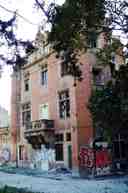
  1. To spot Castel Gesta, look for a striking, castle-like red brick building with tall windows, a stone balcony that juts out above you, and touches of medieval style, such as…阅读更多收起

    To spot Castel Gesta, look for a striking, castle-like red brick building with tall windows, a stone balcony that juts out above you, and touches of medieval style, such as turrets on the corners, set behind some leafy trees. Welcome to the enchanting, and somewhat mysterious, Castel Gesta! Now, if you ever doubted you’d see a real castle in Toulouse, let your eyes feast on this neo-Gothic wonder in the middle of modern city life. With its looming brick walls, pointy turrets, and the occasional gargoyle peeking down, you almost expect a medieval knight-or perhaps a rather startled window cleaner-to show up. But let’s go back to the beginning, when the air was thick with the warm scent of glass being fired and painted. In 1862, Louis-Victor Gesta, a talented stained-glass artist with stars in his eyes, built not just any old house, but a castellated villa right here in what was then the outskirts of Toulouse. Back then, instead of city noise, imagine the gentle hammering and tinkling of glass-makers at work, sunlight streaming through piles of colored glass, and the distant barking of dogs from the grand park surrounding the property. This wasn’t just Gesta’s home. Oh no! Imagine it bustling as one of the most important stain-glass workshops in France. The building you’re looking at was both his showpiece and residence. The locals and many visiting priests-mostly after they’d already admired their own reflections in the vibrant, shining windows inside-would marvel at his work. Gesta’s stained glass soon went from Toulouse to churches all over France and even abroad. Picture crates filled with these rainbow-colored treasures rumbling along the streets, ready to bring light and joy to faraway cathedrals. The original estate boasted an enormous park shielded by proper medieval walls, complete with authentic stone sculptures dotted here and there-just in case you forgot you were in castle territory. A few years later, Gesta added new buildings, including the majestic “Salle des Illustres”-honoring the greats of Toulouse-painted by his friend Bernard Bénézet. There was even a chapel, its walls thick with paintings, its air scented with incense and candle wax. But Gesta’s fairy tale wasn’t destined to last forever. In 1894, Gesta died, his empire shrouded in bankruptcy. He left a puzzle of ownership that his heirs couldn’t solve. The house changed hands-some owners tried to keep it glorious, others simply managed not to lose the key. The building even hosted the Sœurs de la Charité de Saint Vincent-de-Paul during World War II. These nuns offered refuge to families fleeing war, helped local girls learn sewing, and sheltered neighbors in trenches dug right here for safety. Some of the windows grew dark and paint-blotched as time and caution covered once-glimmering murals. By the 1950s, the state took over and Castel Gesta became a school, echoing with the sounds of lessons and footsteps up and down new iron staircases. Then, in 1987, the city bought it, setting up a music conservatory’s organ class and arts association-so yes, at one point, you might have heard Bach echoing through these halls, scaring off the pigeons. But the real drama was yet to come. The castle fell into the hands of ambitious real estate folks, some well-meaning, others less so. In 2001, Castel Gesta found itself center-stage in a wild historical fraud involving missing funds, abandoned restoration, and broken dreams. For a while, the building was barricaded and rumors flew-would it become luxury homes? Would anyone ever clean up that graffiti? The only thing certain was that investors and the state were left scratching their heads… and their wallets. Despite everything, this tough old building refused to give up. Though battered by time, fire, and bureaucratic nonsense, its spirit endured. Since 2014, painstaking restoration work has begun, breathing new life into the red brick walls, turrets, and centuries-old sculptures. So, while you stand in front of Castel Gesta, picture not just its battlescars, but also all its past lives-a buzzing glass workshop, a war refuge, a school, a police quarters, and a music conservatory. Inside these walls, sunlight once traveled through painted glass in a thousand colors. And if you listen closely, maybe you’ll hear a faint melody-or at the very least, the secret whispers of Toulouse’s castle that simply refuses to fade away.

    打开独立页面 →
  2. To spot Chalet Street, just look ahead for the charming old houses lining a quiet road-with a whimsical turreted villa on your right, topped by a pointed slate roof like something…阅读更多收起

    To spot Chalet Street, just look ahead for the charming old houses lining a quiet road-with a whimsical turreted villa on your right, topped by a pointed slate roof like something out of a fairy tale. Welcome to Chalet Street, or as the locals say in Occitan, carrièra dels Chalets! Take a deep breath and let your imagination fly as you stand at the heart of one of Toulouse’s most intriguing neighborhoods. Close your eyes for a moment-well, maybe just one eye, so you don’t bump into a lamppost-and picture yourself back in the 1800s, when this was not city, but countryside, dotted with gardens and fields. Before city life swept through, this was just a stony footpath, the old chemin de Pouzonville, leading out of town past ancient ramparts and mysterious city gates with names lost to time. Now, check out the houses! These elegant homes weren’t always so posh. The real estate boom happened in the mid-1800s, after the railway puffed its way into town. Suddenly, wealthy families wanted a piece of this fresh suburban air. Picture wide hats, mustachioed gentlemen in carriages, and children with marbles clattering along the cobbles. There are still echoes of this golden era in the brick mansions and traditional Toulousain homes-some with hidden gardens, others with ornate balconies. If you see the villa at number 23, don’t miss its slender windows and the playful stone statue in the garden; she’s the Baigneuse, a popular model for shy garden statues everywhere. But the street really gets its charm from its history of secrets and a little bit of scandal. The name “Chalet” is said to come from the humble wooden cabins and playful retreats that once stood here, perfect hideaways for the city’s clandestine romances-particularly those of soldiers from the nearby Compans barracks. It was the place to be if you were in love and perhaps didn’t want everyone to know just yet! If walls could talk, Chalet Street would probably giggle. You’ll notice how narrow and peaceful the road is today, just one-way for cars, and cyclists riding calmly in both directions. No bustling buses rumbling through-though you’re only a stroll away from several metro stops. Instead, you might hear footsteps or a gentle ring of a cyclist’s bell. It’s very much a residential retreat, except for the occasional friendly bar and clusters of doctor’s offices where folks have been known to swap more than just symptoms-they sometimes exchange neighborhood stories too. There’s one very special school here, the Collège des Chalets. Its story? Once upon a time, these solid stone buildings weren’t filled with students but with soldiers, built in the late 1800s as military barracks. It was thanks to the glassmaker Louis-Victor Gesta, who also had his own little castle nearby, and the city architect Joseph Raynaud. After years of echoing with marching boots and army orders, the site transformed into a place for young minds! It opened as a girls’ school, became a collège for all, and has evolved over time, always buzzing with the sounds of learning. Step a few doors down and you’ll spot a gorgeous Art Nouveau house-a swirl of curves and glass. In the early 1900s, this beauty was expanded for the stylish Couret couple. Later, it became the Casa de España, and today, it’s the welcoming Instituto Cervantes. So, if you suddenly feel the urge to say “hola” and practice your Spanish, you’re in the right spot! And of course, legends live here too. Jean Aillet, a brave member of the Resistance, called Chalet Street home during World War II, hiding behind peaceful facades as he fought the occupation. Joseph Anglade, a scholar devoted to the sounds and poetry of Occitan, once penned his studies of troubadours here. Artists, mayors, colonels-this street has seen them all. So as you stroll onwards, notice every detail-the sun on painted brick, the iron gates, and perhaps, if you’re lucky, a playful gust that carries a secret from days gone by. Chalet Street is a living storybook, and right now, you’re in the middle of its pages. Want to explore the location and access, odonymy or the heritage and places of interest in more depth? Join me in the chat section for a detailed discussion.

    打开独立页面 →
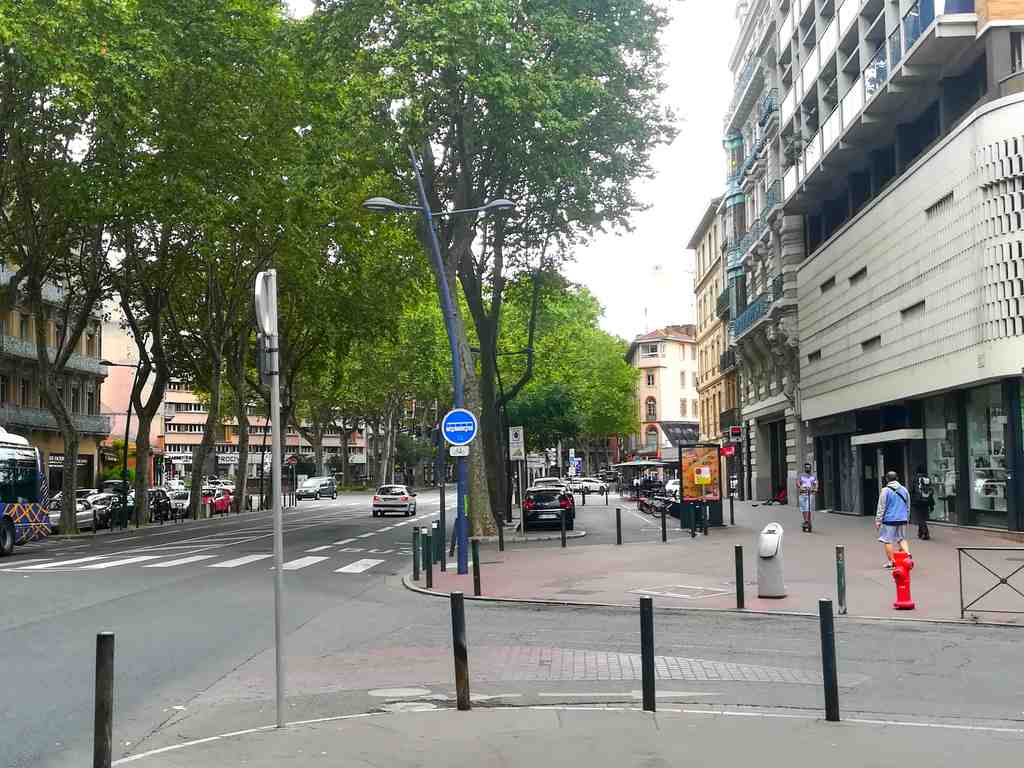
  3. In front of you stretches Arcole Boulevard-a wide, gently curving street lined on both sides with rows of tall, leafy trees that almost kiss overhead, while striking red-brick and…阅读更多收起

    In front of you stretches Arcole Boulevard-a wide, gently curving street lined on both sides with rows of tall, leafy trees that almost kiss overhead, while striking red-brick and modern gray buildings hug the sidewalks; just follow the flow of cars under the green canopy to spot it. Now, take a deep breath and listen to the life of this boulevard, where every building, every tree, and every echoing footstep comes with its own little secret. Imagine yourself here, north of Toulouse’s historic center, right on the border between the buzzing Arnaud-Bernard and peaceful Chalets neighborhoods. Back in the 18th century, if you stood where you are now, you wouldn’t see cars or shops, just a countryside promenade-a wide path peppered with market gardens, shaded by rows of sturdy trees, and bordered by two ancient gates: Arnaud-Bernard to the west and Pouzonville to the east. Picture couples ambling hand-in-hand, perhaps an accordion playing softly in the background, and the soft rustle of leaves overhead. As time wound forward to 1815, Toulouse was growing-those city planners, always wanting to rearrange things!-and an architect called Urbain Vitry cooked up a grand plan: out with the old medieval wall, and in with a sparkling boulevard to smooth out the city’s wrinkles. By 1825, new life pulsed along these brand-new sidewalks. Sounds nice, but the name? Originally, it was the Boulevard de Pouzonville, named after the long-gone city gate near Rue Jean-Baptiste-Merly, but when 1840 rolled around, a brand-new story took center stage-or should I say, center street. Let’s spice things up: Arcole, the very name you see on street signs today, carries not one, but two legends on its strong shoulders. Some say it’s the famous Battle of Arcole in Verona-where a young, gutsy Napoleon Bonaparte (before the hat got really big) snatched victory from the Austrians. Picture the noise, the shouting, the clash of bayonets, maybe Napoleon’s horse neighing in surprise. But hang on, Toulouse is a city of many tales, and another story tells of a young Parisian locksmith who lost his life fighting on the Pont de Grève during the July Revolution in 1830-his courage inspired his friends, and his name was later given to a bridge in Paris, and eventually right here, to this boulevard. Whoever the real namesake, there’s definitely heroism hidden in the street signs. Keep looking left and right as you stroll-notice any grand buildings catching your eye? Take the Immeuble Citroën at number 2-2 bis, one of the city’s earliest tall buildings. When it first rose in the late 1950s, its modern concrete shape caused quite the neighborhood gossip. Sixteen stories high, this building-once home to the famous Citroën garage-is now filled with shops, offices, and apartments, each level a slice of Toulouse life. The lower floors are all swooping horizontal lines with shops bustling below, while the upper ones pull back, climbing up with elegant vertical lines like fingers reaching upward for the sunlight. And just next door at number 4, you’ll spy an eclectic beauty with seven windowed bays and balconies dancing with ornate ironwork and geometric flourishes. Look for the majestic face of Hermes carved in stone, and the two muscular stone atlantes lifting an upper balcony like decorative strongmen in a circus act. If you find yourself smiling, you’re not alone-Toulouse’s architecture has always loved to wink at passersby. Further along, there’s number 13-the École Élémentaire du Nord-whose walls have heard the laughter and whispers of generations of children since the 19th century. And at number 50, why not pause for a moment? This modest brick house, built in 1903, is a charming example of Art Nouveau decoration and leafy balcony ironwork-spot the tiny sculpted oak leaves if you can. Keep your ears open and your eyes peeled! At number 56, legendary singer Claude Nougaro was born. Who knows, maybe if you stand here at night, you might just catch an echo of jazz and chanson floating out of old windows. Arcole Boulevard is more than a street; it’s a living backdrop for revolutionaries, architects, schoolchildren, musicians and dreamers. So, whenever you walk under these leafy branches, remember: you’re part of the latest chapter in a story centuries in the making-one that still grows every day, just like these trees above your head. Eager to learn more about the location and access, odonymy or the heritage and places of interest? Simply drop your inquiries in the chat section and I'll provide the details you need.

    打开独立页面 →
再显示 11 个站点显示更少站点expand_moreexpand_less
  1. To spot the Fontaine Clémence Isaure, just look towards the center of the square-rising above the fountain’s pool is a tall, marble column crowned by a striking bronze lady in a…阅读更多收起

    To spot the Fontaine Clémence Isaure, just look towards the center of the square-rising above the fountain’s pool is a tall, marble column crowned by a striking bronze lady in a flowing gown, wearing a dramatic, pointed headdress that no one in Toulouse could possibly miss. Alright, here we are, at the heart of Place de la Concorde, in front of Toulouse’s most poetic-and debated-fountains: the Fontaine Clémence Isaure. Take a moment and let your eyes wander up from the marble basin, past the fantastically detailed frogs, turtles, and blooming flowers, and follow the slender, geometric column to meet the lady of the hour herself. You can’t overlook her; she’s the one in the soaring, almost comically large headdress! Some say it looks more fit for a wizard at a carnival than a legendary muse, but that’s half the fun. A little over a century ago, in 1905, a local pharmacist named Octave Sage made a generous donation to build this fountain-what a way to make your mark, right? It was meant to be both beautiful and useful, a place where nature, art, and the people of Toulouse could meet. In 1910, the search for an artist began, and Léo Laporte-Blairsy was chosen, though not without some drama. His first proposal, with Clémence Isaure’s head uncovered, was rejected by the townsfolk-Toulouse takes its legends seriously! Rumor has it, Laporte-Blairsy added the enormous hennin, that tall pointy hat, as a bit of a sarcastic jab. Ironically, that’s the version you see standing before you now. But here’s the surprise twist-this statue doesn’t actually have to look like Clémence Isaure at all! According to some, she’s simply a tribute to the poetry and beauty of Occitan culture, her delicate form and flowing dress representing the link between the earth and its people. A touch whimsical, a dash mysterious, and-naturally-a sprinkle of controversy. At her grand unveiling in 1913, many locals were absolutely scandalized. “That’s not Clémence Isaure!” they cried, remembering her statue in the Hotel d’Assézat. Even the bishop of Toulouse nearly put the brakes on the whole thing! But, with a little diplomatic magic, she won everyone over. Wartime brought new suspense. In 1942, as bronze statues across Toulouse were snatched up for the war effort, Clémence Isaure was dismantled-but, in a plot twist worthy of a novel, she survived and was returned, untouched, after the war. Now, this fountain has its own magical tradition: every New Year’s Eve, locals bring fresh, uncut flowers and float them in the basin, a silent poem of renewal. So, as you stand here, among the frogs and dragons, you’re not just looking at a work of art-you’re part of a living, ever-blooming story. Who knew a fountain could be this dramatic?

    打开独立页面 →
  2. To spot Place Jeanne-d’Arc, just look ahead for a lively square with a striking bronze statue of a woman in armor on horseback atop a tall pedestal, flanked by leafy trees and…阅读更多收起

    To spot Place Jeanne-d’Arc, just look ahead for a lively square with a striking bronze statue of a woman in armor on horseback atop a tall pedestal, flanked by leafy trees and surrounded by the hustle and bustle of market stalls and people on the move. Welcome to Place Jeanne-d’Arc, a spot in Toulouse where history, legend, and everyday city life cross paths-sometimes more hurriedly than a bus at rush hour! As you stand here, take in the vibrant atmosphere: bicycles whizz by, buses rumble up to the curb, and market sellers chat with locals buying fresh flowers. There’s always something going on in this square, and that’s honestly how it’s been for centuries. It’s hard to believe that, back in the Middle Ages, this area wasn’t a lively square at all, but a patchwork of fields outside Toulouse’s city walls. As the town grew, a new suburb sprang up around the nearby abbey of Saint-Sernin, and sturdy walls were built for protection. There was even a gate here called Matabiau-named after a rather brutal pastime: "mata buòu" in Occitan means "where the oxen are slain". So, yes, in the eleventh century, you probably would have been dodging cows on their way to meet their fate, rather than avoiding buses! Fast forward to the 1800s, and Toulouse was transforming. The city planners wanted to open up the old medieval ramparts and let the city breathe. They created spacious boulevards lined with trees-one of which, the Boulevard de Strasbourg, leads right here to this square. At that time, the square was still just a modest market with livestock traded and an old water trough in the center. If you stood here in the nineteenth century, you’d smell sheep, see farmers haggling over prices, and probably hear a few grumpy oxen too. Over the years, the face of the square changed again and again. By 1922, a new monument became the heart of this space-one that you can’t miss: the statue of Jeanne d’Arc herself. She stands proud on her mighty horse, in shining knight’s armor, holding her banner high and her face turned skyward, as if still listening for a message. Sculpted by the talented Antonin Mercié and cast in bronze by Ferdinand Barbedienne, she was welcomed by a crowd of 20,000 people on inauguration day, all hoping to catch a bit of the spirit of France’s most famous heroine. They say her monument became the rallying spot for everyone from bustling merchants to dreamy poets. The square didn’t settle down when Jeanne arrived-not in the least! In the 1970s, the space became the nerve center of Toulouse’s urban transport: buses now snake their way around, coming and going, with people constantly hopping on and off. Under your feet, an underground parking garage was added in 1988, ensuring this place remains the beating heart of downtown. The buildings around you whisper their own stories. That building at number 5, with its ornate stone arch and Renaissance revival flourishes, was designed in the early twentieth century-step up close and see if you can spot the carved leaves shaping its doorway. Across the square stands the modern façade of the Credit Agricole headquarters, a bold wall of glass and aluminum that hints at Toulouse’s forward-thinking spirit. And right at the corner, the Clocher de Rodez hotel stands proudly; its roots as a travelers’ inn go all the way back to 1805, when it served tired stagecoach passengers rather than business travelers. But even as the square grew and changed, some traditions refused to budge. The market here, once dominated by sheep and cows, turned into a thriving flower market. On bright mornings, the scent of blossoms and the laughter of merchants fill the air, just as they have for generations. And all the while, between the rumble of the buses, the clatter of passing bikes, and the hum of busy shoppers, Jeanne d’Arc watches over her square, perhaps silently reminding passersby to be brave in their everyday lives-or at least to cross the street carefully!

    打开独立页面 →
  3. Right in front of you stretches the Boulevard of Strasbourg-a wide, lively avenue lined with tall leafy trees, with bustling cars, buses, and cyclists weaving between the shade…阅读更多收起

    Right in front of you stretches the Boulevard of Strasbourg-a wide, lively avenue lined with tall leafy trees, with bustling cars, buses, and cyclists weaving between the shade and sunlight; just look down the long corridor created by the thick rows of trunks and you’ll spot the boulevard in all its action. Alright, let’s jump back in time for a moment-because the Boulevard of Strasbourg isn’t just any city street; it’s a living, breathing slice of Toulouse’s very own urban history! If you listen closely, you might almost hear the echo of carriage wheels from the 1800s rolling alongside today’s humming buses and zooming bikes. You’re standing on one of the great arteries that wrap around the heart of Toulouse, connecting the cool, historic districts of Saint-Georges, Matabiau, Arnaud-Bernard, and Chalets. On your left and right, layers of history are hidden behind every leafy canopy and each bustling storefront. Now, if you want to sneak a peek into Toulouse’s complex past, pay attention to this boulevard’s name-because this street has something of an identity crisis! Dreamt up in 1825, it started off as the Boulevard de Matabiau. By 1852, it fancied itself as the Boulevard Napoléon, tipping its hat to the emperor himself. But empires fall as quickly as bus schedules change, and next it became the Boulevard du Vingt-Deux-Septembre-marking the day France first became a republic! Finally, in 1873, after Strasbourg was annexed to Germany in the Franco-Prussian War, Toulouse named this boulevard in the city’s honor, sealing the name you see on street signs today. Councils even tried to change it back in 1878, but Strasbourg held its ground! Now, let your eyes wander over the elegant facades rising up right here. Each building turns a brick-and-mortar page in Toulouse’s story. Take No. 52, the Hôtel Baylet: built in the late 19th century and revamped in the 1930s by star architect Louis Corlouër, this once-grand bourgeois home whispers tales of grand parties and high-society secrets. Peer up at its grand entrance and the intricate stonework, and you might spot some of the glamour of yesteryear. Just a few paces away, you’ll find the Hôtel Calvet at No. 76-a vision in eclectic Louis XVI style. Picture this: an industrialist professor and his wife tearing down her family estate to build a four-story masterpiece in 1910, topping it with balconies, ornate stonework, and a courtly atmosphere fit for a queen-or at least for the chicest citizens of Toulouse. If you’re a fan of architectural “Easter eggs,” the windows and the sculpted stone porches are a must-see, and at the top, the slate roof with bull’s-eye dormers brings a real Parisian touch to the South. But wait, the Boulevard isn’t only about old grandeur; it’s also the scene of everyday hustle! Hop on a Tisséo bus or the Linéo L1, wave to the locals on their bikes, or marvel at how modern life flows past the same buildings that once watched horse-drawn coaches glide by. And for those who prefer two wheels, VélôToulouse stations dot the area-so you can pedal off with a real “Tour de Toulouse” feeling. At the intersection around Place Idir, keep an eye out for a quirky surprise: the Montariol kiosk. This six-sided, Art Deco beauty was actually moved here from another square and now shelters locals from both sunshine and showers as they sip their coffee or buy a little magazine. With its bright mosaics and generous roof, it’s like an elegant time capsule that looks ready to host a secret jazz night or a detective’s mysterious rendezvous. The boulevard has not just seen grand socialites and architecture buffs-it’s also played host to important characters like Jean Baylet, a radical-socialist journalist and housing advocate; Pierre Dac, a sharp comedian hiding out during World War II; Frédéric Estèbe, the worldly colonial administrator; and even the consulate of Algeria tucked away at No. 67. So as you stand here, if you feel a breeze, imagine it carrying the voices of schoolchildren, shopkeepers, revolutionaries, and bon vivants-each one adding their own layer to Strasbourg’s busy, leafy story. And hey, don’t get lost in daydreams for too long-the traffic lights here are very real, and they don’t care how poetic you’re feeling! Let’s head on-there’s even more to discover just around the bend.

    打开独立页面 →
  4. In front of you is Bayard Street, a long, tree-lined avenue with elegant balconies and classic Toulouse buildings flanking both sides-just look ahead for the rows of iron-wrought…阅读更多收起

    In front of you is Bayard Street, a long, tree-lined avenue with elegant balconies and classic Toulouse buildings flanking both sides-just look ahead for the rows of iron-wrought railings and welcoming café terraces. Welcome to Bayard Street, where modern hustle and whispers of Toulouse’s past mix right under your feet! Picture yourself standing in the heart of the Matabiau district. On one end, there’s the ever-busy Matabiau train station-ready to whisk travelers away-and on the other, the grand city center lies in wait for urban explorers. As you walk, you’ll notice the rhythm of the street; buses rumble by, cyclists ring their bells, and the occasional shout of “Attention!” from someone late for their train. But a few centuries ago, this vibe would have been very different. Can you imagine François Bayard, back in the late 1600s, tending to his grain mill, helped along by the rush of water from the nearby lock on the Canal du Midi? Bayard wasn’t just anybody-he owned three houses, a well with a waterwheel, and enough fertile land to make the neighbors jealous. The Bayard family’s name echoed well beyond this street, stretching north toward the rolling hill of Calvinet, along what used to be the old rural road. Fast forward to today, and Bayard Street is less about grain and watermills, and more about city living. Watch for the elegant details-at number 73 stands the regal Hotel Regina, a grand place built at the dawn of the twentieth century, right when people travelled by steam and ambition. Or perhaps your eye is caught by the stately Hotel Chaubard at number 74, which later became the Terminus Hotel, likely seeing more travelers and stories than any hotel lobby should ever try to contain. If you get a breeze of history here, that’s just Jules Calbairac’s Hotel Victoria from the same era-its doors might as well have a “Welcome, time travelers!” sign. Bayard Street tells its history through its buildings: number 3 dates to 1872, a post-revolutionary era when Toulouse was quietly modernizing behind ornate facades; number 12 from 1924, an age when art deco was the height of fashion and perhaps the neighbors all wore snappy hats; and then, just a short stroll away, number 26, with the elegant flair of 1926 courtesy of Joseph Gilet. Each building has its own attitude, a sort of quiet confidence, like a lineup of actors waiting for the curtain to rise. Today, when you hear the distant vroom of a bus or the hum of a passing metro from Jeanne-d’Arc station, you’re right in step with modern Toulouse. But even now, the street is mindful of its pace. It’s in a “zone 30”-no crazy racing here. Cars slow down, and sometimes the important people are on two wheels; keep an eye out for a VélôToulouse bike, ready for your next joyride. Now, for a bit of mystery-if you’d looked out your window in the early twentieth century, you might have seen Jean Arlaud strolling by, a doctor and mountain climber with ambition beating in his chest. Arlaud once lived at number 3, but he didn’t just stick to city streets-he was among the very first French climbers to conquer the mighty Karakoram in the Himalayas. Or perhaps you’d catch sight of Antoine Labit, legendary founder of the Bazar Labit, who helped turn a simple street into one of Toulouse’s most important arteries for commuters, shoppers, and dreamers alike. In 2017, Bayard Street got a facelift, just like a film star ready for the big premiere. With the new high-speed train-LGV-coming to town, the authorities trimmed the street from three lanes to two, gave it a shine, and made space for modern travelers. And yet, through all this change, Bayard Street remains what it’s always been-a place to meet, to move, to dream, and to discover the quietly beating heart of Toulouse. So keep your senses sharp and your imagination ready-who knows what old story or new adventure awaits just around the bend?

    打开独立页面 →
  5. You’ve arrived at Orient Street - or, if you want to impress your local friends, carrièra de l’Orient in Occitan! Now, let’s imagine ourselves standing here in the middle of…阅读更多收起

    You’ve arrived at Orient Street - or, if you want to impress your local friends, carrièra de l’Orient in Occitan! Now, let’s imagine ourselves standing here in the middle of Matabiau, breathing in the aroma of fresh baguettes and hearing the distant sound of traffic gliding along these old stones. But don’t get too distracted: Orient Street is more than just a shortcut between Bayard and Matabiau. It’s a place constructed layer by layer, much like a French pastry-each layer with its own flavor of history and personality. Orient Street, stretching a neat 206 meters, marches confidently from Rue de Bayard to the street of Matabiau. Back in 1850, when Toulouse was really getting into the swing of urban expansion, this street was carved straight and true, like someone with an especially determined sense of direction. In those days, it wasn’t even called Orient Street-it was Caffarelli Street, named in honor of not one, not two, but *three* brothers: Maximilien, Joseph, and François Caffarelli. Imagine an epic action movie with three sibling heroes, each dashing off to different corners of the world. Maximilien was a Revolutionary general who made it all the way to Egypt but never came home from Saint-Jean-d’Acre. Joseph sailed the seas, fighting with the Americans for their independence and later becoming a kind of maritime boss in Brest. François, another general and aide-de-camp to Napoleon himself, clocked up so many titles he probably needed a business card the size of a baguette. But that old name wasn’t destined to stick. In 1866, something magical happened at number 5-a group of Toulouse’s Freemasons finished building their grand temple, and the street was reborn as Rue de l’Orient. You can almost imagine the excitement: top hats, secrets, and a bit of dramatic masonry under the Toulouse sun. The temple still stands today, a bit hidden away but very much alive-a living headquarters for not one, but several Masonic lodges, including the Grand Orient, the Droit Humain, the women’s Grand Lodge, and the traditional Opera mix of them all. Just don’t expect a secret handshake at the door. I tried once-they just gave me a polite nod and pointed me toward the bakery. Architecturally speaking, the Grand Orient lodge is a visual treat. Picture it: the building wraps around its courtyard in a U-shape, as if hugging centuries of secrets. Flanking wings are made with classic red brick and Garonne pebbles-so perfectly Toulouse. There are grand, rectangular windows and even a coach gate where fancy carriages once clattered in. Head to the back, and you’ll find the star attraction: the main building in a lighter brick, five arches on the ground floor, held apart by columns with those swirling, elegant Ionian capitals you see in old temples. On the upper floor, stately pilasters frame panels proudly painted with the French Republic’s motto-Liberty, Equality, Fraternity. Peer upwards and you’ll spot what’s left of a sculpted group above the cornice: two winged women reclining on either side of an urn, all crowned by the ever-watchful Eye of Providence. Or, as I like to call it, the original “Big Brother”-but less snoopy and more philosophical. But even Orient Street wasn’t safe from history’s storms. In 1941, under the oppressive shadow of the Vichy regime, anything associated with the Freemasons was scrubbed away. The street was renamed after Edmond Rostand-the very guy who wrote Cyrano de Bergerac! Freemasonry’s link to the street was considered too dangerous, too unruly, and, frankly, too interesting for those dark years. When peace returned, so did the name Orient Street, as if the city itself was breathing a sigh of relief. Edmond Rostand found a new home up at Rue Edmond-Rostand, because-let’s face it-even street names need a place to retire. Today, as you stroll along, check out the range of buildings: from the 19th-century homes at numbers 6 and 21, to more modern spots like 2 and 3. Each has its own story. And as you walk, you’ll notice it’s a one-way street for cars, but if you’re on a bike, you’re in luck-it’s doubly “open-minded” for cyclists, just like the street’s spirit. So as you leave Orient Street behind, tip your hat to the Freemasons, to lost names and found identities, to secret symbols and the eternal promise of liberty hidden in the very walls. And if you hear a distant echo of whispered secrets as you pass number 5, well, now you know you’re in the right place. Let’s keep moving on-adventure awaits!

    打开独立页面 →
  6. As you approach Bertrand-de-Born Street, look for a charming, narrow lane lined with red-brick and pastel buildings, lively shops and cafés, and balconies peeking out over the…阅读更多收起

    As you approach Bertrand-de-Born Street, look for a charming, narrow lane lined with red-brick and pastel buildings, lively shops and cafés, and balconies peeking out over the sidewalks-a true slice of Toulouse city life! Welcome to Bertrand-de-Born Street, where the quiet hum of Toulouse’s past mixes with the buzz of today’s city! Take a deep breath-can you smell the hint of pizza from the nearby shop and the soft sweetness of brick dust in the air? No, that’s not the beginning of a new perfume, it’s just the authentic aroma of this Matabiau neighborhood. Picture yourself back in the late 1800s: the street is new, full of the energy of industrial growth. The canal du Midi to your right is bustling with barges hauling goods, and nearby stands the grand Matabiau train station, ringing with the shouts and whistles of travelers. The street lies in the heart of a district that was designed for movement and industry. When this route was completed in 1868-a time when Toulouse was a hive of innovation-its buildings were a statement of confidence, business, and community. And if you feel the need for speed, don’t get your hopes up! The street’s a one-way and the speed limit is strictly 30 km/h. No wild chariot races here, I’m afraid. But now, let me introduce you to the troubadour who gives this street its name. Bertrand de Born was anything but boring: a 12th-century poet and medieval rebel famous for his sharp tongue and satirical poems that could start barroom brawls-or maybe just awkward silences at royal banquets. The city council honored his legacy in 1941, but it’s a good thing they picked this name, because the street almost had an identity crisis! At first, it was named “Cambon,” for a Toulouse parliament president, but that didn’t last. Then it borrowed “Denfert-Rochereau” before finally settling on Bertrand de Born. Talk about a street with a complex! Keep your eyes peeled for number 9-Immeuble Guitard-a classic neoclassical building reconstructed in 1881. See the light-colored bricks? The rows of windows on the first and second floors, dressed up with fancy molding and little cast-iron balconies? On the first floor, those windows are connected by a wide balcony edged with geometric, ironwork rails-a balcony perfect for spying on the neighbors or waving dramatically at passersby. Don’t forget to look up! The building is crowned with decorative cornices and quirky, round windows known as œils-de-bœuf, like watchful eyes peering down from the roof. At street level, you’ll find the lively chaos of shops, updated and changed through the years, but still bustling as ever. Walking further, you’ll see more late-19th-century and early-20th-century façades, once home to busy manufacturers and warehouses, thanks to the street’s close connection to industry and trade. Imagine the clang-and-bang of workshops, the sweet-and-sour tangle of smells, the shouts as workers unloaded cargo from the canal. From troubadours to factory hands to pizza-lovers, Bertrand-de-Born Street has hosted them all. And as you stroll along, remember: every doorway and step is layered with history, echoing with laughter, poetry, and the daily rhythms of Toulouse. So go ahead, walk in the footsteps of rebels, workers, and dreamers-the story of this lively street is just beginning with you!

    打开独立页面 →
  7. Directly in front of you, you’ll see a wide, tree-lined esplanade stretching far into the distance-look for the bright red sculpture of a man with an apple for a head standing on…阅读更多收起

    Directly in front of you, you’ll see a wide, tree-lined esplanade stretching far into the distance-look for the bright red sculpture of a man with an apple for a head standing on a tall pedestal on your right to spot the start of the Jean-Jaurès Alleys. Take a breath and imagine yourself transported back through time, because this grand, sunbathed alleyway wasn’t always here! Once upon a time, this whole area was just open fields, gardens, and a smattering of old houses. Then, in the early 1800s, as Toulouse began to dream big, urban planners envisioned something like the Parisian Champs-Élysées-voilà, the Jean-Jaurès Alleys were born, stretching their leafy arms between the neighborhoods of Matabiau and Saint-Aubin. Picture the scene nearly two centuries ago: In 1822, workers planted hundreds of elm trees along these brand-new allées, giving everyone a shaded place to stroll, gossip, or show off their latest hats. But don’t get too comfortable in that era-because, as with so much in France, names and fortunes changed faster than you could say “la révolution!” First called Villeneuve, then Angoulême (after a royal visit), these alleys even bore the name of Lafayette, hero of both the American and French revolutions. Imagine overhearing heated debates as each new regime rolled into town and swapped the old street signs for the new. If these cobbles could talk, they’d tell you of crowds gathering for bustling fairs-one in May and one in November-where troupes of acrobats, musicians, and showmen filled the air with laughter and applause. On summer nights, the cafés along the allée buzzed with the hum of conversation, the clink of coffee cups, and the distant music from the famous Pré-Catelan-an epic place for dinner, drinks, and a little dancing. But not all was always rosy: The late 1800s saw the rise of cars, and these alleys slowly lost their charm to noise, fumes, and, dare I say, a few ladies of questionable repute. The grandeur faded, even as new buildings in neoclassical and, later, bold modern styles sprang up to reflect each era’s tastes. You can still spot their stories in the buildings around you-from the grand, balustraded residence Franklin Roosevelt to the stylish “Immeuble Riquet,” which was Toulouse’s very first “skyscraper” (even if Parisians might say, “That’s adorable!”). The Jean-Jaurès Alleys are named after Jean Jaurès, a beloved local teacher, politician, and famed pacifist-he believed in peace so much, he made sure these alleys would always have a place for the people! Jump forward to the 21st century and you’ll find the alleys transformed yet again. Between 2016 and 2019, this entire stretch became a pedestrian promenade, the “ramblas jardin” as some locals now lovingly call it. Wider sidewalks, lush gardens, fixed bike paths, and reduced car traffic-you’re walking where Toulousains come to breathe, meet friends, or just escape the city’s rush for a while. If you’re lucky and it’s the right Sunday, you might even stumble across the bustling market of artisans and creators, or, in the winter, see the city’s giant Christmas tree shining here. For a dose of art and whimsy, don’t miss that bright red figure beside you-“L’Homme à tête de pomme.” He’s a bit of a local celebrity, a playful jab at consumer society and maybe at Adam and Eve, too (plus, he’s been known to get curious glances from children and a few raised eyebrows from adults). And finally, keep your eyes open for more treasures: The old Notre-Dame-des-Grâces church, now cleverly converted into offices, sits further along, while the Armenian khatchkar monument quietly thanks the people of Toulouse for their friendship. If you wander toward the end, old Pierre-Paul Riquet, the man who masterminded the Canal du Midi, stands tall in marble, watching over his city. So as you stroll down the alleys, listen for echoes of markets, music, protests, laughter-layer upon layer of Toulouse history, all waiting for you here beneath the rustle of the plane trees. Fancy a bit of people-watching or an impromptu picnic? You couldn’t pick a better spot. Now, onward to our next adventure!

    打开独立页面 →
  8. Ahead of you is Gabriel-Péri Street: just look down this straight, lively street lined with a jumble of red-brick and pale stone buildings-spot the mix of modern facades and…阅读更多收起

    Ahead of you is Gabriel-Péri Street: just look down this straight, lively street lined with a jumble of red-brick and pale stone buildings-spot the mix of modern facades and classic wrought-iron balconies, and you’ll know you’ve arrived in the heart of Toulouse’s Saint-Aubin district. Now, let’s let your feet take a quick break for a moment-after all, it’s only polite to pause before a street with stories this full! Imagine the gentle hum of cars and the occasional ring of bicycle bells, the scent of fresh coffee drifting from the cafés, and the cheerful chatter of locals weaving between shops, bars, and market stalls. Gabriel-Péri Street hasn’t always answered to this name: when it first opened in 1840 it was called the rue de Constantine, after a French military victory in Algeria. For more than a century, its stones echoed with a very different kind of story. But wartime and heroism have their ways of writing themselves into street signs, and so by 1945, after the darkness of World War II, the city chose to honor a man whose courage still echoes in these brick walls: Gabriel Péri. Picture him-a sharp-eyed journalist, full of purpose, swept into the drama of the 20th century. By just 20, he was already a powerful voice among young French communists, his words sharper than a sword, his heart fixed on justice. He ran for public office time and again, and finally, in 1932, he took his seat in parliament. Politics in those days wasn’t just a matter of swinging votes or making promises-it was a matter of standing up to the world’s darkness. Péri traveled to Spain to support the republicans against Franco’s coup, and to Prague to defend Czechoslovakia from the looming shadow of Nazi Germany. Even when war broke, and he had to go underground, he kept fighting with words-writing, publishing, keeping the embers of hope alive, until his arrest and tragic execution in 1941. When you walk here, you’re walking on a street that remembers bravery-a reminder that sometimes, making history is about refusing to go quietly. But let me pull back the veil a little further-because if there’s anywhere in Toulouse where history feels alive, it’s in these mismatched facades. Let your eyes wander to the corner of rue des Sept-Troubadours, where the impressive building at No. 1-3 has lived quite a few lives. That’s the former headquarters of Le Télégramme, one of the region’s great newspapers before it was swallowed up by La Croix du Midi, then transformed into the local tax office, reborn as a nightlife hotspot, and reincarnated once more as Café Oz. If you thought only cats had nine lives, think again! Its architecture is a delightful mishmash: a solid stone base, grand arched doors, clusters of grapes and leafy details carved above the entrance (a sly nod to the city’s vineyards, perhaps?), stately balconies, and brickwork that somehow manages to look both Parisian and distinctly Toulouse. Peek up at the attic windows-those curious round "oeil-de-boeuf"-and you’ll spot the old clock, standing watch over the years since 1912. As you stroll, you’ll find more tales hidden in the plaster and brick. At No. 6, the Ducuing house is an eccentric beauty, built for a pioneering doctor-Joseph Ducuing, a friend to poets and a founder of Toulouse’s ground-breaking cancer center. He believed in healing not just the body, but the soul of the neighborhood, and you can almost feel a whisper of his optimism in the gentle curve of the stonework and the inviting iron balconies. Modern facades pop up beside 19th-century apartment houses; a few old shops have turned into theaters, and paper factories have become lycées, but if you listen closely, the spirit of invention, resilience, and reinvention hums just below the surface. Of course, Gabriel-Péri is more than its stones-it’s a living, breathing street, where you might see a parade of scooters zipping by, someone unlocking a VélôToulouse bike from its rack, or buses rumbling south towards Lazare-Carnot Boulevard. It’s the kind of place that pulls you along, forward into the present, even while the past clings gently to your shoes. And with every step, you’re part of its story-an alley of resistance and reimagining, open to everyone who believes in standing up, speaking out, and maybe-just maybe-sneaking in a pastry from the bakery around the corner. Ready to keep walking? There are more stories waiting around the next bend!

    打开独立页面 →
  9. Look for a simple cream-colored building with pink brick framing the doorway, dark wooden double doors, and a Hebrew inscription above; the Palaprat Synagogue sits quietly right…阅读更多收起

    Look for a simple cream-colored building with pink brick framing the doorway, dark wooden double doors, and a Hebrew inscription above; the Palaprat Synagogue sits quietly right at the intersection, its modest face easy to miss if you blink! Now, as you stand here in front of this very unassuming entrance, let me bring you into a story that stretches nearly two centuries-filled with whispers of faith, echoes of hope, and the everlasting humor of Toulouse weather always trying to rain on every parade. This is the Palaprat Synagogue, Toulouse’s oldest, still bustling quietly with spirit since 1837. Imagine the air in those early days, streets filled with the scent of horses and fresh-baked bread, and just eighty-seven Jewish souls calling Toulouse home-fewer than the number of croissants you’ll see eaten on any given Sunday. Back then, the Jewish community here was almost more of a rumor than a crowd. Lacking a grand temple, they gathered in a small house right here, rented from a local named Mr. Gleyzes, basically at the edge of what was then the fast-growing faubourg Saint-Aubin. Picture a time when this intersection was all rough cobblestones and the only skyline was made of laundry flapping between homes. Over the years, more families arrived, carried here by the tides of history-escaping annexations, fleeing the storms of war in Alsace-Lorraine, running from pogroms in the Russian Empire. By the time brick met mortar for this building, it was with the faint hope that this would be a safe anchor in a restless world. Inside, this synagogue was not designed to impress; instead, it greeted worshippers with modest whitewashed walls, sunlight peeking in through round windows, and a wooden bimah in the center-a reminder that sometimes the heart of a community beats loudest in the simplest settings. Above the entrance, in Hebrew, reads the blessing: "You shall be blessed when you come in, and you shall be blessed when you go out." Sounds like a pretty solid guarantee to me, don't you think? But what this place lacks in grandeur, it makes up for in resilience. Fast forward to the 20th century-this quiet house of worship transformed into the secret pulse of Jewish resistance. During World War II, while fear stalked the streets and German troops shadowed every corner, the synagogue remained open as long as it possibly could. Picture those tense nights: all the curtains drawn, the brave and the desperate huddled together in prayer and determination. This was a hiding place, a planning room for the Jewish Resistance, a birthplace for the Jewish Army in Toulouse. Imagine the tension when, in August 1943, the French militia surrounded the building, threatening those inside, only retreating thanks to last-minute intervention-moments when every breath seemed loud enough to betray a secret. It wasn’t just Jewish heroes who left their mark here. Monseigneur Saliège, the archbishop of Toulouse, played his own daring part-publicly denouncing antisemitic persecution and commanding his flock to help however possible. His courage earned him a plaque within these walls, honoring the day when conscience defeated silence. Sometimes even the most unlikely allies pop up in life and in history-like a squirrel at a picnic. As time rolled on, the synagogue’s story grew richer. Different Jewish communities wove their own traditions here: Sephardic from Turkey and Egypt, Ashkenazi from Poland, North Africans arriving in waves in the ‘60s. Life wasn’t always harmonious-a little drama over rituals and leadership (because, honestly, what’s a family without a bit of squabbling?)-but every hand, every accent, and every prayer echoed inside these walls. In the later 20th century, new synagogues opened, and the big Jewish center on Place Riquet became the new main stage, but Palaprat kept its role as Toulouse’s spiritual living room. Today, it’s still active, tended by attentive rabbis and faithful caretakers, one of Toulouse’s last living links to generations of struggle, courage, and hope-a precious little chapter in the big, wonderful story of this city. So, next time you pass this quiet brick-framed doorway, remember: inside, history is always whispering, and every blessing counted here has been hard won, fiercely kept, and as warmly offered as a smile on a rainy Toulouse afternoon.

    打开独立页面 →
  10. Imagine yourself walking here centuries ago-no cafes, no busy cars, just open countryside. Back then, Colombette Street was simply a dusty path cutting through endless fields of…阅读更多收起

    Imagine yourself walking here centuries ago-no cafes, no busy cars, just open countryside. Back then, Colombette Street was simply a dusty path cutting through endless fields of crops, part of the faubourg Saint-Aubin. This area wasn’t packed with grand buildings and boutiques. Nope, it was mostly home to hardworking farmers and vegetable gardeners, all trying to coax some life out of the Toulousain soil. If you’d come here on a market morning, you’d probably have been offered a turnip or-if you looked trustworthy-a secret recipe for the city’s best soup. Now, you might wonder, why the name “Colombette?” As it happens, that’s thanks to a humble farmhouse near the Guilheméry hillside, owned by Augustine monks in the 1500s. Atop their tower, after a bit of 17th-century DIY, they perched a lead dove, a “colombette” in French. Apparently, you needed a sense of humor-and a good roof-to live in Toulouse back then! That little dove turned into a big deal, giving its name to both the area and the path you’re on. Before you scroll on, here’s a twist worthy of a street magician: during the French Revolution, this road was briefly renamed “Rue Belles-Pensées”-the Street of Beautiful Thoughts. But as you can see, the beautiful thoughts didn’t stick around as long as the lead dove. Fast forward to the Middle Ages: Colombette Street was part of a vital route out to Balma, linking farms and tiny communities with the city. But in 1562, trouble was brewing-religious tensions shut the Villeneuve gate, and with it, the main entrance to the path disappeared. A century later, the mighty Canal du Midi snaked its way through Toulouse, slicing this rural route in two like a knife through a baguette. Progress, it seems, doesn’t always ask for permission. The magic didn’t end there. In the 1800s, changes came slowly at first: more gardens, fewer sheep, and houses still far apart. Then bang!-trains roared in, and suddenly, Toulouse had a railway running to Narbonne. The city wasn’t just growing anymore; it was booming. Residents needed new bridges, so the Colombette bridge took shape between 1873 and 1875, letting locals carry their market wares-and their arguments-across the tracks with ease. By the late 1800s, the street began to fill up. If you look at certain addresses now-say, numbers 1 to 15, 27 to 47, or 77 to 85-you’re seeing buildings that sprang up as factories and paper mills moved in. The Sirven paper factory at number 76 made use of the nearby canal and railway to become an industrial powerhouse. I like to think that, somewhere in its walls, there was always someone humming about the scent of fresh paper and the dangers of papercuts. A curious fact for lovers of Toulouse’s eclectic soul: this was also home to the first synagogue in the city, tucked away in a little house at the corner of what’s now Jean-Palaprat Street-a gentle reminder that Colombette has always been a place of welcome. The 20th century brought another unexpected twist. After World War II, local jeweler Christian Déro gathered the neighborhood’s traders and declared Colombette a “free commune”-with its own mayor and even a rural policeman. Toulouse might have been busy, but Colombette had its own fun-loving government, complete with music-hall comedians in office! Every year since 1944, the neighborhood hosts a festival at All Saints, keeping spirits high and the good times rolling. You can see the legacy in the bars too. At number 9, what was once “Aux Caves du Père Jean” became the “Bar des Deux-Ânes,” headquarters of the street’s free republic, and today goes by Café Populaire. If only these walls could talk-or at least buy you a coffee! Colombette Street is just wide enough for a single lane, but the stories it holds roll in both directions-all at a leisurely 30 kilometers an hour, which, considering everything, is probably fast enough. And if you hear the echo of footsteps-maybe yours, maybe someone from the past-just remember: here in Colombette, every step is part of a living, laughing, bustling story.

    打开独立页面 →
  11. Straight ahead, you’ll spot Lazare-Carnot Boulevard as a wide, lively avenue lined with tall leafy trees and a mix of historic and modern buildings guiding your eye down its…阅读更多收起

    Straight ahead, you’ll spot Lazare-Carnot Boulevard as a wide, lively avenue lined with tall leafy trees and a mix of historic and modern buildings guiding your eye down its bustling path. Now time to take you back through the legendary heartbeats of Lazare-Carnot Boulevard. Just imagine: centuries ago, there’d be nothing here but a winding path snaking past garden patches and medieval walls, with only the occasional medieval troubadour, and certainly no honking buses or scooters buzzing past! If you had wandered in the 1300s, you might’ve heard snippets of poetry drifting from a nearby orchard where seven troubadours-like rockstars with lutes-gathered to found the “Gay Saber,” inventing Toulouse’s famous floral poetry contests, the Jeux Floraux. But by the 1800s, Toulouse decided its old stone ramparts were a bit too ‘certifiably medieval.’ So they asked Napoleon himself for permission to tear them down and build something grander-imagine him twirling his moustache and giving a stern nod! The city’s architect, Jacques-Pascal Virebent, designed a boulevard that was supposed to be 60 meters wide with four rows of trees. In classic city-planner fashion, money troubles made sure it just… wasn’t quite that huge. Yet here you are, standing on its final footprint-proof that sometimes even Napoleon had to compromise. As the 19th and early 20th centuries rolled in, this boulevard became Toulouse’s own ‘see-and-be-seen’ runway. If you’d strolled here in the Belle Époque, you would have been hit by the rich aroma of coffee and a symphony of voices and glasses clinking together from legendary cafés like the Grand Café de l’Aviation or the Café des Nouveautés. In fact, this was Toulouse’s café capital: the sort of place where you could overhear gossip about the mayor, plot your next big invention, or maybe practice your very best moustache twirling in the mirrors. And for a touch of showbiz, don’t miss the story of the Théâtre des Nouveautés. Born from an old circus, it became Toulouse’s go-to spot for everything from slapstick vaudeville to booming symphony concerts-sometimes in the same week! By the mid-20th century, it transformed into a giant cinema, its neon lights glowing above buzzing crowds who came to laugh, cry, and maybe sneak a chocolate out of a friend’s candy box. The façade is still there, its elegant neoclassical lines whispering hello to anyone who looks up-but the drama continues as recent years saw it morph into a trendy hotel, Mama Shelter. Who said old theaters don’t have nine lives? Look up as you walk: the boulevard is a living museum. There’s the proud façade of the Immeuble Gazagne, bristling with Corinthian columns and fierce lions’ heads. There’s the parade of balconies, some dripping with Art Nouveau ironwork, others softly dressed in brick and stone, telling you about all the people who have called this place home. If you listen closely, you might hear echoes of the first automobiles rumbling along the street, sold at what was once the Automobilia store-Toulouse’s first car dealership, where people came to gaze at the future and perhaps wonder if horses would soon be out of fashion. And in the postwar decades-oh la la, did things change! Modern apartment towers like Résidence Saint-Cyr sprang up, experimenting with new styles but always remembering to nod to the old by wrapping themselves in Toulouse’s famed warm-colored bricks. Socialites sipped cocktails at Chantecler while new arrivals moved into the Cap Wilson building, which stands right over what used to be the show-off “Maison Modèle,” a decorated building so fancy it was basically Toulouse’s architectural calling card. But maybe the best magic of Lazare-Carnot Boulevard is that everyone leaves a trace. Pierre Jourdan, the not-so-law-abiding, always-plotting anarchist from the early 1900s, once hid out here between his adventures-a forever reminder that Toulouse has always made space for dreamers, rebels, and poets, not just proper mustachioed mayors. Today the boulevard buzzes with city buses, the ding of people unlocking city bikes, and the footfall of locals off for their morning coffee or racing to the metro. The trees overhead whisper the stories of centuries-if you listen, you can almost hear the poets, the automobile horn, the laughter in the old cafés, and maybe even the faint stomp of Napoleon’s boot. Congratulations, explorer-this is where the heartbeat of Toulouse speeds up and the stories come alive all over again. Seeking more information about the location and access, odonymy or the heritage and places of interest? Ask away in the chat section and I'll fill you in.

    打开独立页面 →

常见问题

如何开始导览?

购买后,下载 AudaTours 应用并输入您的兑换码。导览将准备好立即开始--只需点击播放并按照 GPS 引导的路线行驶即可。

导览期间我需要互联网吗?

不需要!开始前下载导览并完全离线享受。只有聊天功能需要互联网。我们建议在 WiFi 下下载以节省移动数据。

这是导游带领的团体游吗?

不是--这是自助语音导览。您按照自己的节奏独立探索,通过手机播放音频解说。没有导游,没有团体,没有时间表。

导览需要多长时间?

大多数导览需要 60-90 分钟才能完成,但您完全控制节奏。随时暂停、跳过站点或休息。

如果我今天无法完成导览怎么办?

没问题!导览具有终身访问权限。随时暂停和恢复--明天、下周或明年。您的进度已保存。

有哪些语言可用?

所有导览均提供 50 多种语言版本。在兑换代码时选择您的首选语言。注意:导览生成后无法更改语言。

购买后我在哪里访问导览?

从 App Store 或 Google Play 下载免费的 AudaTours 应用。输入您的兑换码(通过电子邮件发送),导览将出现在您的资料库中,准备下载并开始。

verified_user
满意保证

如果您不喜欢该导览,我们将退款。请联系我们 [email protected]

安全结账使用

Apple PayGoogle PayVisaMastercardPayPal

AudaTours:语音导览

有趣、经济实惠、自助徒步导览

试用应用 arrow_forward

深受全球旅行者喜爱

format_quote 这次导览是游览这座城市的绝佳方式。故事很有趣,感觉不太照本宣科,我喜欢能够按照自己的节奏探索。
Jess
Jess
starstarstarstarstar
第比利斯导览 arrow_forward
format_quote 这是了解布莱顿的一种可靠方式,感觉不像游客。解说有深度和背景,但并未过度。
Christoph
Christoph
starstarstarstarstar
布莱顿导览 arrow_forward
format_quote 一手拿着羊角面包,零期望地开始了这次导览。这款应用真的很适合你,没有压力,只有你、你的耳机和一些很酷的故事。
John
John
starstarstarstarstar
马赛导览 arrow_forward

无限语音导览

解锁全球每个导览的访问权限

0 导览·0 城市·0 国家
all_inclusive 无限探索