
Moravské Budějovice 语音导览:石头与精神的故事
曾经,一声凿击在Moravské Budějovice回荡,它不仅锻造了工具,更在这宁静的街道下铸就了一段隐藏的遗产。 这个自助语音导览将揭开历史和日常生活的层层面纱,带您穿越传奇的竞技场、秘密作坊,以及当地人津津乐道但游客常常忽略的城市鲜为人知的角落。 在Moravské Budějovice最臭名昭著的起义中,谁曾孤注一掷?手工艺博物馆的墙壁上刻着什么秘密信息?为什么一场普通的当地冰球比赛曾一度演变成丑闻和全市骚乱? 让您的脚步带您穿越雄心与反叛的故事,在这里,每一块石头都讲述着发明、竞争,以及在手工艺与冲突之间挣扎的市民的脉搏。每一次转弯都为这座城市鲜活的过去带来新的转折。 您探索Moravské Budějovice秘密核心的旅程现在开始。仔细聆听,走进回声背后的遗产。
导览预览
关于此导览
- schedule持续时间 30–50 mins按照自己的节奏
- straighten1.5 公里步行路线跟随引导路径
- location_on
- wifi_off离线工作一次下载,随处使用
- all_inclusive终身访问随时重播,永久有效
- location_on从 Moravské Budějovice 开始
此导览的景点
Right in front of you is a deep red, two-gabled townhouse with white trim and little spiral curls on the roofline, facing the square like it owns the place. This is House No. 32…阅读更多收起
Right in front of you is a deep red, two-gabled townhouse with white trim and little spiral curls on the roofline, facing the square like it owns the place. This is House No. 32 on Peace Square, and it’s been holding its ground since the 1400s... which is an impressively long time to stay fashionable. It started as a medieval burgher’s house stretched across two narrow plots, then took a nasty hit in the big fire of 1532. Cities have always had that one year everyone complains about. What you see now is the later, late-Baroque facelift: two matching fronts, a central entrance, shop windows at street level, and those playful volute gables up top with round oculus windows-basically the building equivalent of raised eyebrows. Inside, it gets serious: cross-rib vaults in the front rooms, barrel vaults deeper in, and a classic mazhaus entry hall leading to a bent staircase-designed to funnel people, goods, and gossip efficiently. When you’re set, Blažek's House (Moravské Budějovice) is a 1-minute walk heading southwest.
打开独立页面 →
再显示 7 个站点显示更少站点expand_moreexpand_less
On your left, look for the long, orange-and-white house with the big black double doors under a pale arched doorway and the painted sign that reads “BARVY - LAKY.” This is…阅读更多收起
On your left, look for the long, orange-and-white house with the big black double doors under a pale arched doorway and the painted sign that reads “BARVY - LAKY.” This is Purcnerova 64, a protected town house that’s been holding its ground since the early 1600s... back when late Renaissance style was the fashionable choice. Then the 1700s rolled in and Baroque tastes took over, so the place got a makeover-same bones, more drama. From the street you can read its orderliness: the facade is framed by flat vertical strips and lined up windows, capped by a strong cornice like a firm eyebrow. That arched carriage portal? It’s not just pretty-it was built for traffic, the kind with hooves and wooden wheels. Inside, the ground floor is covered in barrel vaults, sturdy enough for busy merchants and their goods, while upstairs relaxes into flatter ceilings. It also sits by where the southern city gate used to be… meaning this was prime real estate, with a front-row seat to who came and went. When you’re set, Masné krámy (Moravské Budějovice) is a 1-minute walk heading north.
打开独立页面 →On your left are the Masné krámy… the old meat stalls of Moravské Budějovice, and yes, this building is officially protected, because a town should remember where it fed itself.…阅读更多收起
On your left are the Masné krámy… the old meat stalls of Moravské Budějovice, and yes, this building is officially protected, because a town should remember where it fed itself. The first meat market stood right in the middle of the main square, with records going back to 1522. For more than 300 years, this was where you’d come for dinner ingredients and a little neighborhood gossip… until 1837, when locals pushed to have the old stalls torn down. Nothing says “civic improvement” like demolishing the butcher shops. Two years later, in 1839, this newer classicist complex went up here with twelve shops. Today you can still make out the layout: a horseshoe shape opening to the street, a small courtyard behind a stone wall, and that arched gate… practical, sturdy, built for work. By the 1930s the butchers were gone, clubs moved in, the place wore down, then a 1972 rebuild turned it into a museum, with major repairs again in 2001 and 2002. Since 2003, the eight surviving stalls have been part of the Museum of Crafts. When you’re set, Church of St. Giles (Moravské Budějovice) is a 0-minute walk heading west.
打开独立页面 →In front of you, look for the tall yellow-and-cream church tower with clock faces near the top, rising above the red-tiled roof right beside the château buildings. This is the…阅读更多收起
In front of you, look for the tall yellow-and-cream church tower with clock faces near the top, rising above the red-tiled roof right beside the château buildings. This is the Church of St. Giles, the main Catholic parish church in Moravské Budějovice, sitting just south of the main square on Purcnerova Street. And it’s older than it looks like it should be… the earliest written mention goes back to 1235, when Constance of Hungary donated this church-along with others-to support a hospital connected to the Franciscan monastery in Prague. So yes, this place was already doing community service while most of Europe was still figuring out forks. Architecturally, it’s a single-nave church with a Romanesque core-meaning some of its bones trace back to the medieval world. Over time, it grew in stages: first the presbytery and nave, then the tower with its sacristy and oratory, then a long series of upgrades that tell you one thing… nobody ever truly finishes a church. It also had its share of bad-luck anniversaries: the nearby parish building burned in 1532, and then again in 1633. Still, the church pushed on-new chapels were added, the main space was vaulted, and by the early 1700s the building took on much of its present look. The current tower, just over 50 meters tall, even doubles as a viewpoint if you’re willing to earn it with stairs. Up in that tower hang three bells, with the oldest cast in 1432-still on duty after centuries of weather, war, and human decision-making. When you’re set, the Vicarage is a 1-minute walk heading west.
打开独立页面 →On your right, look for a small gray chapel with a rounded “bubble” gable and a little dark wooden bell-turret on the roof, tucked between tall trees and two skinny evergreens.…阅读更多收起
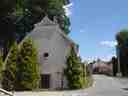
On your right, look for a small gray chapel with a rounded “bubble” gable and a little dark wooden bell-turret on the roof, tucked between tall trees and two skinny evergreens. So this is the Chapel of Saint Anne, sitting here on Peroutka Street... quietly doing what old buildings do best: surviving everybody’s “improvements.” It’s a protected cultural monument today and part of the local Roman Catholic parish under the Brno diocese, but its story starts way earlier, out on what used to be the suburb called Dolní Víska. Before 1406, there was a monastery here, and with it a Gothic chapel. The monastery itself didn’t make it-between 1985 and 1988 it was demolished-but a piece of it still clings on: the sacristy on the north side. History has a brutal edit button sometimes. The chapel kept getting rebuilt and even kept getting re-dedicated, which is a very polite way of saying it couldn’t make up its mind. First it was for Saint John, then in the 1600s it switched to Saint Mark, and since the 1700s it’s been Saint Anne’s place. Around 1715 or 1720, it got a Baroque makeover, including a new ceiling over the main space. The roof changed too-wood shingles out, fired clay tiles in, by 1853. And here’s the fun part: look closely at the south wall and you can still catch traces of the older Gothic chapel-an outline of a stone doorway and a bricked-up Gothic window ghosting through the newer plaster. Even covered up, the past still shows through. When you’re set, HC Žihadla Moravské Budějovice is about an 11-minute walk heading southeast.
打开独立页面 →On your left, look for the low, pale sports building with a long row of small rectangular windows and a big curved roof behind it in a rusty red color. This is the home base of…阅读更多收起
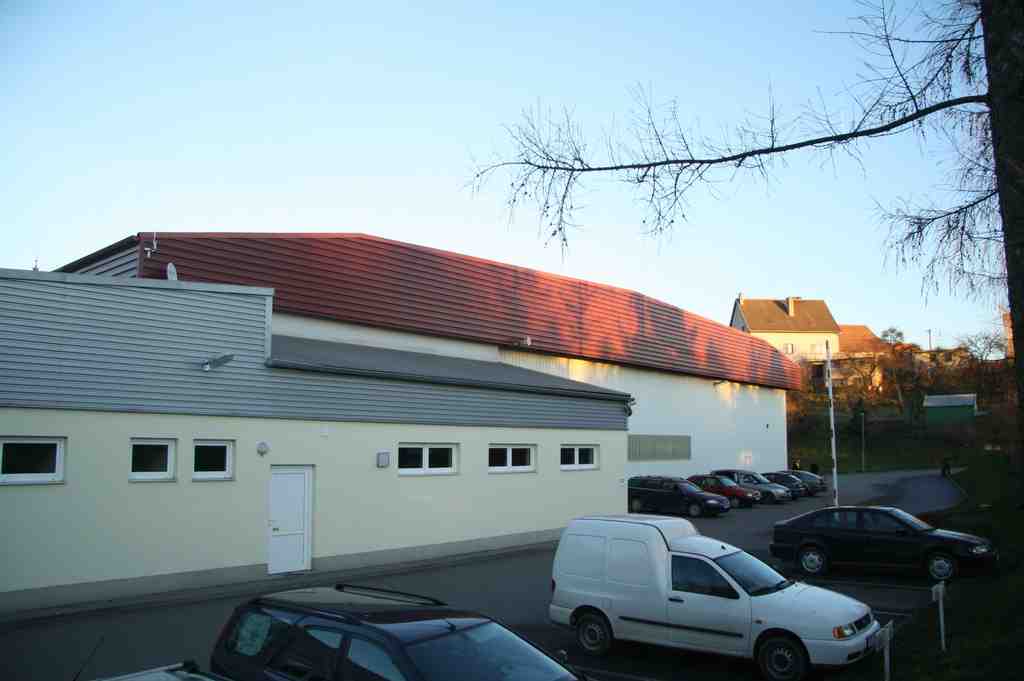
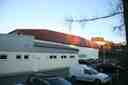
On your left, look for the low, pale sports building with a long row of small rectangular windows and a big curved roof behind it in a rusty red color. This is the home base of HC Žihadla Moravské Budějovice… and if you’re wondering, yes, “Žihadla” means “stings.” Because nothing says a relaxing evening out like being politely threatened by a wasp-themed hockey club. The team plays at the Moravské Budějovice ice stadium right here, a cozy 1,350-seat rink where you’re never far from the action… or the sound of skates carving into ice like someone tearing open wrapping paper in a hurry. On game night, it’s that mix of cold air, hot tea, and the very Czech belief that yelling advice from the stands is a legitimate coaching credential. What’s fun is how long this town had to wait for real ice. Hockey in Moravské Budějovice starts way back in 1919, when a local military unit set up a rink on meadows below the Heřman hills. Not exactly an NHL facility… more like “we found a flat spot and winter did the rest.” By 1925, the Sokol movement-those community gym and sports groups-had their own rink at the city fish ponds. Practical? Maybe. Romantic? Only if you like the smell of carp. Then came decades of trying-and failing-to build an artificial ice surface. The 1970s and 80s were full of ambition, and not much ice. Plans finally started to stick in 1995, serious talks began in 2003, and in 2005 the town opened its first winter stadium… and founded the club that would grow into today’s Žihadla. So yes, it took about eighty years to go from “natural ice if we’re lucky” to “a proper roof and boards.” The club’s name changed a few times-ownership shifts, rebrands, the usual sports-world identity crisis-but the black-and-yellow colors stayed ready for business. Since 2020/21 they’ve been battling in the Vysočina regional league, the fourth level nationally… where grit matters, budgets are tight, and hometown pride is the real trophy. And in 2024 they even added a B-team-smart insurance for young local players who age out of juniors, because Žihadla doesn’t run its own junior squad. The playing coach for 2024/25 is owner Peter Pucher, an experienced forward… which is a very “small-town hockey” thing to do: run the club, then hop on the ice and try to score. Multitasking, but with more bruises. If you’ve made it this far, you’ve earned a seat in the stands… even if only in your imagination.
打开独立页面 →

常见问题
如何开始导览?
购买后,下载 AudaTours 应用并输入您的兑换码。导览将准备好立即开始--只需点击播放并按照 GPS 引导的路线行驶即可。
导览期间我需要互联网吗?
不需要!开始前下载导览并完全离线享受。只有聊天功能需要互联网。我们建议在 WiFi 下下载以节省移动数据。
这是导游带领的团体游吗?
不是--这是自助语音导览。您按照自己的节奏独立探索,通过手机播放音频解说。没有导游,没有团体,没有时间表。
导览需要多长时间?
大多数导览需要 60-90 分钟才能完成,但您完全控制节奏。随时暂停、跳过站点或休息。
如果我今天无法完成导览怎么办?
没问题!导览具有终身访问权限。随时暂停和恢复--明天、下周或明年。您的进度已保存。
有哪些语言可用?
所有导览均提供 50 多种语言版本。在兑换代码时选择您的首选语言。注意:导览生成后无法更改语言。
购买后我在哪里访问导览?
从 App Store 或 Google Play 下载免费的 AudaTours 应用。输入您的兑换码(通过电子邮件发送),导览将出现在您的资料库中,准备下载并开始。
如果您不喜欢该导览,我们将退款。请联系我们 [email protected]
安全结账使用 


