
威廉斯塔德语音导览:信仰、堡垒与多彩遗产的交汇点
闪烁的黄色墙壁和低语的鹅卵石街道揭示了威廉斯塔德的真正核心——一个由秘密反叛者、流亡国王和世界上最古老且仍在使用的犹太教堂塑造的城市。 在这趟自助语音导览中释放你的好奇心。探索传奇地标和隐秘角落,同时揭开连当地人可能都不知道的故事。 在原本应该和平的日子里,为什么枪声会在阿姆斯特丹堡的宏伟大门中回荡?库拉索犹太教堂磨光的木地板下隐藏着什么秘密,被沉默的守护者保护了几个世纪?谁在一场震惊这个宁静港口的丑闻中从广场酒店消失了? 当你穿过柔和色彩的立面和加勒比庭院时,感受历史在你脚下跳动。在每个角落发现叛乱、阴谋和希望的耀眼瞬间。这次旅行将带你穿越威廉斯塔德的活生生传奇,改变你对每一种颜色和每一块石头的看法。 现在就深入其中——追随这座城市隐藏的脉搏,揭开历史试图掩埋的故事。
导览预览
关于此导览
- schedule持续时间 30–50 mins按照自己的节奏
- straighten6.0 公里步行路线跟随引导路径
- location_on
- wifi_off离线工作一次下载,随处使用
- all_inclusive终身访问随时重播,永久有效
- location_on从 威廉斯塔德圣安妮大教堂 开始
此导览的景点
Right in front of you is the Queen Emma Bridge-a wooden walkway stretching across the bay, marked by its graceful metal arches and fancy lamps; just follow the line of colorful…阅读更多收起
Right in front of you is the Queen Emma Bridge-a wooden walkway stretching across the bay, marked by its graceful metal arches and fancy lamps; just follow the line of colorful waterside houses, and you can’t miss it! Welcome to the Queen Emma Bridge, affectionately called the “Swinging Old Lady” of Willemstad! Imagine it’s 1888: the salty breeze hits your face, and people are bustling across this floating bridge, linking the lively Punda and Otrobanda quarters. This bridge isn’t just a way to cross the water, it’s a show-because when an enormous ship needs to enter St. Anna Bay, the operator hustles over to a small shelter, fires up the diesel engines, and suddenly… the entire bridge swings open in a slow, graceful arc, gliding aside like a curtain at a royal theater. For more than a century, people have enjoyed this moving marvel-just don’t forget your shoes! Once upon a time, folks barefooted across here for free, sneaking by the toll-collectors. Now, only pedestrians stroll beneath the twinkling arches, which glowed for the first time in 1955 when Queen Juliana visited. When the bridge opens, don’t worry-a couple of cheerful ferries swoop in to shuttle you across, proving the Old Lady’s still got your back. Every crossing is a bit of living history, and let’s be honest-how many cities can brag that their bridge dances out of the way?
打开独立页面 →
再显示 7 个站点显示更少站点expand_moreexpand_less
Looking ahead, you’ll see a tall, faded yellow and pink high-rise with distinctive curved windows towering over the street-it’s impossible to miss, as it’s still the tallest…阅读更多收起
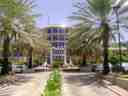
Looking ahead, you’ll see a tall, faded yellow and pink high-rise with distinctive curved windows towering over the street-it’s impossible to miss, as it’s still the tallest building on the island! Now, let’s step back in time and picture this very spot in the 1950s, when the salty Caribbean breeze was filled with excitement and the sound of construction echoed through the old walls of the historic Waterfort, once a stronghold built back in 1634. Imagine curious locals peeking through the fort’s arches, watching the city’s future rise before their eyes. Then, in 1957, with a flourish, the Hotel Curaçao Intercontinental opened its glamorous doors. People dressed to the nines poured in, and even KLM swooped in to announce direct flights from New York-Curaçao on the world map! But this wasn’t any ordinary hotel. By 1970, a shiny new 14-story tower rose up, promising the glitz and glamour of Caribbean sunsets from every window-and, let’s be honest, giving every other building a serious case of height envy. This was soon the place to meet: business summit on the second floor, penthouse parties at the very top, and more guests than Curaçao had ever seen. Of course, every legend has its twists and turns. The InterContinental crew checked out, making room for the next big player-Canadian Pacific. Suddenly, Air Canada was promising new flights, and the hotel buzzed with dreams of private beaches. But Curaçao’s coral reefs weren’t having it, and environmentalists stepped in with a firm “no sand for you!” Still, the disco lights were about to be lit; the Hart Group bought the hotel, gave it a renovation, and opened the grandest dance floor on the island. Fast forward to 1989: Van der Valk rolled into town, determined to spruce up the place amidst ever-stubborn negotiations and a crowd of beach-hungry tourists. Drama swirled like a tropical storm, especially when ownership disputes, unpaid bills, and legal battles left the hotel’s management wheeling and dealing from Florida courtrooms to Curaçao’s own capital. By 2017, though, the glamour had faded. The once-mighty hotel had seen years of neglect, and bankruptcy loomed with the kind of suspense you’d find in a soap opera. The tale takes a bittersweet turn-at auction after auction, fortunes were promised and missed. Pieces literally fell from the building, as experts warned the safest visitor would be one with a hard hat. By 2020, a pension fund finally took control, with big plans for redevelopment. For now, Plaza Hotel stands as a reminder: here, in the heart of Willemstad, you can almost hear echoes of old parties and bustling guests. Every creak, every chipped tile tells a story. So, as you stand under its shadow, take a moment to imagine the whisper of the wind-the stories aren’t over just yet!
打开独立页面 →Straight ahead, you’ll spot a tall, soft yellow building with curvy white columns and arched windows-just look for the classic black shutters and that elegant, old-world…阅读更多收起
Straight ahead, you’ll spot a tall, soft yellow building with curvy white columns and arched windows-just look for the classic black shutters and that elegant, old-world doorway. You’re now standing before the legendary Mikvé Israel-Emanuel Synagogue, lovingly known as “the Snoa,” which has been watching Willemstad’s streets for almost 300 years. Let’s conjure up a slice of history: it’s the early 1700s, horse hoofs clopping on cobblestones, and a close-knit Jewish community made of Spanish and Portuguese families is buzzing with anticipation. Their ancestors arrived here from the Netherlands and Brazil in the 1650s, hoping to finally celebrate their faith freely-no more hiding or muffling footsteps on sand to avoid prying ears. But, here’s the twist: even inside this Caribbean paradise, tradition lives on. That sand-covered floor inside isn’t for beach vibes. It’s an echo from their Iberian past, when sand was used to silence their prayers, keeping them hidden from danger-a little secret right beneath your toes! Step beneath those azure stained glass windows and you’ll walk into a hall with three vaulted ceilings, a grand carved mahogany Holy Ark, and sturdy wooden benches, all beautifully reminiscent of the Portuguese Synagogue in Amsterdam. Squeaky floorboards, sunlight bouncing off crystal chandeliers, and a quiet buzz of visitors -there’s an atmosphere of peaceful wonder. Over time, this synagogue survived rival congregations, a big reunion in 1964, and even a royal drop-in from Queen Beatrix herself! And tucked next door, in the Jewish Historical Cultural Museum, you’ll find artful replicas of tombstones from the oldest Jewish cemetery in the Western Hemisphere. So, as you stand here, picture centuries of whispered hopes, laughter, community spirit, and maybe a little scheming about whose turn it is to sweep the sand!
打开独立页面 →To spot the Central Bank of Curaçao and Sint Maarten, look straight ahead past the rows of palm trees for a modern, round-front building with tall glass windows and flags…阅读更多收起
To spot the Central Bank of Curaçao and Sint Maarten, look straight ahead past the rows of palm trees for a modern, round-front building with tall glass windows and flags fluttering proudly above the entrance. Now, while you stand under the Caribbean sun, imagine the year is 1828. Horses and carriages rattle across dusty roads as Willemstad’s new financial guardian opens its doors, ready to control the currency of a whole island chain. This grand building before you isn’t just a fortress for coins and bills-it’s the oldest surviving central bank in the Americas! From the days when Curaçao and Sint Maarten were part of the Netherlands Antilles, this institution juggled stacks of guilders and shaped the lives of everyone from sailors to shopkeepers. Then, after 2010, the bank got a makeover-new name, new responsibilities, but the same nerve-wracking job: steer the money ship through the wild waves of global finance. In 2025, the old Netherlands Antillean guilder was swapped out for the sparkling-new Caribbean guilder. Of course, even a bank has its dramas: there was a real-life financial soap opera when President Emsley Tromp was fired in 2017 because of shady scandals. So as you stand here, picture the secrets, the strategy, and the occasional scandal, all swirling just behind those shiny glass windows.
打开独立页面 →Take a moment to stand here in front of what once was the beating heart of Curaçao’s medical world-the Sint-Elisabeth Hospital. If these walls could talk, you’d probably have to…阅读更多收起
Take a moment to stand here in front of what once was the beating heart of Curaçao’s medical world-the Sint-Elisabeth Hospital. If these walls could talk, you’d probably have to wait in line for their stories! Imagine the Otrobanda district back in 1855, when the salty Caribbean breeze carried the sound of horse carriages and church bells, and Monseigneur Ferdinand Eduard Cornelis Kieckens founded the very first nursing home on this site: the St. Elisabeth Gasthuis. Over the years, this modest home grew into a bustling hospital with 500 beds and all sorts of curious corners-like a decompression chamber. Yes, you heard right! Here, doctors helped scuba divers who spent a little too much time enjoying the sea’s hidden treasures and found themselves needing more than just sunscreen. The hospital also had a kidney dialysis unit, offering hope and lifesaving treatment to many. But all journeys have their twist-a new contract and a shiny, high-tech replacement arrived in 2019: the Curaçao Medical Center. Sint-Elisabeth Hospital waved goodbye, some of it destined for demolition, but its memory lives on. It’s a place that saw Curaçao grow up, cared for generations, and probably held more secrets than a treasure chest at the bottom of the bay. So take a breath, maybe a deep one-you’re on historic ground!
打开独立页面 →To find the Curaçao Museum, look for a large, light-colored building with a red-tiled roof, beautiful crosshatched railings, and striking shutters painted with bold red and black…阅读更多收起
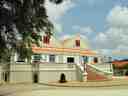
To find the Curaçao Museum, look for a large, light-colored building with a red-tiled roof, beautiful crosshatched railings, and striking shutters painted with bold red and black diamonds-it’s right across from you, with a grand staircase inviting you to come closer. Now, let’s travel back in time-can you feel that gentle Caribbean breeze? This charming building wasn’t always home to the treasures of Curaçao’s history. It started its life in 1853 as a military hospital, perched atop a hill on the old Plantersrust plantation, and during World War II, it was even used as an internment camp for Jewish women and children. Imagine the echoes in these halls, stories whispered through the thick colonial walls. Then, in 1948, the doors opened wide as the island’s first true museum, thanks to a group of dreamers led by Chris Engels and the Curaçaoan people, who pooled together an impressive 80,000 guilders-no small change for that era! Inside, you’re surrounded by the sights and sounds of centuries: creaky antique furniture, pots and pans from a traditional Curaçaoan kitchen, a crowd of fascinating artifacts stretching back to the 1700s, and vibrant local artwork brightening the rooms. If you need a break from the paintings, venture down to the basement for a peek into the island’s deep Amerindian past. Oh, and outside? There’s a sculpture garden celebrating local heroes, and even the cockpit of the “Snip” airplane, which made the first daring flight all the way from the Netherlands to Curaçao! Feel free to wander among rare, fragrant trees in the botanical garden-don’t be surprised if a friendly iguana tries to guide your way. This museum is an adventure through Curaçao’s colorful soul, with surprises around every corner.
打开独立页面 →To spot the Omar bin Al-Khattab Mosque, look straight ahead for a striking white building with a golden dome and a tall, pointed minaret rising boldly into the sky-it’s hard to…阅读更多收起
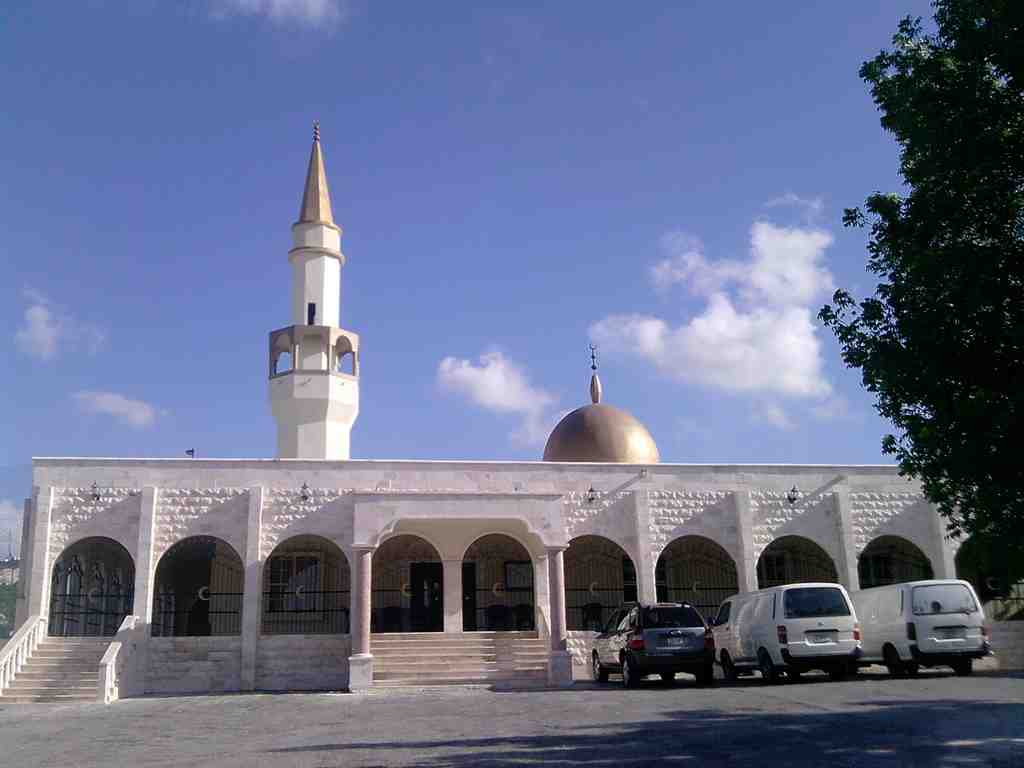
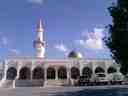
To spot the Omar bin Al-Khattab Mosque, look straight ahead for a striking white building with a golden dome and a tall, pointed minaret rising boldly into the sky-it’s hard to miss, especially with its elegant arches out front. Now, let’s dive into the mosque’s story-a tale of dreams, determination, and a bit of international teamwork. Picture the early 1960s: the hot Curaçao sun beating down on an old plantation estate called Plantersrust, as the local Muslim community imagined something extraordinary rising from this patch of land. They didn’t have government backing; instead, support arrived from far-flung friends in Saudi Arabia, Libya, and Trinidad and Tobago, creating a mosaic of generosity. With every brick laid between 1963 and 1965, hope grew-especially for the many Lebanese families who’d made Willemstad their home. By 1966, the mosque finally stood ready, its golden dome gleaming and its 18-meter minaret ready to touch the clouds. When governor Cola Debrot arrived to open it, the scene must’ve felt electric: 200 worshippers, the air fragrant with anticipation, laughter mingling with prayers, and the sense that something brand new-and yet deeply rooted-had entered the heartbeat of Curaçao. The mosque still stands today, a symbol of unity, perseverance, and unexpected global friendship.
打开独立页面 →

常见问题
如何开始导览?
购买后,下载 AudaTours 应用并输入您的兑换码。导览将准备好立即开始--只需点击播放并按照 GPS 引导的路线行驶即可。
导览期间我需要互联网吗?
不需要!开始前下载导览并完全离线享受。只有聊天功能需要互联网。我们建议在 WiFi 下下载以节省移动数据。
这是导游带领的团体游吗?
不是--这是自助语音导览。您按照自己的节奏独立探索,通过手机播放音频解说。没有导游,没有团体,没有时间表。
导览需要多长时间?
大多数导览需要 60-90 分钟才能完成,但您完全控制节奏。随时暂停、跳过站点或休息。
如果我今天无法完成导览怎么办?
没问题!导览具有终身访问权限。随时暂停和恢复--明天、下周或明年。您的进度已保存。
有哪些语言可用?
所有导览均提供 50 多种语言版本。在兑换代码时选择您的首选语言。注意:导览生成后无法更改语言。
购买后我在哪里访问导览?
从 App Store 或 Google Play 下载免费的 AudaTours 应用。输入您的兑换码(通过电子邮件发送),导览将出现在您的资料库中,准备下载并开始。
如果您不喜欢该导览,我们将退款。请联系我们 [email protected]
安全结账使用 


