
里耶卡语音导览:知识、信仰与创新的回响
在里耶卡宏伟的大学殿堂和回荡着历史的博物馆展厅之下,隐藏着一座由叛逆的怒潮和不懈的好奇心锻造而成的城市。它的街道承载着无声的档案和隐秘的标本,每一个都在向匆匆的旅人低语着不为人知的丑闻。 这个自助语音导览邀请您按照自己的节奏,一层层揭开里耶卡的神秘面纱,发掘那些被旅游指南忽略的未曾讲述的故事和秘密角落。 在里耶卡大学,是怎样的爆炸性争议将学术抱负转变为政治冲突?自然历史博物馆里的一块化石为何引起国际轰动?谁消失在国家档案馆那些紧锁的门后——又是哪份被遗忘的文件在一夜之间改变了一个国家? 穿梭于绿树成荫的大道和阴影笼罩的庭院,从塑造革命的思想家到尘埃中弥漫着阴谋的走廊。将里耶卡发现为一个充满戏剧、神秘和启示的活生生舞台。 现在就开始吧,让里耶卡揭示其学术外表下隐藏的一切。
导览预览
关于此导览
- schedule持续时间 40–60 mins按照自己的节奏
- straighten2.2 公里步行路线跟随引导路径
- location_on
- wifi_off离线工作一次下载,随处使用
- all_inclusive终身访问随时重播,永久有效
- location_on从 《新报》 开始
此导览的景点
You’re looking for a tall, grey, and very rectangular building with rows and rows of square windows, standing prominently on Zvonimirova street-there’s even a big sign with the…阅读更多收起
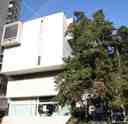
You’re looking for a tall, grey, and very rectangular building with rows and rows of square windows, standing prominently on Zvonimirova street-there’s even a big sign with the name near the entrance to help you spot it. Now, picture Rijeka over a century ago, the air buzzing with fresh ideas and the scent of ink from the printing press. In 1900, Frano Supilo, a man who probably had more coffee than sleep, launched the very first edition of Novi list. Through political storms, bans, and a handful of dramatic name changes-like Riječki Novi list, Primorski Novi list, and Sušački Novi list-the presses were silenced and restarted more times than a stubborn computer! Skip ahead to March 1st, 1947-after years of political unrest and forbidden headlines, the papers started rolling again under the name Riječki list, and by 1954, it became the Novi list everyone knows today. Imagine reporters, editors, and newsboys racing to meet deadlines in this very building since 1965. Through it all, from Frano Supilo to Slavica Bakić, the editors made sure the whole of Croatia could start its day with fresh news hot off the press. Even today, the buzz of stories continues, fueled by people who believe every good city deserves a bit of daily drama.
打开独立页面 →To spot the University of Rijeka, look for a grand, pale building with bold columns flanking the entrance, rows of large windows, and flags fluttering just above the main…阅读更多收起
To spot the University of Rijeka, look for a grand, pale building with bold columns flanking the entrance, rows of large windows, and flags fluttering just above the main doorway. As you stand here, picture the lively hum of student life spilling out onto the front steps, the stone façade catching the breeze off the Adriatic and echoing with both academic chatter and the slightly panicked shuffle of students on exam mornings! This university, founded officially in 1973, might seem like a youngster, but its roots stretch back nearly four centuries. Imagine Jesuits arriving in Rijeka in 1627, robes swishing as they opened the first higher-education school-at the time, that was like getting a university delivered by express wagon in a city where the hottest technology was a very enthusiastic horse. Their academic endeavor put Rijeka shoulder-to-shoulder with the mightiest cities of the old Austrian Empire. Over the years, Rijeka’s reputation as a city of knowledge grew and the faculties blossomed-philosophy in 1726, theology in 1728, and then the grand Royal Academy of the Habsburg Monarchy chose Rijeka as its home between 1773 and 1780. Life was never dull. You could almost hear the echo of debates and the clink of ink bottles on wooden tables. But then, quite suddenly, that old academic dream faded away… only to burst back into life in the 1970s, amid Croatia’s whirlwind of new universities rising out of the landscape. Today, the University of Rijeka is a sprawling brain hive, made up of eleven faculties-ranging from civil engineering to tourism and hospitality management-a fine arts academy, and innovative departments like biotechnology, informatics, mathematics, and physics. For a city with a population smaller than some sports stadiums, that’s quite the academic arsenal! You might think, “Okay, so modern times, lots of coffee and laptops.” But don’t skip ahead! In 2009, a dramatic scene unfolded at their engineering faculty construction site just up the hill in Trsat. Sparks flew-literally!-as a wayward welding spark set three floors alight, sending thick smoke curling above the rooftops. The fire department from Rijeka, and even neighboring Opatija, had to come in like academic superheroes. Luckily, not a single person was hurt-though I bet some textbooks had a close call! That adventurous spirit lives on in their modern labs: the Department of Mathematics hosted an international NATO conference on information security, while Informatics was recognized as a cutting-edge Nvidia CUDA Teaching Center. They’ve got projects with names like NeuRi and Riteh Racing Team-if robots or racing cars start whizzing by, don’t worry: you’re just seeing student inspiration in action. And then there are the stories of human leadership; the university has had thirteen rectors since 1973, each steering through a sea of academic challenges. Even now, the Center for Iconographic Studies organizes international conferences that bring together art lovers, scholars, and the occasional curious cat (sadly, the cats rarely publish). Together with their Center for Advanced Studies of Southeastern Europe, the university isn’t just about grades and graduations; it’s a place where fresh ideas cross borders faster than a speeding dean! So whether you study here, teach here, or just happen to be wandering by, you’re at the heart of Rijeka’s learning legacy-surrounded by ambition, smarter-than-average conversations, and, let’s face it, a few very epic snack breaks. Now, ready to see what’s next on our city adventure?
打开独立页面 →To spot The Church of St. Jerome, just look for the elegant cream-colored building with a curved baroque facade, a small rose window near the top, and an arched entryway right in…阅读更多收起
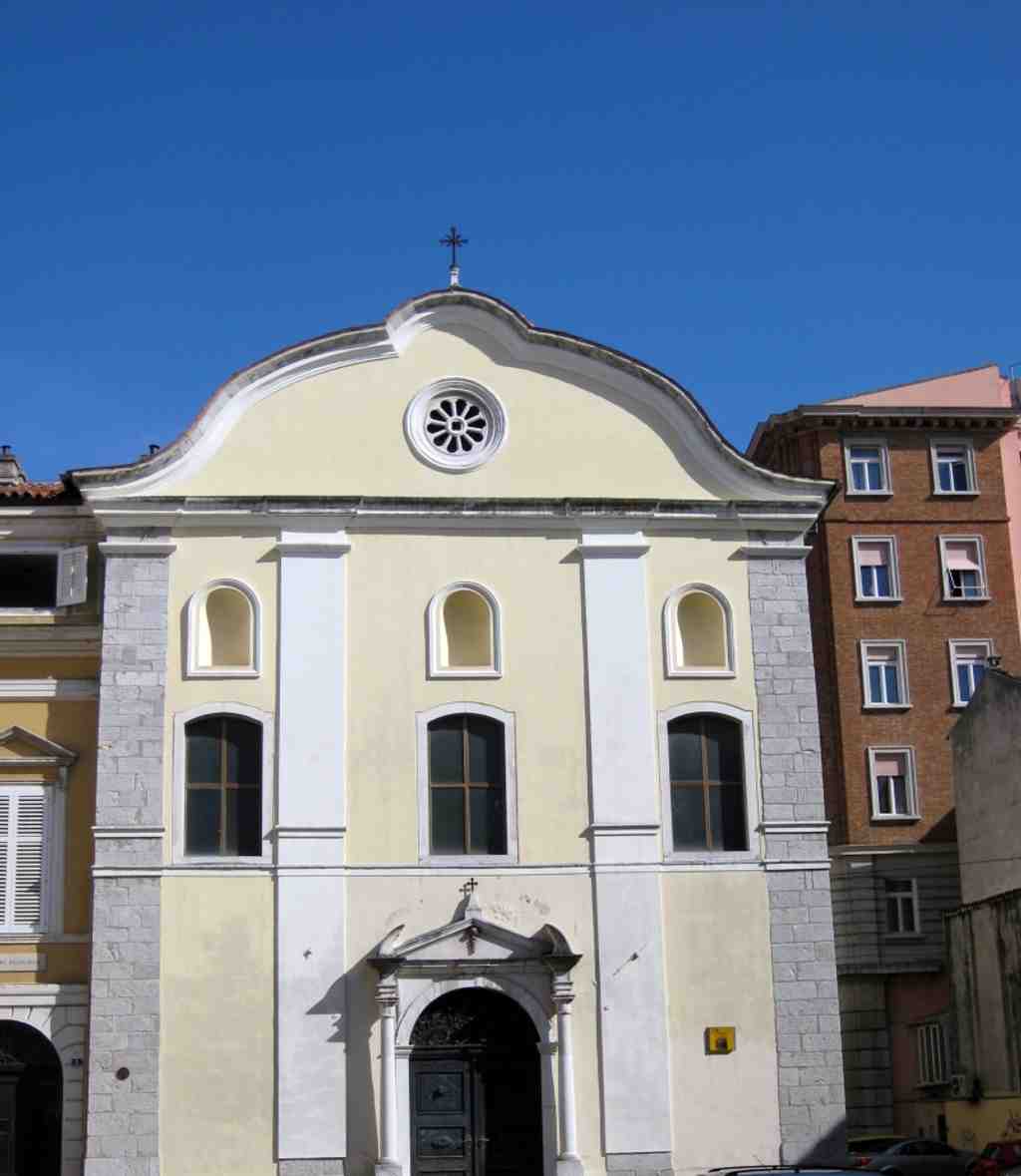
To spot The Church of St. Jerome, just look for the elegant cream-colored building with a curved baroque facade, a small rose window near the top, and an arched entryway right in front of you on the square. Breathe in deeply and take a step closer-can you smell the centuries? Here on the Trg Riječke rezolucije, The Church of St. Jerome stands with its graceful late Baroque face, almost as if it’s quietly showing off its long history. This is more than just a church; it was once part of an Augustinian monastery complex and a grand mausoleum. Imagine stonemasons chiseling in the sun, and the echo of medieval processions in the air. The story of this place begins way back in 1315, founded by the mighty lords of Rijeka, the counts of Devin. Through intrigue and inheritance, it changed hands-grandfathers passing it to grandsons, and then by a twist of marriage, it landed in the hands of Raimbert Walsee. Inside its walls, you’d find gothic buttresses and pointed windows-remnants from centuries before the baroque update. After surviving a major earthquake in 1750, the church got a stylish facelift in 1768, stretching gracefully towards the square with a new facade. As you stand here, imagine the echo of baroque hymns and see the altars gleaming inside-some carved by the famous Michelazzi and the Capovilla workshop. The cloister next door is filled with ancient tombstones, marking the final resting place of powerful families, scientists, bishops, and even a famous cartographer, Klobučarić. There’s drama here, too-memorials remember sudden deaths, secret negotiations, and families who paraded on Easter morning. If these walls could talk, I bet they’d spill more secrets than an old priest at confession!
打开独立页面 →
再显示 10 个站点显示更少站点expand_moreexpand_less
You’ll spot the Church of St. Nicholas straight ahead by its pale yellow facade and elegant, square bell tower topped with a greenish dome, just above some modern shop signs at…阅读更多收起
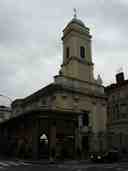
You’ll spot the Church of St. Nicholas straight ahead by its pale yellow facade and elegant, square bell tower topped with a greenish dome, just above some modern shop signs at the street corner. Imagine it’s the late 1700s and the streets around you are buzzing not with car engines and shoppers, but with whispers and cautious excitement. Serbian Orthodox families, who fled tough times in the Ottoman Empire, have settled right here in Rijeka, hoping to make a new start. They come together to fund this church-brave, determined, and resourceful-while some local politicians try to stall them at every corner. Designed by Ignazio Hencke in 1787, it took three years of negotiations, hard work, and probably a few stubbed toes, before the Church of St. Nicholas finally opened its doors in 1790. Inside, treasures from far-off monasteries in Bosnia and Vojvodina find a safe haven, their golden icons glinting in candlelight. Over generations, the church becomes a heart for Rijeka’s Serbian community-a symbol of hope and belonging in a city that has always danced to its own beat. Even today, with Adidas and Fila across the street, St. Nicholas stands as a witness to stories of migration, faith, and a whole lot of perseverance (and maybe a little bit of stubbornness, too).
打开独立页面 →To spot the City Tower, look straight ahead for a tall, yellowish clock tower with a dome-shaped top and a grand arched passageway right in the middle of the lively…阅读更多收起
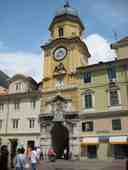
To spot the City Tower, look straight ahead for a tall, yellowish clock tower with a dome-shaped top and a grand arched passageway right in the middle of the lively street. Alright, welcome to one of Rijeka’s most iconic symbols - the City Tower, or as locals call it, “Gradski toranj.” As you stand here, imagine you’re a traveler a few centuries ago, just arriving in town, your footsteps echoing on the stone. This tower has watched over Rijeka’s main street, Korzo, for centuries, greeting everyone who entered the city. Back in the day, Rijeka was completely wrapped in defensive walls. To get inside, you’d cross a wooden bridge over a moat filled with water and squeeze through gates - either the “Sea Gate” or “Upper Gate.” Above the city entrance stood the original version of this tower. It was the meeting point, the place for lovebirds and city deals. The locals would always say, “Meet me under the clock!” Quite convenient, unless you’re late and have nowhere to hide. In the 17th century, the tower was raised higher and a clock was added - and so began the tradition of the “Clock Tower.” Meetings and secret plans were always happening by the big clock, which ticked faithfully through centuries, with only a few upgrades. In fact, in 1873 Rijeka bought a new clock mechanism fresh from an international exhibition in Vienna - and believe it or not, that very clock’s still ticking today. Take a good look above the arch and you’ll spot crests and busts. The best story? There’s a majestic double-headed eagle, given by Emperor Leopold I in 1659. You might wonder about the eagle’s heads - well, for a while after World War I, the poor bird lost one of them, courtesy of soldiers who wanted it to look “less Austrian, more Roman.” It was removed altogether after World War II, but don’t worry - in 2017, a brilliant new replica was mounted, wings spread, shining from the top once again. The new eagle is massive: about 270 kilos, its wings over 3 meters wide! Imagine seeing it lifted back into place, 30 meters up, overlooking the city. Over centuries, this spot has survived earthquakes, urban makeovers, and many rulers - even earning a snazzy new look in the 1890s. So, as people mill about and the clock quietly chimes, you’re standing where stories and secrets have intertwined for hundreds of years. If only the tower could talk, right? Or at least tell us how many people have used being “fashionably late” as an excuse under its clock!
打开独立页面 →Right in front of you, you’ll spot a grand pale-yellow building with arched windows and elegant decorative details, nestled among lush greenery-just look for the stately mansion…阅读更多收起
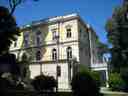
Right in front of you, you’ll spot a grand pale-yellow building with arched windows and elegant decorative details, nestled among lush greenery-just look for the stately mansion with iron railings and an air of quiet authority. Now, let’s step into the story of the State Archives in Rijeka! Imagine standing here back in the late 19th century; the soft crunch of gravel beneath your shoes, the scent of exotic flowers drifting from the fantastic park surrounding this mansion, and the elegant whispers of history in the wind. This impressive villa was originally the residence of Archduke Joseph, a relative of the famous Emperor Franz Joseph I, who, after a royal family quarrel, chose Rijeka as his place of exile. Talk about family drama! Instead of sulking, he took this 17th-century patrician’s villa and gave it a grand facelift in 1895, following the designs of Rafael Culotti. Rijeka gained not just a residence but one of its most elegant palaces, brimming with that refined flair of historicism. Fast forward a few decades-the world outside was changing rapidly. Within these walls, however, an entirely new adventure was unfolding: the safeguarding of the region’s entire written memory! The Archives started their official mission here in 1926 as the Royal State Archives in Rijeka. Cue the parade of languages: Latin, Italian, Croatian, German, Hungarian-you name it! The scribes of history left their marks in everything from gothic and humanistic scripts to the curly delights of Glagolitic letters. Rijeka sat under shifting rule after shifting rule, each leaving behind courts, schools, armies, and more-generously donating their paperwork, whether they liked it or not! As the Second World War approached, the reach of the Archives expanded like a detective’s magnifying glass, peering into even more corners of the region-Kvarner, parts of Istria, Slovenian Karst, and bits and pieces annexed or liberated as borders changed. After 1945, Rijeka was reunited with Croatia, and the Archives found itself with new neighbors-stories from Cres, Lošinj, Krk, and the far reaches of eastern Istria started filling the shelves. In fact, the collection grew so fast, the staff probably had to dodge rolling scrolls and avalanche-prone paperwork more than once! But wait-it gets even busier! The institution’s name changed nearly as often as the weather: from Royal Archives to State Archives, to Historical Archive, to finally, the State Archives in Rijeka. This building, holding more than 7000 meters of documents in over 1000 collections, is practically bursting at the seams. Some documents are older than the city walls-the oldest from 1201-while others document marriages and town statutes dating back to the 1400s. If only paper could talk! Actually, it would probably whisper, “Please, no more boxes!” Today, you’ll find reading rooms, a lecture hall, and even a representative exhibition salon in what was once the palace salon. Want to guess what connects this archive to the industrial side of Rijeka? In 2000, the archives expanded into former factories, turning old leather workshops and machine plants into treasure vaults for historical documents. These are among the first examples in the city of industry reborn as culture-proof that in Rijeka, the past is never thrown away, just carefully filed! So, as you look up at this villa, try to imagine a staircase full of dignitaries, a park blooming with rare plants, and rooms echoing with the secrets of centuries. Here, every document, every faded page, is a puzzle piece of Kvarner, Gorski Kotar, Istria, and beyond-a reminder that history isn’t just kept here, it’s alive. And if you hear a distant sneeze inside, it’s probably just a centuries-old scribe shaking off the dust of time!
打开独立页面 →Right in front of you, you’ll spot a charming, stone-based building with a modern glass panel near the entry, surrounded by lush plants and blooming flowers-just let your nose…阅读更多收起
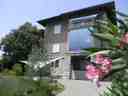
Right in front of you, you’ll spot a charming, stone-based building with a modern glass panel near the entry, surrounded by lush plants and blooming flowers-just let your nose follow the fresh scent on the breeze, and you’ll find yourself at the door of the Natural History Museum Rijeka. Welcome, explorer, to Rijeka’s very own cabinet of natural curiosities! Imagine yourself standing here not just in the peace of Nikola Host Park, but right at the heart of scientific adventure dating all the way back to 1876, when a passionate doctor named Josef Roman Lorenz dreamed up this museum and sent his ambitious plans off to the city’s mayor. It was a time when the world felt bigger, the Croatian coast teeming with secrets, and amateur collectors stacked their homes with minerals, fossils, and seashells from adventures near and far. Long before Instagram, Rijeka’s early naturalists couldn’t resist showing off their treasures. The craving for knowledge became so strong that, after World War II, a local nature enthusiast named Mario Rossi rallied his friends and neighbors to open the museum’s doors to the world, choosing this stately family villa once owned by Count Negroni as their headquarters. You might say the place was overflowing with more specimens than a magpie’s nest-so much so, that on the very first of May, 1946, curious visitors came flocking to see an aquarium and even a tiny zoo as part of the new museum! Imagine kids of every age pressing their noses to glass, hoping to spot something fishy. Fast-forward and the museum grew up, swapping its petting zoo and old glass jars for state-of-the-art science. Rijeka’s own regional nature museum, inspired by Vienna’s Natural History Museum, became a true temple of exploration. The 1960s brought a dash of drama: city leaders proclaimed it was time for more serious research, and soon museum staff were zipping around the region, collecting everything from fossilized seashells on Krk Island to rare sea sponges and sparkling local minerals. Fieldwork turned up ancient cave bears, rare fossils, and even new species from sunken caves and hidden meadows. If you step inside, today you’ll discover a treasure house with 26 different collections-over 90,000 items in all! From shimmering crystals to Adriatic sea creatures, from birds and mammals to creatures that crawl and slither, there’s always something waiting to surprise you. There’s even a multimedia aquarium where you can lose yourself watching sharks, and a hands-on workshop for kids who want to touch, mix, and play with the wonders of the natural world. Don’t miss the peaceful botanical garden outside, designed in 2005, or the collections at the museum’s “castle” in Gorski kotar, dedicated to the art of hunting and forest life. So before you move on, take in this intersection of history and nature-where every rock, shell, flower, and feather has a secret story, and the only thing missing from the next exhibit… might just be your own discovery.
打开独立页面 →To spot the Rijeka City Museum, just look for a bold, modern white building with large, boxy windows that stands tall beside leafy green trees-it's up the steps right in front of…阅读更多收起
To spot the Rijeka City Museum, just look for a bold, modern white building with large, boxy windows that stands tall beside leafy green trees-it's up the steps right in front of you. Now, let’s step into a whirlwind of Rijeka’s stories-right outside the Rijeka City Museum, a place that’s packed tighter with history than a suitcase before a big trip! Picture the spirit of the city, from sea spray to symphony, all preserved under this unassuming concrete cube by architect Neven Šegvić, purpose-built back in 1976 when disco was king and flared jeans ruled the streets. Believe it or not, the city museum you see today is something of a shape-shifter. Born in 1994, it burst onto the scene by transforming the old Museum of the People’s Revolution-now, instead of just focusing on political echoes, it’s all about Rijeka’s colorful life stories. It once lived in the shadowy old house of Count Laval Nugent, survived a move, and finally found its showcase sparkle in the grand Sugar Refinery Palace in 2020. Rijeka’s story, tucked into these walls, stretches from the 1700s right up until yesterday. I promise, it’s more dramatic than daytime TV. Step inside and you’ll find treasures of all kinds. In one glass case, a shiny music box might twinkle-listen close, maybe you’ll catch it playing a tune from decades ago. There’s a fine art collection with portraits of famous locals. Imagine artists hunched over their canvases, or townsfolk in their finest, holding as still as statues-don’t blink! And speaking of statues, there’s a whole section just for sculpture, stage costumes, and theatrical sketches. Flip through old documents and photographs from Rijeka’s bustling boulevards-wedding snapshots, dramatic events, and postcards from admirers far and wide. Here you’ll also find the most complete stamp collection this side of the Adriatic (move over, post office!), not to mention medals, wartime relics, and curious odds and ends that once decorated the homes of Rijeka’s proudest residents. The museum doesn’t shy from hard stories either-like the weapons and keepsakes from times of war, or haunting relics from prisons. Yet, there are lighter tales: theater posters, film reels, even clunky old photo equipment that once captured the heart of a city. So, as you gaze at this striking modernist block before you, remember: you’re not just standing before a building, but a giant scrapbook of Rijeka itself-full of heroics, heartbreak, music, revolutions, and everyday magic. Something tells me, if you listen closely, you might just hear the city whispering its secrets.
打开独立页面 →You’ve arrived at the mysterious Rijeka Tunnel, a passageway with more secrets than an old spy novel-though the Italian army probably wished not so many people would find out…阅读更多收起
You’ve arrived at the mysterious Rijeka Tunnel, a passageway with more secrets than an old spy novel-though the Italian army probably wished not so many people would find out about it! Dug out between 1939 and 1942, the tunnel stretches 350 meters under Rijeka’s Old Town, from St. Vitus Cathedral to Dolac Primary School. Imagine the tense air of World War II as Allied planes thundered overhead. Civilians would scramble into this tunnel, finding momentary safety underneath the ground. While today’s biggest danger might be tripping over a selfie stick, back then, survival meant everything. Take a look around and you’ll spot signs reading “Riservato all U.N.P.A.”-that’s Italian for “Reserved for the Anti-aircraft Corps.” It’s like a preserved label from a time when the city’s fate was anything but certain. For 75 years, this tunnel was sealed off, holding onto its mysteries in silence. But in 2017, it opened to the public again, letting visitors like you stroll where fear, hope, and courage once mingled. And, by the way, don’t worry about sneaking in-a €1.5 ticket will do the trick! Nowadays, Rijeka’s residents cross here for fun, not fear. The only thing you need to dodge are echoes of giggles, not air raids.
打开独立页面 →Straight ahead, look for a pale yellow church with tall arched windows and, just next to it, a sturdy stone bell tower famously leaning a bit to the side-it’s hard to miss the…阅读更多收起
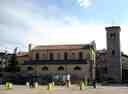
Straight ahead, look for a pale yellow church with tall arched windows and, just next to it, a sturdy stone bell tower famously leaning a bit to the side-it’s hard to miss the slanted “Crooked Tower” greeting you as part of the scene! You’re standing at the spot where centuries of Rijeka’s story come together in a single square! The Church of the Assumption of the Blessed Virgin Mary used to look quite different-in fact, its very first walls were built back when Romans were relaxing in steam baths on this same spot. Fast forward to the Middle Ages, and voilà: the church rises again from ancient ruins, its nave stretching taller thanks to a clever Zadar craftsman named Juraj in 1442. This church has seen trouble too-it took a beating when Venice’s armies stormed through in 1509 but, like Rijeka itself, bounced right back. The 1700s brought drama and elegance, with the powerful Orlando family building a grand new sanctuary (and their family tomb right in the middle, no less). Just imagine: beneath your feet, 75 graves lie under stone slabs now built into the church’s outside wall-each engraved with tales of local townsfolk. Inside, art lovers get a treat: the main altar is a masterpiece from Ljubljana, dotted with statues by a Padua sculptor, and surrounded by side chapels bursting with colorful marble and dazzling baroque decorations. In the 1930s, walls were painted with swirling motifs inspired by earlier decorations, filling the air with light and color. Outside, you can spot a real oddity: that bell tower has been leaning nearly half a meter since 1920! Locals call it the “Crooked Tower”-so don’t worry, you’re not seeing things. And look for a window shaped like a rose, crafted all the way back in 1516, now set in a 19th-century facade designed by the city’s own star architect. History, legends, and a little bit of architectural mischief-all in one place. Welcome to the heart of Rijeka!
打开独立页面 →

常见问题
如何开始导览?
购买后,下载 AudaTours 应用并输入您的兑换码。导览将准备好立即开始--只需点击播放并按照 GPS 引导的路线行驶即可。
导览期间我需要互联网吗?
不需要!开始前下载导览并完全离线享受。只有聊天功能需要互联网。我们建议在 WiFi 下下载以节省移动数据。
这是导游带领的团体游吗?
不是--这是自助语音导览。您按照自己的节奏独立探索,通过手机播放音频解说。没有导游,没有团体,没有时间表。
导览需要多长时间?
大多数导览需要 60-90 分钟才能完成,但您完全控制节奏。随时暂停、跳过站点或休息。
如果我今天无法完成导览怎么办?
没问题!导览具有终身访问权限。随时暂停和恢复--明天、下周或明年。您的进度已保存。
有哪些语言可用?
所有导览均提供 50 多种语言版本。在兑换代码时选择您的首选语言。注意:导览生成后无法更改语言。
购买后我在哪里访问导览?
从 App Store 或 Google Play 下载免费的 AudaTours 应用。输入您的兑换码(通过电子邮件发送),导览将出现在您的资料库中,准备下载并开始。
如果您不喜欢该导览,我们将退款。请联系我们 [email protected]
安全结账使用 


