北京语音导览:一次穿越帝国崇敬与现代韧性的旅程
钢铁与石头在此见证着秘密——长安街在你的脚下宽阔延伸,在北京跳动的心脏中隐藏着比表面更多的东西。 这是一个为渴望揭开这些著名街道中真实故事和被遗忘时刻的探险家们打造的自助语音导览。超越导览手册,去发现大多数人永远不会听到或看到的东西。 在一个人与一排坦克之间的紧张对峙中,究竟发生了什么?为什么在这些政府大楼附近,某些对话会立即从互联网上消失?以及公安部内部的午夜斗争是如何在黎明时分塑造了中国的未来? 当你从宏伟的大道走向神秘的政府走廊时,步入抗议、权力博弈、隐藏身份、消失的反叛者和被忽视的英雄的故事中。期待每一步都闪耀着戏剧性——一次穿越阴影与阳光的旅程,历史在每一个转弯处都紧密相随。 敢于深入探索,让北京揭示其最激动人心的真相——你的冒险现在开始。
导览预览
关于此导览
- schedule持续时间 30–50 mins按照自己的节奏
- straighten4.4 公里步行路线跟随引导路径
- location_on
- wifi_off离线工作一次下载,随处使用
- all_inclusive终身访问随时重播,永久有效
- location_on从 长安街 开始
此导览的景点
To spot Chang’an Avenue, just look for the incredibly wide road with bustling traffic and grand government buildings, running straight through the heart of Beijing-right in front…阅读更多收起
To spot Chang’an Avenue, just look for the incredibly wide road with bustling traffic and grand government buildings, running straight through the heart of Beijing-right in front of the famous Tiananmen Square and flowing endlessly east and west. Welcome to Chang’an Avenue, the grand boulevard that never seems to end! Imagine you’re standing at the center of the world’s longest and widest urban avenue, ringed by the hum of traffic and the constant pulse of city life. Wanderers, commuters, tourists, leaders-everyone has crossed this avenue at some point. If you listen closely, you can almost hear the echo of centuries-old footsteps mixing with the modern click of bicycle spokes and the distant hum of car horns. Let’s rewind about 600 years. The story of Chang’an Avenue begins in the Ming Dynasty, when Emperor Yongle laid out a plan so bold for Beijing that only a street this grand could carry his visions. Back then, this avenue was just a fraction of its current size, with names like East and West Chang’an Street reflecting how Beijing was set up-everything neatly divided and named. It was once called the "Ten Mile Long Street," although that name was more of a poetic stretch. Maybe they just liked to exaggerate a little, you know, to impress Ming Dynasty guests. Fast forward through dynasties, revolutions, and the birth of the Republic, and Chang’an Avenue started to take on its modern identity. During the Republic era, a portion of the street became known as “Zhongshan Road,” paying homage to Sun Yat-sen. As the years rolled on and Beijing exploded in size, the avenue became the vital east-west backbone it is today-a ribbon connecting ancient palaces, revolutionary squares, and bustling business districts. Over time, this street has seen it all: Imperial parades, revolutionaries with bright hopes, and the tragic tension of 1989, when on June 3rd and 4th, the avenue filled not with parades but with shouts, gunfire, and sorrow as the army moved in to clear Tiananmen Square. There’s a somber weight to that memory-history here is still very present, always moving alongside the commuters and tourists. But Chang’an Avenue isn’t just about politics and history-it’s a living showcase for modern China. Imagine gazing north to see the red walls of Tiananmen cut through the sky, then looking to the south where the vastness of Tiananmen Square opens up along the avenue’s edge. The Great Hall of the People, the National Museum, government ministries, concert halls, banks-you name it, they dot both sides of the street, like pearls on a string. Beijing’s biggest parades-like the massive National Day celebrations-play out right here, with tanks and dancers, cannons and confetti. Here’s a quirky fact: Because Chang’an Avenue is so iconic, the city has strict rules. Want to build a new building? You’ll need to go through almost a mythical maze of paperwork, approvals, and expert opinions just to make sure your design fits in with the neighborhood. Even billboards and banners are tightly controlled here. If you’re hoping to spot a flashy commercial ad, you’ll have to look somewhere else! And let’s not forget about the adventure of driving here: big trucks stay away, green waves of synchronized traffic lights keep the flow moving, and at rush hour, it can still be quite the challenge getting across. If you hear the rumble below your feet, that might just be Subway Line 1, gliding smoothly beneath the surface, carrying millions along this spectacular artery every day. Now, as you stand here, think of all the celebrations, all the processions, all the unsung stories written and erased by the passing years. Chang’an Avenue-this “First Street Under Heaven”-is more than a road. It’s the stage where China’s old world and new world meet, sometimes quietly, sometimes clashing with drama. So take it all in, snap a photo (watch out for photobombing cyclists!), and let the spirit of Beijing’s mighty main road escort you to your next adventure.
打开独立页面 →Directly ahead of you, look towards the wide avenue-just beyond the white streetlamps, you’ll spot the place where one man in a white shirt famously faced off against a line of…阅读更多收起
Directly ahead of you, look towards the wide avenue-just beyond the white streetlamps, you’ll spot the place where one man in a white shirt famously faced off against a line of large, olive-green tanks rolling down the open road. Now, picture yourself here on a hot, tense day in June, 1989. Imagine the buzz of anxious voices, the thrum of distant motors, and the smell of dust kicked up by thousands of feet and rumbling tanks. The events leading to this moment were anything but ordinary-just the night before, this place had echoed with chants, songs, and the frantic footsteps of protesters, as the government moved to clear the square with brutal force. On this broad avenue, with the morning sun burning overhead, a single figure suddenly stepped out into the road, clutching two shopping bags. He was a small shape against the hulking machines-one man in a sea of armored steel. The tanks, enormous and camouflaged, crawled forward. Everyone expected him to move-wouldn’t you? But instead, this unknown protester calmly planted himself in the center of their path, staring down the lead tank. The world seemed to freeze. The lead tank veered left. With impressive stubbornness, the man moved sideways too, blocking it again and again. It became a silent, anxious dance-tank tries left, man shuffles over; tank tries right, man meets it head-on. Behind him, the other tanks lined up, unsure if they should crush or retreat. Finally, the engines cut off and everything stopped. Maybe the tank drivers were confused. Maybe they saw the crowd watching. For a moment, street and machine were locked in a stand-off. Then, in an act of wild courage (or maybe baffling mischief-you decide!), the man climbed onto the tank’s hull. He pounded the metal, trying to talk to the soldiers inside, as if to say, "What are you doing here?" Some say he argued. Others say he begged. But nobody really knows, and in fact, his entire identity remains a mystery even now, decades later. Next, two figures-no one’s sure who they were-ran up and gently but firmly pulled the man away, vanishing him into the crowd. The tanks rumbled back to life, and the world started moving again. What happened to him? Some say he was a student named Wang Weilin, others think he might have later slipped away to work in a museum, or, sadly, was caught and imprisoned. Truth is, nobody has ever been able to prove what became of the “Tank Man.” He could be living quietly somewhere, unaware he became a global symbol, or he could be a ghost in history. What followed that day was perhaps just as dramatic. The photographers who captured these images risked everything. Film was confiscated, journalists roughed up, and many had to smuggle their photos out of the country-one even hid a roll of film inside a toilet just before police raided his room. Imagine, if luck had run out, the world might never have seen this scene! Instead, these few images spread like wildfire, landing on front pages and TV screens all over the globe. The photo you see now was taken from a hotel balcony, half a mile back. It became so famous that magazines like Time and Life declared it was one of the “100 photos that changed the world.” It’s popped up in music videos, in plays, and even in video games-though these always end up censored in China. You see, inside China, talking about this incident is off-limits; the government censors images, search results, even songs or jokes that reference the “Tank Man.” Some younger people in China today are surprised when they see the photo-they think it’s some strange piece of art, not realizing what it means! And who was the soldier inside that lead tank? No one knows that either. But whatever you think about courage, humanity, or hope, this spot and this moment capture a unique slice of all three. It’s proof that sometimes, one very ordinary person-shopping bags and all-can become the symbol of a whole generation. Not bad for a guy just out running errands, huh? Intrigued by the obstruction, identity and disappearance or the censorship? Explore further by joining me in the chat section below.
打开独立页面 →Take a moment to look up at the building before you: the Ministry of Public Security of the People’s Republic of China. It might look rather graceful, but don’t be fooled-it’s the…阅读更多收起
Take a moment to look up at the building before you: the Ministry of Public Security of the People’s Republic of China. It might look rather graceful, but don’t be fooled-it’s the headquarters of one of the nation’s most powerful institutions. If this place had a voice, it would probably say, “Walk quietly and carry a big badge.” Let’s rewind the clocks back more than a century. In the late Qing Dynasty, around 1905, China was a land on edge, and maintaining order was almost as hard as finding decent Wi-Fi at the Great Wall. Back then, the first version of an official police authority was set up-called the "Patrol Police Department," with a whole toolkit of divisions: police law, police security, police education, and even fire squads. No superhero capes, but I guarantee, there were plenty of waxed mustaches. As empires crumbled and new dreams rose, China’s governments kept reshuffling their public security institutions. Picture the scene in 1911: last days of Qing rule, with ministers scurrying through dusty corridors, anxious for the sound of change. After imperial China fell, the Republic came in with its own system: first the Ministry of the Interior, then the Ministry of Internal Affairs, eventually evolving-through switches and tweaks-into what Beijing has today. Even the word "police" started to morph-sometimes called the Public Security Bureau, sometimes the "police precinct." You’d need a flowchart just to follow the name tags. Fast forward to 1949. New China is born, the red flag waves in the autumn wind, and the Ministry of Public Security-known simply as the “Gong'anbu”-is established. Early days were no walk in the park. After all, half the country still felt unsettled, and the Ministry’s job felt a bit like being the referee in the world's most raucous football match-but with spies, revolutionaries, and the occasional pigeon thief. Mao Zedong himself said that the Ministry’s men and women held “half the burden of the nation’s security,” and Zhou Enlai quipped, “You’re not just law enforcement-you’re the nation’s guardians, always on call.” Let’s add a dash of drama: In the 1950s and '60s, things inside these halls were… dynamic, to say the least. The political winds blew hard, and the Ministry was reorganized, subdivided, merged, split-like a Rubik’s cube nobody could quite solve. There were bureaus for political security, cultural protection, border defense, economic safety, even atomic energy. Yes, atomic energy. If you thought your job had a wild LinkedIn profile, try being the Bureau Chief for Preventing Alien Sabotage and Misplaced Plutonium, all before lunch. On top of that, there were fierce struggles during the Cultural Revolution, with shifting alliances, military takeovers of departments, and political purges. Those marble floors must have echoed with both hurried boots and nervous whispers. In the 1980s and beyond, the Ministry’s remit kept growing: from riot response to traffic lights, from drug busts to passport control. At one point, the Ministry was even responsible for overseeing fire rescue teams daily-so if you ever lost your cat in a tree, these were the folks you’d eventually have to thank. There’s a legendary efficiency to be admired here, though the paperwork probably weighs more than the building itself. Listen closely-even now, the Ministry isn’t just fighting crime. It manages immigration, directs anti-narcotics campaigns, shields against economic espionage, and helps coordinate security for major parades and key events. Those quiet, polished doors have seen statesmen, scientists, and seasoned detectives pass through, tense negotiations echoing in the grand meeting rooms. But here’s a little humor for you: In China, everyone jokes that the Ministry knows more about you than you know about yourself. If you lose your wallet, don’t worry-by the time you get home, they might have already sent your grandma a text message about it. Today, the Ministry oversees national police forces, border security, traffic management, cybercrime squads, and much more. From humble beginnings to global-scale operations, it remains the silent shield of China’s public safety-watching over protests, festivals, and your daily commute. So, as you stand here, remember: every siren, uniformed officer, or flashing red light in Beijing’s streets has a direct line back to this building. And if you feel a sudden urge to walk in a perfectly straight line, don’t worry-that’s just the Ministry’s influence. Now, onward to our next stop-I promise, no ID check required. Seeking more information about the evolution, institutional settings or the discipline inspection and supervision team stationed in the ministry? Ask away in the chat section and I'll fill you in.
打开独立页面 →
再显示 8 个站点显示更少站点expand_moreexpand_less
Just ahead of you, you’ll spot the iconic old city wall-its sturdy bricks standing tall even today, as if bracing for what’s to come-and if you look up, imagine that very spot…阅读更多收起
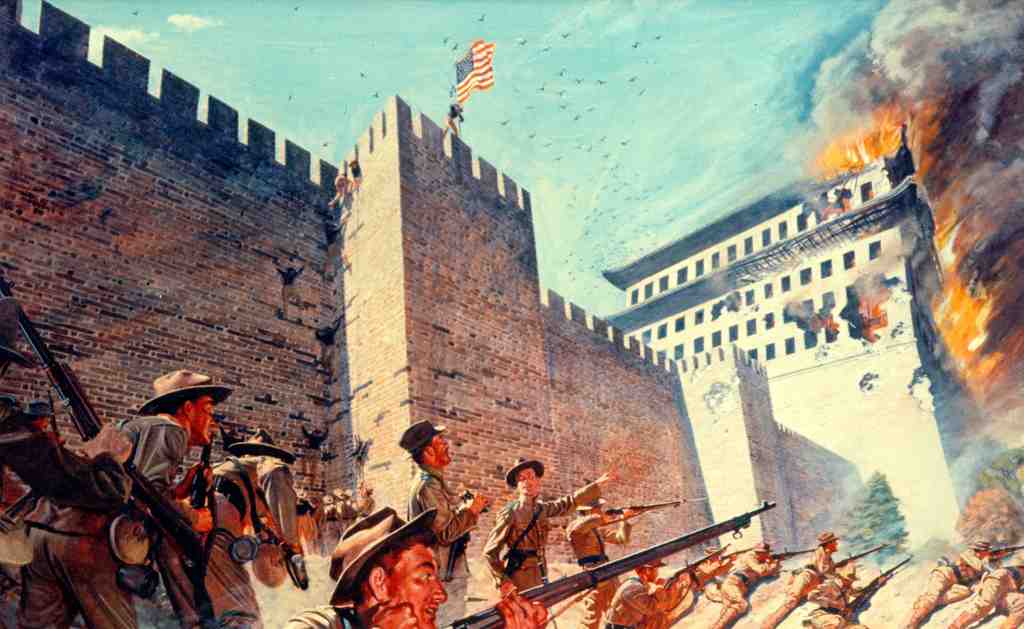
Just ahead of you, you’ll spot the iconic old city wall-its sturdy bricks standing tall even today, as if bracing for what’s to come-and if you look up, imagine that very spot crawling with determined soldiers, desperate refugees, and the chaos of smoke and flames from a century ago. Now, let’s step back into the summer of 1900, and trust me, it was anything but uneventful here. Picture the Legation Quarter, a bustling 2-mile-long zone reserved for foreign diplomats and their families, wedged right inside the heart of old Beijing. It was a patchwork of embassies from nations like Britain, America, Germany, Japan, and more-each with their own guards, flags, and secrets. But there was trouble brewing-big trouble. For decades, foreigners had forced China to sign unequal treaties, chipping away at the country’s pride and sovereignty. Locals were frustrated and angry, and eventually, all that steam boiled over into a movement known as the Boxers. These were not your regular martial artists-they believed that with the right rituals, swords, and a bit of bravado, they’d be immune to bullets! (And I struggle to get through a Monday without caffeine.) By 1900, the Boxers, calling for “Support the Qing! Destroy the Foreigner!” swept into the capital, burning churches, attacking anyone seen as too close to the West-even targeting fellow Chinese who had embraced Christianity. The air was thick with the smell of smoke and fear, and rumors buzzed through the narrow lanes. It wasn’t long before nearly 900 foreigners and almost 3,000 Chinese Christians packed into the Legation Quarter, barricading themselves like a scene from a wild action flick-except this one came with horses, ancient cannons, and a lot of rationed rice. The Chinese imperial government was in a bind. Some officials scoffed at the Boxers, while others secretly rooted for them. Then, after a foreign assault on the coastal Taku Forts, Empress Dowager Cixi herself joined Team Boxer, and things really heated up. Foreign soldiers from eight nations manned defensive lines, and everyone-including 79 foreign children-held their breath. If you’d been here at night you’d have heard rifle fire, cannons roaring, and the unsettling pop of fireworks meant to keep the defenders awake (as if anyone could have napped through that). Fierce fighting broke out along these walls-the British, Americans, French, Italians, Germans, Japanese, and Russians all holding their ground, often in impossible conditions. On the very wall you see before you, American Marines and German soldiers teamed up to hold off waves of attackers. The defenders were so low on proper weapons they constructed makeshift artillery from scrap-nicknaming one such invention “Betsy the International Cannon.” It was like an episode of “MacGyver,” but with higher stakes. Some days, the defenders resorted to eating horse meat and musty rice while chaos raged outside. Water was always precious, and the Christians sheltered here-especially Chinese converts-struggled and starved, their fate tied to the outcome of a siege that felt like it might never end. Truces came and went faster than a Beijing taxi-at one point, the Empress sent supplies as a gesture of goodwill, the next, the wall was under assault again. By July, the siege became truly desperate. Flame-lit nights, mining operations under the walls, explosives shaking the ground-every sense on red alert. The Boxers and the Qing troops came within a hair’s breadth of crushing the Legation defenders. The wall you’re next to now? Holding it was the difference between life and death. Soldiers on both sides faced daily terror. “The men all feel they are in a trap, and simply await the hour of execution,” one American captain wrote. It was as real as suspense gets-no popcorn needed. But then came the twist: at dawn on August 14, 1900, the rescue army-soldiers from Britain, America, Japan, France, and Russia-stormed the city. The Americans even climbed these walls instead of fighting through the gates! By afternoon, the siege lifted. You can almost hear the cheer from exhausted survivors and the clip-clop of cavalry through ash-choked streets. After the siege, the Legation Quarter became a symbol of survival, but also of the bitter cost of foreign intervention. Mark Twain himself later criticized what happened here. And despite the suffering, the city didn’t fall apart-though the Boxer movement faded swiftly, the memory of these days lingered on in every scorched brick. So as you stand here, picture this place not just as another spot on your walking tour, but as the set of a dramatic showdown-one that changed the course of history, shaped international politics, and left behind stories of fear, courage, and the bizarre belief that you could dodge bullets with the right dance moves. A little reminder: when you’re up against the wall, creativity-and a reliable rice supply-can save your life! Yearning to grasp further insights on the legation quarter, rising tensions or the dilemma of the chinese government? Dive into the chat section below and ask away.
打开独立页面 →If you’re looking for the Chairman Mao Memorial Hall, just ahead of you stands a massive square building with a reddish-brown roof, tall columns, and a grand staircase, right in…阅读更多收起
If you’re looking for the Chairman Mao Memorial Hall, just ahead of you stands a massive square building with a reddish-brown roof, tall columns, and a grand staircase, right in the very heart of Tiananmen Square. Here you are, facing one of the most famous and solemn sites in all of China, and-no pressure-someone might be watching to make sure you don’t chew gum or wear a hat. Welcome to the Chairman Mao Memorial Hall! The building you see before you practically hums with history, standing right where the Gate of China used to invite emperors in and out of the Imperial City, before this new chapter was written. After Mao Zedong passed away in 1976, the mood in China was anything but ordinary. Picture crowds of people in dark clothes, somber air, and a sense that history itself had stopped to catch its breath. The leaders of the day were faced with a big question: where, and how, should they honor the man who had led the Communist Party through revolution and civil war? Mao himself wanted a simple ending-a pledge to be cremated, in line with Communist ideals. But in a mysterious twist, this wish was quietly brushed aside, and the decision was made to preserve the Chairman's body for everyone to see, forever changing Tiananmen Square. Suddenly, Beijing turned into a gigantic construction site. Designers, planners, and experts from more than ten organizations-and across eight provinces-rushed to the capital, gathering at the Qianmen Hotel. There were heated debates on where Mao’s memorial hall should actually go: the fresh, leafy hills of Fragrant Hills, the imperial gardens of Jingshan, or the iconic Tiananmen Square. In the end, the very heart of the city was chosen, and the work began at lightning speed-if “fast as 700,000 volunteers from all across China can move” counts as lightning! Mao’s memorial hall, completed in less than a year, is a patchwork quilt of China’s vast landscape. Imagine granite all the way from Sichuan, porcelain tiles traveling hundreds of kilometers from Guangdong, and pine logs arriving after a long journey from the legendary revolution base of Yan’an. Even milky quartz was brought down from the Kunlun Mountains, and the soil under your feet contains dirt from the earthquake-ravaged city of Tangshan. You can almost picture people everywhere-in fields, on mountainsides, in factories-sending a piece of their home for this building. Walk up to the entrance and you’ll notice four big sculpture groups flanking the main doors to the north and south. Each tells its own story: the struggles of revolution, the dreams of industrial construction, the inheritance of spirit, and the unstoppable force of change. Step inside, and at the far end of the North Hall, you’d find a statue of Mao himself-alabaster white, seated, gazing out across the square. Here’s a fun bit of backstage drama: at first, Mao’s statue was posed with legs crossed. Some thought that was friendly, like he was just waiting for tea, but others said it needed more solemn power. The government nearly changed the whole statue, but in the end, the crossed-leg Mao stayed. Imagine the confusion-architects running around with statues, party leaders debating statues’ knees! Inside the Memorial Hall lies Mao’s preserved body, protected behind crystal-clear glass, dimly lit and surrounded by flowers. The first anniversary of Mao’s death saw crowds so massive, officials had to coordinate memorial ceremonies with military precision. Since then, everyone from ordinary citizens to foreign presidents-think Fidel Castro and Nicolas Maduro-have visited to pay their respects. Over the decades, Mao’s Memorial Hall has become both a pilgrimage site and a political symbol. Every big anniversary, the nation’s leaders gather here to honor “the great leader and mentor.” The Hall has even gotten a facelift now and again; in 1997 it closed for months of renovations-imagine the dusting required after all those visitors! And so, here it stands: part memorial, part museum, and part riddle-why keep a leader’s body on display when he wanted to be cremated? Maybe that’s a secret only Tiananmen Square can keep. But one thing is clear: Chairman Mao Memorial Hall is a living piece of history, built from the hands and hopes of millions, and watched over by the ever-sitting, ever-cross-legged Chairman himself.
打开独立页面 →Look straight ahead for a towering grey stone obelisk rising above white marble steps-right in the heart of Tiananmen Square, you can’t miss its commanding presence against the…阅读更多收起
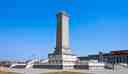
Look straight ahead for a towering grey stone obelisk rising above white marble steps-right in the heart of Tiananmen Square, you can’t miss its commanding presence against the open sky. Now, as you stand before this impressive sight, imagine the square buzzing with excitement in the late 1940s. After the city of Beijing was taken over by new forces, a decision was made: they needed a grand monument, not just any stone, but a monument dedicated to wish all of China’s people “eternal glory.” Originally, planners debated putting this monument in several different spots around the city-Babaoshan, Dongdan, but in the end, it was Tiananmen Square that was chosen. Why? Because this was where fiery student protests like the May Fourth Movement happened, where the voices of change cried out the loudest. Picture a chilly morning in September 1949. Workers and craftsmen hurried through Beijing’s old alleyways, commissioned to build a model out of copper lapis lazuli as a foundation stone. Soon after, the very first ceremony at the site played out-a military orchestra marching and the sound of patriotic tunes swirling through those wide Beijing skies. Leaders like Mao Zedong himself wrote the monument’s famous inscription, promising eternal glory to those who had fought and fallen in China’s battles for independence, freedom, and the future. The design process became a nationwide competition. More than 140 designs poured in-some flat, some sculptural, some tall and thin, some favoring curves. Eventually, they settled on an obelisk, inspired by classic Chinese monuments and the mighty columns in the Summer Palace. Still, there were heated moments: what should top the monument? A statue? Something that lights up? In the end, wisdom prevailed and the designers went with a dignified architectural cap, saving the extravagant ideas for another day (hey, sometimes classic is best, right?). In 1952, the first stone was cut from Laoshan Mountain far away in Qingdao-imagine the difficult journey as the giant slabs rolled by train and tractor all the way to the capital. Architects Liang Sicheng and Lin Huiyin, a couple famous in China’s design world, devoted long nights and sketches to the project. Stonemasons traced the very handwriting of Chairman Mao and Premier Zhou Enlai, chiseling the words deep into the monument’s heart, then gilded the letters so they would shine in the sunlight. This column isn’t just a pretty face either-it’s 37.94 meters high, pieced together from over 13,000 slabs of granite and alabaster. Stare at the base and you'll spot eight massive bas-reliefs; each one tells a dramatic chapter from recent Chinese history. There’s the destruction of opium at Humen, the spark of the Taiping Revolution, student protests, uprisings, and the thunderous War of Resistance Against Japan. Walk around, and you relive an entire century of upheaval and hope-look closely, and you might even feel the stone pulses with stories. On the front, you’ll read “Eternal glory to the people’s heroes,” in Mao Zedong’s own calligraphy, while the back holds an emotional tribute written with Premier Zhou Enlai’s help-a salute to the countless men and women whose courage stretched all the way back to the 1840s and the first Opium War. It’s meant to embrace everyone, from rebellious students to heroic soldiers, who fought for a new dawn. Over the years, this monument has seen grand ceremonies, foreign dignitaries laying wreaths, and careful repairs-sometimes with workers gently cleaning stone and mending cracks, other times with floral baskets piling up on Martyrs’ Memorial Day. There were even wild ideas like making the top glow at night, but in the end, the monument stands as a steady, silent witness to history. If you listen carefully, you might almost hear the echoes of all those parades, speeches, and footsteps-the tireless heartbeat of the people’s heroism in the very center of the nation’s capital. So, take a moment-gaze up, and remember the stories carved into every layer of this unforgettable monument.
打开独立页面 →Ah, you’ve just stepped up to a spot that-at least once every decade-transforms into the beating heart of China’s grandest birthday party. Picture this: It’s 1 October 2009,…阅读更多收起
Ah, you’ve just stepped up to a spot that-at least once every decade-transforms into the beating heart of China’s grandest birthday party. Picture this: It’s 1 October 2009, Tiananmen Square is bursting with color, music, nervous energy, and a sheer sense of scale that could knock your socks off-if only you’d remembered to wear socks on such an important walking tour! Today, let’s relive the 60th anniversary celebration of the founding of the People’s Republic of China. This wasn’t just another day on the calendar. It was like China’s Super Bowl, New Year’s, and a big family reunion all rolled into one. Now, if you think Beijing goes all out for a regular National Day, you should’ve seen this one. Over 10,000 soldiers, each so well-drilled that even the pigeons in Tiananmen Square marched in step, paraded proudly down Chang’an Avenue. And behind them was an awe-inspiring display of military hardware: tanks, rocket systems, stealth missile boats, helicopters, and jets-all shining and glinting under the famous Beijing autumn sky. But don’t worry-they left the dragons at home that day. Wouldn't want to upstage the hardware! Here’s how it built up: Since the People’s Republic was proclaimed by Mao Zedong in 1949, big anniversary parades became tradition-at least until the early 1960s, when the leadership decided to dial it back to once every ten years. It was a move to be “frugal”-a word not often found on the same page as nationwide spectacle! From the tumultuous times of the Cultural Revolution to Deng Xiaoping’s reform years, and then Hu Jintao’s era, each parade echoed the shifting heartbeat of modern China. The 60th in 2009? That was Hu Jintao’s only chance to lead the charge-well, parade at least. He left office just a few years later. The planning? Oh, you have never seen an operation so intricate. Forty million potted flowers-with five million lining Chang’an Avenue-turned the city into a bloom-filled runway, making Beijing the world's unofficial Flower Capital for a day. State-owned flower companies even had workers watching over the blooms 24/7, guarding them from every petal-nibbling invader...and, apparently, particularly cheeky squirrels. There were 56 “pillars of national unity” in Tiananmen Square, each stuffed with fireworks (nothing says unity like a synchronized explosion), representing China’s 56 ethnic groups. Translation for foreign guests? Covered! There were 30,000 language-savvy volunteers in vests to help lost tourists, and an army of 800,000 others keeping crowds in line. Even bugs weren’t invited: mosquito and rat exterminators swooped through the city in nighttime sweeps, sending every fly and cockroach scurrying to safer districts. The spirit of hygiene was alive and well. Banners everywhere proclaimed, “Eradicate the four pests, stress hygiene. Cleanly, cleanly welcome National Day!”-which sounds like the world’s strictest cleaning party. Now, the security! Imagine a city where every mailbox, rooftop, and subway tunnel was under watch. Basements inspected, mailboxes relocated, public spots sealed. Rumor had it that standing out on balconies might attract a “strong suggestion” to return inside-which, in police-speak, meant “get back in there before you get in trouble.” Tens of thousands of paramilitary officers patrolled the streets; even internet sites like Facebook and Twitter mysteriously vanished that week-just as well, because nobody had time to check their phones. They were too busy gawking at the floats. Now, let’s talk about the spectacle: Sixty themed floats rumbled by, celebrating everything from technology to national unity, each one swamped by clusters of marchers with banners and slogans-“Long live the people! Serve the people!” The biggest floats carried giant portraits of China’s modern leaders: Mao Zedong, Deng Xiaoping, Jiang Zemin, and Hu Jintao himself. Slogans in huge letters blared out their guiding philosophies, while voice recordings echoed across the square so you couldn’t forget who was in charge (or where the speakers were hidden). Music set the pulse-a mix of anthems, patriotic songs, marches, and crowd favorites, echoing the electric mood. And when evening came, a fireworks extravaganza that rivaled the Olympics blazed overhead. Beijing’s night sky became a masterpiece of light, color, and hope. The details didn’t stop at the parade: commemorative coins with peonies, rockets, and the Olympic stadium, fan-shaped stamps, and even the Empire State Building in New York lit up in red and gold. (Some New Yorkers were confused, but hey, at least the city looked festive!) So as you stand here, imagine the laughter, the shouts, the rigid formation of troops, and the explosion of fireworks-the memory of that October day lives on in every flag you see waving here. “Tomorrow will be better,” the banners declared that night. In this city, under these trees and lamps, you can almost hear the echoes-and if you listen closely, maybe even the flowers are humming the national anthem. For further insights on the background, preparations or the media, feel free to navigate to the chat section below and inquire.
打开独立页面 →Look for a grand, imposing building with a golden-yellow tiled roof, bold red walls, and a majestic stone staircase rising up in front of it-right in your line of sight! Welcome…阅读更多收起
Look for a grand, imposing building with a golden-yellow tiled roof, bold red walls, and a majestic stone staircase rising up in front of it-right in your line of sight! Welcome to the Imperial Ancestral Temple-Taimiao-the beating heart of ancient Beijing’s rituals! Imagine the scene centuries ago: the stone courtyards bustling with stoic servants, decorated officials, and perhaps a few sleepy imperial guards doing their best to look regal (and alert!). Right where you stand, emperors of the Ming and Qing dynasties arrived in their flowing robes, the air thick with incense and the sound of solemn drums, to honor generations of imperial ancestors. But this wasn’t your average family reunion-this temple was so sacred it was built on a mighty three-tiered platform, a sign that it ranked among Beijing’s holiest places. Inside the Hall for Worship of Ancestors, rows of delicate thrones and beds waited for the wooden spirit tablets of past emperors and empresses, all surrounded by golden incense burners and glimmering offerings. On festival days, the tension in the air was so thick you could almost taste it-what if the emperor forgot a ritual line or tripped over his robes? Now that’s what I’d call “high-stakes ancestor worship!” Picture the two long halls flanking the courtyard. On one side, loyal courtiers’ spirits were honored; on the other, mighty princes of the empire. If walls could talk here, they’d whisper secrets of power, rivalry, and the occasional spectacular hat mishap. And behind that main hall? More sacred storehouses for the spirit tablets-some dating all the way back to the temple’s founding in 1420. By the 1920s, the mood lightened: the area was transformed into a public park, and now, this tranquil place, buzzing with modern life, is called the Working People’s Cultural Palace. The temple has even hosted grand opera performances! Imagine that-centuries of ceremonies, then, one night, opera divas hitting high notes for all of Beijing to hear. What a transformation!
打开独立页面 →To spot the landmark, look straight ahead for a striking rectangular building with red walls and a bright golden roof sitting behind a multi-tiered stone altar, surrounded by…阅读更多收起
To spot the landmark, look straight ahead for a striking rectangular building with red walls and a bright golden roof sitting behind a multi-tiered stone altar, surrounded by lush, ancient trees-it’s hard to miss! Welcome to Beijing Shejitan, or the Altar of Earth and Harvests! Right now, you’re standing in front of a place where, long ago, emperors would have shown up in their very finest robes-you know, those silk outfits with more dragons embroidered on them than a child’s doodle pad at nap time. This is no ordinary temple; it’s the last remaining altar in China built purely for worshipping the earth and the harvest gods-talk about VIP access! Way back in the day, the emperor didn’t just wave to the crowds and wish for good weather-he had to come here and make things official with rituals to the gods of soil and grains, asking for bumper harvests and peace across his vast kingdom. The simple folks of old Beijing must have held their breath as solemn processions wound through what is now a leafy park. But guess what? The Shejitan was only built as you see it today in 1420, when Emperor Yongle decided that the emperor’s job description should include farming consultant-if only he’d had a garden gnome for advice! Imagine the drama before this: in other cities, like Nanjing, the gods of earth (for land and country) and the gods of harvests (for the grains) were given separate addresses and their own altars-like roommates who just couldn’t get along. But in 1377, the mighty Ming founder Zhu Yuanzhang declared, “Enough! Let’s bring these gods together-one altar, fewer delivery costs for the sacrificial offerings!” So, in Beijing, a grand altar was put up on the site where temples had stood since the Tang and Liao dynasties. Over the centuries, the temple survived fire, war, and perhaps more than a few grumpy officials. Fast forward to the 20th century, and this exclusive imperial grounds becomes something truly radical-a park open to everyone! In 1914, Beijing Shejitan became one of the first royal gardens the public could walk through, breathe in the scent of old cypress trees, and maybe grab a picnic. But hold on-the plot thickens! In 1925, when the revolutionary Sun Yat-sen passed away, his casket was actually placed in the grand hall you see to the north-picture hundreds visiting to pay their respects to the “Father of Modern China” surrounded by those same golden eaves. By 1928, the park changed its name to Zhongshan Park to honor him, and for a while, students even checked out library books here-proving you can have a history of emperors, peasants, and bookworms, all in one place. But that’s not all-did you know this altar is paved in five different colored soils? Yellow in the middle (for the center), blue for the east, red for the south, white for the west, and black for the north-never mind color coding your closet, try color coding your entire altar! Each patch represents one of the five elements, embodying the emperor’s control over all the land and its people. Stand here and you might just sense the weight of tiny mysteries-the “Jiangshan Stone” or “Country Stone” once stood on the altar as a guardian, though it vanished after the last dynasty. During the Cultural Revolution, the colored earth was swapped out for nothing but yellow soil-cotton was even grown here for a short time. But thanks to careful restoration, the five colors returned, and these ancient stones and tiles have kept Beijing’s very long memory alive. So, as you look at those bright red walls and elegant rooftops, imagine centuries of rituals, revolutions, and restorations-all swirling together right beneath your feet. You’re standing at the heartbeat of Beijing’s history, where old emperors prayed for grain, revolutionaries honored their heroes, and now, you can just enjoy the peace and shade under the trees. Not a bad place to stop and daydream a little, right?
打开独立页面 →If you look straight ahead, you'll see a massive red gate with a grand, tiled roof and two long arms stretching out on each side-this is the imposing Meridian Gate, standing right…阅读更多收起
If you look straight ahead, you'll see a massive red gate with a grand, tiled roof and two long arms stretching out on each side-this is the imposing Meridian Gate, standing right in front of you. Now, as you stand here under the open sky, let your mind travel back hundreds of years. Imagine yourself at the very threshold of imperial China, where the air crackles with the hush of anticipation. The Meridian Gate isn’t just any ordinary entrance-it’s the largest and southernmost gate of the Forbidden City, acting as the palace’s mighty doorman. Just look for the pair of broad red walls arching out like outstretched wings, and the five grand arches cut into the gate itself. In ancient times, the center arch was off-limits to almost everyone except the Emperor himself. The only others allowed were the Empress-just once, on her wedding day-and the top three scholars who triumphed in grueling imperial exams. Imagine being one of them, heart pounding, stepping through the central arch as the crowd gossips and gawks. Everyone else, from top ministers to common servants, had to skirt to the sides, probably feeling a bit jealous! Gaze up at the rooftop pavilions, known as the Five Phoenix Turrets. These dazzling buildings soar above you, their tiles glinting in the sun. This decorated platform was the stage for imperial announcements-the Emperor would appear on high, reading out urgent proclamations while the crowd below waited breathlessly, wondering, “Is it good news… or another round of taxes?” But not everything up here was official business. After victorious battles, prisoners were sometimes brought here for display, the drama thick in the air, though legend exaggerates the punishments-big executions are more myth than fact. Still, nerves wouldn’t have been in short supply! So as you listen, picture golden roofs shimmering above, footsteps echoing on ancient stones, and history swirling all around you. This gate has seen it all-triumphs, heartbreak, and a timeless royal spectacle that starts right at your feet. And hey, be grateful you don’t need an imperial pass to step inside!
打开独立页面 →Look ahead for an endless sea of golden rooftops stretching into the distance, all enclosed by imposing gray walls and a wide moat-if you see a sprawling, symmetrical palace…阅读更多收起
Look ahead for an endless sea of golden rooftops stretching into the distance, all enclosed by imposing gray walls and a wide moat-if you see a sprawling, symmetrical palace complex rising in layers before you, you’re gazing at the mighty Forbidden City! Welcome to the legendary Forbidden City, a place once so secret that if you’d tried to wander in back in the day, you’d have gotten yourself into much more than just a little trouble-immediate execution was on the line! But now, lucky for us, we can stroll right up and marvel at what’s probably the most famous palace in Chinese history. Built from 1406 to 1420 by more than a million workers, this vast complex served as home to 24 emperors and their families across the Ming and Qing dynasties and stood as the center of Chinese power for over 500 years. Imagine standing here in the freezing Beijing winter as golden-brick flagstones crunch under your feet, with the aroma of incense and the distant thunder of ceremonial drums. Back in those days, the Forbidden City buzzed with ceremonies, secrets, and maybe a little palace drama-after all, with almost 9,000 rooms and hundreds of concubines, courtiers, musicians, and guards, there was always something happening behind these red walls. And about those walls! They reach nearly 8 meters high and are surrounded by a deep, wide moat-pretty good security against nosy neighbors or surprise guests. Look for the dramatic gates-Meridian Gate to the south and the beautifully named Gate of Divine Prowess to the north-which only the emperor could walk through on the Imperial Way, unless you were about to become empress or had just aced your imperial exams! Yellow tiles gleam atop every roof, a royal color reserved just for emperors. And let’s not forget the ornate corner towers at each corner-these are topped with 72 decorative ridges, and legend has it that even the emperor’s best craftsmen struggled to rebuild them during the Qing dynasty. At the heart of the city stands the towering Hall of Supreme Harmony, China’s largest surviving wooden structure, where emperors were crowned, married, and sometimes caught a cold draft while preparing for grand ceremonies. But don’t think the Forbidden City was all fancy robes and banquets! In 1644, rebels stormed in, the emperor barely escaped, and part of the palace was set ablaze. Later, foreign armies occupied it during the Opium Wars, and in 1924, the last emperor, Puyi, got the royal boot from these imperial chambers-ending over five centuries of imperial rule. Talk about a rollercoaster history! Yet, even as dynasties crumbled, the Forbidden City survived-thanks to a bit of luck, some quick-thinking leaders (Zhou Enlai even sent soldiers during the Cultural Revolution to defend it!), and massive restoration projects that today allow us to walk the very same marble ramps and gaze at intricate dragon carvings and dazzling courtyards. Now, nearly 15 million visitors come here every year, exploring treasures that once filled secret armories and libraries: priceless porcelain, shimmering jade, ancient scrolls, and clocks that tell time with a flourish. Legend claims there are 9,999 rooms here, but surveyors have counted a "mere" 8,886-so if you’re thinking of playing hide-and-seek, you might want to bring snacks. Mystical meaning runs through it all: the palace name "Zijincheng" is a nod to the North Star, believed to be the residence of the celestial Jade Emperor. Down on earth, this palace was said to be its mirror image, linking heaven and China’s rulers in a hug of stone, wood, and golden tile. So as you gaze upon this sea of rooftops glowing in the sunset, remember: you’re at the real crossroads of ancient power and modern wonder, where emperors once ruled and where millions now come chasing history’s whispers. Enjoy your walk through this palace of legends, just… don’t try to count all the rooms. That’s one imperial examination you’re guaranteed to fail! Fascinated by the etymology, structure or the architecture? Let's chat about it
打开独立页面 →
常见问题
如何开始导览?
购买后,下载 AudaTours 应用并输入您的兑换码。导览将准备好立即开始--只需点击播放并按照 GPS 引导的路线行驶即可。
导览期间我需要互联网吗?
不需要!开始前下载导览并完全离线享受。只有聊天功能需要互联网。我们建议在 WiFi 下下载以节省移动数据。
这是导游带领的团体游吗?
不是--这是自助语音导览。您按照自己的节奏独立探索,通过手机播放音频解说。没有导游,没有团体,没有时间表。
导览需要多长时间?
大多数导览需要 60-90 分钟才能完成,但您完全控制节奏。随时暂停、跳过站点或休息。
如果我今天无法完成导览怎么办?
没问题!导览具有终身访问权限。随时暂停和恢复--明天、下周或明年。您的进度已保存。
有哪些语言可用?
所有导览均提供 50 多种语言版本。在兑换代码时选择您的首选语言。注意:导览生成后无法更改语言。
购买后我在哪里访问导览?
从 App Store 或 Google Play 下载免费的 AudaTours 应用。输入您的兑换码(通过电子邮件发送),导览将出现在您的资料库中,准备下载并开始。
如果您不喜欢该导览,我们将退款。请联系我们 [email protected]
安全结账使用