萨斯卡通音频导览:市中心艺术、火灾与传奇
在萨斯卡通的心脏地带,闪亮的玻璃塔楼在秘密隧道和传奇大厅上投下阴影,艺术在此敢于与政治碰撞,河流低语着城市被遗忘的丑闻。 这是一个专为好奇的探索者设计的自助音频导览,带您超越表面。从雷迈现代艺术博物馆的大胆杰作,到市中心广场的熙攘活力,再到贝斯伯勒三角洲酒店回荡的宏伟传统,探索萨斯卡通充满活力的文化及其隐藏在表面之下的戏剧性历史。 在贝斯伯勒酒店舞厅的一个午夜,发生了什么几乎改变了萨斯喀彻温省命运的事件?哪位意想不到的艺术家的作品在雷迈现代艺术博物馆差点被禁?为什么老人们仍然谈论市中心那家一夜之间消失的鞋店? 当您从玻璃幕墙画廊走向河畔传奇时,感受这座城市的脉搏。在每一步、每一景、每一个被揭示的秘密中,感受萨斯卡通的活力。 按下播放键,让萨斯卡通在您的脚下揭示其最狂野的故事。
导览预览
关于此导览
- schedule持续时间 40–60 mins按照自己的节奏
- straighten3.6 公里步行路线跟随引导路径
- location_on
- wifi_off离线工作一次下载,随处使用
- all_inclusive终身访问随时重播,永久有效
- location_on从 雷迈现代艺术博物馆 开始
此导览的景点
To spot the Remai Modern as you walk, just look for a large, striking building with contemporary glass walls, dramatic copper mesh panels, and cantilevered sections right along…阅读更多收起
To spot the Remai Modern as you walk, just look for a large, striking building with contemporary glass walls, dramatic copper mesh panels, and cantilevered sections right along the riverbank. Welcome to the Remai Modern! As you stand here, imagine you’re on the edge of a sweeping prairie with the South Saskatchewan River stretching out beside you. And suddenly-rising from the landscape-a structure appears: glass glinting in the sunlight, copper mesh casting shifting shadows, and bold stacks jutting towards the sky. This isn’t just a building; it’s a tribute to the region’s open farmland and those classic barns and silos you’d see scattered across Saskatchewan. But the story behind this museum? Oh, it’s got more twists than a modern art installation. Back in 2009, Saskatoon dreamed of reinventing its art scene. They waved goodbye to old renovation plans for the Mendel Art Gallery and decided to do something big and bold, right here at River Landing. The Art Gallery of Saskatchewan was born-sort of like a superhero origin story, but with more Picasso and fewer capes! Now enter Ellen Remai, a Saskatoon philanthropist and the fairy godmother of the arts around here. She donated a whopping 30 million dollars, not to mention the world’s largest collection of Picasso linocuts-over 400 slices of artistic genius and a handful of Picasso ceramics thrown in for good measure. Thanks to her generosity, the museum you’re looking at became Remai Modern, proudly opening its doors in 2017. This building was designed by Bruce Kuwabara, inspired by Prairie style and Frank Lloyd Wright-the classic cool architect move. It’s four floors, with a massive open atrium that seems to breathe in sunlight from every angle. On the outside, see that copper? That’s a cheeky architectural wink to the famous Delta Bessborough hotel’s rooftop just down the river. Local steel, glass, and about a metric ton of artistic ambition came together to make this place what it is. But don’t let this sleek exterior fool you-inside, Remai Modern holds more than 8,000 pieces of art, a collection spanning Canadian legends like Emily Carr and Lawren Harris, international stars, and new troublemakers pushing the limits. The Mendel Art Gallery’s whole historic collection found a new home here, and with it, stories of decades past echo through these halls. Oh, and did I mention drama? Like any good piece of art, there’s a little controversy. During construction, a board member found himself the center of a heated debate over a tweet, and there’s even a tale about some construction budget acrobatics. But in the end, Remai Modern triumphed and opened with a bang-celebrated by First Nations and Métis performances on its grand opening day. Today, it’s not just an art gallery. It’s a hub for talks, film screenings, rooftop sightseeing, and hands-on fun for students and visitors alike. You might even catch live music, wild dance, or something totally unclassifiable-modern art at its finest! So, take a breath, soak in the copper and glass, and let your imagination run wild. You never know whether you’ll spot a Picasso, a wild new piece, or just a fantastic sunset reflecting off those windows. Ready for more? Let’s head on to our next stop-Saskatoon Technical Collegiate! Exploring the realm of the architecture, permanent collection or the programming? Feel free to consult the chat section for additional information.
打开独立页面 →As you stand here, imagine yourself back in the early 1930s on the banks of the South Saskatchewan River. Picture it: the city’s old Chinatown once stood where you’re standing,…阅读更多收起
As you stand here, imagine yourself back in the early 1930s on the banks of the South Saskatchewan River. Picture it: the city’s old Chinatown once stood where you’re standing, bustling with energy, before it made way for the impressive Saskatoon Technical Collegiate Institute. Yes, this was the city’s powerhouse for hands-on learning, opening its doors in 1931-if buildings could flex, this one surely would. The air back then might have been tinged not just with the excitement of new beginnings, but also with a bit of tension. In 1932, a group of unemployed men gathered on these very grounds, only to be dramatically escorted away by the police and RCMP. Don’t worry, they weren’t after any late library books. The school quickly became famous, boasting Saskatoon’s largest gym-and, believe it or not, one of the best women’s basketball teams in the province. In the 1932-33 season, they claimed the provincial championship, dribbling right into the city’s history books! But art lovers, pay attention. The walls of this collegiate were vibrant with the genius of Ernest Lindner, a master artist who started teaching here in 1931. He inspired students like Ted Pulford, future watercolor wizard, and Ivan Eyre and Robert Hurley, who’d go on to become legends themselves. And in the late 1950s, a young art student named Joan Anderson-the world now knows her as Joni Mitchell-wandered these halls, guided by painter Henry Bonli. Imagine the whiff of linseed oil and a dash of musical genius in the air. In 1939, Ernest C. F. Chan, from near Canton, China, broke new ground as Canada’s first Chinese public school teacher, going on to become a civic leader and champion of Saskatoon’s multicultural spirit. Though the doors eventually closed and the building-by then known as the Gathercole-was demolished in 2004, many fought to save it as a hub for arts and culture. Today, River Landing has grown in its place-but if you listen closely, you might hear the echoes of bouncing basketballs, passionate debates, and creative dreams swirling on the riverbank. Now, isn’t that a technical legacy worth remembering?
打开独立页面 →Right here, you’re standing on the spot where one of Saskatoon’s most unforgettable-and tragic-events unfolded: the Queen’s Hotel fire of May 31, 1980. Picture the bustle of 1st…阅读更多收起
Right here, you’re standing on the spot where one of Saskatoon’s most unforgettable-and tragic-events unfolded: the Queen’s Hotel fire of May 31, 1980. Picture the bustle of 1st Avenue South, folks heading in and out, the hotel glowing with evening activity. Suddenly, smoke began curling up from the basement, creeping along the walls and crawling under the doors. Firefighters rushed in-these heroes weren’t just fighting flames; they were racing against time. In a moment that still echoes in Saskatoon’s memory, Victor James Budz and Dennis Aron Guenter gave their lives here while trying to wrestle the blaze into submission. It was the first time in city history that Saskatoon lost firefighters on duty-a somber chapter, indeed. Jump forward a few decades, and the site has changed; the old Queen’s is gone, and now there’s the Scotiabank Theatre. In 2016, a memorial plaque was placed here, so the story isn’t forgotten. So next time you catch a movie, know you’re also part of a much bigger story-one of courage, sacrifice, and the community’s deep respect for those who protect it. And trust me, this story’s got more heat than your bucket of popcorn!
打开独立页面 →
再显示 12 个站点显示更少站点expand_moreexpand_less
But wait! Like many dramatic stories, there’s a pause-the curtains closed in the mid-60s, only to swing back open with a new name, the Grodieon. Over the decades, this building…阅读更多收起
But wait! Like many dramatic stories, there’s a pause-the curtains closed in the mid-60s, only to swing back open with a new name, the Grodieon. Over the decades, this building has survived more makeovers than a soap opera star. Remember it as the Odeon, Paradise, or even O’Brians? If you’re getting whiplash, don’t worry-you’re not alone! Now, the Coors Event Centre combines that historic charm with modern flair. Joined with the old Royal Bank of Canada next door, it boasts 20,000 square feet all set for concerts, banquets, and big events. Each brick and beam here has a story to tell. So, whether you're here for a rock show or a wedding, you’re stepping into over a century of Saskatoon’s entertainment history!
打开独立页面 →Look for an eight-story office block with a striking red granite base and fancy white terra cotta trimming its lower floors and the roofline-if you spot large bison heads flanking…阅读更多收起
Look for an eight-story office block with a striking red granite base and fancy white terra cotta trimming its lower floors and the roofline-if you spot large bison heads flanking the main doorway, you’ve found the Canada Building! Standing here in front of the Canada Building, you can almost imagine it rising out of the prairie dust back in 1913-right in the middle of a city full of hope and hustle. Picture businessmen in bowler hats, their voices echoing off the polished red granite as they step briskly through those very doors, no doubt watched over by the building’s rather stern-looking bison guardians. The builder behind this eight-story wonder, Allan Bowerman, was a bit of a city super-producer-he was also the mind behind the Bowerman House. Now, take in the terra cotta flourishes near your feet and high above near the rooftop cornice; in their day, they were something to brag about. The Canada Building was Saskatoon’s tallest office block in its prime, flirting with the sky at 35 meters tall. Through harsh winters and roaring booms, it's seen plenty of deals-and, I’d bet, more than a few coffee spills in those long hallways
打开独立页面 →Straight ahead, you’ll spot the Midtown Plaza with its grand brick façade, triangular glass roof peaks, and the tall Midtown Tower rising behind-it sits right at the end of the…阅读更多收起
Straight ahead, you’ll spot the Midtown Plaza with its grand brick façade, triangular glass roof peaks, and the tall Midtown Tower rising behind-it sits right at the end of the street, nestled between lines of leafy trees and parked cars. You’re standing in front of Midtown, Saskatoon’s shopping marvel and a place where the scent of cinnamon pretzels has battled for decades with the distant, hopeful whiff of popcorn from long-gone movie nights. It might look like just a modern mall now, but this spot has traveled through time more than a superhero with a forgetful sidekick! Picture 1960s Saskatoon-steam engines rumbling in, the clang of iron wheels on rails, and pigeons scattering as the city’s main railway station sits where Midtown is today. But change was coming on a freight train of its own, part of a sweeping plan that gave Saskatoon not just a new bridge and an arts centre, but its crown jewel of commerce: the Midtown shopping mall. Ground was broken, steel went up, and soon, the click of suitcases on the station platform was replaced by the jingle of coins and the squeak of shopping carts. The doors of Midtown opened on July 30, 1970, and the place had just 51 stores and services-though, let’s be honest, with an underground parking garage you didn’t have to shovel, people would’ve shopped here even if the best deal was on socks. There was excitement in the air and plenty of polyester. Long before the age of “anchor” tenants closing like dominos, Simpsons-Sears planted its flag in 1968, beating everyone else to the punch. Eaton’s followed, and shoppers flocked like birds chasing spilled popcorn. The 1970s and 80s brought flavors of their own, with the city’s first-ever mall cinema popping up here-imagine the thrill as folks watched blockbusters, not far from where shoppers tried not to trip over each other at the Dominion grocery store or zipped in for last-minute shoes. The cinema doubled its screens, calling itself a “multiplex”-a fancy word for “now you can lose your friends twice as fast trying to find the right movie!” Eventually, the lights dimmed for good by 2000, and the space turned into pop-up shops and exhibits before giving in to the hunger for more stores (and let’s face it-more parking). But Midtown was always changing its outfit. In 1990, a second storey blossomed atop the original building, while architects gave the façade a clever nod to that old 1900s train station with charming peaked roofs and vertical lines. Rumor has it, some sighs of nostalgia floated through the air with the cement dust. Around the same time, a new toy superhero landed in the parking lot-Saskatoon’s first Toys "R" Us, still there today, possibly haunted by the ghosts of forgotten teddy bears. And, let’s not forget Midtown’s towering sidekick-the Midtown Tower-once the tallest office building around! From the 1970s to early 2000s, the fifth floor buzzed as the home of CBKST, the CBC TV station-somewhere in the archives, there’s probably a clip of a newscaster struggling with their tie while thousands of shoppers strolled below. Over the years, Midtown added, lost, and reshuffled stores like a gambler shuffling cards. Dominion’s grocery carts rolled away in the 80s. Eaton’s fell in 1999. Sears abandoned ship in 2018. Hudson’s Bay just closed in 2025-the mighty have fallen and taken their winter coat sales with them. And through it all, flashier retailers sprang up. H&M opened its doors in 2020, a second chance for fashionistas. A new wing promised a sparkling future, with a food court called Midtown Common bringing the smell of fries and chatter of teenagers back into the spotlight. There’s humor here too-the fate of MEC, the outdoor store, became a whole mall soap opera: opening delayed, corporate drama, and as of 2025, still nothing but dreams and maybe a squirrel living in the construction dust. So as you gaze at Midtown Plaza, you’re not just looking at a shopping centre. You’re standing where trains gave way to escalators, where blockbusters became bargains, and where change is always on sale-sometimes at half price, sometimes a little more.
打开独立页面 →Look just above eye level for a big round sign with the bold red CBC logo hanging off a brick-and-stone building, and you’ve found the Hutchinson Building right beside…阅读更多收起
Look just above eye level for a big round sign with the bold red CBC logo hanging off a brick-and-stone building, and you’ve found the Hutchinson Building right beside you. Welcome to a spot where hardware, handicrafts, and TV cameras all share some real estate! Picture yourself back in the early 1900s, walking through these doors as the scent of sawdust and tools hits you-this was Saskatoon Hardware Store Ltd, the go-to place for everything from nails to maybe your neighbor’s best DIY advice, all the way up to 1970. Fast forward a bit, and suddenly it’s all about creative flair inside-paintbrushes, wool, and craft supplies took over when Saskatoon Handicraft Supplies moved in, filling the space with colors and the buzz of imagination until 1995. But wait-there’s more! The building had another secret life: the studios of CBC Television sat right above you before they went quiet in 2012. Imagine the whispers of late-night news anchors and the lights of TV cameras-who knows, maybe you just stepped on a spot where history was broadcast to thousands! In 1999, Saskatoon made things official, designating this place a heritage property. So while it’s seen a lot, the Hutchinson Building stands steady, keeping stories and secrets right here on the sidewalk.
打开独立页面 →To spot the Hotel Senator, just look for a beige brick building on the corner with a bold sign reading "Senator" above the entrance and several flags waving above its…阅读更多收起
To spot the Hotel Senator, just look for a beige brick building on the corner with a bold sign reading "Senator" above the entrance and several flags waving above its doorway. Welcome to the historic Hotel Senator! Imagine the year is 1907: horse-drawn carts clatter down the street, and the brand-new Flanagan Hotel stands proudly behind you, gleaming with luxury unheard of at the time-steam heating, phones in every room, and marble everywhere you look. James Flanagan, Saskatoon's own ambitious dreamer, made this place sparkle with the finest marble, wood, and all the modern wonders a guest could desire. Tragically, Mr. Flanagan didn't get to enjoy it for long-he passed away just two years after the grand opening, leaving the hotel to be sold for the princely sum of $150,000 in 1910, which, back then, was enough to buy a small fleet of mansions! Today, the building is protected as a local treasure and has transformed into a charming boutique hotel, with 38 rooms giving guests a taste of European flair. And if you listen closely, maybe you’ll hear a faint echo of laughter and clinking glasses, a ghostly toast to old James Flanagan’s vision.
打开独立页面 →Look for a light stone building on the corner with big, triple-arched windows and a black-and-stone entrance canopy stretching toward the street. Welcome to the legendary Eaton’s…阅读更多收起
Look for a light stone building on the corner with big, triple-arched windows and a black-and-stone entrance canopy stretching toward the street. Welcome to the legendary Eaton’s Building! Imagine it’s December 1928, and you’re standing here shoulder-to-shoulder with eager shoppers, all eyes glued to the sparkling new department store in Saskatoon-people buzzing with excitement, boots crunching the frosty sidewalk. Designed by the star team of Ross and Macdonald with local flair by Frank Martin, it was supposed to soar eight stories, but building only three didn’t dampen its glamour one bit. If you peek up, you can almost picture the original fuss: that Neo-Renaissance touch with sleek tyndall stone, black marble accents, and those fifteen grand, arched Palladian windows-talk about window shopping! Inside, it was pure luxury. Imagine gliding over terrazzo flooring, sun glinting off elaborate bronze fixtures, and maybe catching a whiff of roast beef from the Mediterranean-style dining room. In one corner, a children’s paradise: Toyland, complete with a mechanical lion that roared (though thankfully, the real lions stayed at the zoo). Meat lovers would have drooled over the eighty-foot marble counter in the meat department-probably the city’s classiest spot to buy a brisket! Fast-forward to the 1970s, the Eaton’s sign comes down, but the excitement isn’t over-the 1971 Canada Winter Games athletes bunk here, and with Army & Navy moving in, a nautical-themed cafeteria helps people pretend the Saskatchewan River is actually the open sea. In the early 2000s, when the building looked a little tired, the Board of Education swept in with a restoration, bringing back the shine on brass fixtures and terrazzo floors. Now, behind these elegant windows, lessons are learned, and memories are made. See? This building sure knows how to keep life interesting!
打开独立页面 →To spot the Delta Bessborough, look straight ahead for a grand, castle-like building made of warm, brownish stone with tall turrets, a steep slate roof, and surrounded by lush…阅读更多收起
To spot the Delta Bessborough, look straight ahead for a grand, castle-like building made of warm, brownish stone with tall turrets, a steep slate roof, and surrounded by lush gardens and tall trees-trust me, you can’t miss it! Now, close your eyes for a moment and breathe in the atmosphere of Saskatoon’s grand hotel-the mighty Delta Bessborough! Imagine you’re stepping into the 1930s, when the world felt full of uncertainty, hope, and a touch of glamour. It’s 1930, and Saskatoon’s business leaders are buzzing with excitement and nerves, determined to put their city on the map with a new chateau-style hotel. Picture the ground rumbling as workers with steam thawers and clanking gasoline excavators break the Saskatoon winter frost--making way for the dream rising before your eyes. Fast forward and see the silhouette of this stunning Châteauesque castle emerge, designed first by John S. Archibald and then carried forward by John Schofield after Archibald’s death. Its turrets, oriel windows, and dormers brought a sense of fairytale wonder to the prairies, inspired by the Bavarian castles you'd expect to find in the pages of a storybook. Canadian pride is carved into its very bones: Tyndall stone shipped from Manitoba, bricks fired at the Claybank plant in Saskatchewan, and tiles glowing from Estevan-every corner proudly homegrown. But this was more than a feat of engineering; it was a symbol of hope during dark times. The Great Depression nearly kept its doors locked shut even after it finished construction in 1932. The city gave the railway a sweet deal: no property tax for 25 years-as long as they built their grand hotel with at least 200 rooms. And who was given the honor of its name? His Excellency, The 9th Earl of Bessborough, who visited the site with the Countess while it was still a skeleton of stone and wood, waving regally to curious onlookers. The grand doors finally swung open in December 1935, the very first guest, Horace N. Stovin, stepping onto terrazzo floors that glistened like a promise kept. Through its ten floors, the Bessborough quickly became the beating heart of Saskatoon’s high society. The ballroom’s laughter echoed with parties, the restaurants-like today’s Garden Court Café-served meals crafted from the riches of the prairies, and the riverside gardens buzzed with secret rendezvous and jazz music, especially during the now-famous Saskatchewan Jazz Festival. Yet, the “Bess” as locals call her, wasn’t left untouched by time. The Baltzan family gave it new life in the 1970s, and then another massive revitalization was undertaken in 1999-imagine $9 million worth of chandeliers, ornate plaster, and the sparkle of history lovingly restored, all without losing an ounce of charm. Today, she’s managed by Delta Hotels under Marriott, but is still the same old castle-full of stories and maybe even a few mischievous ghosts (but don’t worry, they’re rumored to just rearrange the furniture and enjoy room service). With 225 guest rooms, a Vice Regal Suite facing the city, fitness spots, spa, a pool, and event spaces so grand they make anyone feel like royalty, the Bessborough is ready for another hundred years of memories. So, whether you’re gazing at the gothic dormers, the gleaming oriel windows, or simply enjoying the breeze from the river in its magnificent gardens, remember: you are standing before the castle that made Saskatoon dream bigger. And if you listen closely, you might still catch the sound of a 1930s jazz band drifting through the evening air.
打开独立页面 →Look for a stately, beige-brick building with big upper windows and bright red awnings right across the front, peeking out just behind the leafy branches. Standing here in front…阅读更多收起
Look for a stately, beige-brick building with big upper windows and bright red awnings right across the front, peeking out just behind the leafy branches. Standing here in front of the Odd Fellows Temple, it’s easy to picture a grand old ball roaring to life inside, with folks dressed to the nines, laughter bubbling up as music drifted through those lofty windows. Built by the mysterious-sounding Independent Order of Odd Fellows, the temple was part secret society clubhouse, part social hotspot, and even had its own ballroom-imagine the swish of dresses and the squeak of polished shoes on a wooden floor. From 1913 to 1923, Saskatoon's very first public library set up shop here, so the place once buzzed with the turning of pages and the shushing of librarians. In 1959, the torch passed to the Saskatoon Labour Council, so the building kept busy hosting passionate debates and loud union meetings. The city thought it so important, it became an official heritage property in 1983. With each layer of history, the Odd Fellows Temple has been a place for books, for dancing, and for people fighting for change-so who says you can't squeeze a whole soap opera into a block of bricks?
打开独立页面 →Look for a tall, modern office tower with sleek curved windows and bright signage that reads "Vendasta Square" at the corner of 22nd Street and 4th Avenue-if you spot the…阅读更多收起
Look for a tall, modern office tower with sleek curved windows and bright signage that reads "Vendasta Square" at the corner of 22nd Street and 4th Avenue-if you spot the revolving doors, you're in the right place! Now, picture yourself standing before one of Saskatoon's downtown giants-a shimmering glass tower reaching for the sky, originally called Saskatoon Square when it popped up in 1979. Back then, it was the cool new kid, quickly becoming the second-tallest office tower around. Imagine the buzz when it was built: business folks hustling in, phones ringing, and important meetings on every floor. Several big names owned slices of this tower, but SaskTel was boss, holding a whopping 70%! In 2010, the building made headlines by selling for a whopping $50 million-just imagine lugging that around in loonies. In 2014, the suspense skyrocketed during a wild windstorm; gusts hit 115 kilometers per hour, and a window on the seventh floor popped out and crashed onto the street below (don’t worry, no flying paperwork was reported). And just recently, renovations gave two top floors a facelift-imagine rooftop patios, fancy dining rooms, and fresh air with your coffee. In 2022, the name changed to Vendasta Square, marking a new era but keeping the heart of downtown beating strong as ever.
打开独立页面 →To spot St. Paul’s Cathedral, look for a tall, slender brick church with a striking striped bell tower and a pointy spire reaching toward the sky, right at the corner of 22nd…阅读更多收起
To spot St. Paul’s Cathedral, look for a tall, slender brick church with a striking striped bell tower and a pointy spire reaching toward the sky, right at the corner of 22nd Street East and Spadina Crescent. Here you are, standing in front of one of Saskatoon’s oldest and most spirited landmarks-St. Paul’s Co-Cathedral, which technically is a cathedral, except...well, it’s a bit on the cozy side for that title. Close your eyes and imagine the year is 1910: people gather by the river, their shoes crunching on gravel as none other than Prime Minister Sir Wilfrid Laurier sets the first stone of this church in place, setting the stage for both grandeur and humble warmth in Saskatoon’s heart. Only a year later, Archbishop Adelard Langevin made it official-so you could say this little church came out swinging, or maybe singing, thanks to its famous Casavant organ installed in 1912. St. Paul’s stained glass windows set the mood year-round, but they shimmer with especially moving stories: some panes memorialize those who bravely served in World War II, while others were added after a tragic fire in 1976, their colors casting a kaleidoscope of emotion across the pews. On June 29, the feast day of Saints Peter and Paul, you can even spot paintings by celebrated German artist Berthold Imhoff, proudly carried here all the way from Blaine Lake! Not all stories here sparkle, though. In the summer of 2021, this cathedral-like many churches across Canada-became a site of protest and mourning as red handprints appeared on its walls, echoing discoveries of unmarked graves from residential schools. It was a moment that made the whole city pause and remember its responsibilities. Today, St. Paul’s stands as both a sanctuary and a place of reckoning-smaller than some, but bursting with history, echoing music, and the sounds of voices still calling for justice and healing. Not bad for a little church that never meant to be a big cathedral, right?
打开独立页面 →Straight ahead you'll spot a tall, reddish-brick building with large, pointed neo-Gothic windows trimmed in tan stone, peeking out between tidy evergreens and a wooden sign…阅读更多收起
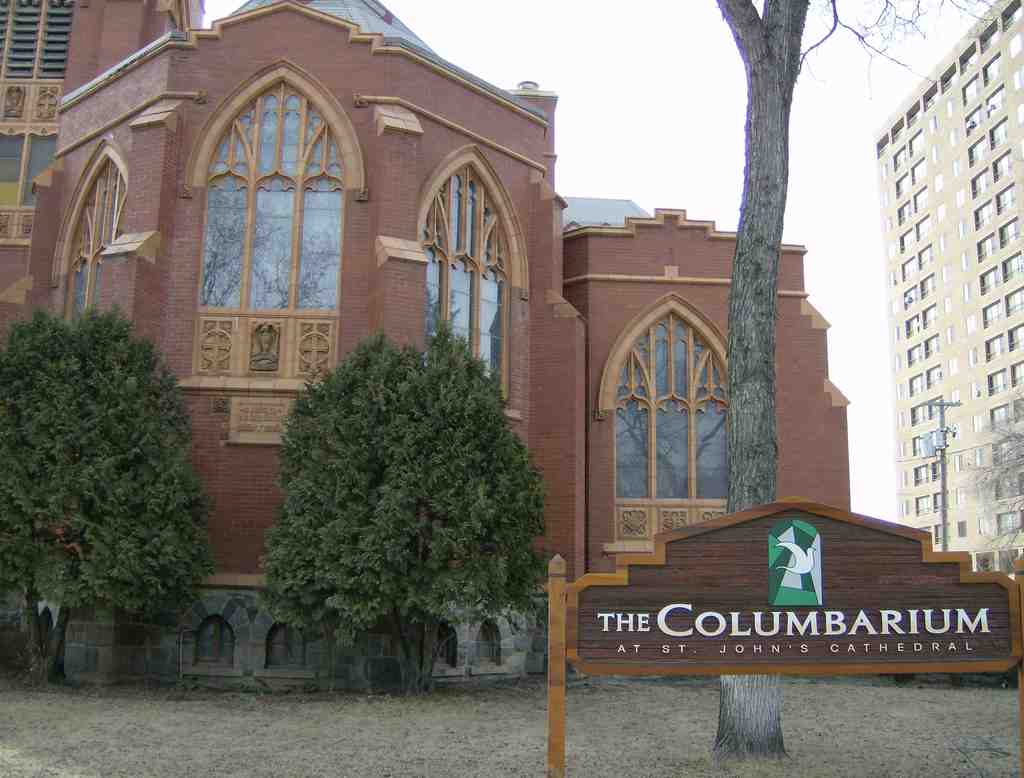
Straight ahead you'll spot a tall, reddish-brick building with large, pointed neo-Gothic windows trimmed in tan stone, peeking out between tidy evergreens and a wooden sign reading "The Columbarium at St. John's Cathedral"-just follow the shape of the windows! Ready for a tale that’s packed with tradition and a dash of royal drama? Here at the Cathedral of St. John the Evangelist, you’re standing in front of a building that’s seen Saskatoon grow from a plucky temperance colony into the vibrant city it is today. Picture this: back in 1902, this patch of land was buzzing with mostly Methodists and Presbyterians, and the first Anglicans built a humble wooden church, probably creaking every time someone opened the door. By 1912, Saskatoon was ready for a grander vision. That year, none other than the Governor General of Canada, Prince Arthur, showed up to lay the cornerstone, with the city no doubt a flurry of hats, horse-drawn wagons, and excitement. The cathedral that rose was no ordinary church. Built of brick, solid Tyndall stone, and decorated with creamy terra cotta, it boasts a soaring neo-Gothic style-notice how those tall windows and pointed arches draw your eyes upward. Inside, the rood screen, pulpit, and altar are made of Carrara ware, so convincing that you might think it’s real Italian marble. For years, music floated through the air from a modest reed organ, until the mighty Hill, Norman and Beard organ rumbled to life in 1956, later replaced by a Casavant Frères organ-still the pride of the cathedral. With room for 800 today, St. John’s holds a royal distinction: It has welcomed Queen Elizabeth II herself, three times no less, alongside the Duke of Edinburgh, and dignitaries like Governor General Viscount Alexander. The sunlight that streams through its documented stained glass fills the space with color, whispering stories from nearly every era of the city’s past. Imagine all the footsteps, the hymns, and the hopeful prayers that have echoed here-this spot is a living timeline, right in the heart of Saskatoon.
打开独立页面 →To spot Knox United Church, just look for a grand brick building with towering walls, huge arched windows filled with stained glass, and a bold entrance right along Spadina…阅读更多收起
To spot Knox United Church, just look for a grand brick building with towering walls, huge arched windows filled with stained glass, and a bold entrance right along Spadina Crescent East. Standing here today, imagine arriving in 1885 when Saskatoon was just a fledgling settlement and folks gathered in homes, a stone schoolhouse, and even the railway roundhouse-who knew prayer meetings could double as locomotive inspections? Fast forward to 1912, and you get Brown and Vallance, architectural wizards from Montreal, waving their magic Gothic wands on this spot. Suddenly, a magnificent two-storey sanctuary rises up, dark red bricks gleaming in the prairie sun and tall stained-glass windows sparkling like jewel boxes. As you gaze up, you can almost sense the buzz of 1,200 parishioners squeezing onto those original wooden pews, marvelling at the building’s acoustics-so good, every whisper and high note found an audience, whether at a spirited sermon or a refined chamber music concert. Many tales swirl around these windows, their colored glass carefully documented by the Institute for stained glass in Canada. Knox has witnessed generations laughing, singing, and even the odd off-key hymn-a place where the echoes of community and culture continue to shimmer through every pane and brick.
打开独立页面 →
常见问题
如何开始导览?
购买后,下载 AudaTours 应用并输入您的兑换码。导览将准备好立即开始--只需点击播放并按照 GPS 引导的路线行驶即可。
导览期间我需要互联网吗?
不需要!开始前下载导览并完全离线享受。只有聊天功能需要互联网。我们建议在 WiFi 下下载以节省移动数据。
这是导游带领的团体游吗?
不是--这是自助语音导览。您按照自己的节奏独立探索,通过手机播放音频解说。没有导游,没有团体,没有时间表。
导览需要多长时间?
大多数导览需要 60-90 分钟才能完成,但您完全控制节奏。随时暂停、跳过站点或休息。
如果我今天无法完成导览怎么办?
没问题!导览具有终身访问权限。随时暂停和恢复--明天、下周或明年。您的进度已保存。
有哪些语言可用?
所有导览均提供 50 多种语言版本。在兑换代码时选择您的首选语言。注意:导览生成后无法更改语言。
购买后我在哪里访问导览?
从 App Store 或 Google Play 下载免费的 AudaTours 应用。输入您的兑换码(通过电子邮件发送),导览将出现在您的资料库中,准备下载并开始。
如果您不喜欢该导览,我们将退款。请联系我们 [email protected]
安全结账使用