AudaTours logoAudaTours

金边语音导览:揭秘金边地标

语音指南12 景点

一座莲花状的佛塔在金边的喧嚣之上拔地而起,但它的阴影所隐藏的远不止民族自豪感。借助这个自助语音导览,超越显而易见之处,揭开朗卡寺、独立纪念碑和诺罗敦·西哈努克纪念碑中交织的秘密和传说。哪股强大的力量几乎让来自远方的僧侣集会鸦雀无声?在闪耀的仪式火焰下,隐藏着怎样的动机?为什么在一位青铜国王的就职典礼上,全副武装的警察将他团团围住? 从寂静的寺庙庭院走向熙熙攘攘的大道。随着城市的层层展开,追溯反叛、政治阴谋和跨文化联系的回响。准备好踏上戏剧发生之地,用全新的视角探索金边。 准备好步入每一根雕刻柱子背后依然萦绕的谜团了吗?您的旅程现在开始。

导览预览

map

关于此导览

  • schedule
    持续时间 40–60 mins按照自己的节奏
  • straighten
    6.5 公里步行路线跟随引导路径
  • location_on
  • wifi_off
    离线工作一次下载,随处使用
  • all_inclusive
    终身访问随时重播,永久有效
  • location_on
    从 朗卡寺 开始

此导览的景点

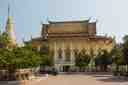
  1. This place was actually built to serve as a refuge and meeting place for monks from Cambodia and Sri Lanka. It's like a little international monk club! And because of that, it was…阅读更多收起

    This place was actually built to serve as a refuge and meeting place for monks from Cambodia and Sri Lanka. It's like a little international monk club! And because of that, it was given the name "Wat Lanka," as a reminder of the gathering between the two cultures. You'll find Wat Langka located southwest of the famous Independence Monument, right at the intersection of Sihanouk Boulevard and Street 51. So, you can't miss it! Keep an eye out for the beautiful architecture and vibrant colors. It's truly a sight to behold. Alright, let's move on to the next stop on our adventure! Hop on over to the Independence Monument, and I'll meet you there with more fun facts and jokes along the way. See you soon!

    打开独立页面 →
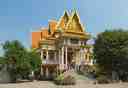
  2. Now, take a look at this lotus-shaped stupa. It's quite a sight, isn't it? It was designed by the talented Cambodian architect, Vann Molyvann, who got some special instructions…阅读更多收起

    Now, take a look at this lotus-shaped stupa. It's quite a sight, isn't it? It was designed by the talented Cambodian architect, Vann Molyvann, who got some special instructions from none other than Prince Norodom Sihanouk himself. Talk about a royal touch! Standing tall at 37 meters, this monument is hard to miss! It proudly marks the intersection of Norodom Boulevard and Sihanouk Boulevard, right in the heart of Phnom Penh. During national celebrations, this place is bursting with activity. A ceremonial flame on the interior pedestal is lit by a royal or high official, and the stairs are adorned with beautiful floral tributes. Quite the spectacle, I must say! Oh, and do you see that memorial right behind the monument? That's the Norodom Sihanouk Memorial, built in 2013 to honor the beloved prince. It's a reminder of the great leaders who played a crucial role in Cambodia's history. It's really no surprise that both locals and tourists flock here year after year. So let's take a moment to admire this symbol of independence before we move on to our next exciting stop!

    打开独立页面 →
  3. First things first, this memorial is also known as the Statue of King Father Norodom Sihanouk. It's basically a giant bronze statue that stands at a towering 4.5 meters tall. Now,…阅读更多收起

    First things first, this memorial is also known as the Statue of King Father Norodom Sihanouk. It's basically a giant bronze statue that stands at a towering 4.5 meters tall. Now, I don't know about you, but that's one big statue! But wait, there's more! This impressive statue is actually housed under a 27 meter high stupa. Fancy, huh? Now, you might be wondering who this big statue is honoring. Well, it's none other than the former King Norodom Sihanouk himself. He was quite the important figure in Cambodian history. In fact, this statue cost a whopping US$1.2 million to create and took a whole 8 months to complete. Talk about dedication! On the day the statue was inaugurated, security was super tight. You see, armed military police were stationed near the statue, making sure everything went smoothly. Can't have any shenanigans around such an important monument, right? The statue is dedicated to honoring Sihanouk's incredible accomplishment of liberating Cambodia from French colonialism on November 9th, 1953. Now that's something worth celebrating! If you're curious, Sihanouk sadly passed away on October 15th, 2012, in Beijing, China. He left behind his son, the current King Norodom Sihamoni, and his wife, Norodom Monineath. Quite a legacy, wouldn't you say? So, take a moment to admire this magnificent statue and think about the incredible history it represents. And remember, if you need any more details or have any questions, just give me a shout!

    打开独立页面 →
再显示 9 个站点显示更少站点expand_moreexpand_less
  1. Ah, the Cambodia-Vietnam Friendship Monument! This towering concrete beauty is all about celebrating the close bond between Cambodia and Vietnam. It's like a big old handshake…阅读更多收起

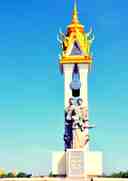
    Ah, the Cambodia-Vietnam Friendship Monument! This towering concrete beauty is all about celebrating the close bond between Cambodia and Vietnam. It's like a big old handshake frozen in time, commemorating their alliance in the past. Built in 1979, it's a relic of the communist regime that rose to power after the Cambodian-Vietnamese War. Located in Botum Park, right in the heart of Phnom Penh, it really is quite the popular spot. When you lay your eyes on this monument, you'll see something straight out of a movie. It's got these heroic statues of Vietnamese and Cambodian soldiers, standing tall and strong, like they're ready to tackle anything that comes their way. Now, what's really interesting is the art style here. It's called "Socialist Realism," and it was all the rage back in the Soviet Union in the 1930s. So, you're getting a little bit of Soviet flair right here in Phnom Penh! Keep your eyes peeled for a woman and baby too, because they're also part of the monument. They represent the Cambodian civilians, kind of like a reminder that the friendship between these two countries is about the people, not just the soldiers. But wait, there's more! This monument has seen a bit of drama of its own. Back in 1998, during some post-electoral protests, a mob went all Mission Impossible on it. They climbed up with hammers, poured gasoline on it, and set it on fire! Talk about some serious dedication to their cause. Guess what? The authorities fixed it up just two months later. Can't keep a good monument down! And if that wasn't enough excitement for you, in 2007, a bomb exploded at the base of the monument. Don't worry, though, it didn't do too much damage. Some ultra-nationalist Cambodians were probably behind it, but hey, at least they didn't bring the whole thing down. So, my friend, take a moment to appreciate the history and the resilience of the Cambodia-Vietnam Friendship Monument. Oh, and make sure to grab a selfie while you're at it! Next up, we'll head over to Wat Botum. Let's keep this adventure going!

    打开独立页面 →
  2. Legend has it that this temple was built by a king, and he really wanted to highlight the lotus flower. So he named it Wat Botum Vatey Reachavararam, which means "The temple of…阅读更多收起

    Legend has it that this temple was built by a king, and he really wanted to highlight the lotus flower. So he named it Wat Botum Vatey Reachavararam, which means "The temple of lotus which was built by the king." Talk about a royal touch! Now, let me take you back in time. This pagoda was actually built way back in the 15th century by King Ponhea Yat. Can you imagine what it looked like then? It's amazing how it has stood the test of time. Oh, and did you know that Wat Botum is one of the five oldest pagodas in Phnom Penh? Yep, it's got some serious history behind it. Back in the day, it was even called Wat Khpob Ta Yang. It's like they couldn't decide on a name, so they just kept changing it! You'll also be interested to know that many important and influential figures are buried here. It's like a who's who of Cambodian politicians and dignitaries. And even the You Bo and the Khmer Writers' Association have their headquarters here. It's not just a temple, it's a cultural hub! In the late 1800s, King Norodom decided to spruce up the place. He added a hill, expanded the ditch, and planted lotus trees all around. Talk about landscaping! And get this, in 1887, King Norodom even received a Bodhisattva tree and some relics of the Buddha from Sri Lanka. That's like getting a gift from a celebrity! He must have thrown quite the party to celebrate. Now, let's take a look at the pagoda itself. The main stupa is a whopping 33 meters high and quadrangular in shape. And if you look closely, you'll see smaller stupas at each corner. They're like little towers showing off their fancy designs. In 1937, the temple got a makeover, with the old one being dismantled and a brand new one being built. It's always good to keep up with the times, right? Wat Botum Vatey is definitely one of the most sacred pagodas in Cambodia with a rich history. So take your time, explore, and appreciate the beauty and tranquility of this place. Alright, let's move on to our next stop! Get ready for some more adventure and fun facts.

    打开独立页面 →
  3. Now, let's talk bling! Inside the Silver Pagoda, you'll find a whole treasure trove of national treasures. There are gold and jeweled Buddha statues aplenty. The most famous one…阅读更多收起

    Now, let's talk bling! Inside the Silver Pagoda, you'll find a whole treasure trove of national treasures. There are gold and jeweled Buddha statues aplenty. The most famous one is a small green crystal Buddha made of Baccarat Crystal back in the 19th century. This little guy is a replica of a real emerald statue made in the 17th century. It's said that the original emerald statue could defeat the devil! Talk about having some superpowers! But that's not all! We also have a life-sized gold Maitreya Buddha that weighs a whopping 90 kilograms. And get this, it's dressed in royal regalia and set with 9584 diamonds, with the largest diamond weighing 25 carats. That's some serious bling! King Sisowath commissioned this shiny masterpiece back in 1906 and 1907. Now, after the Cambodian Civil War, some of those diamonds went missing, but hey, the Buddha still shines bright! And you know what else shines? The Silver Pagoda itself! In the past, it was decorated with over 5,000 silver tiles. Can you imagine walking on a floor covered in silver? It's like stepping into a fairy tale! But sadly, only a small area of the silver tiles is available for public viewing now. Boo! However, fear not, because the walls surrounding the temple are covered in vibrant murals of the Reamker, which is Cambodia's version of the Ramayana. They were painted by talented Cambodian artists back in 1903-1904. It's like having a history lesson right on the walls! Oh, and did I mention that the cremated remains of Norodom Sihanouk, a former King of Cambodia, are also interred here? Pay your respects to a truly remarkable leader while exploring the beauty of this temple. So, shake off your shoes and make your way into the Silver Pagoda. Just be careful not to lose yourself in all that bling! It's easy to get distracted in a temple that shines brighter than a disco ball. Enjoy your visit, my shiny friend!

    打开独立页面 →
  4. So, the Royal Palace has been home to the Cambodian monarchs since it was constructed between the years 1866 and 1870. King Norodom, being the trendsetter that he was, decided to…阅读更多收起

    So, the Royal Palace has been home to the Cambodian monarchs since it was constructed between the years 1866 and 1870. King Norodom, being the trendsetter that he was, decided to move the royal capital from Oudong to Phnom Penh, and voila, the Royal Palace was born! It's built on top of an old citadel called Banteay Keo, which adds to its majestic charm. Now, get this, the Royal Palace faces east and is located at the Western bank of the Tonle Sap River and the Mekong River where they meet, known as Chaktomuk. It's like the palace has the best seat in the house, overlooking the rivers and basking in all their glory. Talk about a room with a view! You might be wondering why the capital kept moving around like a game of musical chairs. Well, after the Khmer court's heyday in Angkor, they faced some environmental problems and ecological imbalance. So, they decided to settle in Phnom Penh in the 15th century and called it Krong Chaktomuk Serei Mongkol. But they couldn't stay put for long and hopped around different locations until they finally returned to Phnom Penh in the 19th century. And that's when the Royal Palace made its grand entrance. The Royal Palace complex is quite impressive, and it used to have a whole bunch of buildings back in the day. King Norodom's palace had everything from a throne hall to private villas and traditional salas, but unfortunately, most of these buildings were demolished and rebuilt by King Sisowath between 1912 and 1919. But fear not, there are still some exquisite structures to admire! The Throne Hall is the highlight, where kings are crowned and foreign ambassadors are received. Can you imagine how regal that must feel? And then there's the Napoleon Pavilion, which used to be a reception hall and is now a museum. Don't worry, Napoleon didn't actually live there, it's just a name. We like to keep things interesting! We also have the Phochani Pavilion, which is a banqueting hall. Who doesn't love a good feast, right? And let's not forget the Chan Chhaya or Moonlight Pavilion, located on the northeast section of the wall. This one is used for state banquets and dance performances. So, if you're lucky, you might catch a glimpse of some traditional dance moves! Oh, and before we wrap up our royal adventure, I have to mention the impressive Damnak Chan, an administrative building situated behind the Napoleon Pavilion. This is where all the important paperwork and decision-making happen. I mean, even kings need an office, right? Well, my friend, that's a glimpse into the fascinating world of the Royal Palace of Cambodia. It's a place where history, royalty, and grandeur come together to create an unforgettable experience. Enjoy exploring the rest of the palace, and remember, don't touch the royal thrones, unless you want a royal scolding!

    打开独立页面 →
  5. Established way back in 1917, RUFA is actually the oldest university in Cambodia. It all started when the Khmer Arts School was set up inside the Royal Palace. But, as luck would…阅读更多收起

    Established way back in 1917, RUFA is actually the oldest university in Cambodia. It all started when the Khmer Arts School was set up inside the Royal Palace. But, as luck would have it, the courtyard was just too small for all that artistic talent. So, King Sisowath decided to move the school to its current location, with the help of a French artist named George Grolier and seven talented Cambodian artists. And that's how RUFA was born! In the swinging 1960s, the Fine Arts School got a major upgrade and became the Royal University of Fine Arts. They added five faculties to their lineup: the Faculty of Choreographic Arts, the Faculty of Music, the Faculty of Plastic Arts, the Faculty of Archaeology, and the Faculty of Architecture and Urbanization. Talk about variety! Sadly, during the Khmer Rouge regime, the university had to close its doors in 1975. But don't worry, it bounced back like a champ. The Cambodian government reopened it in 1988 as the University of Fine Arts. And a few years later, in 1996, it was renamed the Royal University of Fine Arts. Now, let me tell you about something really cool that's come out of this place. The Cambodian fishing dance performance! Picture this: a rural setting, male and female dancers, and some rattan baskets and scoops. This unique dance was composed right here at RUFA in the 1960s. It's a true artistic gem! So, if you've got an eye for creativity or you just want to be surrounded by all things beautiful, RUFA is the place to be. Trust me, you'll leave feeling even more inspired than before!

    打开独立页面 →
  6. So, let me give you the lowdown in a not-so-boring way. The museum is located in Chey Chumneas, Phnom Penh, and it's like a treasure trove of historical and archaeological…阅读更多收起

    So, let me give you the lowdown in a not-so-boring way. The museum is located in Chey Chumneas, Phnom Penh, and it's like a treasure trove of historical and archaeological artifacts. We're talking about over 14,000 items, dating all the way back from prehistoric times to the Khmer Empire and beyond. That's some serious historical swag! And the building itself? It's a real showstopper. Designed by George Groslier, a historian and arts enthusiast, it's inspired by traditional Khmer temple architecture. It's like they took ancient bas-reliefs and made them life-size. Impressive, right? But hold on, it gets even better. The museum promotes awareness, understanding, and appreciation of Cambodia's culture and heritage. It's not just here to look pretty, folks. It's here to educate and inspire! They even have a permanent exhibition called "Post-Angkorian Buddha" that supports the religious function of the museum. So, if you're up for a little spiritual enlightenment, you know where to go. Now, let's explore the rest of this cultural extravaganza. Take a stroll through the adjacent Royal University of Fine Arts, where the Department of Archaeology calls home. These guys are all about preserving Cambodian traditions and keeping the proud Cambodian identity alive. Give them a round of applause, people! So, what are you waiting for? Let's dive into this treasure trove of Khmer art and history. And hey, be sure to keep an eye out for the bats hanging out on the museum's roof. It's like our very own Batcave, but with way cooler stuff inside. Enjoy your visit!

    打开独立页面 →
  7. Alright, folks! Welcome to our next stop, the Foreign Correspondents' Club, Phnom Penh, or as the cool kids call it, 'the FCC.' Located along the beautiful Tonle Sap river, this…阅读更多收起

    Alright, folks! Welcome to our next stop, the Foreign Correspondents' Club, Phnom Penh, or as the cool kids call it, 'the FCC.' Located along the beautiful Tonle Sap river, this place is a fabulously funky public bar and restaurant. And hey, did you know it's currently undergoing a major remodel? Cue the exciting music! Once upon a time, this three-story colonial-style building was the place where war correspondents would gather to share their thrilling tales while sipping on exotic cocktails. Can you imagine the suspense? The walls of the FCC were adorned with powerful photographs capturing the intensity of the Khmer Rouge invasion of Phnom Penh. Talk about turning history into art! Now, let me tell you a little secret: despite its name, the FCC in Phnom Penh isn't actually a super exclusive private club like its counterparts around the world. But fear not, my friends, because members from other Foreign Correspondents' Clubs get a sweet 10% discount on food and drinks here. Who doesn't love a good deal, right? Oh, and did I mention that the FCC in Phnom Penh is more than just a place to grab a bite? They've got nine hotel rooms, folks! So, if you're thinking of extending your stay in this vibrant city, why not do it in style at the FCC? Oh, and wait, wait - there's more! The FCC has also spread its wings to Siem Reap, where they have another hotel, restaurant, and bar. Talk about a power move! So, whether you're here for the delicious food, the fascinating history, or the chance to rub shoulders with legendary war correspondents (well, maybe not anymore), the FCC is definitely worth a visit. I hope you're having a blast on our tour so far, but don't fret, my intrepid explorers - there's still more to see! Let's move on to our next stop, shall we?

    打开独立页面 →
  8. Ah, Wat Ounalom, our next stop on this exciting tour! This wat is located on Sisowath Quay and is considered the most important wat in Phnom Penh. It's like the cool kid in the…阅读更多收起

    Ah, Wat Ounalom, our next stop on this exciting tour! This wat is located on Sisowath Quay and is considered the most important wat in Phnom Penh. It's like the cool kid in the neighborhood, you know? Established way back in 1443, this place has seen some history. It's the seat of Cambodia's Mohanikay Order and the center of Cambodian Buddhism. So, if you're looking for some inner peace and Zen vibes, you've come to the right place! Now, here's something really fascinating - within the main complex, there's a stupa. And guess what's inside? Well, according to legend, it contains an eyebrow hair of none other than The Buddha himself! Can you imagine? I bet his eyebrow game was always on point! And that's not all, my friend. There's also an inscription in Pali, a sacred language, inside the stupa. Talk about keeping things mysterious! The name "Wat Ounalom" is actually quite intriguing. It's named after one of the holiest relics in Cambodia, which is a hair from the whorl between the eyebrows of The Buddha. That's right, we're talking about the unna in Ounalom! It's like this place is carrying a symbol of enlightenment right on its doorstep. So, let's take a moment to appreciate the history, spirituality, and eyebrow hair of this magnificent wat. Don't forget to snap some pictures and remember, no plucking any hairs, even if you're trying to channel your inner Buddha!

    打开独立页面 →
  9. Now, this house has a pretty fancy nickname - it's called the "Cambodian Taliesin." I know, catchy, right? It's praised for its unique ability to combine European modernism with…阅读更多收起

    Now, this house has a pretty fancy nickname - it's called the "Cambodian Taliesin." I know, catchy, right? It's praised for its unique ability to combine European modernism with traditional Khmer design seamlessly. Vann Molyvann really knew how to marry different architectural styles like a pro. Located along Mao Tse Tung Boulevard, on the corner of Street 163, this house sits in the heart of Phnom Penh's inner ring. It used to be in the outskirts of the city when it was first built, but now it's in the middle of all the action. Quite the transformation, I must say! This house covers a whopping 924 square meters of land, so you can imagine how spacious it is. Its New Khmer Architecture style really sets it apart from the surrounding buildings, which are mostly rectangular townhouses or high-rising structures. They even say that due to all the changes in the neighborhood, this historical gem can be quite hard to spot. But fear not, my friends, we've found it! Vann Molyvann designed many public buildings in Cambodia, but this house was his chance to let loose and have some fun. It was like his personal playground of architecture. The ground floor served as his workshop and birthplace of many incredible projects, while the rest of the house was his cozy family home. Sadly, the Molyvann family had to leave Cambodia in 1971 due to the Civil War. The house, which was rented out and then abandoned during the Pol Pot era, fell into disrepair. But when Vann Molyvann returned to Cambodia in 1993, he managed to restore the house with the help of the Royal Government of Cambodia and King Norodom Sihamoni. It was a real labor of love, my friends. Now, despite all the efforts to keep this place alive, its fate remains uncertain. In 2014, there were plans to turn it into a design showroom, but that didn't last. And in 2020, it was put up for sale for a cool seven million dollars. Can you imagine owning a piece of architectural history? But fear not, my friends, let's not dwell on the uncertain future. Let's celebrate the fact that we can still admire this seamless blend of modern and traditional forms. It's a true testament to Vann Molyvann's genius and the New Khmer Architecture movement. So take a moment to soak in the beauty of this architectural gem, my friends. Let your imagination wander through its halls and envision the creative spirit that once filled this space. Who knows what the future holds, but for now, we can revel in the magnificence of the Vann Molyvann House.

    打开独立页面 →

常见问题

如何开始导览?

购买后,下载 AudaTours 应用并输入您的兑换码。导览将准备好立即开始--只需点击播放并按照 GPS 引导的路线行驶即可。

导览期间我需要互联网吗?

不需要!开始前下载导览并完全离线享受。只有聊天功能需要互联网。我们建议在 WiFi 下下载以节省移动数据。

这是导游带领的团体游吗?

不是--这是自助语音导览。您按照自己的节奏独立探索,通过手机播放音频解说。没有导游,没有团体,没有时间表。

导览需要多长时间?

大多数导览需要 60-90 分钟才能完成,但您完全控制节奏。随时暂停、跳过站点或休息。

如果我今天无法完成导览怎么办?

没问题!导览具有终身访问权限。随时暂停和恢复--明天、下周或明年。您的进度已保存。

有哪些语言可用?

所有导览均提供 50 多种语言版本。在兑换代码时选择您的首选语言。注意:导览生成后无法更改语言。

购买后我在哪里访问导览?

从 App Store 或 Google Play 下载免费的 AudaTours 应用。输入您的兑换码(通过电子邮件发送),导览将出现在您的资料库中,准备下载并开始。

verified_user
满意保证

如果您不喜欢该导览,我们将退款。请联系我们 [email protected]

安全结账使用

Apple PayGoogle PayVisaMastercardPayPal

AudaTours:语音导览

有趣、经济实惠、自助徒步导览

试用应用 arrow_forward

深受全球旅行者喜爱

format_quote 这次导览是游览这座城市的绝佳方式。故事很有趣,感觉不太照本宣科,我喜欢能够按照自己的节奏探索。
Jess
Jess
starstarstarstarstar
第比利斯导览 arrow_forward
format_quote 这是了解布莱顿的一种可靠方式,感觉不像游客。解说有深度和背景,但并未过度。
Christoph
Christoph
starstarstarstarstar
布莱顿导览 arrow_forward
format_quote 一手拿着羊角面包,零期望地开始了这次导览。这款应用真的很适合你,没有压力,只有你、你的耳机和一些很酷的故事。
John
John
starstarstarstarstar
马赛导览 arrow_forward

无限语音导览

解锁全球每个导览的访问权限

0 导览·0 城市·0 国家
all_inclusive 无限探索