
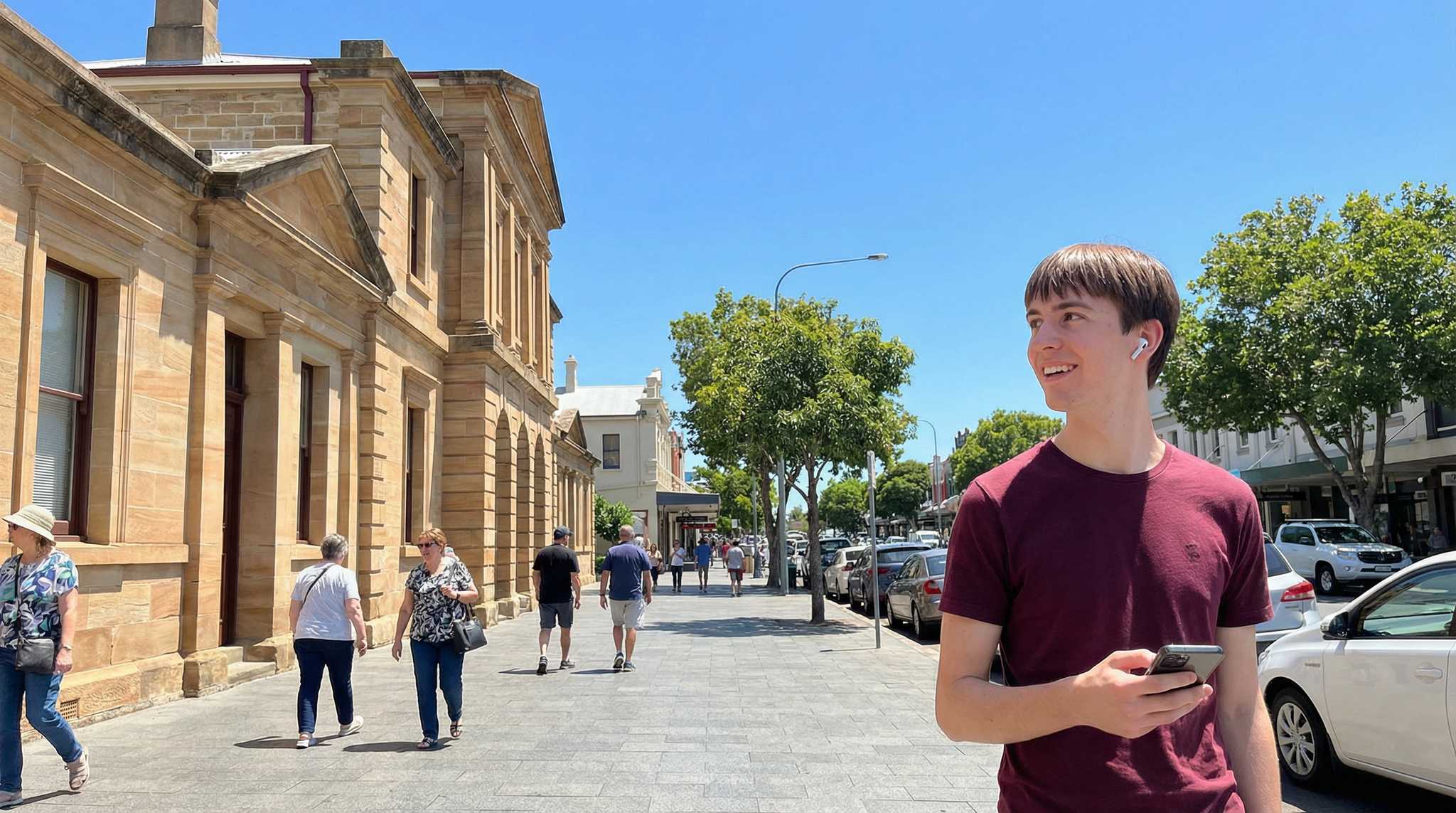
伊普斯维奇语音导览: 时光漫步
一场秘密的政治丑闻曾回荡在伊普斯维奇优雅的街道上,然而很少有当地人知道哪个地标保留着它的痕迹。这个自助语音导览将带你深入历史表层之下,揭示隐藏的戏剧性和近在咫尺的建筑奇迹——那些大多数游客不经意间走过的地方。 在塑造昆士兰未来的激烈辩论中,克莱蒙特宽阔的阳台庇护了哪些秘密?谁从昆士兰国家银行的深处消失,只留下一个神秘的签名?为什么当地人坚称威廉·约翰斯顿的商店下方有一个古老的酒店地窖,低语着火灾和禁忌聚会的故事? 漫步在这座城市中,囚犯、政客、银行家和旅店老板的影子将跟随你的脚步。每个角落都充满了新的紧张气氛、未被发现的遗迹和等待被揭示的百年谜团。 准备好揭开伊普斯维奇庄严外墙下隐藏的秘密了吗?你的冒险现在开始。
导览预览
关于此导览
- schedule持续时间 40–60 mins按照自己的节奏
- straighten4.0 公里步行路线跟随引导路径
- location_on
- wifi_off离线工作一次下载,随处使用
- all_inclusive终身访问随时重播,永久有效
- location_on从 克莱蒙特, 伊普斯维奇 开始
此导览的景点
Ah, here we are at our first stop, Claremont! To spot it, look out for a charming single-story Georgian-style stone villa. It’s got a wide, inviting verandah with tall, white…阅读更多收起
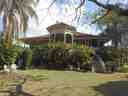
Ah, here we are at our first stop, Claremont! To spot it, look out for a charming single-story Georgian-style stone villa. It’s got a wide, inviting verandah with tall, white pillars wrapping around the house. The roof is pitched and adorned with a few cute little chimneys poking out. Claremont, located at 1A Milford Street, Ipswich, is more than just a pretty face. Built in 1857, it's like the James Bond of Ipswich - full of history and mystery. Designed by William Claydon Wakefield, it originally belonged to John Panton, a businessman and politician who must have juggled his responsibilities while sipping tea on that lovely verandah. Now, John Panton had to sell the house in 1862 due to financial difficulties (we’ve all been there, haven’t we?). The buyer? George Thorn, a former Superintendent of Convicts and quite the political player himself. His son, George Thorn Jr., even became Premier of Queensland while living in Claremont. Imagine living in the same house where Queensland’s big decisions were made, now that's a fun fact to impress people with! To add a dash of archaeological intrigue, beneath these very grounds might lie physical evidence of the site's first European use, dating back to when it was called Limestone Station. Convicts once roamed here, quarrying limestone with huts and a lime kiln nearby. Talk about living on top of history! Over the years, Claremont was sold, altered, and even used as a boarding house. But no matter the changes, this villa has retained its charm and continues to be a significant piece of Ipswich’s historical tapestry. So take a good look at this grand old dame as we move on to our next stop!
打开独立页面 →As you walk along Brisbane Street, keep an eye out on your right for a charming row of three two-story brick buildings. You'll know you’ve found William Johnston’s Shops when you…阅读更多收起
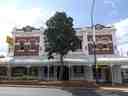
As you walk along Brisbane Street, keep an eye out on your right for a charming row of three two-story brick buildings. You'll know you’ve found William Johnston’s Shops when you see their distinct architectural features: two gables on the right side, iron lacework balconies with ornate detailing, and a brick façade that boasts a lovely interplay of red and beige hues. Below these balconies, you'll notice awnings that shield the shops and give a hint of Victorian-era charm. William Johnston's Shops are a heritage-listed row of three shops that have stood majestically at 93 Brisbane Street, Ipswich, since their construction between the late 1870s and 1893. The shops were added to the Queensland Heritage Register on October 21, 1992. The story starts in 1876 and 1877 when William George Johnston purchased two adjacent pieces of land on Brisbane Street. The land previously hosted the Clarendon Hotel, which, following a dramatic event of fiery destruction in 1875, left a blank canvas for Johnston’s vision. William Johnston didn't waste any time, using a £400 mortgage from the Ipswich and West Moreton Permanent Benefit Building and Investment Society to fund the construction of a two-story brick building in 1877. Interestingly, before the fire, the site was home to the Queens Arms Hotel, established by George Thorn around 1843/44. The hotel was renowned for its fantastic hospitality, shadows of which perhaps linger under today's structure. Beneath these 1877 buildings, some locals like to believe that the cellar remains from the original Queens Arms Hotel, potentially making it the oldest surviving structure in Ipswich, although concrete proof is absent. After Johnston’s first brick shop was constructed, it found a new tenant as Dan Kennedy opened the Victoria Hotel between 1883 and 1891. Over the years, the adjacent shops were believed to have been built around the 1880s, appearing in photographs as early as the 1893 flood. The shops transitioned through various hands and purposes, standing the test of time and the changing tides of commerce. Today, they remain a testament to Ipswich's rich commercial history from the bustling late 19th century to now. If those walls could talk, they’d certainly tell some fiery, yet fascinating tales!
打开独立页面 →
再显示 11 个站点显示更少站点expand_moreexpand_less
To spot the former Bank of Australasia, look to your left as you approach 116A Brisbane Street. You're looking for a grand, single-story building that's a real gem of historic…阅读更多收起
To spot the former Bank of Australasia, look to your left as you approach 116A Brisbane Street. You're looking for a grand, single-story building that's a real gem of historic architecture in a classic revival style. The building's facade is adorned with three large arched windows featuring 'Indian Mehfil' signage, and you'll notice the intricate balustrade along the rooftop. The building's color is a warm beige, which makes it pop against the bright blue Queensland sky. Alright, let's dive into some history! The Bank of Australasia is a true survivor, standing tall since 1878 when it was designed by Reed & Barnes. Originally built on the corner of Brisbane and Nicholas Streets (right on the bones of the old St Paul's Church!), this building has worn many hats over the years. Initially, it served as a bustling bank. But come 1943, it was time for a career change. After a stint of standing empty and considering early retirement, it was snapped up by the Ipswich City Council. The building then enjoyed a vibrant phase as shops and even a tourist information centre. These days, it’s cosying up to some spicy curries as home to the Indian Mehfil Restaurant. What makes this building special? Well, it’s a prime example of 19th-century bank architecture, with an attached manager's residence - a posh combo if you ask me! It's like a historic encore, echoing the evolution of banking services in Queensland. And let's not forget its visual charm; it's a finely detailed example of revival classic commercial architecture, making it a key player in Ipswich's historic streetscape. So, as you stand here, take a moment to appreciate this heritage-listed beauty, still proudly flaunting its remarkable aesthetic and rich history. Isn’t it amazing how a building can wear so many hats through the years? Now, onward to our next stop! Keep your curiosity fueled - we've got more stories to uncover!
打开独立页面 →Alright, you should now see the Railway Signal Cabin and Turntable on your left! This structure stands out with its three-storey timber build, white weatherboard exterior, and…阅读更多收起
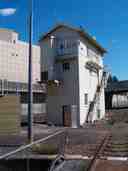
Alright, you should now see the Railway Signal Cabin and Turntable on your left! This structure stands out with its three-storey timber build, white weatherboard exterior, and multiple windows. The cabin looks a bit like a narrow house, perched right next to the railway tracks. It also has an external staircase clinging to its side, definitely hard to miss. Give a wave as you pass by! Now, onto the fun facts! The Railway Signal Cabin and Turntable is heritage-listed and can be found near the Ipswich railway station on Ellenborough Street. Built between 1881 and 1895, this cabin and its nearby locomotive turntable played vital roles in Queensland's railway system. Added to the Queensland Heritage Register on May 27, 2005, this spot has quite the historical track record. Why is this place so special, you ask? Well, the signal cabin houses an 1881 McKenzie and Holland mechanical interlocking signal frame, which ensured trains didn’t have surprise meet-ups on the tracks (and we all know how awkward unplanned meet-ups can be). The locomotive turntable and semaphore signal were essential parts of the Ipswich railway station's infrastructure. Back in the day, Ipswich, being a provincial center, was where Queensland's railway adventure began. The goal was to link the productive agricultural regions like the Darling Downs with major coastal cities. The first railway section, from Ipswich to Grandchester, kicked off in 1865. Initially, the Ipswich railway station was in the heart of town on the south side of the Bremer River. The line had to wiggle its way around various terrains and bridges, ensuring seamless connectivity. Fun fact: there were three different railway stations here, all located near the same site! Each upgrade helped improve the flow and efficiency of the railway system. Before fancy electronic systems, train collisions were avoided by using a Staff and Ticket relay system, where a physical token was passed between trains. Imagine it as a super-early version of a relay race baton, but with much higher stakes! Today, train control is centralised and much more high-tech. And don’t forget, the interlocked yard ensured that train signals and points-the tracks that change a train’s direction-were perfectly coordinated to avoid crashes. McKenzie and Holland, one of the earliest signaling contractors in Britain, were pros at this kind of innovation. Well, that wraps up our signal stop! Onward, railway explorers!
打开独立页面 →As you approach this stunning landmark, look for a large brick church with Gothic Revival architectural features. You should see a building with pointed arches, tall narrow…阅读更多收起
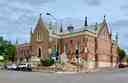
As you approach this stunning landmark, look for a large brick church with Gothic Revival architectural features. You should see a building with pointed arches, tall narrow windows, and numerous spires reaching towards the sky. It’s hard to miss with its prominent brickwork and intricate details. The red doors and the arched windows will guide you to St Paul's Anglican Church. Now, let’s dive into the rich history of this place. St Paul's Anglican Church, located at 124 Brisbane Street in Ipswich, is a heritage-listed gem, built between 1855 and 1929. This church rejoices in its Gothic Revival architecture, with meticulously supervised construction by William Wakeling, and likely designed by Edmund Blacket. The site initially hosted Church of England services in a modest timber building on Ellenborough Street. A brick church came next in 1850 at the corners of Brisbane and Nicholas Streets as a temporary structure and what a spot it found in Ipswich's bustling social and economic scene. By laying the foundation stone of this impressive structure in 1855, the community created not just a place of worship but a potential cathedral for a hopeful bishop. Over the decades, the church expanded and underwent several architectural enhancements, with side aisles added by F. D. G. Stanley in 1888/89 and western extensions by George Brockwell Gill in 1929. What started as a simple brick church cornered at Brisbane soon bloomed into a cultural and architectural marvel. St. Paul’s also houses a historical treasure - a pipe organ imported from England in 1860, the first of its kind in the colony. Reno and repair works over the years may have altered it, but the original essence remains. A memorable feature in the church’s northeast corner is the Martyrs Chapel, honoring New Guinea martyrs, including Mavis Parkinson, with intricate memorials and a unique cross from Tokyo’s Bishop, showing the church’s far-reaching legacy. A fun fact: Ipswich was in fierce competition with Brisbane at the time, and this church was hoped to attract the new bishop, potentially making Ipswich a cathedral town! If only bricks could talk. Enjoy your visit here, and look out for the ornate stained glass windows and numerous memorials that tell stories from Queensland history. Keep an eye out for the Celtic cross and the commemorative artifacts around the church which reflect its past, like the memorial to John Panton and the commemorative baptismal font bowl for Anna MacArthur. Now, off you go to soak in the history and beauty of St. Paul's. It's not only an architectural marvel but also a window into the rich heritage of Ipswich! Enjoy!
打开独立页面 →You're now approaching St Paul's Young Men's Club, which you'll find at 48 d'Arcy Doyle Place, formerly known as Nicholas Street. Look for a charming brick building with painted…阅读更多收起
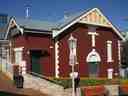
You're now approaching St Paul's Young Men's Club, which you'll find at 48 d'Arcy Doyle Place, formerly known as Nicholas Street. Look for a charming brick building with painted cream trims, it’s hard to miss! The entrance is to the upper floor, and you’ll notice the unique arched windows on the western elevation, flanked by rectangular ones on the south side. The vibrant brickwork and traditional design with ridge ventilators make it stand out. Look for the sign that reads "Ipswich Art Gallery" as a sure indicator. St Paul's Young Men's Club is a heritage-listed former clubhouse, now functioning as an art gallery. Designed by George Brockwell Gill and built in 1911, this building was originally aimed at fostering the spiritual, intellectual, and physical development of young men. Imagine a place with a reading room, a gymnasium, a billiard room, and even a piano for "wholesome exercises for body and mind." It sounds like a fun hangout spot, doesn’t it? The building has served various purposes through the decades: during World War I, it became a Soldiers' Rest Room, and later in 1939, Ipswich City Council bought it and housed council engineering staff. It’s been home to the city library and eventually was transformed into the Ipswich Regional Art Gallery, which now displays a mix of contemporary and historical exhibitions. It's fascinating to think about the multitude of activities this building has seen over more than a century. From parliamentary mock debates to being a rest room for soldiers, every brick in this building has countless stories to tell. Now, as an art gallery, it continues to be a creative and educational hub in Ipswich. And there you have it! Enjoy absorbing some art in a building that’s layered with history and charm. On to our next stop!
打开独立页面 →As you approach stop number 8, the Flour Mill, it will be on your right-hand side. Look for a large, three-story brick building with a noticeable mix of old industrial charm and…阅读更多收起
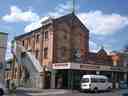
As you approach stop number 8, the Flour Mill, it will be on your right-hand side. Look for a large, three-story brick building with a noticeable mix of old industrial charm and modern adaptations. The building has a steep gabled roof, numerous windows with bricked-in tops, and an external staircase on the left side with a sign that reads “YOGA” in bright, eye-catching letters. Below the old mill structure, you’ll see signage for various shops and businesses, including one that proudly declares “Old Flour Mill.” Now, here’s the fun bit about this landmark: The Flour Mill, located at 231 Brisbane Street, joins the ranks of Ipswich’s cherished heritage with its construction dating back to 1901-1902. Designed by George Brockwell Gill, a chap with quite an eye for design, this mill was originally built for the Ipswich Milling Company Ltd. Francis Kates, who played a significant role in this venture, might have been considered a flour aficionado of his time-he built numerous mills, with this one being his eighth. Back in the day, the mill was a powerhouse of productivity, churning out 35-40 tons of flour each week! The brand they marketed was called "Snowcloud"-as fluffy and dreamy as the flour that likely poured out of those storied walls. The building hosted a variety of enterprises over time, even transforming into a car showroom in 1926 and housing a radio station, 4IP, on the top floor in 1935. Talk about versatility! One of the mill's many makeovers saw it become a lively shopping arcade and function room in 1993, courtesy of Beverley de Witt. Today, it stands as a testament to the historical and cultural tapestry of Ipswich, blending its rich past with modern uses. So whether you’re here for some on-the-go yoga or just some historical sightseeing, the Flour Mill holds a bit of Ipswich’s heart and hustle from yesteryears and today. Enjoy the view and the story!
打开独立页面 →You're approaching the grand Hotel Metropole! Look to your right - you'll spot a prominent two-storey red brick building with striking white decorative elements. You'll see the…阅读更多收起
You're approaching the grand Hotel Metropole! Look to your right - you'll spot a prominent two-storey red brick building with striking white decorative elements. You'll see the word “HOTEL” in bold, engraved on the facade above the first-floor windows. Notice those fancy arches and columns framing the central entrance? That’s classic heritage charm! Now, let’s dive into the story of this place: The Hotel Metropole is a heritage-listed gem at 253 Brisbane Street, West Ipswich. Designed by the renowned architect George Brockwell Gill and constructed in 1906, this grand old building has seen more than a century of Ipswich history. It was officially added to the Queensland Heritage Register on October 21, 1992 - quite a red-letter day for the hotel! Initially built with a rustic yet elegant design, this two-storey brick hotel became particularly interesting in 1915 when part of its surrounding property was resumed by Queensland Railways. By 1925, the brewers Perkins & Co had taken over the lease, and when they merged with Castlemaine in 1928 to form Castlemaine Perkins, this renowned structure became part of a larger hotel empire. George Brockwell Gill, the brain behind this architectural masterpiece, came all the way from London and settled in Ipswich in 1886. Among his prolific designs are the Ipswich Girls' Grammar School, the Ipswich Technical College, and the strikingly modern Walter Burley Griffin Incinerator from 1936. Gill certainly made his mark on Ipswich! Since its opening, the Hotel Metropole has been a constant, serving as a hotel and a nightclub. It had a few name changes, becoming The Harp of Erin and the Silver Fern, before reverting to its original name by the mid-2000s. As of 2015, it houses the Waghorn gastropub and Club Metro nightclub, still under the Hotel Metropole banner. So, if you're looking for a place to experience a blend of history and modern-day entertainment, you’ve found it right here! Whether you're into historic architecture, a good meal, or a bit of nightlife, the Hotel Metropole has it all. Enjoy your visit!
打开独立页面 →As you’re walking, look to your right and you should spot a charming building with a light grey corrugated iron roof that uniquely curves around the edges. It’s built into the…阅读更多收起
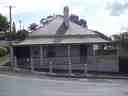
As you’re walking, look to your right and you should spot a charming building with a light grey corrugated iron roof that uniquely curves around the edges. It’s built into the hillside, so while it may initially appear single-storey from the street, it’s actually a two-level house. The house has a quaint verandah with simple square balusters and decorative posts, giving it a welcoming feel. Now, let's dive into the story of Penrhyn: Penrhyn is a heritage-listed detached house located at 103 Limestone Street, Ipswich. Built around 1879 by John Farrelly, this gem was constructed using recycled materials, which gives it a character beyond its years. Farrelly, originally from Ireland, was a man of many talents - both a builder and architect. He migrated to Australia in 1861 and eventually settled in Ipswich. This house is a lovely blend of simplicity and charm. Its design harkens back to an earlier architectural style, despite being built in the late 19th century. This is partly due to its use of old bricks and other recycled materials, a signature of Farrelly’s works. Penrhyn, nestled into the hillside of Denmark Hill, faces some quirky urban challenges. The roadway level in front of the house has been an issue since 1881, leading to its front verandah now sitting below the footpath level. Imagine complaining to the council about roadway fillings over 140 years ago! Initially rented out, Farrelly and his wife Susan moved into the house around 1884 until his death in 1904. Post his and later Susan’s death, the property changed hands many times, serving as a rental property for years. Thankfully, in the early 1990s, some conservation work restored much of its charm. The house might appear modest, but it harbors some delightful details like vaulted pressed metal ceilings, old colonial sash windows, and even fireplaces that whisper tales of the past. So, as you gaze upon Penrhyn, imagine the stories and the history that have passed through these walls, from its elegant verandahs to the charmingly old bricks. Enjoy this small but significant piece of Ipswich’s history!
打开独立页面 →As you approach stop number 11, Brickstone will be on your left. Look for a charming, two-storey house with a distinctively steep, metal roof. The roof is a standout feature, with…阅读更多收起
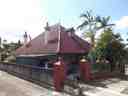
As you approach stop number 11, Brickstone will be on your left. Look for a charming, two-storey house with a distinctively steep, metal roof. The roof is a standout feature, with dormer windows peeking out like watchful eyes on three sides. You'll also spot two prominent chimneys reaching up from the roof, adding to the house's historic charm. The structure is surrounded by a solid red brick fence with green railings and an inviting front yard. Now, let's dive into the fascinating history of Brickstone! Brickstone, also known as Brixton, is a heritage-listed detached house located at 11 Murphy Street, Ipswich. Built around 1864 by the notable local builder William Hancock, this house stands proud as a relic of Queensland’s early days. It's like a Victorian-era Snapchat filter was applied to the whole house, preserving its High Victorian style from a major renovation in the 1980s. Originally, the land on which this house stands was purchased in 1861 by a local wheelwright, Mr. James Kirby Swan. By around 1864, he was already residing here, suggesting the house was built in the early 1860s. William Hancock, the builder of the house, has quite a resume. He migrated from England in 1856 and contributed significantly to Ipswich's growth, constructing numerous notable buildings, including the first railway workshops and laying pipes for the waterworks in 1877. His work is a testament to the boom Ipswich experienced during that time, spurred by coal mining and wool and cotton production. Interestingly, Brickstone wasn't just Hancock's brainchild. He lived in this house briefly in 1875. Over the years, the house saw various owners and occupants, including Hancock’s own family members. Around the 1920s, it transformed into flats, undergoing significant alterations including the closure of the attic and removal of stairs. But, fast forward to 1985, the house received a grand revival. Kirk Jensen and Peter Gelherr bought the property, reversed the flat conversion, and restored its Victorian charm, adding a set of recycled stairs and reopening the attic with delightful dormer windows. So, as you stand here admiring Brickstone, know that you’re looking at a piece of history that has weathered almost two centuries and has stories hidden in every brick and tile!
打开独立页面 →As you approach stop number 12, you’ll see Gooloowan coming up on your right. Keep an eye out for a two-storey Victorian mansion that stands out amidst well-maintained gardens.…阅读更多收起
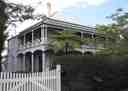
As you approach stop number 12, you’ll see Gooloowan coming up on your right. Keep an eye out for a two-storey Victorian mansion that stands out amidst well-maintained gardens. The building has a prominent, expansive verandah that wraps around both the ground and upper levels with intricate cast-iron balustrades. Supported by paired timber posts, the upper verandah has a beautiful concave curved roof covered in corrugated galvanized iron. The structure's creamy facade with green accents on the posts and shutters is hard to miss. The house is set back from the road, behind a white picket fence with distinctive Gothic-style finials. Gooloowan, located at 43 Quarry Street, is a stunning heritage-listed villa that really captures the essence of the 19th century. Designed by the talented architect Charles Balding, this magnificent house was built beginning around 1864 and was commissioned by Benjamin Cribb for himself and his second wife, Clarissa. Cribb, originally from Dorsetshire, England, came to Moreton Bay in 1849, and his entrepreneurial spirit led him to establish and nurture a successful business in Ipswich called "London Stores." After the death of his first wife, Elizabeth, in 1852, Benjamin married Clarissa Foote and the couple soon became a powerhouse together, with John Clarke Foote, Clarissa's brother, joining the business. As Cribb and Foote, the firm flourished, becoming a well-regarded name in Ipswich, providing goods and financial support, especially to farming families in the region. Gooloowan, with its lush gardens and grand circular driveway flanked by mature camphor laurel trees, hasn’t seen many changes since its original construction. Some minor modifications include rendering over the original brickwork and changing the slate roof to corrugated galvanized iron. Inside, you’d find lovely cedar joinery and rare, surviving bathrooms from the era. This mansion holds a rich history, passing through generations of the Cribb and Walker families, including prominent figures like Thomas Bridson Cribb, who served as Queensland Treasurer in 1901. The property stayed within the original family's hands until it was sold to the Isbell family in 1988. Whether you’re an architecture enthusiast or a history buff, Gooloowan is a real gem and a testament to Ipswich’s rich cultural heritage. Enjoy soaking in the grandeur and stories of this splendid villa!
打开独立页面 →As you're approaching stop number 13 on your right, keep an eye out for a charming two-storey timber house with a classic Queenslander look. You'll easily spot its distinctive…阅读更多收起
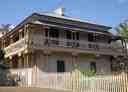
As you're approaching stop number 13 on your right, keep an eye out for a charming two-storey timber house with a classic Queenslander look. You'll easily spot its distinctive white picket fence and lush surrounding greenery. Notice the beautiful verandah balcony wrapping around the top floor, complete with intricate detailing and crisscross balustrades. The house sports a soft grey facade, with contrasting white accents and dark green trim on the columns. Now, let's talk about its history with a dash of fun! Welcome to the Central Congregational Church Manse at 21 Quarry Street! This heritage-listed beauty was designed and built in 1883 by none other than Samuel Shenton. Imagine living in a house with 12 rooms and verandahs all round - kind of like having your own private oasis! The Congregational Church Yearbook of 1883 bragged about the manse being a two-storey weather-board house, which indeed turned out to be a real stunner. It took some serious dedication - and a hefty £1221/18/7 - to bring this edifice to life. Shenton, a founding church member and architect extraordinaire, wasn’t new to this; he had already nailed the first Congregational Church building back in the 1850s. This manse isn’t just a pretty face, though. It stands as a testament to the independent spirit of the Congregational Church of Ipswich, which was formed in 1854 as a merger of necessity between Baptists and Independents. The church was Queensland’s first Congregational parish and rapidly expanded in the late 19th century without ever accepting government subsidies. Sadly, the nearby church built in 1870 met a tragic end due to a fire in 1953, but the manse, with its seamless, unchanged exterior and classic 1896 charm, is still here telling the tale. It was sold in the mid-1930s and transformed into flats, and although it lost a bit of its grounds to road works in the 1950s, the manse remains remarkably intact. Samuel Shenton, the visionary behind this structure, was quite the influential figure in Ipswich - a man of many talents and civic contributions, from architecture to politics. His legacy, including this manse, has definitely stood the test of time. So take a moment to appreciate this hidden gem of Ipswich, a fabulous gateway to Queensland's fascinating architectural and religious heritage!
打开独立页面 →As you're approaching the Ipswich Club House, it should be coming up on your right side. Look out for a grand, two-storey timber villa with distinct architectural features that…阅读更多收起
As you're approaching the Ipswich Club House, it should be coming up on your right side. Look out for a grand, two-storey timber villa with distinct architectural features that really set it apart. The building is highset, which means it's elevated on timber stumps, a common design in the Federation era. You'll notice its northern façade is quite majestic, featuring a central octagonal porch that really stands out, accompanied by a double access stairway leading up to it. The lush greenery, including palms and other garden plants, frames the house beautifully, making it hard to miss. Welcome to the Ipswich Club House, a heritage-listed beauty located at 14 Gray Street, Ipswich. This stunning villa comes with quite a pedigree. Designed by the notable George Brockwell Gill and constructed around 1915-1916, it joined the Queensland Heritage Register on 21 August 1992. Quite the VIP of buildings, wouldn’t you say? Originally built for J. P. Bottomley, a prominent butcher and pastoralist, this house was christened 'Tydfil.' Bottomley was quite the character, the youngest of 14 children, born in Yorkshire, England, and moving to Ipswich in 1884. Ever the businessman, he initially worked with Watson Brothers, but soon branched out on his own, buying pastoral land and running his very own butcher shop. Never one to sit idle, he also served on the Purga Shire Council and the Ipswich City Council, and held presidencies in multiple community organizations, including the Ipswich Show Society and the Ipswich Bowling Club. Apparently, life was a constant juggling act for Bottomley! The man behind the architectural brilliance, George Brockwell Gill, was a well-respected architect responsible for many grand designs in Ipswich, from the 1880s to the 1930s. Just take a look around Ipswich, and you'll find his fingerprint on landmarks like "Brynhyfryd," Ipswich Girls' Grammar School, and the Ipswich Technical College, among others. Benjamin Button might age backwards, but Gill’s work stands timeless. Fast forward to 1959, the house was purchased by the Ipswich Club and officially opened its doors in 1960. Throughout its history, this building has been a hub for community social events. Fittingly, it continues to serve as a venue for numerous functions today, but now with a few modern twists. They've added a bar in the front east wing and transformed the front west wing verandah into a restaurant. Despite these changes, the decorative ceilings and central hall joinery remain just as Bottomley would have remembered them, preserving a touch of the past in a contemporary space. So, while walking past this grand residence, take a moment to appreciate its storied history and architectural charm-a testament to the rich past of Ipswich. That is one impressive structure, and if walls could talk, oh the stories it could tell!
打开独立页面 →
常见问题
如何开始导览?
购买后,下载 AudaTours 应用并输入您的兑换码。导览将准备好立即开始--只需点击播放并按照 GPS 引导的路线行驶即可。
导览期间我需要互联网吗?
不需要!开始前下载导览并完全离线享受。只有聊天功能需要互联网。我们建议在 WiFi 下下载以节省移动数据。
这是导游带领的团体游吗?
不是--这是自助语音导览。您按照自己的节奏独立探索,通过手机播放音频解说。没有导游,没有团体,没有时间表。
导览需要多长时间?
大多数导览需要 60-90 分钟才能完成,但您完全控制节奏。随时暂停、跳过站点或休息。
如果我今天无法完成导览怎么办?
没问题!导览具有终身访问权限。随时暂停和恢复--明天、下周或明年。您的进度已保存。
有哪些语言可用?
所有导览均提供 50 多种语言版本。在兑换代码时选择您的首选语言。注意:导览生成后无法更改语言。
购买后我在哪里访问导览?
从 App Store 或 Google Play 下载免费的 AudaTours 应用。输入您的兑换码(通过电子邮件发送),导览将出现在您的资料库中,准备下载并开始。
如果您不喜欢该导览,我们将退款。请联系我们 [email protected]
安全结账使用 


