
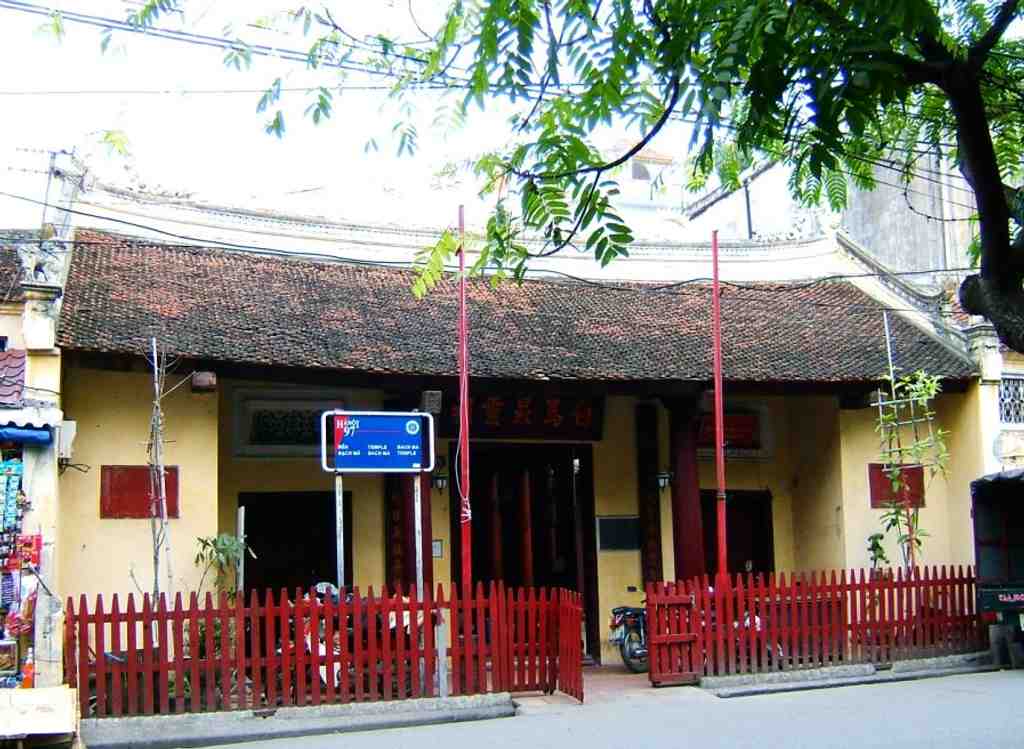
To spot Bach Ma Temple, just look for a low, yellow building with a worn red tile roof and a bright red picket fence directly in front of you-trust me, that fence is hard to miss!
Alright, ready for a legendary tale? You’re standing now at Bach Ma Temple, a spot that’s been guarding the eastern side of ancient Thang Long Citadel for over a thousand years. Imagine-long ago, this area wasn’t bustling with motorbikes and street vendors, but covered with the mysteries of old Hanoi. If you close your eyes for a moment, you might hear the echoes of chanting monks or the floating from inside.
Back in the ninth century, it was right here that people began worshipping the powerful deity Long Do, the “Dragon’s Navel”-the original guardian spirit of ancient Hanoi. But the story gets juicier! Fast forward to around the 10th century, and here comes the mighty general Dinh Bo Linh. He’s got a country to save and enemies everywhere. When his army was facing chaos, what did he do? Not call for reinforcements, but come to this very temple to pray. He promised the local god a grand ceremony and honors if he could just help out a bit. Spoiler alert: the god delivered, Dinh Bo Linh won every battle, and became known as the “King of Ten Thousand Victories.” Now if only my phone’s battery lasted as long as his luck!
Ah, but the saga isn’t over! As legend tells, after uniting the country, Dinh Bo Linh had a dream-one of those classic “peel-your-eyes-open-at-3am” dreams. In it, a god appeared and said, “Hey, I’ve helped the country, and you haven’t even said thank you!” Well, even kings have to mind their manners, so the Emperor quickly awarded all sorts of majestic titles to the spirit-Hộ Quốc Bảo Cảnh Linh Thông Tế Thế, which is a very fancy way to say “Super Protector Extraordinaire.” He made sure grand temples like this one were built or rebuilt, not just in Hanoi but also in his queen’s hometown. Talk about family loyalty!
We’re still not done-turn the clock to 1010, when Emperor Ly Thai To moved the capital here and tried to build a massive citadel. The trouble was, the walls kept collapsing and no one could figure out why. So he came to this temple to beg for a bit of supernatural help. Suddenly, a dazzling white horse burst out the front doors-no, it wasn’t a local parade-leaving hoofprints around the site. The emperor took the hint, marked out the building plan by tracing the horse’s path, and voilà! The walls finally stood solid. If only all construction projects got that kind of magical help…
This temple has gotten more facelifts than a movie star over the centuries-just look at those bold wooden columns and the delicate roof beams inspired by the Nguyen dynasty’s artistry in the 1800s. The structure is precise and elegant, the wooden frames and giant ironwood pillars holding up history itself, decorated with bold patterns and carvings fit for a god. On festival days, those supports double up as lantern hangers, bathing the whole place in a warm, otherworldly glow.
Inside, you’ll spot shrines to ancient queens, mountain spirits, ancient censers, and wooden sedan chairs that could tell a thousand tales themselves if only they had tongues. The temple even preserves artifacts and stone steles-fragile, engraved records of Hanoi’s incredible past. They’re kind of like ancient Wikipedia pages, but with a lot more style and less suspicious editing.
So here you are, standing where emperors pleaded, gods delivered miracles, and powerful spirits watched over a growing, thriving city. Even today, Bach Ma isn’t just a building-it’s a guardian, a witness, and a link to the wild stories that shaped Hanoi. When you walk past, try not to step on any invisible horse hoofprints, just in case the spirit is still around, keeping an eye-and an ear-on those who walk these timeless streets.


