
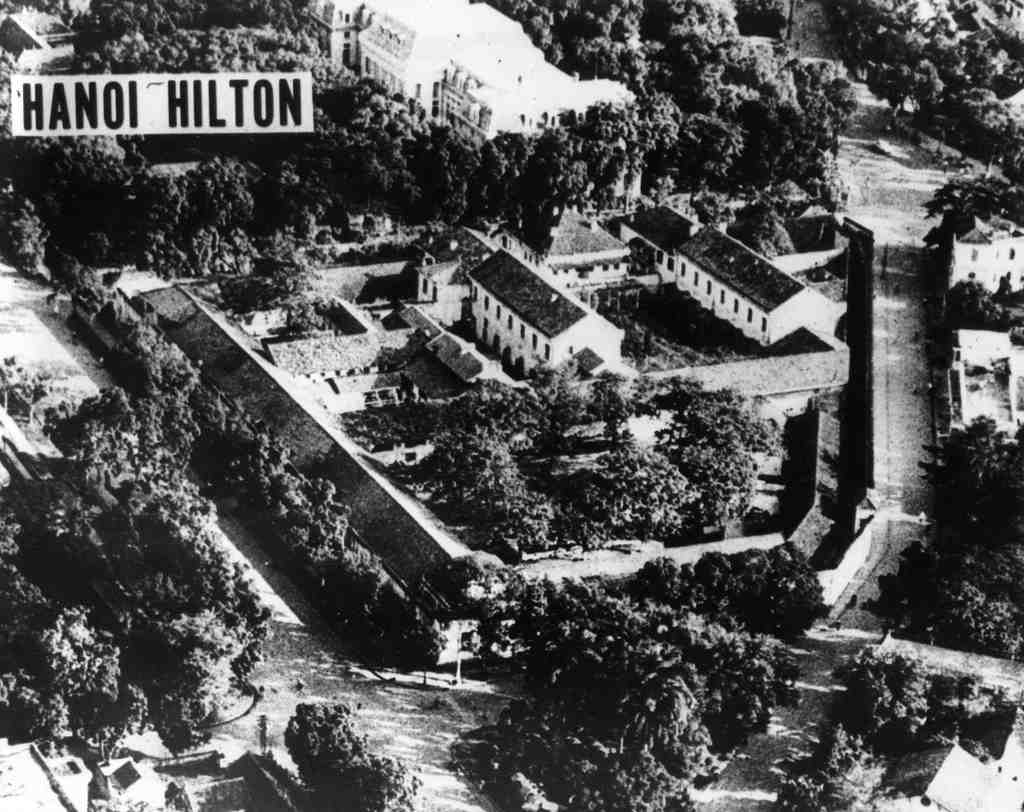
After the war, Hỏa Lò Prison was used to imprison Vietnamese dissidents and other political prisoners, including renowned poet Nguyễn Chí Thiện. While the prison has been demolished in the 1990s, its gatehouse remains intact and serves as a museum to educate visitors about its dark history.
The name "Hỏa Lò" derives from the street name, which was known for its shops that sold wood stoves and coal-fire stoves. The translation varies from "fiery furnace" to "Hell's hole" and even "stove". The French referred to the prison as Maison Centrale, meaning "Central House", a term still used for prisons housing dangerous or long sentence detainees in France.
Hỏa Lò Prison was designed to hold Vietnamese prisoners, particularly political activists seeking independence, who were subjected to torture and execution. Over the years, the prison witnessed overcrowding and inhumane living conditions. Its central urban location allowed for communication and the exchange of ideas both within and outside its walls. Many influential figures in Communist North Vietnam and Viet Minh spent time here during the 1930s and 1940s.
Following the French defeat and the 1954 Geneva Accords, the prison came under the authority of the Democratic Republic of Vietnam. It served as an educational center for revolutionary doctrine and activity, symbolizing the historical significance to North Vietnam.
During the Vietnam War, Hỏa Lò Prison became a place of misery for U.S. prisoners of war. Lieutenant Junior Grade Everett Alvarez Jr., the first American POW, arrived here in 1964. The conditions were deplorable, with insufficient food and unsanitary environments. The American POWs humorously referred to it as the "Hanoi Hilton", drawing an ironic comparison to the well-known Hilton Hotel chain.
In 1967, a new section of the prison was opened specifically for incoming American POWs, called "Little Vegas". Buildings and areas within were named after landmarks along the Las Vegas Strip, a nod to many pilots who had trained at Nellis Air Force Base near Las Vegas.
As you explore the Hỏa Lò Prison Museum, you will learn more about the experiences of those held captive here and gain a deeper understanding of the complex history surrounding this significant site.


