
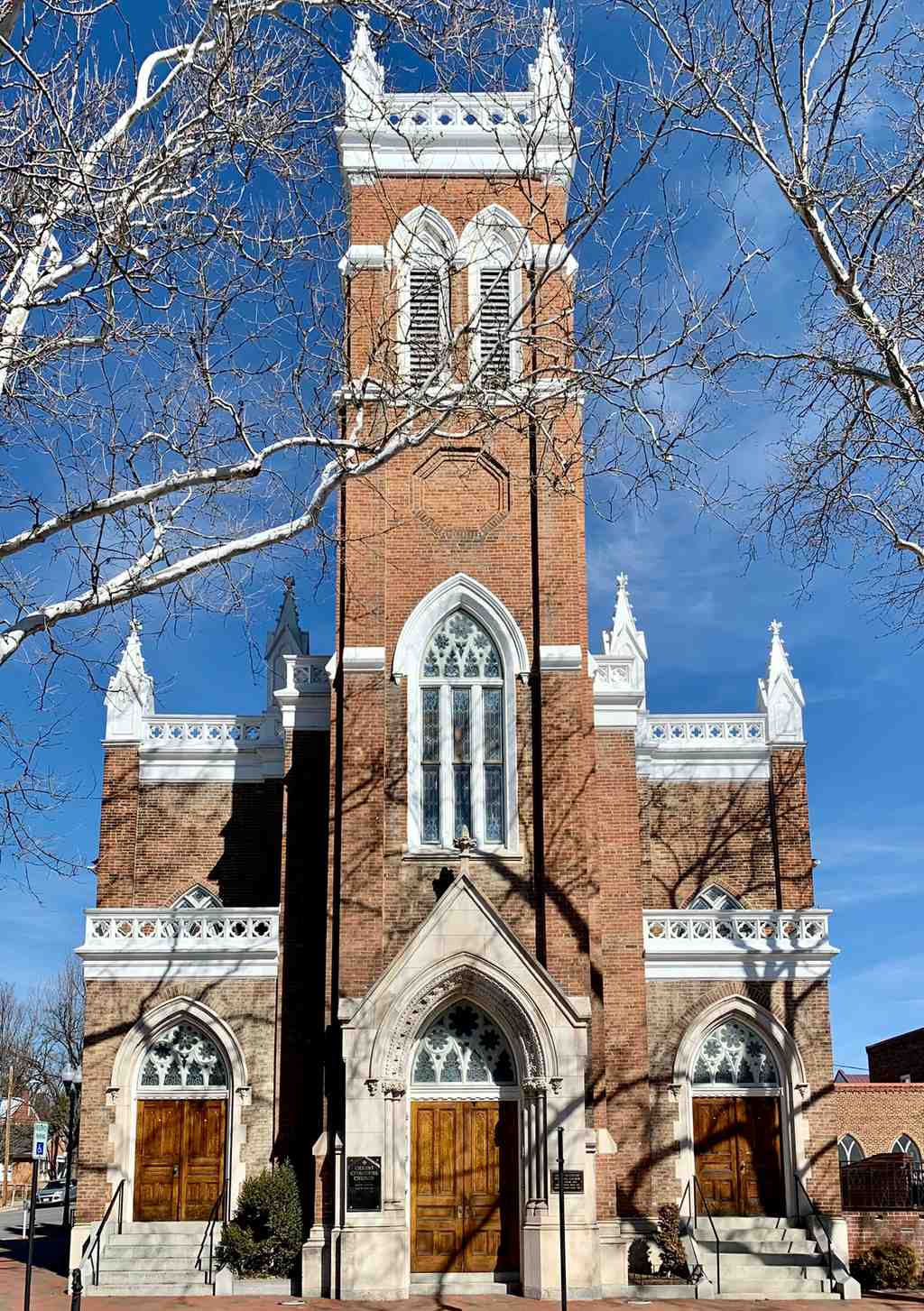
To spot Christ Episcopal Church, just look for the stunning brick building with a tall, central bell tower and beautiful pointed windows right in front of you, framed by white stone details and high Gothic spires.
Now, take a step back and let yourself soak in the atmosphere-imagine you’re standing on the same ground where history has echoed for nearly three centuries. The story of Christ Episcopal Church stretches all the way back to 1738, when this was just a frontier outpost and a dream. The very first congregation was a mix of hopeful pioneers and sturdy settlers, setting up a wooden church right here, where the sounds of axes on timber were the heartbeat of the growing town.
The church became the spiritual core of a wild and changing region-Frederick Parish once covered half the Shenandoah Valley! Picture early Winchester: Quakers from Maryland, German Lutherans, and Scots-Irish Presbyterians living side by side, each with their own dreams and songs. Anglican services here looked a little different from those across the border in Maryland, and at times, a bit of drama and controversy swirled around building chapels or paying the preacher-one vestryman even ran off with the church’s money, making for some lively vestry meetings!
When war and hardship came, Christ Church became more than just a house of worship. During the French and Indian War, church horses were sent off to help the militia, and a young George Washington, yes, that George, camped right in town. Fast forward a few decades, and the church is right in the thick of the American Revolution. The rector, Charles Mynn Thruston, joined the fight, losing an arm but returning to farm just outside Winchester. Leaders from this very congregation shaped the new nation inside these walls.
As you look up at the brickwork and Gothic stone, let your mind drift to the early 1800s, when the famous architect Robert Mills-yes, the one who designed the Washington Monument-created this striking third building, finished in 1828. The tall windows and pointed arches were the height of style. This church soon became a gathering place for some of the biggest moments in Winchester.
Stormy times were never far away. During the Civil War, the building was almost like a main character in its own right. Winchester changed hands again and again-sometimes you might see Confederate soldiers kneeling in prayer, and just weeks later, Union generals like Sheridan and Custer enjoying Christmas service! Once, this church was even used as a jail for captured soldiers. Parishioners sometimes held their own private Sunday services to avoid the sight of their Union counterparts. Through it all, the stained glass windows sometimes shattered, but the spirit of the congregation never broke.
After the war, tired but undaunted, the people returned. The women of the church ran dinners and sales to repair finances and care for the needy, and the church played a key role in helping to create the “Stonewall Cemetery” in the nearby Mount Hebron graveyard, a place for the many lost in battle. Winchester’s first girls’ school, Dunbar Seminary, and the Episcopal Female Institute were born from the dreams and determination of this parish.
Look around and you can still see the living history in every careful detail-the addition of the bell tower, the stained glass glowing by day, the careful renovations that brought in electricity, and even a modern chapel tucked inside where the original organ once played. In the end, Christ Episcopal Church stands as one of the oldest continuously used religious buildings in the county, a place where echoes of old prayers mingle with laughter from today’s community.
So as you stand outside these grand wooden doors, imagine all the footsteps that have passed across this threshold-soldiers and statesmen, preachers and schoolchildren, each with a story and a hope. And just think: if these stones could talk, what adventures would they whisper about next?


