
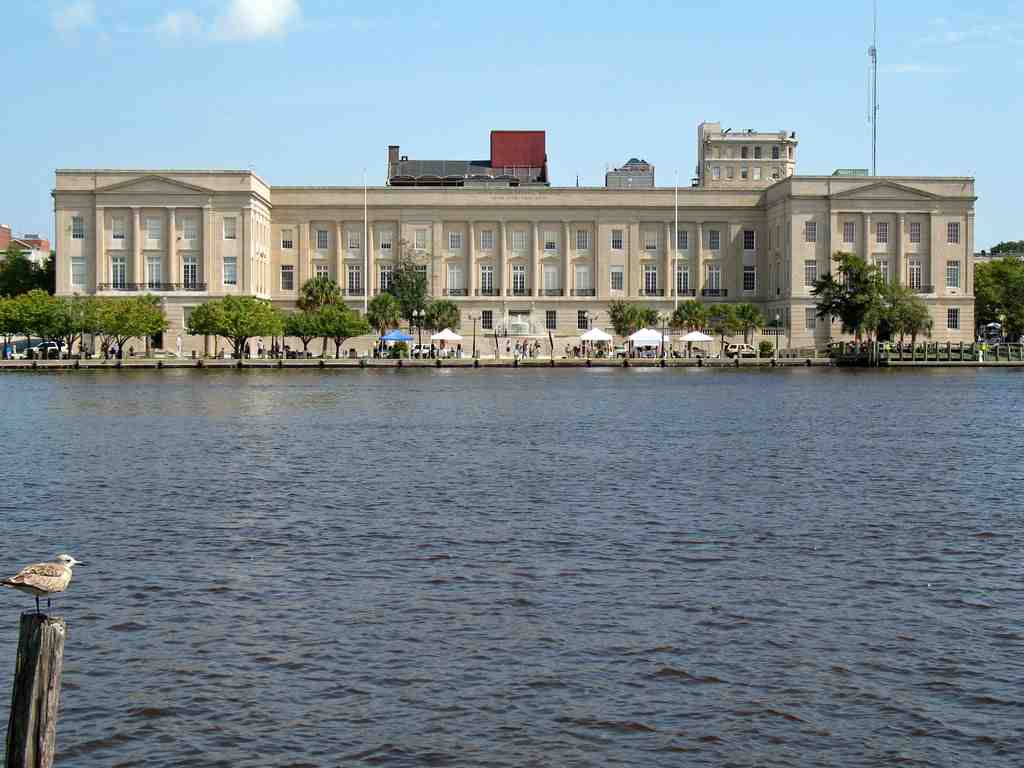
Look right across the street at that enormous three-story light sandstone building, dominated by a long row of columns and balanced by two projecting wings that frame its massive, block-like shape. It looks like a flawless monument, but getting the Alton Lennon Federal Building and Courthouse off the ground was a near disaster.
The cornerstone was laid in 1916, but almost immediately, the project hit a wall. Severe material shortages from the First World War choked off the supply chain, and then the deadly Spanish Influenza outbreak brought everything to a grinding halt. When it finally opened in 1919, it cost 500,000 dollars, which is about 9 million dollars today. The grand Classical Revival design completely dazzled the locals.
But there is always a tension here between a majestic facade and a much darker history. In 1976, the building was named for Alton Lennon, a Wilmington native and congressman. Beneath the honor lies a turbulent legacy, as Lennon was the sole Southern Democrat to vote against every major civil rights measure during his tenure.
Eventually, the building's striking exterior found a completely different life on screen, helping earn the city its nickname as the Hollywood of the East. If it looks familiar, you might recognize it from Dawson's Creek or One Tree Hill. It also famously served as the exterior courthouse for seasons seven through nine of the television series Matlock. When you think about it, those theatrical illusions are entirely fitting for a place so wrapped in drama.
The drama was not just for the cameras. For decades, the building was caught in a bizarre property dispute over its original 1919 bronze lanterns. The city had moved the heavy fixtures down to the nearby Cotton Exchange, which we just explored, back in the 1970s. But in 2015, the federal government suddenly threatened a massive lawsuit to force their return for the building's centennial.
Just a few years later, an existential threat arrived. Hurricane Florence slammed into the coast in 2018, knocking out power for weeks. Trapped without climate control, the historic courthouse was rapidly devoured by extensive, damaging mold growth. It took over five years and a 50 million dollar architectural preservation effort to finally reopen the doors in 2024.
Today, the polished halls host incredibly weighty battles. It is the center for the Camp Lejeune Justice Act hearings, where thousands of veterans are seeking compensation for decades of exposure to toxic drinking water. It is also a stage for high-profile downfalls, like local entrepreneur George Taylor pleading guilty to evading over 2.2 million dollars in taxes.
There is always more beneath the surface of this city's beautiful exterior. Let us head toward the Wilmington Historic District, a 9 minute walk away, to uncover the personal secrets hidden behind the doors of the grandest private homes.




