
Sacramento Audio Tour: Echoes of Empires, Gold & Grandeur
A state seal glistens beneath towering columns while old secrets ripple through Sacramento’s corridors of power. This is a city where every corner hides a turning point in California’s story. Start this self-guided audio tour to unlock tales most visitors never hear. Walk in the footprints of visionaries and rule-breakers as the city comes alive through whispered scandals and long-shadowed mysteries. Why did a single vote inside the State Assembly nearly change California’s fate overnight? What ghosts linger beneath the marble of the Cathedral of the Blessed Sacrament? How did a broken clock at Caltrans spark a bureaucratic legend still debated in hushed tones? Trace your path from standoffs to reverence, from rebellion to revelation. With each step the streets reveal drama and decisions that shaped not just a city but a state. Press play and chase the secrets still echoing through Sacramento’s most storied walls.
Tour preview
About this tour
- scheduleDuration 90–110 minsGo at your own pace
- straighten4.0 km walking routeFollow the guided path
- location_onLocationWest Sacramento, United States
- wifi_offWorks offlineDownload once, use anywhere
- all_inclusiveLifetime accessReplay anytime, forever
- location_onStarts at Downtown Commons
Stops on this tour
lock_open 3 free previews · 9 unlock with purchase
Look for a large, modern-looking brick building with big, squarish windows-a bit of a fortress from the future, right at the corner of I Street; you’ll spot people gathered around…Read moreShow less
Look for a large, modern-looking brick building with big, squarish windows-a bit of a fortress from the future, right at the corner of I Street; you’ll spot people gathered around outside, ready for a journey through time. Welcome to the California State Railroad Museum, where brick walls hide legends of steel, steam, and sooty faces-plus the occasional conductor with a mustache you’d swear was carrying its own ticket! Right here in the heart of Old Sacramento, step closer and imagine it’s the 1870s: the air smells of wood smoke and hot metal, the ground rumbles every time a locomotive coughs to life, and dreams-along with new, hopeful Americans-are barreling westward, chasing fortune, adventure, and maybe a little bit of gold fever. The story actually begins in the late 1930s, long before this brick marvel rose up. Picture a handful of train fanatics in the Bay Area, perched over their coffee and blueprints, dreaming big: “Let’s save history with a museum!” Well, they did more than dream-they started stashing away locomotives and rail cars, thirty in all, and convinced the State to join in. That first spark led, after decades of work, to the original passenger station museum, then, in 1981, to this sprawling, world-class home for California’s railroading past. But what’s waiting inside is more than dusty metal and faded tickets. Incredibly, the museum is home to 21 beautifully restored locomotives-a wild parade of engines, ranging from a petite Central Pacific engine built in 1862 (the Governor Stanford, named for a California bigwig and probably the only governor who could claim he’d ever climbed through a firebox) to enormous beasts of steel and power, like the mighty Southern Pacific 4294, the last of its ‘Cab-Forward’ kind. If a locomotive could wear a superhero cape, that would be the one! Step in, and the first thing you’ll “hear” is the past roaring alive: the clanging of bells, the distant whistle echoing across mountain passes. The museum’s “Sierra Scene” exhibit really sets the mood-a sprawling diorama of tough-as-nails workers hacking a railroad through ice and stone at Donner Pass in the 1860s. You can almost taste the fear of avalanches or imagine the nervous laughter as the men settled down by a campfire after a long day’s work. Of course, there’s more than just the big iron. The museum’s collection stretches to every corner of railroad life. You’ll find model trains zipping through impressively detailed landscapes-they don’t issue tickets to tiny passengers, but you can bet someone’s thought about it. There are artifacts: lanterns, brass buttons, company badges, pamphlets for railroads you never knew existed. There are even boxes and boxes of photographs-gritty, epic snapshots of the men and women whose sweat powered progress, and proof that posing for railroad pictures with a straight face is harder than stopping a runaway train. For kids (and the young at heart) there’s a special thrill-between April and October, museum volunteers run the Sacramento Southern Railroad, chugging out with visitors for a 40-minute ride along the Sacramento River. You might imagine the conductor shouting, “All aboard!” as steam swirls around your ankles, feeling, just for a moment, like you’re off to find the wild unknown. And true to its spirit, the museum is a full-on living, breathing archive. Railfans and history buffs can dig deep in the library-hundreds of books, rare blueprints, and donations from old railroaders who wanted their stories to live on. And for the digital age? There are podcasts and virtual exhibits, proof that even history’s iron horses can keep pace with the times. So, as you stand outside, think of this brick building as a treasure chest-unlock the doors, and you’ll discover the old West was louder, stranger, and faster than you ever imagined. Don’t miss your chance to step aboard! And if you start walking with a bit of a chugga-chugga rhythm, don’t worry-that’s just railroad fever. To delve deeper into the features, library and archives or the locomotives, simply drop your query in the chat section and I'll provide more information.
Open dedicated page →You’ll spot Old Sacramento State Historic Park right in front of you by looking for a row of charming, two-story 19th-century buildings with pastel colors, big wooden balconies,…Read moreShow less
You’ll spot Old Sacramento State Historic Park right in front of you by looking for a row of charming, two-story 19th-century buildings with pastel colors, big wooden balconies, and old-fashioned signs for the Central Pacific Rail Road and Huntington & Hopkins Hardware-like stepping onto a movie set from the Gold Rush! Now, take a deep breath-can you smell the old timber, feel the groan of wagon wheels over boards, and almost hear the shouts of gold-seekers and the ring of blacksmith hammers? Welcome to Old Sacramento, or as the locals like to call it, “Old Sac.” If these streets could talk, you’d get a wild tale of fortune, fire, flooding, and a dash of questionable decision-making, all sprinkled with hope and ambition. Picture it: it’s the mid-1800s and Sacramento’s rising from the muddy banks of the river, fueled by the dreams of those chasing gold and glory. Sutter’s Fort was neat and tidy, but folks realized all the action was here by the river, handy for steamboats hauling everything from pickaxes to pianos. But there was just one little problem: the place flooded so often, you basically needed a canoe to go shopping. People got so tired of soggy shoes that they literally raised the entire city-yep, streets and all-one level higher. What’s left underneath is a twisted labyrinth of tunnels and old sidewalks, where adventurous souls can now take historic tours (and maybe find a lost boot or two). By the 1960s, the glory had faded and Old Sac had gotten a bit, well, shabby. But Sacramento had a wild plan. Like a cowboy giving an old horse a brand-new saddle, they restored and rebuilt much of the district-saving historic treasures like the B.F. Hastings Building, where the mighty Pony Express once thundered in with news from the East, and the Big Four House, where railroad tycoons plotted the transcontinental line over strong coffee (and probably stronger mustaches). If you try hard enough, you might catch the whisper of deals made, secrets shared, and dreams of steel stretching across America. Almost every building you see is a survivor, rebuilt or restored after fires, floods, and a rough-and-tumble past. There’s the Lady Adams Building, California’s oldest non-residential address, standing its ground since the days when this was still the Wild West. Legendary places like the Eagle Theatre and the Morse Building draw visitors with stories of heartbreak, hope, and a lot of adventurous doctors and pioneers. On festival days, Old Sacramento comes alive in a way that could make a gold miner spit out his coffee. There’s Gold Rush Days, where the streets get blanketed in dirt, horses clop where cars usually honk, and costumed actors fill every corner. On other weekends, music spills from doorways and the air’s full of the scent of kettle corn and river breeze. Five million visitors come every year, and the place is rarely quiet: there are museum exhibits, heritage train rides, haunted Halloween ghost tours, and the steamboat Delta King, waiting at the dock with riverside adventure and a slice of cornbread. Take a good look at the Spanish-inspired wrought-iron balconies and the tall, arched windows. The style here hints at far-off cities like Havana or Seville-a reminder that California’s history is deeply intertwined with Spain, Mexico, and a dozen other cultures. Every building here is like a time capsule, inviting you to step through the door and leave the 21st century behind. If you’re lucky, you might catch a reenactor striding past in a stovepipe hat, or hear a guide retelling ghost stories that will raise the hair on your arms. Old Sacramento is stubborn, joyful, and full of surprises. It’s a place where every brick tells a tale and every corner hides a little magic-so explore, imagine, and don’t forget to watch your step, just in case you find yourself walking down a tunnel to the past! For a more comprehensive understanding of the architecture, historic buildings or the memorials, engage with me in the chat section below.
Open dedicated page →
Show 9 more stopsShow fewer stopsexpand_moreexpand_less
Directly in front of you, you’ll spot a towering cream-colored mansion with elegant rows of tall windows, ornate carvings, and a fancy rooftop dripping with ironwork-and if you…Read moreShow less
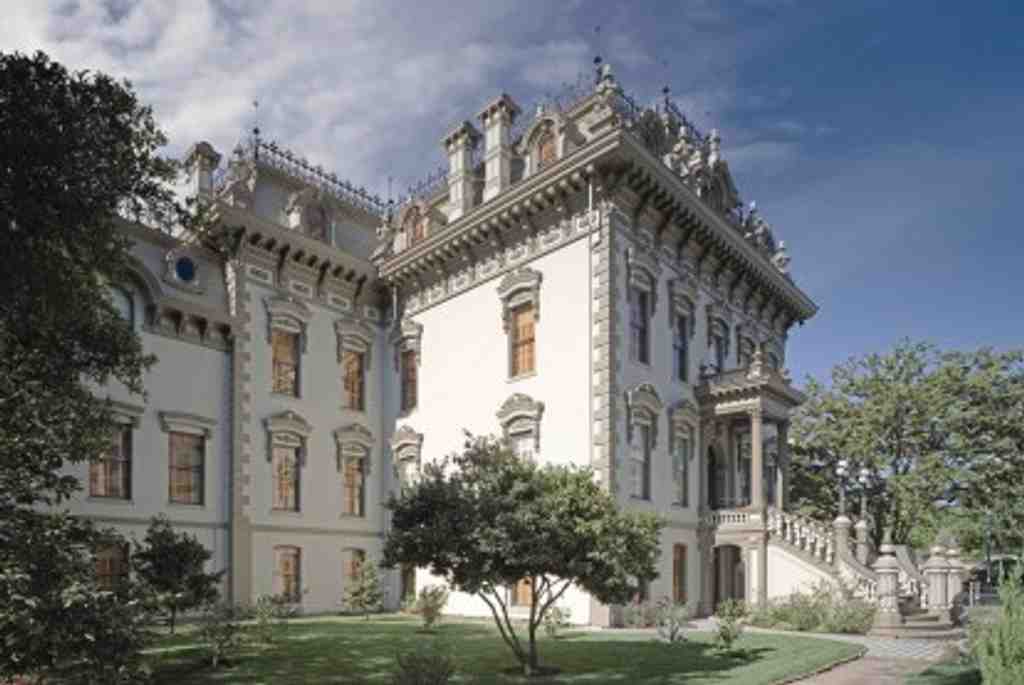
Directly in front of you, you’ll spot a towering cream-colored mansion with elegant rows of tall windows, ornate carvings, and a fancy rooftop dripping with ironwork-and if you look for the sweeping staircase winding up to the entry, you’ll know you’re at the Leland Stanford Mansion. Now, let’s picture Sacramento in the middle of the 1800s: dusty streets, clapboard houses, and a whole lot of muddy shoes. Suddenly, this grand mansion appeared-built in 1856 by a successful merchant named Shelton C. Fogus. Back then, the place looked nothing like it does now. Imagine it as a stylish but simple two-story house, standing proud among the city’s growing chaos. But soon, it was ready for a bigger story. Enter Leland Stanford-the railroad tycoon, soon-to-be governor, and the man who really knew how to shop real estate bargains. He swooped in during 1861 and bought the home for just $8,000 (that’s what you’d pay for a used car today, adjusted for inflation of course), and almost immediately, the mansion became California’s power center. The halls buzzed with political secrets and railroad deals. Stanford may have been the governor, but sometimes even he couldn’t avoid Sacramento’s mighty floods. Legend has it that for his inauguration in 1862, he had to row a boat straight to the mansion’s steps-imagine the splashy headlines for that one! Not keen on wet feet, Stanford called in the builders to hoist the house a whopping twelve feet higher. And why stop there? He topped it with extra stories and a fashionable Mansard roof, expanding it from a cozy 4,000 square feet to a sprawling 19,000, all in the glittering French Second Empire style. It must have felt like walking out of Sacramento and into a Parisian dream whenever you set foot on those floors. The Stanford family wasn’t just about glitz, though. After Leland’s passing, his widow Jane Stanford donated the mansion to the Roman Catholic Diocese, turning it into a safe haven for orphaned children. For much of the 20th century, the mansion was filled with the voices and laughter of youngsters, transforming the halls of power into a home for those who needed it most. The building bravely survived a fire, changes in caretakers, and a few awkward teenage years as a residence for high school girls. By the late 1970s, California recognized its value and rescued it again, this time for the whole state to share. It took a heroic $22 million face-lift (now we know where politicians get their style tips), but the mansion finally opened its doors to visitors in 2005, looking just as splendid as in its 1870s heyday. With its restored grand staircase, shimmering chandeliers, and echoing high ceilings, the mansion today is not just a California State Historic Park, but also the official spot where the governor hosts leaders from around the world. So whether presidents are strolling the gardens or school kids are marveling at four stories of fancy finery, the Leland Stanford Mansion is always ready for its next chapter-and maybe yours, as you stand right here outside its storied doors!
Open dedicated page →To spot the California State Library, look for a large, modern building with light gray stone walls, striking green-tinted windows, and a unique round, open structure perched on…Read moreShow less
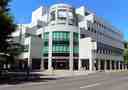
To spot the California State Library, look for a large, modern building with light gray stone walls, striking green-tinted windows, and a unique round, open structure perched on top-right there in front of you. Picture this: the year is 1850, and California has just become a state. That’s when the California State Legislature-impressed with their own handwriting, probably-decided it was time for a proper library to collect and protect every scrap of California’s growing story. Fast forward to today, and you’re standing in front of a hub that holds more facts, secrets, and stories than the world’s biggest trivia night. On a typical day, the glassy walls all around you reflect sunshine and the quiet determination of researchers, librarians, and people who have just realized their printer is out of ink. Inside, you’ll find not just rows and rows of books but a crossroads for California’s cultural heritage-an alphabet soup of information from ancient maps to the wildest city directories. This is where the state’s biggest questions meet their answers and some genius might have finally figured out how to spell “Sacramento” without autocorrect. What makes it even more interesting? This library isn’t just for dusty old books. It’s a treasure chest, providing help to every public library in the state-a bit like being the friendly older cousin who always helps with homework. The Library funds California Revealed, which is a sort of digital Indiana Jones adventure where old photos, rare films, and forgotten voices are preserved, digitized, and made public so you can browse them from anywhere. Pioneers’ letters, newspapers from wild days, even the world’s largest public haiku archive outside Japan-all are kept right here or within the library’s sprawling network. Someone, somewhere, has probably written a haiku about losing their library card, and it’s safe thanks to these folks. Now, here are a few things you wouldn’t expect. Take the Bernard E. Witkin State Law Library-this branch is a fortress for every important law and opinion, from historic court decisions to current must-know statutes. If anyone ever wanted to settle the great debate of whether a hot dog is a sandwich, you’ll probably find a legal argument about it here. Just next door, there’s the Braille and Talking Book Library, part of the national network serving people who can’t use regular print. Since the 1930s, this division has made sure everyone in Northern California has access to books-whether they’re read with fingers or ears. Special players are available, and the reading room is stocked with helpful devices, from magnifiers to scanners that talk more than a game show host. The California History Room is like a detective agency for the past. Need an old phone book for a deep dive into your family tree? Wondering what happened in Gold Rush-era Sacramento on a Friday night? This is where you get answers, and you might even stumble into the world’s biggest North American haiku collection while you’re digging. So don’t be surprised if someone is whispering short poems about the weather. Reports for California lawmakers come from the California Research Bureau, which sounds fancy but basically means these folks answer the government’s trickiest homework questions. The Government Publications section is a depository for both state and federal documents-stacks upon stacks of booklets and papers that keep democracy running and help you find out just how many times someone proposed building a giant rubber duck in the Capitol fountain. If you hear someone excited about federal grants or new technology, that would be the Library Development Services Bureau. These legendary helpers direct funds to support local libraries, improve access, and even run literacy programs statewide. Talk about team spirit-if libraries had cheerleaders, they’d be leading the parade. And for genealogy fans or anyone who loves old books? The Sutro Library in San Francisco rounds out the team. It’s loaded with rare documents, maps, and histories that track families from all over, inspired by the collection of Adolph Sutro-a man who really knew how to give a memorable housewarming gift. So take a moment and soak it all in-you’re at California’s information crossroads: a place for everyone, where the best stories are carefully kept and always shared.
Open dedicated page →Here you stand in front of the notorious Caltrans headquarters, Sacramento’s very own nerve center for all things on wheels, rails, and just about anything that moves Californians…Read moreShow less
Here you stand in front of the notorious Caltrans headquarters, Sacramento’s very own nerve center for all things on wheels, rails, and just about anything that moves Californians around. If it has ever taken you three hours to cross the Bay Bridge or five minutes to fly down the Pacific Coast Highway, you can tip your hat-right here-to this building! Let’s wind the clock all the way back to 1895. Picture a wild California where roads are no more than dusty, lumpy dirt trails, and some poor county officials scratching their heads, wondering how to keep their wagons from getting stuck after a drizzle. Three commissioners are given the job to investigate these wobbly roadways. Their solution? They decide California should have an actual state highway system! The Bureau of Highways is born, replaced a few years later by the rather serious-sounding Department of Highways. Even with all that good intention, progress chugged along at the average speed of a mule cart because of bad politics and even worse budgets. Fast-forward to 1910: the people finally tired of bumping along muddy roads and voted in an $18 million bond to really get this show on the road. Their very first highway? A nice stretch of El Camino Real, which would eventually become part of California State Route 82-history made on those first smooth miles. In 1912, something extraordinary happened. This upstart agency founded a Transportation Laboratory before it was cool, started organizing teams regionally, and built headquarters up and down the state-from Willits to Los Angeles. Suddenly, the dream of seamlessly zipping across this giant state didn’t seem so far away. A year later, everyone who owned a car had to cough up for vehicle registration, and-presto!-highway maintenance could get off the ground, too. By 1933, the legislature decided the state needed more roads-thousands more miles, in fact. But it wasn’t until after World War II, with the Collier-Burns Highway Act of 1947, that California’s highways got the funding boost they desperately needed. Imagine a time when gas taxes soared from three cents to a shocking four-and-a-half cents a gallon. Outraged drivers grumbled, maybe, but thanks to this revenue, California paved the way for the legendary “Golden Age” of highways from the 1940s through the 1960s. Nearly all the highways you know today-Interstate 5, Highway 101, and all the rest-either sprang up or got serious makeovers during this heady era. Caltrans became a place of firsts. They painted those famous yellow and white centerlines that save us from honking fender-benders. They created the first four-level stack interchange, the kind that makes every out-of-town driver wonder where to go next. If you’ve ever had your tires bounce over those Botts’ Dots-yep, the raised pavement markers-thank Caltrans innovation for the “road-plink-plink!” But it wasn’t always a smooth ride. In the 1970s, the agency hit some speed bumps with declining funds, rising maintenance costs, and growing calls for cleaner, quieter, and safer roads. A 1971 earthquake literally shook Caltrans’ world-leading to new design standards so our bridges stay standing! Environmental laws came along, and suddenly Caltrans was juggling not just asphalt and steel, but air quality, wildlife, and archaeology. They became stewards not just of movement, but of California’s environment and history. Today, Caltrans is split into twelve regional districts, but the mothership remains here in Sacramento, right where you’re standing. Fun fact: Their mission is to “Provide a safe, sustainable, integrated and efficient transportation system to enhance California’s economy and livability.” That’s a mouthful, but basically, it means they’re here to get you where you want to go-safely, efficiently, and with a surprisingly stylish stack of paperwork. So next time you’re cruising down the highway, caught in traffic, or marveling at a high-speed Amtrak train, remember that the invisible hand guiding you home might just be busy inside this building, making California move.
Open dedicated page →You’re now standing in front of where California’s laws come to life-the California State Assembly. Picture this: the majestic Capitol rises before you, and through those very…Read moreShow less
You’re now standing in front of where California’s laws come to life-the California State Assembly. Picture this: the majestic Capitol rises before you, and through those very doors, everyday people step inside as Assemblymembers with the weighty job of representing nearly half a million Californians each-more than any other state lower house in the country. That’s a bigger audience than many pop stars can claim! Now, the Assembly is the “lower house” (think of it as California’s legislative launchpad) and works alongside the more “senior” State Senate. Since 1879, no one’s added more chairs, so only 80 lucky folks get in. Election Day here is almost a game of musical chairs-every two years, all 80 seats are up for grabs, so a lot of handshaking and baby-kissing goes on. Members can serve up to 12 years in Sacramento, but don’t get too comfy; your parking spot might change fast. Inside, the Assembly Chamber is dressed up in rich green tones, inspired by the British House of Commons. If you peer through the windows, you might spot the striking "E"-shaped dais-the heart of the room-where the Speaker reigns supreme. Democracy doesn’t just happen; someone has to keep things moving! The Speaker, elected by the biggest voting bloc, manages who talks, when votes happen, and who gets which office. Right now, Democrat Robert Rivas holds the gavel, and his team, including Cecilia Aguiar-Curry and James Gallagher, helps steer the good ship Assembly. Above the dais, Abraham Lincoln’s portrait keeps a watchful eye, making sure everyone remembers: legislatorum est justas leges condere-“It is the duty of legislators to pass just laws.” Latin may be a dead language, but fair laws keep things lively. The Assembly runs on more than debates and votes. The Chief Clerk is like the school principal, keeping records, wrangling paperwork, and publishing the Daily Journal-a sort of legislative diary full of motions, triumphs, and the occasional typo. And let’s not forget the Assembly’s Chaplain, Imam Mohammad Yasir Khan. He’s the first Muslim chaplain in Assembly history, offering a moment of calm amidst the legislative storm. And guarding order since 1849, the Sergeant-at-Arms and their team ensure no food fights, even during the tensest debates. To become an Assemblymember, you need to be a U.S. citizen over 18, a registered voter, and live in your district for a year-just enough time to discover the best taco shop on Main Street. With supermajorities sometimes leading to dramatic showdowns (and perhaps a few eye rolls), every session is a little bit politics, a little bit pageantry, and plenty of passion. So next time you see the news from Sacramento, remember the plot twists, centuries-old traditions, and a cast that’s always changing-but the drama? That’s as old as California itself. Want to explore the leadership, terms of office or the meeting chamber in more depth? Join me in the chat section for a detailed discussion.
Open dedicated page →To spot the Senator Hotel, look for a grand cream-colored, nine-story building with rows of tall windows and elegant arches along the bottom, stretching along the corner of 12th…Read moreShow less
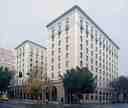
To spot the Senator Hotel, look for a grand cream-colored, nine-story building with rows of tall windows and elegant arches along the bottom, stretching along the corner of 12th and L streets right across from the State Capitol. Alright, welcome to the legendary Senator Hotel-a place so famous for political secrets and high-society drama that if these walls could talk, Sacramento might have even more laws on the books! Imagine you’re standing here in the 1920s, looking up at a brand-new $2 million masterpiece inspired by the grand Palazzo Farnese in Italy. The air is thick with anticipation, and the marble-like peach-colored terra cotta arches line the sidewalk, echoing with footsteps and the buzz of lively conversation. This hotel didn’t just serve as a place to catch some sleep-it was Sacramento’s beating political heart for over fifty years. Politicians, bigwigs, and lobbyists would sit right in the lobby, making deals so fast that if the walls had ears, the walls would be millionaires by now! The whole place was styled for intrigue: two tower-like wings, connected by a gorgeous archway-covered lobby that once shone with gilded blue ceilings and winding staircases of pastel-painted ironwork. Picture walking through grand hand-painted doors, greeted by the distant sound of a jazz band floating from the Empire Room. Speaking of jazz, if you time-traveled back to the hotel’s heyday, you could have caught a show with “The Syncopating Senators” or even Stan Kenton’s sometimes-raucous orchestra. But music was just a side act-the real symphony played out in smoky corners as California’s most notorious power broker, Arthur Samish, clinched lucrative deals from his personal suite upstairs. The lobby-oh, that lobby-once saw heavyweight boxer Max Baer showing off his latest sweetheart, and in the bar, whispers of the abdication of Britain’s King Edward VIII swirled beneath a controversial mural that had the whole town debating decorum. Just outside, it wasn’t all politics and cocktails. You might see silent film star Buster Keaton and his crew rushing through in 1927, or Charles Lindbergh being honored for crossing the Atlantic in his plane. And upstairs, at random moments, you’d find Martin Luther King Jr. resting before a speech, or a young Joan Didion nervously auditioning for a role that could change her life. There's a mysterious hum in the air, like history itself breathing softly in the hallways. During the post-war boom, the Senator Hotel hosted feasts in the Peacock Room (where, by the way, men were not the main event) and grand banquets in the Roman Hall. Governors Jerry Brown and Ronald Reagan, plus presidents like Nixon and Carter, all visited-sometimes for a speech, sometimes maybe just for the Empire Room’s famously long bar. But not all tales end in gold. By 1979 the hotel had become a legend of its own, but one hampered by almost 80 building code violations. The doors slammed shut, windows were covered, and Sacramento suddenly had no great historic hotel left. Yet, as you can see around you, the story didn’t fizzle out. In the 1980s, a sweeping renovation turned this old venue into the Senator Hotel Office Building-a perfect place for modern-day powerbrokers to eavesdrop on government via squawk-box, still just steps from the Capitol. Standing outside right now, take a deep breath and gaze up at the arches. Imagine the laughter, the arguments, the music, and the ambitions that once filled every marble echo. Who knows-walk close enough, and maybe you’ll still catch the faint sound of a deal being made or a jazz band warming up. In a city that loves its secrets, the Senator Hotel might just be the biggest storyteller of them all!
Open dedicated page →Look for a large, five-story building on the corner with rows of tall arched windows, decorative columns, yellow-brown brick, and bright green awnings along the street level-right…Read moreShow less
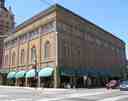
Look for a large, five-story building on the corner with rows of tall arched windows, decorative columns, yellow-brown brick, and bright green awnings along the street level-right at the intersection, you can’t miss those arches and the building’s stately, old-school vibe. Now that you’re standing outside the Sacramento Masonic Temple on J Street, let’s time travel together-don’t worry, no secret handshakes required! Picture yourself back in the early 1900s, when Sacramento was buzzing with ambition and local architect Rudolph Herold was sketching the grand dreams that would soon become the Masonic Temple. Construction started in 1913, and when the doors finally opened in 1918, this impressive building looked just as you see it today. Honestly, if buildings could brag, this one would be the humblebrag champion, because it remains nearly unchanged over the last century-almost like it hit pause on its own aging process. If you peek up above the green awnings, you’ll notice those tall arched windows, framed by patterned terra cotta and decorated with detailed moldings. Each arch is capped by a keystone featuring a charming little cherub-some call them cupids-so keep your eyes open for their playful faces watching over the city. The fluted pilasters stretch all the way from the ground up to the projecting cornice, giving the Temple that sense of stretching towards something greater-maybe a secret to eternal youth? On the front, flanking the entryway, stand two full-sized terra cotta Knights Templar, keeping watch over all who pass through the segmented archway, like medieval bouncers at a very dignified nightclub. Step inside, and you’d be met with light-filled lobbies, beautiful marble stairs, and elaborate tilework underfoot. Lift your gaze and you might feel dizzy from all the layers of painted stencils and decorative moldings overhead. Shields line the walls, hinting at the Masonic brotherhood’s noble ideals. And in the very center, an Otis elevator-Sacramento’s first-waits with its original open cage, meshwork, and bronze trim. Just imagine the thrill folks felt riding that clanging elevator one hundred years ago, feeling like they’d seen the height of modern invention. On the second floor, four enormous lodge rooms open for meetings that ranged from mysterious rituals to, I assume, heated debates over who brought the best potato salad to family celebrations. With their beamed and coffered ceilings, grand windows, and walls of wood panels, each room feels like a movie set where drama and secrets might unfold-maybe that’s why the Temple has hosted everything from elegant weddings to product launches! Overhead, original sunburst light fixtures glow where Masons once gathered for ceremonies, celebrations, and the odd awkward dance at a reception. The third floor is a party waiting to happen-its vast ballroom and balcony can hold almost 500 people, all surrounded by Art Nouveau light fixtures and Moderne style terra cotta. There’s even a spot where you could, and probably should, imagine a jazz age band striking up a tune while guests twirl under the high ceiling and grand arched windows. In quieter corners are club rooms, a lady’s lounge, and even period-perfect pool tables, with matched cue cupboards and polished hardwood floors, where laughter and competition must have echoed off the walls. Even as downtown Sacramento changed around it, the Temple held steady. Its exterior remains essentially untouched, aside from some shopfront upgrades and a mural added to the west wall for California’s 150th birthday. If walls could gossip, these ones would tell stories of grand banquets, mysterious ceremonies, rambunctious parties, and the slow, patient wait for the next event. Standing here, surrounded by the energy of over a century of gatherings, you can feel the past pulse just beneath the surface. Maybe those Knights Templar are smiling because they know…some secrets just stay inside these walls. Though, if you listen closely, you might just catch an echo from the grand old days. For a more comprehensive understanding of the the architect, cherubs or the lodge rooms, engage with me in the chat section below.
Open dedicated page →


Frequently asked questions
How do I start the tour?
After purchase, download the AudaTours app and enter your redemption code. The tour will be ready to start immediately - just tap play and follow the GPS-guided route.
Do I need internet during the tour?
No! Download the tour before you start and enjoy it fully offline. Only the chat feature requires internet. We recommend downloading on WiFi to save mobile data.
Is this a guided group tour?
No - this is a self-guided audio tour. You explore independently at your own pace, with audio narration playing through your phone. No tour guide, no group, no schedule.
How long does the tour take?
Most tours take 60–90 minutes to complete, but you control the pace entirely. Pause, skip stops, or take breaks whenever you want.
What if I can't finish the tour today?
No problem! Tours have lifetime access. Pause and resume whenever you like - tomorrow, next week, or next year. Your progress is saved.
What languages are available?
All tours are available in 50+ languages. Select your preferred language when redeeming your code. Note: language cannot be changed after tour generation.
Where do I access the tour after purchase?
Download the free AudaTours app from the App Store or Google Play. Enter your redemption code (sent via email) and the tour will appear in your library, ready to download and start.
If you don't enjoy the tour, we'll refund your purchase. Contact us at [email protected]
Checkout securely with 




