
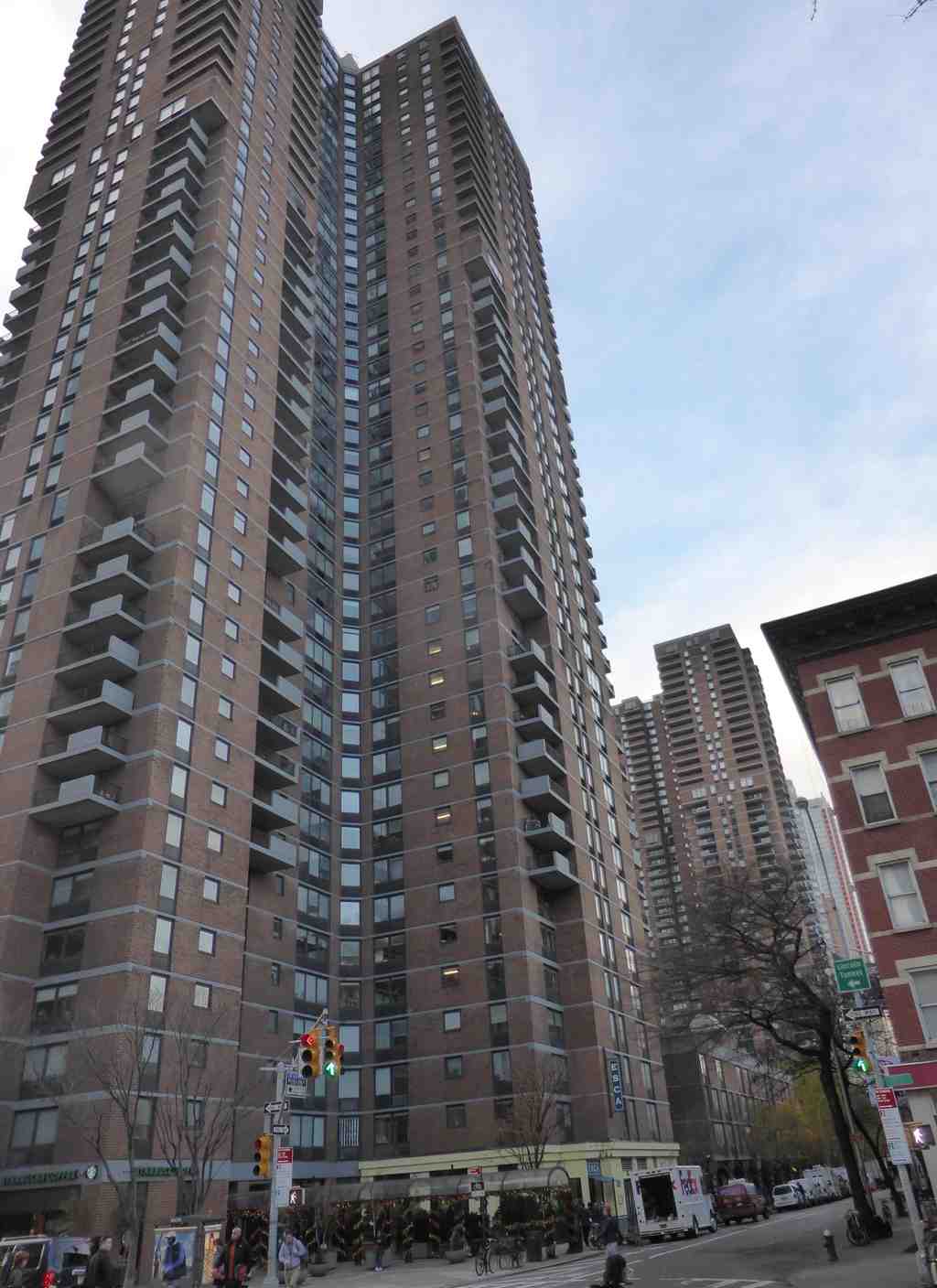
To spot Manhattan Plaza, just look up for two towering brown brick residential buildings with rows of balconies and a cluster of shops at street level-they fill almost the whole block between 9th and 10th Avenues, so you really can’t miss them rising high above the street.
You’re now standing in front of something that, from the outside, might seem just like another colossal city apartment complex, but let me tell you-Manhattan Plaza has a personality as big and bold as any Broadway star! Imagine, if you will, it’s 1977: New York is tough, especially this neighborhood-known as Hell’s Kitchen-famous back then for being a bit on the wild and woolly side. The Times Square area was packed with neon, adult stores, and not a Broadway star in sight. It was a place your mother might tell you to walk quickly through and hold your wallet tight!
Now, picture a construction site smack in the middle of this chaos: two giant towers planned for middle and upper-middle class tenants, with fancy townhouses, a health club, and a parking garage-a glimmering, marble-clad dream that quickly turned sour. Why? Well, New York hit a financial crisis, the city was so broke it could only fund part of the project, and suddenly, nobody wanted to move into these new apartments. The city stared at a half-built promise and realized it desperately needed a miracle-cue the enterprising real estate developer Daniel Rose, who, as the story goes, must have thought, “Why write a check when you can write history?”
Rose looked around, searching for a clever way to fill these towers. He needed people the neighborhood would accept-folks with spirit, creativity, and maybe an occasional tendency to sing show tunes in the elevator. His “aha!” moment? Fill the place with artists. Actors, musicians, backstage crew, dancers, directors, you name it-all the people who keep the performing arts alive. This wasn’t just about putting on a show; it was about saving the investment, revitalizing the neighborhood, and breathing new life into a faded part of town. It had never been tried before. City officials, at first, thought it was an odd idea-can you imagine telling City Hall you only want tenants who can tap dance or recite Shakespeare? But the performing arts unions loved it, the city eventually loved it, and even the neighbors-initially worried about trouble-gradually warmed up when they saw reports that artists might be struggling for rent, but they’re hardly the kind to cause mayhem on the block (unless you count epic karaoke singalongs).
When Manhattan Plaza finally opened in 1977, it was like opening night at a Broadway show. The mayor cut the ribbon, 70% of the apartments went to artists, 15% to local elderly and handicapped residents, and 15% to neighborhood families living in tough housing. Within a year, there was a 3,000-name waiting list-seems everyone wanted an apartment with a side order of jazz hands.
But the story doesn’t end with happy murals and curtain calls. The building became a tight-knit community, the kind of place where the doorman probably knew your favorite monologue. Rev. Rodney Kirk, the first Director of Manhattan Plaza, was a guiding force-kind, compassionate, and beloved. When the AIDS crisis hit in the 1980s, Manhattan Plaza was devastated. Many in the performing arts community lost friends and loved ones, and the building became one of the hardest hit in the country. But here’s the real miracle: residents, volunteers, and health professionals rallied, creating support networks and services to look after each other when the world outside didn’t know what to do.
When the city healed, Manhattan Plaza blossomed again. The stars were never far-the Laurie Beechman Theatre downstairs hosted more one-act plays than you could count, the West Bank Cafe buzzed with budding playwrights and even a young Bruce Willis tended bar there before his big break. Kids played in one of the city’s few high-tech, interactive playgrounds-complete with virtual games and an electronic setting, donated by a football star! The elderly aged gracefully, cared for by a community that always looked out for its own.
So the next time you see a Broadway show, remember: there’s a good chance the leading actor, the violinist in the pit, or the stage manager once called Manhattan Plaza home. In the middle of Hell’s Kitchen, these two towers didn’t just house people-they sheltered dreams, dramas, and a thousand stories, each worthy of a standing ovation.




