

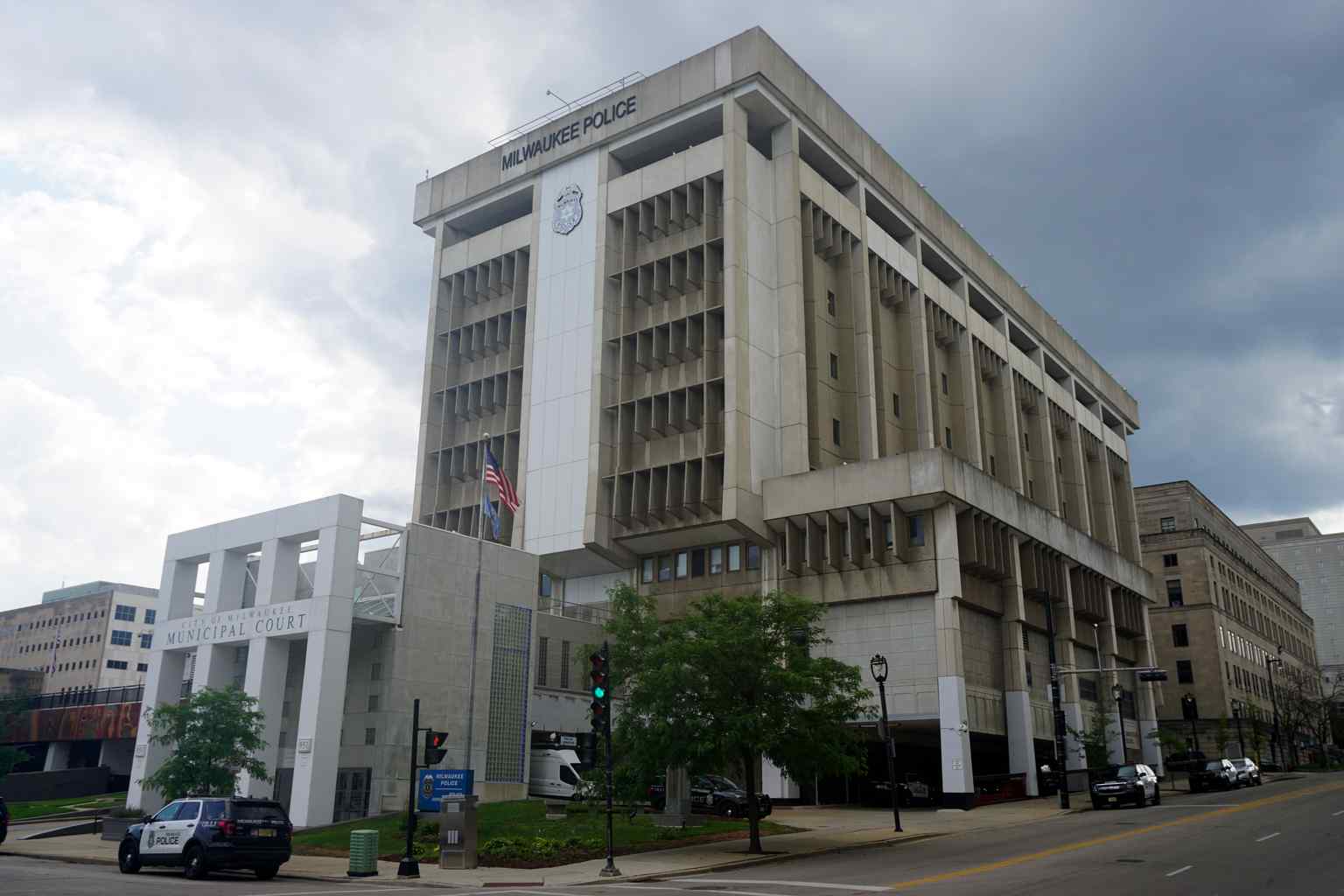
Look straight ahead at the sturdy masonry building, marked by a bold shield-shaped emblem with a bright blue and yellow border and a prominent central gear. It looks pretty orderly now, but this department was born out of absolute chaos. Back in the mid nineteenth century, Milwaukee was overrun by local gangs, mobs, and thieves. The county sheriff was completely overwhelmed. So, the city decided to completely overhaul its approach to law enforcement, establishing a dedicated police force in eighteen fifty five to wrestle back control of the streets. They brought in a guy named William Beck, a tough former New York City detective, to be the first chief.
Beck started with just six policemen. As the force grew, they introduced roundsmen. A roundsman was essentially an early shift supervisor who led the patrolmen out to their specific neighborhood beats. For that extra responsibility, a roundsman earned an extra five dollars a month, which is roughly a hundred and seventy dollars today.
That all sounds very structured, but grabbing control of the city wasn't just about fighting street crime. It was a vicious political tug of war. For decades, the department was at the mercy of the spoils system, a practice where winning politicians handed out government jobs as rewards to their loyal supporters. Take eighteen seventy eight, for example. A new Democratic mayor appointed a fellow Democrat as police chief, and that chief immediately fired twenty five Republican patrolmen just for being on the wrong side of the ballot.
The real test of the department's grit, though, happened in nineteen seventeen. A social worker named Maude Richter noticed a strange package wrapped up next to an evangelical church. She dragged it into the basement, and the church janitor eventually brought it right to the central police station. The station keeper was showing this suspicious package to the shift commander right before a scheduled inspection. Then, it detonated. It was a massive black powder bomb. The explosion ripped through the station, killing nine officers and a civilian.
Check out your phone to see a historical newspaper clipping covering the devastating aftermath of that blast. Investigators suspected the bomb was planted by the Galleanists, a faction of radical Italian anarchists who advocated for the violent overthrow of the government. For decades, that tragedy stood as the most fatal single event in national law enforcement history.
You can also glance at your screen to see the wider administration building where the modern force operates. It is a stark reminder that this town is always reshaping its identity, tearing down old paradigms and fighting tooth and nail to build something new from the rubble.
Speaking of massive civic transformations, let us head to our final destination. We are walking eleven minutes down the street to a spot where huge public investments and modern entertainment collide. Follow your map, and I will catch up with you at Fiserv Forum.





.jpg)