

Washington Audio Tour: Echoes of Faith, Legacy, and Hidden Stories
A cathedral dome gleams above the city skyline, hiding layers of secrets beneath its soaring vaults and stone arches. Here in Washington, history whispers from every shadowed chapel and stone corridor, eager for a keen ear. This self-guided audio tour leads you through religious grandeur, academic intrigue and political crossroads. Go beyond the postcards and discover the competing ambitions and lost legends most visitors never even hear about. Which forgotten scandal nearly brought the Theological College to its knees? Why did a silent rebellion ripple through the Institute for Policy Research and Catholic Studies late one night? And how did a single stained glass window ignite decades of heated debate on campus? Move from sanctuary to sanctum, each step peeling back layers of spiritual drama and untold struggle. See Washington’s sacred heart in a new, electrifying light. Ready to uncover what’s hidden beneath the city’s shining façade? Your story begins now.
Tour preview
About this tour
- scheduleDuration 30–50 minsGo at your own pace
- straighten3.5 km walking routeFollow the guided path
- location_onLocationMount Rainier, United States
- wifi_offWorks offlineDownload once, use anywhere
- all_inclusiveLifetime accessReplay anytime, forever
- location_onStarts at Basilica of the National Shrine of the Immaculate Conception
Stops on this tour
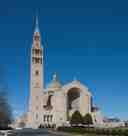
To spot this landmark, look for the towering cream-colored spire and a gigantic dome mosaicked in dazzling blue and gold right ahead-trust me, it’s the biggest church building in…Read moreShow less
To spot this landmark, look for the towering cream-colored spire and a gigantic dome mosaicked in dazzling blue and gold right ahead-trust me, it’s the biggest church building in North America, so if you see something enormous and grand, you’re in the right place! Welcome to the Basilica of the National Shrine of the Immaculate Conception! Right in front of you rises a building so massive, you could fit a flock of tourists and still have space for a marching band. If you think the dome looks almost heavenly, you’re not alone-at 237 feet tall and covered in 47,000 shimmering tiles, it’s nearly as large as the U.S. Capitol’s dome and shines a little brighter (though, apologies, Congress, it probably disagrees). The brilliant blues, bold yellows, and passionate reds aren’t just for show; they’re coded with meaning, representing the Virgin Mary, Jewish tradition, and Christ’s sacrifice respectively. Now, let’s rewind the clock. Imagine the murmur of the crowd in 1920, as Bishop Thomas Joseph Shahan dreams up a church that would put all the others to shame. He pens a newsletter and the excitement snowballs across America. Dioceses everywhere chip in, pennies and prayers piling up in Washington until, finally, the first big ceremony draws over 10,000 people all dressed in their Sunday best. That first foundation stone is blessed as dignitaries, ambassadors, and government officials look on, some probably wondering how big this church could possibly get. But every epic tale has a few plot twists. Construction crawls forward until 1932, when the Great Depression and then World War II bring things to a grinding halt. For decades, the Crypt Church is all people see-talk about a dramatic cliffhanger. But then, post-war, the bishops rally like superheroes with blueprints and fundraising drives, and by 1959, Catholics and crowds pack in for the dedication of the Great Upper Church. You can almost sense the collective sigh of relief! Inside, the atmosphere is nothing short of breathtaking: mosaic-covered domes on every side, narrow beams of colored light filtering down through grand stained glass, and eighty-two Marian chapels, each dedicated by groups from the far corners of the Catholic world. There’s even a chapel honoring the Maronite faithful, complete with a mosaic inspired by a sixth-century gospel. And don’t forget-behind those thick medieval-style stone walls, clever engineers tucked in modern surprises. They hid speakers so no one misses a sermon, added heating slabs big enough to roast marshmallows (okay, I might be kidding about the marshmallows), and even a basement cafeteria if your spiritual journey makes you hungry. This basilica is unique: it isn’t actually a parish church, and the Archbishop doesn’t control it. The shrine’s real “bosses” are the Catholic University-who gave up this land for it-and the U.S. Conference of Catholic Bishops, making this a true national church. Since the 1990s, popes have graced its halls: Pope John Paul II made it a minor basilica, Pope Benedict XVI brought the rare Golden Rose-a papal honor so fancy it probably needs extra polish-and Pope Francis canonized Junípero Serra here with a Mass on the green. Still not impressed? Here’s a good nugget to tell your friends: the basilica’s only permanent inhabitant is Bishop Shahan himself. His remains are the only ones interred here, a fitting tribute for the dreamer who started it all. And if you get lost, just find the Brookland-CUA Metro station less than a third of a mile away. After all, this place was built to welcome everyone-and now, here you are, standing before the country’s grandest hymn in stone. For further insights on the details of vicinity, architecture or the completion (21st century), feel free to navigate to the chat section below and inquire.
Open dedicated page →
Show 6 more stopsShow fewer stopsexpand_moreexpand_less
 5
5Brooks Mansion
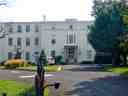
Buy tour to unlock all 13 tracksLook ahead for a stately, light-colored mansion with tall windows and a small porch supported by classic columns, standing proudly behind a decorative black fence-this is Brooks…Read moreShow less
Look ahead for a stately, light-colored mansion with tall windows and a small porch supported by classic columns, standing proudly behind a decorative black fence-this is Brooks Mansion. Alright, story time! Imagine you’re stepping back into the 1840s, where you’d see Colonel Jehiel Brooks, a weathered War of 1812 vet, showing off his brand-new Greek Revival mansion-maybe even bragging a little to the neighbors. He called the place Bellair, and he shared it with his wife, Ann Margaret Queen, who-fun fact-was the daughter of one of the biggest landowners in the city. The house sat on a massive 246-acre plantation, with rolling fields and quiet country roads where the only “traffic jam” was a runaway horse. But times change! After the Brooks family moved on, the land was sold off, split up, and-voilà-the suburb of Brookland was born. Brooks Mansion itself transformed many times: it became a boarding house, then a home for the Marist Brothers, who even stuck on an extra wing (because who doesn’t want more room for activities?). The Benedictine Sisters arrived in 1905, filling the mansion with the excited chatter of young students at St. Anthony’s Academy, and later offering shelter for women in need. By 1928, with women now admitted to Catholic University, the mansion buzzed with the energy of high schoolers at St. Anthony’s. Hidden behind those elegant columns and windows are stories of faith, learning, and a few hard-fought property deals. Today, after more twists and turns-a stopover with the Metro authority, a brush with the endangered places list-Brooks Mansion stands as a guardian of neighborhood tales and a hub for community TV (DCTV). That’s a history worth a peek, don’t you think?
Open dedicated page →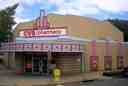 7
7Newton Theater
Buy tour to unlock all 13 tracksLook for a cream-colored Art Deco building with bold red stripes and a big CVS/pharmacy sign above the entrance-the unique old theater shape stands out on your left. Alright,…Read moreShow less
Look for a cream-colored Art Deco building with bold red stripes and a big CVS/pharmacy sign above the entrance-the unique old theater shape stands out on your left. Alright, time for a bit of showbiz magic! Imagine you’re standing here in 1937, as the bright lights flicker on and car engines hum, drawing a crowd eager to see the very first film: “I Met Him in Paris.” Back then, this very spot was buzzing with laughter and clinking popcorn buckets, and all eyes were on the beautifully designed Art Deco facade by John Jacob Zink, the same guy who gave the region over 200 movie theaters. Fast-forward to the 1960s and the spotlights dimmed, only for Catholic University to give the place a second act, filling these walls with new kinds of stories until ’71. But wait, the plot thickens! In the late ’70s the silver screen rolled again, only to change to something wildly different-punk rock concerts in the 1980s, with music loud enough to make the seats shake. Some might say the old theater still wants an encore after all these years; now, you can pick up your prescription in the same place where mosh pits once ruled! And guess what? It’s now a historic star, listed on the National Register of Historic Places. Now that’s what I call dramatic flair!
Open dedicated page →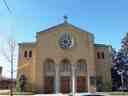 8
8St. Anthony of Padua Church
Buy tour to unlock all 13 tracksTo spot St. Anthony of Padua Church, just look for a big, honey-colored brick building with a huge round stained-glass window and three inviting wooden doors, right at the center…Read moreShow less
To spot St. Anthony of Padua Church, just look for a big, honey-colored brick building with a huge round stained-glass window and three inviting wooden doors, right at the center of Monroe Street NE-you can’t miss it! Picture yourself back in 1891 right where you’re standing, but instead of cars and playgrounds, there’s the soft clip-clop of horse hooves and the earthy scent of new gardens planted by ambitious settlers. Antoinette Margot, a bold woman who worked with Clara Barton and the Red Cross, packs her bags-hot on the heels of Washington’s latest wave of development-and settles here in Brookland. Alongside her friend Leonide Delarue, Antoinette dreams of a Catholic community, so what does she do? She teams up with a brilliant priest from Catholic University, Fr. Henri Hyvernat (try saying that three times fast), to gather the locals. The very first Mass is held not in a grand church but right at a neighbor’s cozy house, filling the air with hope and the delicious aroma of home-baked bread. Soon, the church blossoms thanks to Cardinal James Gibbons and the first official pastor, Desire C. DeWulf. Today, you’re standing on land where friends, faith, and a little daring spirit turned a patch of Northeast D.C. into “Little Rome,” right next door to a bustling Catholic school. Not bad for a place that started with little more than a prayer and a lot of heart!
Open dedicated page →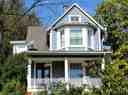 9
9Slowe-Burrill House
Buy tour to unlock all 13 tracksLook for a two-and-a-half-story Queen Anne-style house with blue wood siding, a prominent bay window above the wide front porch, and a pointed roof just behind the trees right in…Read moreShow less
Look for a two-and-a-half-story Queen Anne-style house with blue wood siding, a prominent bay window above the wide front porch, and a pointed roof just behind the trees right in front of you. You’ve made it to the Slowe-Burrill House-this blue delight with its big porch and that jigsaw puzzle of shingles up top isn’t just a pretty face. Picture yourself here a hundred years ago: the gentle sound of laughter floating out from the backyard, the clinking of tea cups, the fresh scent of grass and summer air swirling together as brilliant minds gather under the sun. In 1922, Lucy Slowe and Mary Burrill-trailblazing African American educators and courageous partners-moved in, turning this house into a quiet symbol of love and defiance. This was no ordinary home; it became the hub for intellectual gatherings, with the rear yard serving as the lively stage for picnics, debates, and celebrations among African-American women thinkers. There’s a dash of suspense, too! When Howard University tried to force Lucy Slowe to live on campus, she stood her ground, rallying support from friends, colleagues, and even the famous Mary McLeod Bethune. Slowe and Burrill refused to budge, filling their home with warmth, friendship, and, dare I say, the best garden parties in Brookland. Even the university’s top brass couldn’t oust her; Lucy’s determination echoed through these wooden halls until she passed here in 1937, with Mary mourning her loss and saying goodbye to their shared dream house soon after. In 2024, after more than a century of stories, the Slowe-Burrill House finally received its fitting crown as a National Historic Landmark. This place celebrates unsung courage-African American, women’s, and LGBT history all rolled together, wrapped up in the shade of that big bay window. It’s a place where love and learning took center stage, even when the world tried to dim the spotlight. If you listen carefully, you might feel some of their steadfast spirit soaking into the front porch boards beneath your feet. Congratulations-your tour ends at a home where history dared to live out loud.
Open dedicated page →
Frequently asked questions
How do I start the tour?
After purchase, download the AudaTours app and enter your redemption code. The tour will be ready to start immediately - just tap play and follow the GPS-guided route.
Do I need internet during the tour?
No! Download the tour before you start and enjoy it fully offline. Only the chat feature requires internet. We recommend downloading on WiFi to save mobile data.
Is this a guided group tour?
No - this is a self-guided audio tour. You explore independently at your own pace, with audio narration playing through your phone. No tour guide, no group, no schedule.
How long does the tour take?
Most tours take 60–90 minutes to complete, but you control the pace entirely. Pause, skip stops, or take breaks whenever you want.
What if I can't finish the tour today?
No problem! Tours have lifetime access. Pause and resume whenever you like - tomorrow, next week, or next year. Your progress is saved.
What languages are available?
All tours are available in 50+ languages. Select your preferred language when redeeming your code. Note: language cannot be changed after tour generation.
Where do I access the tour after purchase?
Download the free AudaTours app from the App Store or Google Play. Enter your redemption code (sent via email) and the tour will appear in your library, ready to download and start.
If you don't enjoy the tour, we'll refund your purchase. Contact us at [email protected]
Checkout securely with 


