
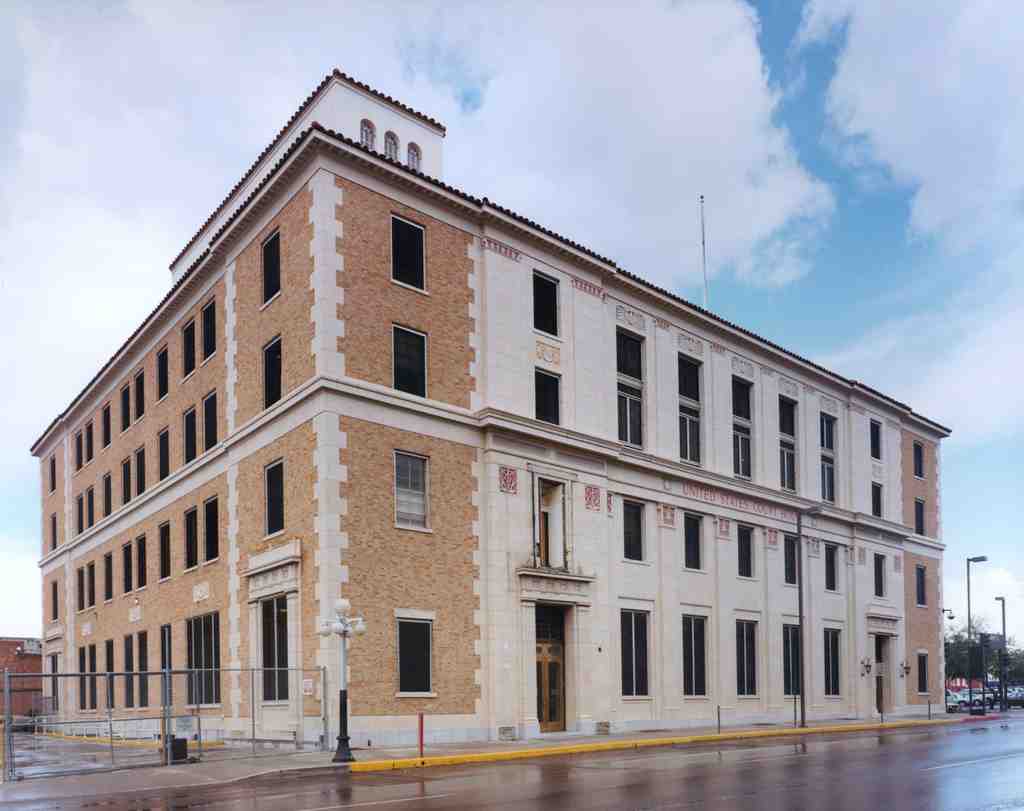
Look ahead for a stately, square-shaped building with creamy limestone-colored walls, bright terracotta trim, and rows of tall windows-just across the street and proudly marked “United States Court House” near the top.
Right now, you’re standing before a living slice of Tucson’s storied past! The James A. Walsh United States Courthouse may look like it’s keeping secrets behind its dignified Neoclassical face, but trust me, it’s got quite the tale-full of political wrangling, missed deadlines, and, believe it or not, a gas station or two. Imagine Tucson over a century ago, when the area around this very spot buzzed with anticipation. Back in 1910, Congress finally decided Arizona was worthy of statehood. Cue the confetti, right? Well, almost… They also approved the plan to pick a spot for a grand post office in Tucson-although for the next 20 years, Uncle Sam seemed to run on desert time. Every time Congress dragged its feet (which was often), the city of Tucson took action and even bought the perfect plot of land in 1911, eager to gift it to the federal government.
But then, oh-the drama! It turns out that Congress decided to hit pause on building anything new. There was a moratorium, and while the feds twiddled their thumbs, the empty lot practically became the Swiss Army knife of Tucson, with businesses and a gas station popping up for a few years. Imagine-judges and lawyers now stroll across floors where “Fill ’er up!” once echoed.
But at long last, in 1926, the moratorium lifted, and finally, in 1928, money appeared for design and construction. The Office of the Supervising Architect-under a fellow named James A. Wetmore-put together a Neoclassical dream with just a hint of Mission style, nodding respectfully to Arizona’s Spanish heritage. The result? The building you see before you-a boxy, powerful beauty finished with ornate terracotta, slender columns, and a truly impressive classical front that just dares you to walk up to its broad doors. Take a good look at the corners-those chunky terracotta quoins-almost like the courthouse is wearing a fancy suit with reinforced elbows!
If we stood here on September 19, 1930, you would have seen Tucsonians in Sunday best, streaming in for the grand opening. Back then, the first floor was all humming post office action: letters, telegrams, coins clinking in brass tills, and the hope of airmail from faraway places. For decades, this was the beating heart of local communications, reporting everything from birthdays to broken hearts.
But life in court is rarely still, and neither is this building. In the 1970s, the post office packed its bags for a new home, and the courtroom drama moved downstairs. The lovely, sunlight-drenched lobby where postmasters once greeted their neighbors was turned into a jury assembly room. Even the original skylight was covered up-though, don’t fret! When renovations swept through in the 2000s, many beautiful touches returned, like the basketweave-patterned terracotta floor tiles, smooth marble, and even those stately plaster crowns on the ceilings that turn every jury pool into a regal occasion.
Through these walls echoed some of the most important cases in southern Arizona history: for most of his 29 years here, Judge James A. Walsh was the lone federal judge stationed in Tucson-talk about job security! The building took his name in 1985 as a tribute. In 2000, the U.S. District Court headed to a newer home, but this landmark wasn’t ready for retirement. No, sir! The U.S. Bankruptcy Court moved in, and by 2008, with major restoration work finished, the building had a new lease on life-all while preserving the fancy courtroom woodwork, high-beamed ceilings, and stenciled patterns that would make even the strictest judge smile.
And there’s something else magical about this site. Even as the world outside changed, the courthouse kept most of its grand 1930 face intact. The Primary (South) Facade remains the showstopper, with double entryways sporting dramatic stone surrounds and two rows of tall, shapely pilasters. Look up for stylized eagles peering out between the top windows, almost like the building’s personal security detail!
So, as you stand here and feel the hush of legal histories and long-gone mail counters, try to imagine how many moments-both thrilling and tense-have echoed between these stone walls. This is truly Tucson’s best-preserved example of Depression-era architecture, and it still stands watch over the city’s ever-changing stories. And hey, if walls could talk, I bet these ones would ask you if you have any overdue library books!




