
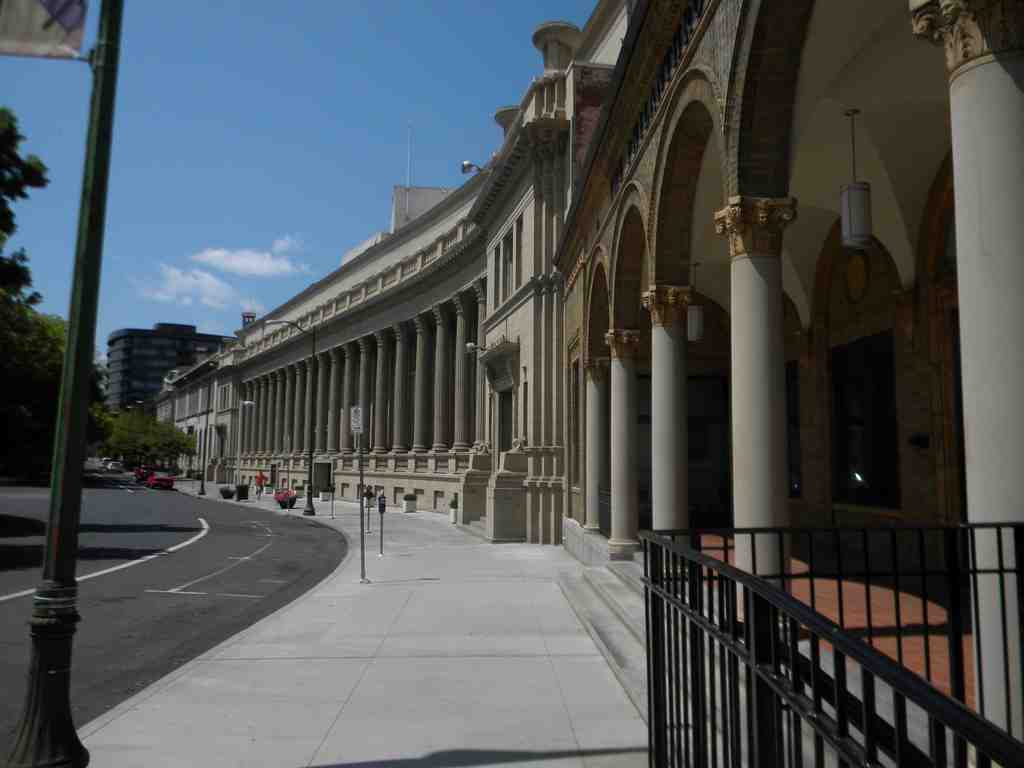
To spot the Riverside Avenue Historic District, just look for that sweeping, tree-lined stretch of grand old stone buildings with rows of stately columns curving along Riverside-right across the street, their classic facades practically parade down the block.
Now, let me set the scene for you: imagine you’re here in the early 1900s-spit-shined shoes, elegant hats, and that smell of fresh-cut grass from the parkway running right down the middle of Riverside Avenue. You’re standing at the heart of what locals once proudly called the Civic Center-a five-block stage of drama, ambition, and civic pride atop the bluff, high above the Spokane River, which you can practically feel tumbling away just a block to the north.
This place is like Spokane’s answer to Broadway, but instead of musical theaters you'd find monumental stone, swooping colonnades, and so many architectural flourishes it feels like the city hired every builder with a cape and a flair for drama. Between 1,860 and 1,880 feet above sea level, Spokane’s best architects competed to impress, and-plot twist-the city itself was their client, swept up in the City Beautiful movement. Everyone here wanted a touch of ancient Rome… or maybe just better parking.
Check out the Spokane Club-built in 1910, dripping with Georgian Revival elegance and boasting three basements stacked towards the steep riverside drop, as if it’s clinging to the cliff by its brick fingernails. Not to be outdone, the Civic Building (now The Philanthropy Center) stands just down the block-a Renaissance Revival beauty with a loggia so grand you feel underdressed just walking by.
And oh, the Masonic Temple. At 222 feet long and dressed in Corinthian columns, it curves with the avenue like a parade float, every right angle politely packed away. Teddy Roosevelt himself-yes, the president and a proud Mason-showed up to break ground here, shovel in hand. Inside: cryptic Egyptian motifs, a secretive Blue Room plush with the same swanky carpet as the Davenport Hotel, and a floating ballroom floor that literally springs under the dancers’ feet. Word is, folks in the auditorium would hush at night, hoping to catch the mysterious footsteps of past Masons echoing in the horseshoe balconies.
Don’t miss the Elks Temple, with its Renaissance frills and Ionic colonnade, once pulsing with club members-nearly 8,000 strong! Imagine that: a sea of antler hats and not a single smartphone in sight. And if you’ve ever wanted to visit a funeral home and a posh apartment block in one building, the Smith Funeral Home proved everyone in Spokane in 1921 had an eye for multitasking architecture.
The district’s crown jewel in height is Our Lady of Lourdes Cathedral. Its twin towers rise above everything-second only to one other church in all Spokane-and those doors? Bronze, heavy enough to make even the toughest gym-goer sweat. In the sunlight, the stained glass windows cast vibrant colors onto the faces of worshippers and wanderers alike.
The neighborhood didn’t stop at grand facades-a wedge-shaped marvel called the San Marco Apartments ties two streets together with a Renaissance wink, and the old Carnegie Library at Cedar Street keeps its quiet dignity, even after a century of change and a few years abandoned to dust and ghosts. While the old library’s doors once opened for every curious child in town, now it holds the secrets of design firms-though sometimes, if you listen carefully, you might still hear the shuffling of books.
But progress comes knocking-even here. In 1973, the Riverfalls Tower crashed the party, a shiny high-rise rising 11 stories over the old district, with enough glass and steel to make even the classical facades peek over in curiosity. Some folks thought it didn’t fit in, but Spokane eventually welcomed it onto its own register of historic places, like a slightly awkward cousin at a family reunion.
Today, as you walk these blocks, you’re not just strolling through beautiful buildings-you’re drifting through a century of triumphs, close calls, fancy dances, and maybe even a presidential handshake or two. You can almost hear the echoes from every era: carriages rattling over the brick, club members cheering, distant bells chiming from the cathedral’s towers-reminders that every stone here once rang with life, and still does, every time footsteps like yours walk by.


