
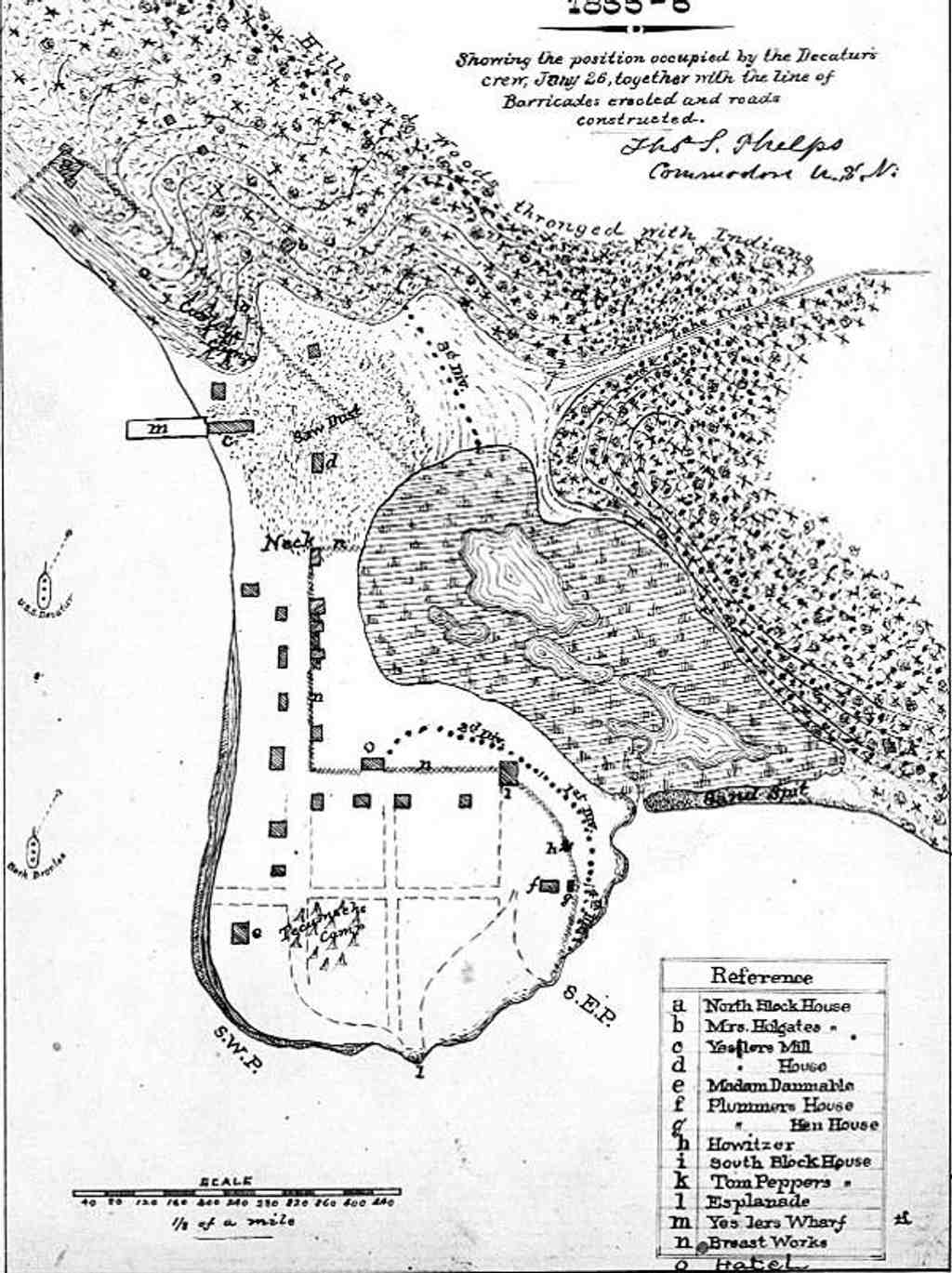
To help you spot the site of the Battle of Seattle, look for an illustrated old map surrounded by city life-you're standing near Seattle’s historic Pioneer Square, where the peninsula’s edges meet and the old forested ridges once rose over marshland and bay.
Alright, time to step back in time-imagine standing here January 26, 1856, when Seattle was just a tiny, rugged settlement, only four years old, huddled on this bit of land between the wilds and the waters of what we now call Elliott Bay. The settlement was so new, they’d only just named it after the respected Chief Seattle, leader of the Suquamish and Duwamish peoples. There were only a handful of wooden buildings, a scattering of muddy streets, and everywhere, the dense scent of the surrounding forest.
Tensions had been simmering for months as Native American tribes resisted treaties that shrank their homelands, while settlers nervously guarded their new lives. The governor had even declared a “war of extermination”-as if a day in the Pacific Northwest wasn’t interesting enough already! Add in the U.S. Navy sloop Decatur sitting in the bay, a handful of cannons, and about a hundred settlers worried about losing their breakfast-history was about to get dramatic.
The night before the battle, the settlers took their posts. Picture them: some clutching homemade rifles, others probably wondering why their parents had ever left Ohio. They’d strung together a shaky defensive line through marshes, up over mounds, and all the way to a brand new blockhouse made from lumber meant for sunny California.
But wait, it gets more interesting! Two local chiefs, Owhi and Lushi, crept through the settlement, cleverly disguised as friends. They tricked a sentry with a convincing story, scouting out the town’s defenses. And here's a twist-some chiefs were playing both sides, one even asking if his friend Henry Yesler could be spared in the chaos. Like a historical soap opera, alliances shifted with every hour.
When the morning sun burned off the fog, the air suddenly crackled-rumors and warnings finally proved true! A small decoy force of warriors drew defenders out toward First Hill, while the women and children scrambled onto ships in the harbor for safety. “Ready the cannons!” someone shouted aboard the Decatur as they spotted movement in the trees. The first howitzer shell arched out over the roofs and exploded near Tom Pepper’s house. That was the signal: the battle had begun.
For seven hours, muskets rattled, bullets zipped through the raw air, and the defenders were caught in what one historian called “an almost uninterrupted storm of bullets.” Settler families darted between blockhouses, seeking cover, while the marines manned their posts. Sometimes, the language of battle was, quite literally, Chinook jargon-a trade language both sides could understand, so orders and even jokes could be overheard.
Humor was in short supply as courage and confusion tangled together. Young Milton Holgate, just fifteen, accidentally shot Jack Drew-a member of the Decatur’s crew, mistaking him for an attacker trying to climb through a cabin window. Tragic and accidental, like so many parts of chaotic history. Elsewhere, a thirsty settler ducked for water and fell to enemy fire-another reminder that even a drink could turn deadly in those tense hours.
Though the sound of gunfire and yelling filled the clearing, casualties were miraculously few among the settlers: just a handful dead, despite the odds. The native losses were never clearly known-some said twenty-eight, others guessed higher-but their leaders quietly withdrew, unable to break through the defenders’ lines or the Decatur’s roaring cannons.
The next day, Governor Stevens finally rushed back, admitting he just might have underestimated that “looming threat.” The people of early Seattle, no strangers to hard work, quickly built new palisades, dug ditches, and built a second blockhouse, just in case someone got adventurous with “home defense.” For weeks, nerves remained high. My favorite tale is of the future fire chief digging in his yard, finding an old Decatur shell, tossing it into a stump fire-BOOM!-nearly making himself the last casualty of the Battle of Seattle.
While the battle put an end to open fighting here, it was only one part of a much larger story of broken treaties and shifting alliances. Today, all that remains are echoes beneath your feet, but, if you listen closely, you might just hear the rumble of a cannon-or maybe it’s your stomach waiting for the next food stop!




