
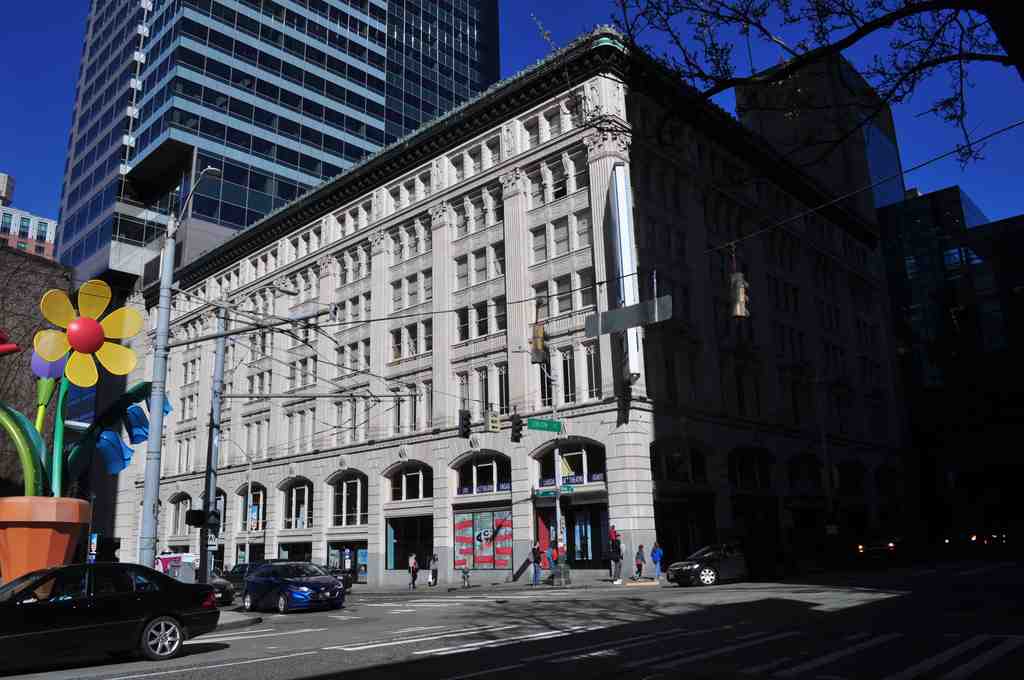
Look for a grand, cream-colored building with tall, ornate columns and rows of arched windows, right on the corner-with a large sign reading “ACT Theatre” along its left side; it’s hard to miss with its classic architectural flair among the glassy modern towers.
Now, step right up and let me take you back in time to where this story begins-right here at what’s now the ACT Theatre, but once was the Eagles Auditorium, beating at the heart of Seattle’s creative soul. In the 1960s, Seattle’s theatre scene was good… but a bit like eating vanilla ice cream every day. That’s when Gregory A. Falls, a bold spirit with a taste for the avant-garde, decided the city needed something new-a “serious alternative to summer stock,” as they say. He founded ACT in 1965, planting a seed for risk-taking and fresh stories that’s grown taller than a curious bean sprout.
Originally, ACT made its home in a more modest space, Queen Anne Hall (now On the Boards). But dreams, as we know, have a habit of outgrowing their pots. So, after a long search for a place big enough to hold their ambition (and audiences!), ACT moved here in 1996, into this historic Eagles Auditorium Building, now called Kreielsheimer Place. They share the structure today with Eagles Apartments, which means you could technically live above-or below-a world of drama and comedy. I hope they hand out free applause upstairs!
The building is as storied as the performances inside. Imagine, just above your head, the grand Allen Theatre, once filled with gilded balconies, ornate ceilings, crystal chandeliers, and the buzz of excitement. Oh, and here’s a quirky twist of fate: the very stage where Martin Luther King Jr. inspired crowds and the Grateful Dead once jammed is still here-you can find it, now just a painted relic, in the background, like the cameo appearances of theatre history itself. It’s not just a theatre; it’s a living time capsule.
And yet, there’s plenty of everyday drama too. In the late 1990s, ACT’s fortunes grew as stormy as a Seattle winter. A few misfires with productions, new leadership, and shaky critical reception meant ticket sales sank and debts piled higher than stage props after closing night. By the early 2000s, the theatre was teetering on the edge-will the curtain fall for good? Enter some generous folks, including Boeing’s chairman with half a million bucks, and an ambitious new artistic director, Kurt Beattie. With grit, luck, and a little theatre magic, ACT fought its way back from the brink, like a hero in the final act of a play.
The renaissance meant bold new productions took the stage, from black comedies to locally written pieces that made their way to New York audiences. Big names like Julie Harris and Randy Newman walked through these doors. And ACT remains a creative hub-part of the city’s top trio of playhouses, together with the Cornish Playhouse and the Rep. Not bad for a theatre once on life support! In fact, in 2025, ACT merged with the Seattle Shakespeare Company, kicking off this new era with a run of Twelfth Night right in the Falls Theatre. Sure, there may have been some arguments about turning the old vaudeville-style auditorium into theatre-in-the-round, but isn’t a little drama just part of theatre’s charm?
So as you gaze at all those ornate details and elegant arches, picture the echoes of applause, the rustle of scripts, and the wild, wonderful leaps of imagination ACT has set loose for over half a century. Whether you’re here for a world premiere or just passing by, you’re standing outside a genuine landmark of Pacific Northwest creativity-a place that’s seen triumphs, disasters, and more comebacks than an improv comedian. And trust me, this spot never gets stage fright.




