
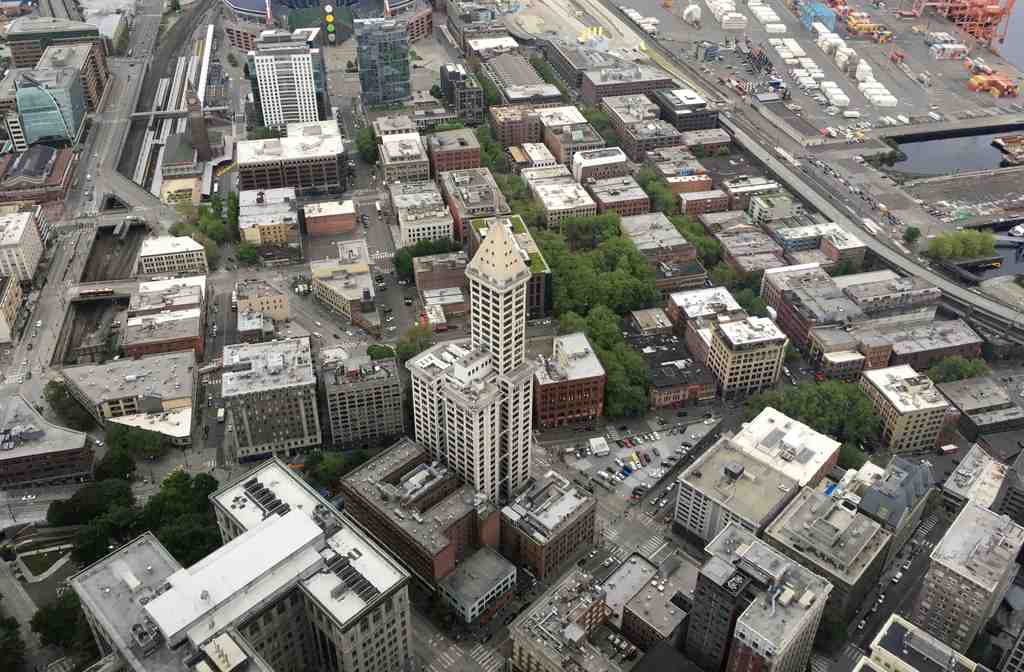
To spot Pioneer Square, look for a cluster of handsome red-brick and stone buildings with a small, leafy park nestled among them, just to the west of the tall, white Smith Tower and near the train tracks and piers.
Alright, traveler, you’re standing in the beating heart of Seattle’s history-Pioneer Square. Imagine yourself stepping into a time machine-the pavement rattles under your feet as streetcars jangle by, brick buildings rise up around you, and the salty breeze brings a whiff from Elliott Bay.
Back in 1852, Seattle's founders landed here, possibly a little soggier than they'd hoped after braving the wilderness across the bay at Alki Point. They settled this spot for a very practical reason: Henry Yesler wanted to build a lumber mill, and who can blame him? The city grew right out of the mud and water, with early settlers filling in marshy ground and leveling bluffs to lay out the first streets. It wasn’t exactly a neat grid-cross Yesler Way, and suddenly even the roads couldn’t agree on which way to run.
In those days, this area was a wild jumble of wooden buildings, bustling wharves, and a mix of pioneers, dreamers, and more than a few folks seeking trouble. Yesler Way itself became famous for more than its sawmill; it drew the line between the more “proper” north and the so-called “restricted district” to the south-otherwise known as Skid Road. It was a place where deals, dice, and the occasional dubious decision flowed freely-I wouldn’t advise you to check your wallet too thoroughly, though; rumor has it even the police only entered in teams.
Disaster struck in 1889. The Great Seattle Fire roared through these very streets, turning nearly everything to ash and cinders. But the city wasn’t going to let a little thing like total destruction slow it down! Within a year, dozens of sturdy brick and stone buildings rose from those ashes in late 19th-century armadillo-skinned style-Richardsonian Romanesque, if you want to sound fancy at dinner parties. Pioneer Square’s distinctive look comes from those determined folks stacking bricks, plunking arches over windows, and building with dreams.
By the time the gold-lust of the Klondike Gold Rush hit in the late 1890s, stampeders swarmed through Pioneer Square on their way north. Merchants grew rich, and, I bet, more than one hopeful prospector lost their savings to a sharp card game or a piano-playing charmer.
Speaking of notorious legends, you’re walking streets that once saw brothels, saloons, and “box houses”-rowdy places full of theater, music, and all manner of entertainment, honest or otherwise. There’s an art to chaos, and Pioneer Square had it in spades. (If the sidewalks seem a little high, by the way, you’re not imagining things! The city literally raised the streets to fix drainage, leaving some old storefronts buried below-a mystery you can still explore in the city’s famous Underground Tour.)
Keep your eyes out for the art around you-not just the totem pole and pergola, but galleries tucked into old buildings and public art woven into alleyways thanks to the Forest For The Trees project. With installations brightening up brick walls and small passageways, the neighborhood now mixes the buzz of history with a splash of modern creativity.
If you’re here in early June, you might just stumble upon the Pioneer Square Fire Festival. The area fills with the wail of sirens and cheer of crowds as firefighters parade past-celebrating the men and women who keep Seattle safe, and honoring the fallen with the solemn bronze of the Firefighter’s Memorial.
Pioneer Square is a place where every corner tells a story: from bawdy cabarets and parlor houses (run, fun fact, by some celebrity madames-Lou Graham, Lila Young, and Raw McRoberts, anyone?) to Seattle’s first Catholic church founded by Father Francis Xavier Prefontaine-whose name lives on in the nearby street. You can feel the pulse of history in the hodgepodge street grid, the echo of cable car bells, and the lively crowds packing cafés and bars.
So, as you stand here, let your imagination walk alongside dockworkers, dreamers, and the tides of fate that built Seattle. And don’t worry-if you get lost in all these stories, just look for the Smith Tower looming nearby; it’s been pointing the way in Pioneer Square since 1914. Just try not to confuse it for the “Sinking Ship” parking garage across the way-unless, of course, you’re due for a good pirate joke!




