
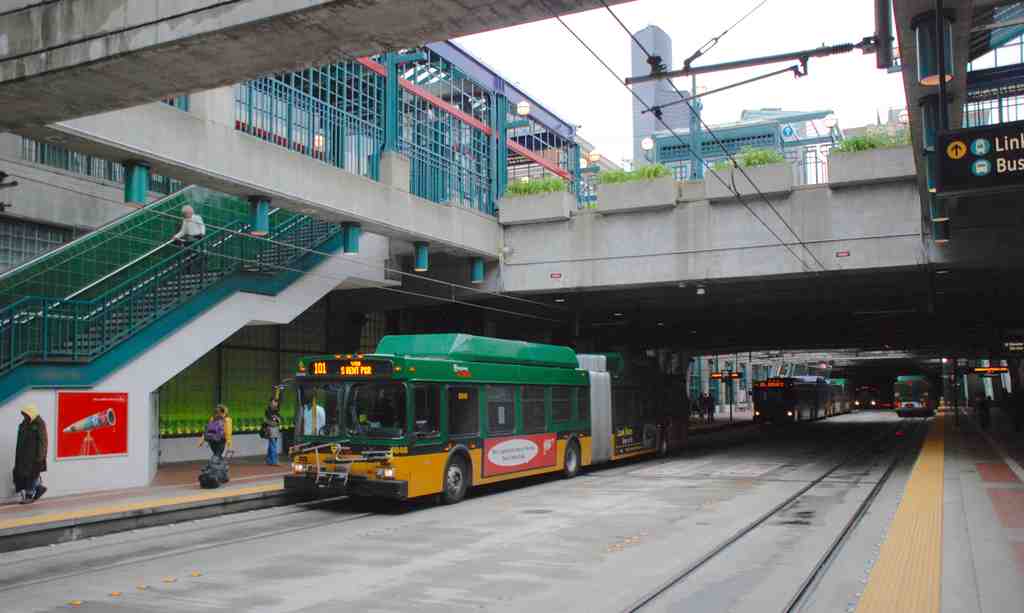
To spot the International District/Chinatown station, just look ahead for a big open-air concrete structure beneath the street, with green railings zigzagging up the staircases and rows of buses pulling under a wide bridge-if you see those green-and-yellow buses and modern glass blocks, you’ve found it!
Welcome to the beating heart of Seattle’s International District transit hub! Take a deep breath and let the cool tunnel air waft over you-doesn’t it feel like the city’s very own subway cave? Wait long enough and you’ll catch the tremble of a train, the distant chime of the next arrival, or maybe just the echoing footsteps of fellow travelers rushing to catch their next ride.
The story of this place is one of bold dreams, tricky politics, and, well, quite a bit of digging. Over a hundred years ago, this area was a muddy tide flat, slowly transforming as Seattle grew, and immigrants from China, Japan, and the Philippines began building their new lives along these blocks. Back then, trains chugged to gleaming new stations-King Street Station in 1906 and Union Station in 1911-carrying hopes, luggage, and crates of fresh produce. But folks had bigger plans! In 1911, a city engineer named Virgil Bogue drew up a grand vision: an elevated rapid transit swooping from King Street, through Chinatown, onward to Rainier Valley. Sounds flashy, right? But Seattleites gave it a big thumbs down at the polls-guess no one wanted flying trains quite yet.
Fast forward to the dreams of a subway in the 1950s, the bold “Forward Thrust” plans of the late 1960s, and several other attempts that, well, just never left the station. Each time, Seattle’s dreamers and doers planned for tunnels and portals, for connecting the city’s far corners, but politics turned more than one blueprint into scrap paper. Meanwhile, the International District kept humming, welcoming new faces and flavors as Asian Americans from across the Pacific shaped the neighborhood into a lively crossroads-the “International District” name stuck, a nod to the melting pot that lived, ate, and traveled here.
Finally, in the wild neon glow of the 1980s, progress picked up. Seattle decided to go underground-literally-and built this very bus tunnel below your feet. Twin tunnel machines, like mechanical moles, started digging in 1987 right from this spot, gnawing north through the city’s underbelly. By 1990, the International District station opened, ready for its very first-get this-electric buses that switched to trolley mode at the end of the tunnel, just to keep things spicy.
But the story doesn’t end there! All around you, the architecture blends Asian motifs-red columns, green tiles, and cozy wooden seats inspired by Japanese homes. Look down: the brick plaza with animal symbols is a nod to the Chinese zodiac, but done in Coast Salish style-a beautiful blend of cultures. There are stories hidden everywhere: steel origami “chasing” each other along the wall, poems by Asian railroad laborers, and even children’s clay tiles with legends from far-flung lands.
When Seattle wheeled out its new Link light rail, this station was ready. After a grand renovation in the early 2000s, light rail finally rolled in with a celebratory whoosh in 2009. Gone were the days of bus fumes filling the tunnel-now it was sleek trains and the promise of zipping off to SeaTac, the university, or someday even Bellevue and Redmond. If you listen closely, you might imagine the departure bells or the laughter of families reuniting after a long trip, echoing through these halls.
Today, this plaza is more than an entrance; it’s a community stage, a shortcut to Uwajimaya, Lumen Field, and the busy world outside. The whole thing is getting ready, yet again, for a new chapter: soon, a new train line will branch off, and this will be the place where Seattle’s north-south and east-west paths cross, a veritable transit “X marks the spot.” So whether you’re hopping a train, catching a bus, or just pausing for a moment, imagine the ghosts of old dreamers, tired workers, and hopeful newcomers all moving through the same space-this is where Seattle comes together, and where its journey keeps rolling on.


