
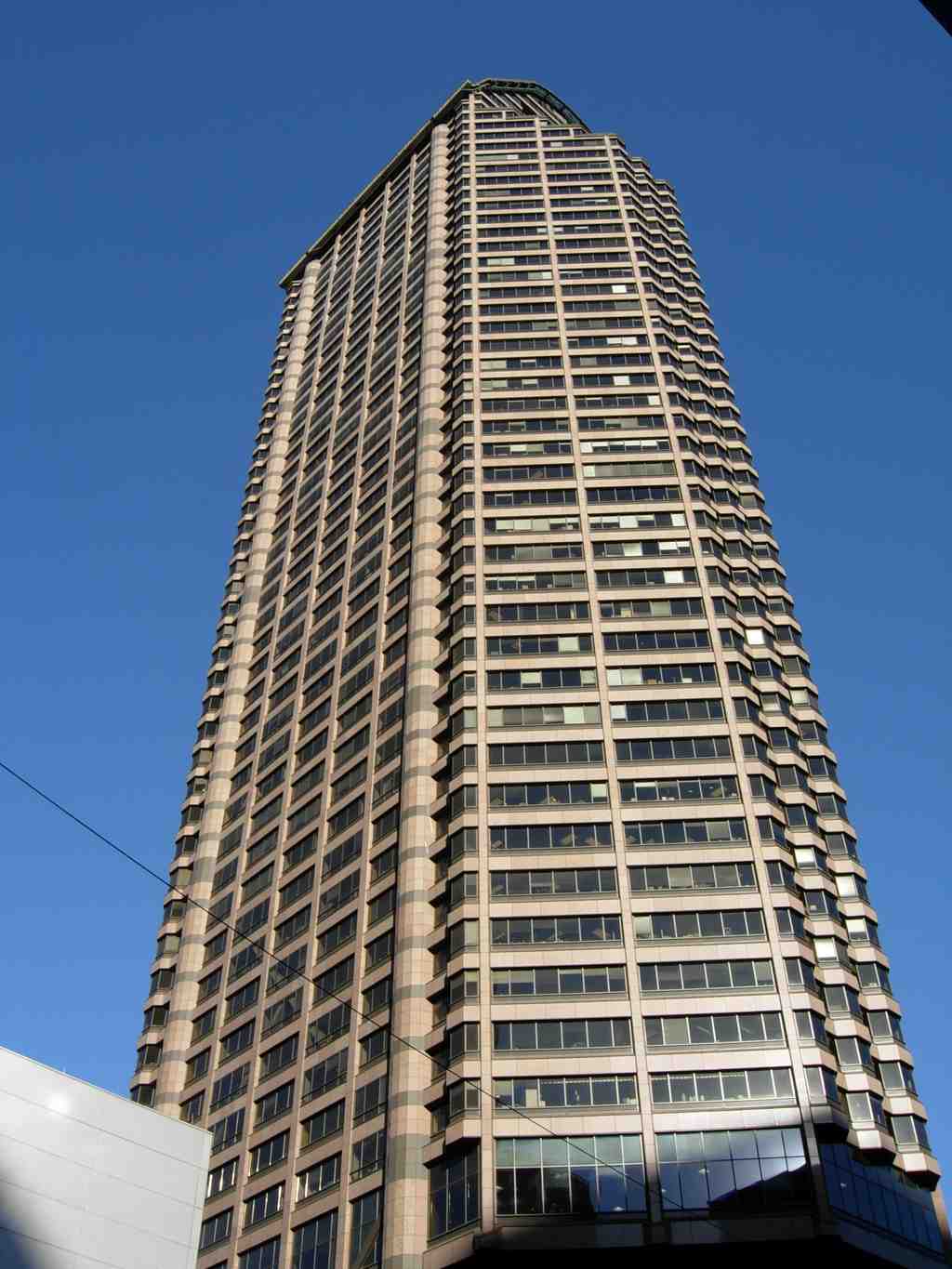
Look up-way, way up-and you’ll see the Seattle Municipal Tower towering above you, with its sleek grid of beige and glass wrapping its sides and a pointy glass hat at the very top, making it stand out against the sky.
You’re standing in front of history and a lot of stairs-trust me, your feet are glad you’re outside! Imagine the early 1980s, Seattle bustling with classic apartments at this very spot and residents getting their morning paper as rush hour whizzed past. The city was ready for a skyscraper, but not just any skyscraper-a tall one, the biggest on the block. Local developers Herman Sarkowsky and Delbert Belfoy had their eye on this place and started planning what they called the “Sixth & Columbia Building.” Now, here comes our first bit of tension-a group of renters living in the Doris and Breslin Apartments thought, “Hang on! Where would we go?” So they took their fight to court, suitcases packed with courage more than clothes, standing up for their homes amid plans for a building that would cast a literal shadow over their future.
Meanwhile, on drawing boards and in coffee-fueled meetings, architects wrestled with questions: Would they make this a 55-story giant or go all out with 65, including a daring stretch over the expressway ramps? The plan for the bigger tower had one wild feature-a part of it floating above the roaring I-5 entrance ramp. Developers needed to “lease air”-yes, lease the sky itself-from the state to pull that off. Throw in a skyway that would zip across Columbia Street, and you’ve got Seattle’s version of an indoor amusement park, minus the roller coasters.
Once the dust and debates settled, the tower began to rise. In 1990, it finally debuted as the AT&T Gateway Tower-only to have a bit of an identity crisis, swapping names to KeyBank Tower whenever the mood (or the anchor tenant) changed. By 2004, the city had claimed it for good, bestowing the proud and official title you see today: Seattle Municipal Tower.
Now, here’s where it gets quirky. A brainchild of Bassetti/Norton/Metler/Rekevics Architects, this building has more surprises than a magician’s hat. For instance, the lobby isn’t even on the ground floor-nope, it’s way up on floor four, and if you need to find a friend upstairs, you’ll need a game plan. Elevators are divided by league: lower floors, upper floors, and a special “sky lobby” on 40 where you switch rides, as if you’re boarding a rocket. For the bravest visitors wanting to reach “The Tip” on floor 62, well-you need a secret-encoded badge just to hitch that private elevator from floor 61.
Even its restaurants play a bit of hide and seek. The three are perched on the plaza at the sixth floor, but only one welcomes you indoors. The rest say, “Come around the outside!” As for getting to the plaza or the tunnels below? Don’t even think about using the main elevators. You’ll either have to transfer at floor four or take the winding decorative stairs-try not to get dizzy, but no promises.
Standing here, you might sense the pulse of Seattle’s government. The city scooped up this 722-foot marvel in 1996, snatching a bargain during an economic slide, and now it’s home to the real muscle behind municipal works-Seattle City Light, utilities, Human Services, and more. It’s part of the Seattle Civic Center complex, with City Hall just nearby, kind of like a dynamic duo fighting bureaucracy one paper at a time.
For those curious about the tip-top, the crown of glass you see up there isn’t a fancy penthouse-it’s full of mysterious, clanking elevator equipment. Take a long look up and imagine the stories packed inside every one of those windows: city builders, dreamers, reluctant tenants, and planners who dared to lease the sky itself.




