
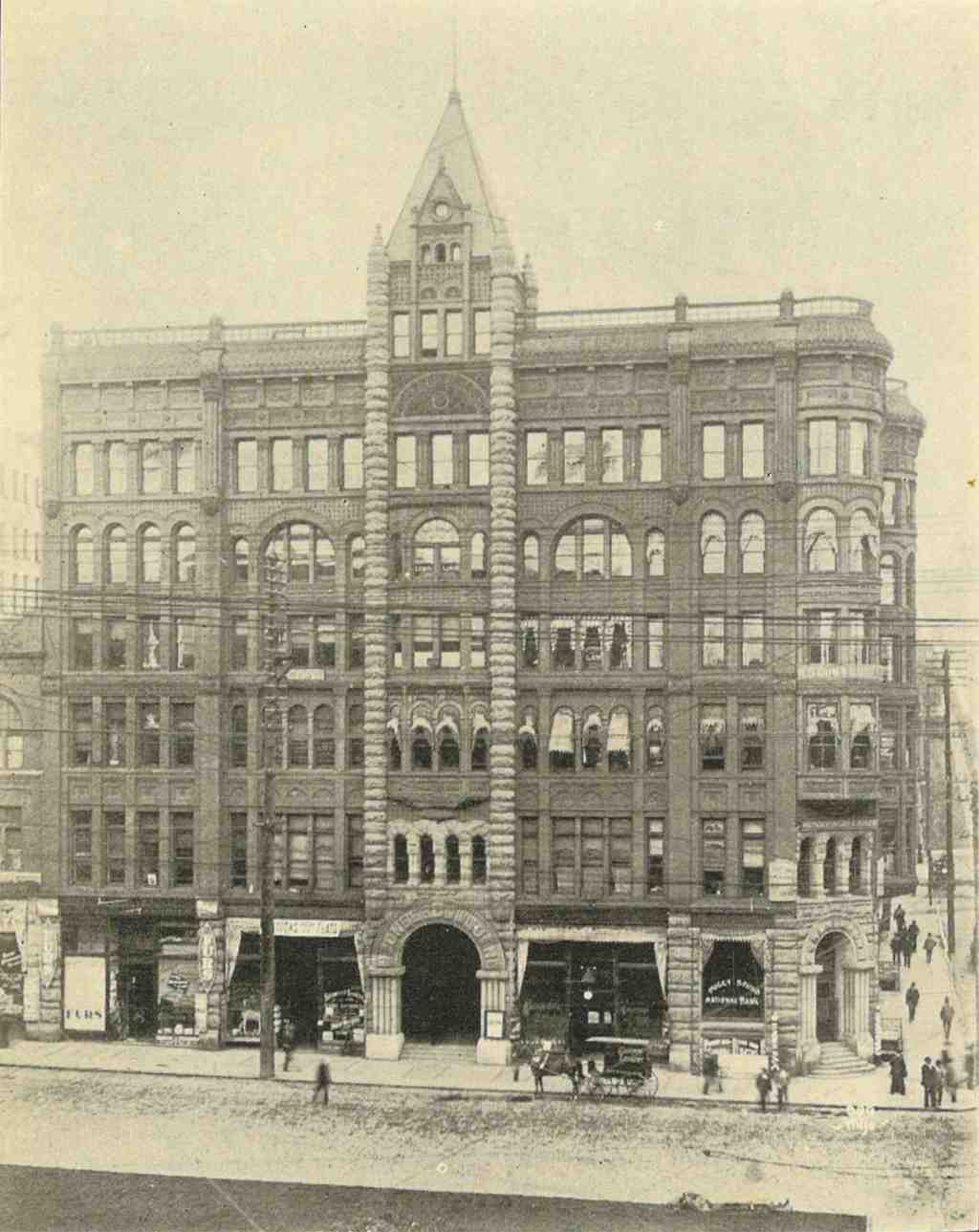
To spot the Pioneer Building, look for a grand, symmetrical, red-brick and stone structure right on the corner, with an arched entrance in the middle and rounded bay windows towering above-you can’t miss its distinctive blend of red brick, gray stone, and ornate details.
Welcome to the very heart of old Seattle! Picture yourself standing where the city’s first real boom began-before this towering red-brick marvel existed, you’d be crunching across grass and apple blossoms, right in Henry and Sarah Yesler’s backyard orchard. Their little house here wasn’t just a home; it was the unofficial town clubhouse, where, if you were lucky, you might’ve been served a mug of coffee or swapped stories with the whole early Seattle crowd. Just a short stroll away, Henry’s steam-powered sawmill billowed its own clouds of smoke. The spot you stand on was where business and social life sprouted side by side, setting the stage for a remarkable transformation.
Fast forward to the late 1880s-Seattle’s growing fast, and Henry Yesler, never one to let the grass grow under his feet, decides it’s time for this patch of land to host something much, much bigger. Instead of knocking down their old house, he simply scoots it to the back of the lot, filling the front with relocated buildings like a city-sized puzzle. By 1889, planning is underway for a mighty office block that the newspapers call ‘the largest north of San Francisco!’ Now, can you imagine the anticipation in the air as people gawked at the blueprints on public display, murmuring about this soon-to-rise giant?
The Pioneer Building’s creation, however, wasn’t all smooth. The builders broke ground in February 1889, but ran smack into a citywide stone shortage. With only 144 out of 800 needed tons of stone delivered, construction crawled. And just as things were settling down-whoosh-disaster struck: the Great Seattle Fire of 1889 swept through 32 blocks, leveling nearly everything downtown. But out of these very ashes, the Pioneer Building rose, a phoenix built from Bellingham Bay sandstone, red bricks, and California terra cotta, standing strong against flames and setbacks alike. The building we see today took shape in two parts, the southern half first, then the northern, reflecting both Victorian elegance and Romanesque muscle-look at those bold arches and chunky stone pillars. Even its brickwork forms a kind of grid, as if the building itself is standing tall, hands on hips, daring the next disaster to come.
At 94 feet tall, with three projecting bays of cast iron-especially notice the beautiful curved corners and the angled bay reaching above the entrance-the Pioneer Building became one of Seattle’s finest, most resilient business blocks. Once, a proud seventh-floor tower room sat above the door like a pointy hat, but the 1949 earthquake shook it right off!
Inside, imagine the clatter of boots on stone and the buzz of 185 tiny office rooms, each rented to buzzing businesses. Two atria pierce through the building, lighting up the interior like beams of morning sun cracking through storm clouds.
But that’s not all-come the Klondike Gold Rush in 1897, this place was swarming with miners! Forty-eight mining companies jammed themselves into these rooms, with gold fever running hotter than a July sun. And if you time-traveled right, you might even stumble into Seattle’s first secret speakeasy during Prohibition-don’t mind the shifty glances, just knock twice and bring your own password!
By the 1950s and ‘60s, the whole district nearly met the wrecking ball, doomed to make way for parking garages. But the people of Seattle, stubborn as January rain, fought to save it. Thanks to that movement, the Pioneer Building and its historic neighbors gained the protection of the National Register of Historic Places-call it Seattle’s own “comeback story.”
In 1971, the National Park Service dreamed of making the Pioneer Building the home of the Klondike Gold Rush National Historical Park, but the plan fizzled, and instead, savvy entrepreneurs took over, renovating it for a new era. By 1977, it became a National Historic Landmark, forever paired with the famous Pioneer Square pergola and totem pole just nearby.
Today, this magnificent structure isn’t just a relic; it’s alive with energy. You can step into Doc Maynard’s Nightclub and Lounge below, buy a ticket for the Seattle Underground Tour right here, or finish off at the gift shop packed with quirky souvenirs. Wander upstairs and you’ll find coworking spaces, law offices, even golf-course designers. In 2015, the building got another makeover, this time welcoming startups and creative folks looking for inspiration in these old brick corridors.
So as you stand here, listen for a whisper of the past-the echo of miners, partygoers, secretive Prohibition patrons, hopeful entrepreneurs, and maybe even the shuffle of Yesler himself, chuckling as he trades his apple orchard for a city’s future.
For a more comprehensive understanding of the location, design or the current use, engage with me in the chat section below.




