
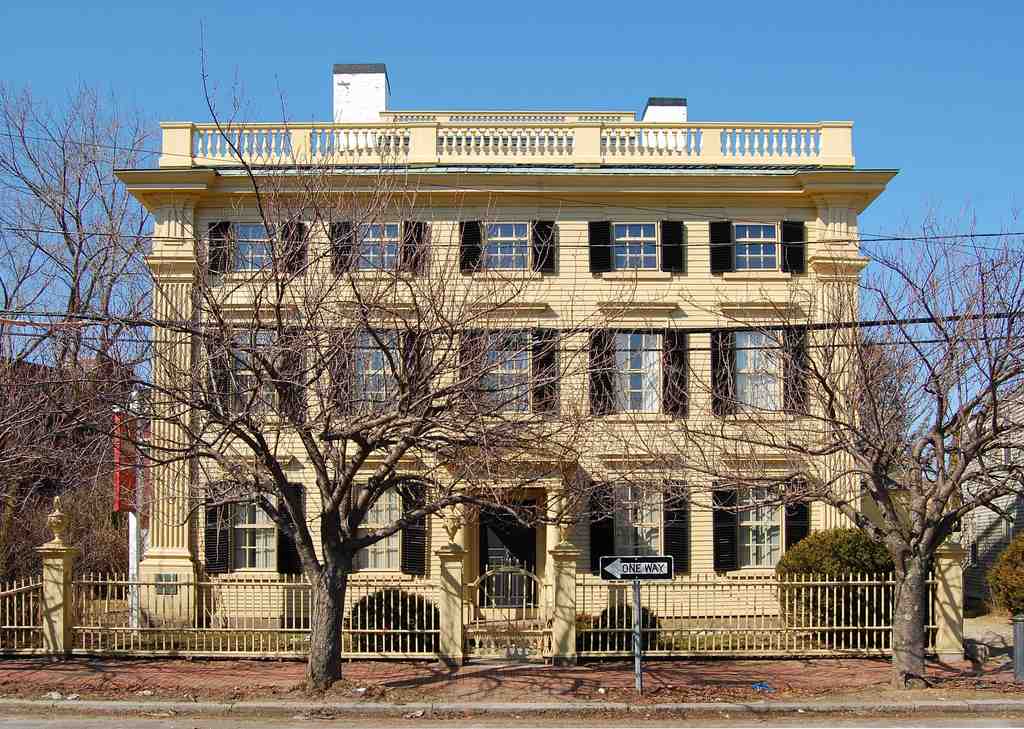
To spot the Peirce-Nichols House, look for a big, pale yellow, three-story mansion just ahead with black shutters, stately white columns at the front entry, a low-pitched roof surrounded by a fancy balustrade, and tall chimneys rising above.
Now, as you stand here squinting up at this grand home, let’s hop into a story that’s practically bursting at the seams with Salem’s old riches and a dash of bad luck. Imagine the year is 1782. Jerathmiel Peirce, a local guy who started out wrangling leather, is riding high after the Revolutionary War. He and his partner Aaron Waite weren’t just merchants; they owned a privateer ship called the Greyhound that chased down British vessels. Salem back then was so packed with wealth, it was said to be the richest city per person in America-ships were coming and going, money jingled in pockets, and the air buzzed with ambition.
So, with pockets full (at least for now), Peirce hired a young genius builder named Samuel McIntire. Picture the sawdust flying and the steady hammering as McIntire built one of his earliest masterpieces right on this very spot. The design? Inspired by British pattern books, you get a late Georgian vibe-see those Doric columns and the perfectly symmetrical windows? McIntire put his heart in every detail, from the grand pediment out front to the fluted pilasters running up the corners.
But, oh, the twists that life brings! As Peirce’s business adventures went a little south (not every ship came back golden), he lost this dazzling house. Friends stepped in, making sure the house stayed near the family-eventually, it passed to the Nichols children, through Sally Peirce’s marriage. Can you imagine the excitement in 1801 when they spruced up the hallway and parlor for Sally’s wedding? New Federal-style touches were added-lighter and full of hope for new beginnings.
Swing behind the house, and you’ll find the old carriage house, still standing tall with its grand arches. Over the centuries, the house was filled with laughter, secrets, and probably more than one argument over who got the best bedroom. By 1917, the Nichols family finally said goodbye, and the Essex Institute took over, eventually opening it to the public. Today, it’s part of the Peabody Essex Museum-a time capsule of Salem’s climb to fortune, clever design, and the ever-turning wheel of luck.
So, take a moment to soak it all in: the dreams built into these walls, the echo of footsteps from ship captains to wedding guests… and maybe try not to envy the folks who lived here-okay, maybe just a little!


