
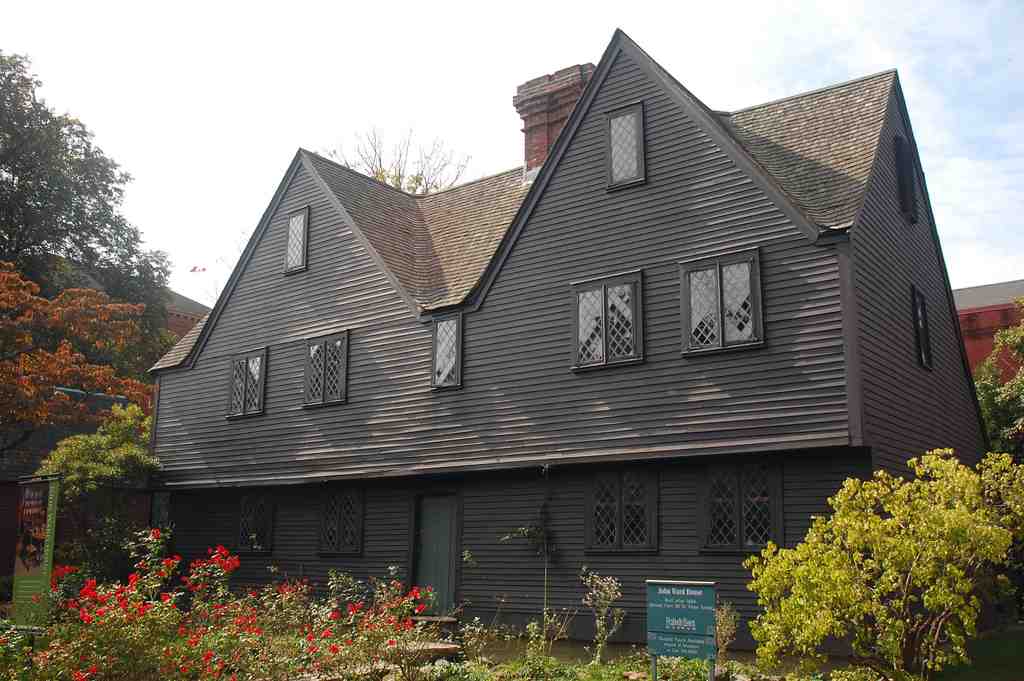
Directly in front of you, you’ll see the John Ward House-a striking, dark wood building with two steep-pitched gables, a chunky brick chimney in the middle, and diamond-paned windows that almost look like they’re winking at you from every floor.
Picture Salem in the late 1600s: the crackle of fireplaces, the scent of pine, and the thud of boots on packed dirt as John Ward-a currier, not a man who delivers curries but a leather worker-began building what would become an enduring piece of colonial craftsmanship. Back then, this house started as a humble two-room structure with a massive chimney hogging one side of the building-a bit like a pizza oven, but with considerably less mozzarella. When Ward’s family grew, so did the house, stretching to fit that classic five-window colonial look with a front door in the center, and finally, a lean-to in back gave the whole building that unmistakable “saltbox” shape. All those expansions? It’s almost like the colonial version of adding a bump-out to fit a big-screen TV.
Generations of the Ward family called this place home, passing it down until 1816, when it went under the auctioneer’s gavel, the bidding heated and quick, and Temple Hardy took it over, bakery smells soon filling the air as crusty bread and pastries came from its ovens. Time marched on, and the house shifted roles-just like a stage actor-going from a bakery to a crowded tenement, even gaining an east-end wing that seemed to sprout unexpectedly, only to disappear again by the early 1900s.
But wait, things got even stranger! By 1910, the house found itself in trouble-it wasn’t just going to get a paint job; it was about to be picked up and moved three blocks away. No big trucks for these folks: they split the house in two, perched each half on giant logs, and then oxen dragged them to Brown Street. I’d love to see the movers’ faces today if you asked them to relocate a house-with oxen!
When the dust settled and the house was reassembled, the meticulous restoration began, led by George Francis Dow. This guy was so deep into authenticity, he chose the wallpaper and even the furniture to fit his vision of Salem in 1700. If John Ward peeked in today, he’d probably be looking for his favorite chair. By 1911, the public was invited to poke around this living time capsule, making it the first outdoor architecture museum in the country, where you could marvel at diamond-paned windows, the chamfered beams, and the creaky floors-half original, half the handiwork of those 1912 fixers.
You might notice the cross-gabled roof and tall chimney, both rebuilt during restoration, and those gorgeous diamond windows sparkling in the morning sun, as if daring you to guess which century you’re in. The Peabody Essex Museum welcomes curious visitors inside, where rooms still show off 17th-century style, and even a faint whiff of whitewash still lingers if you sniff hard enough.
And by the way, there’s even a replica of this house out by mile marker 80 on the Massachusetts Turnpike-the tourist information staff once dressed up in period costumes for travelers. I bet the oxen there got paid overtime!


