
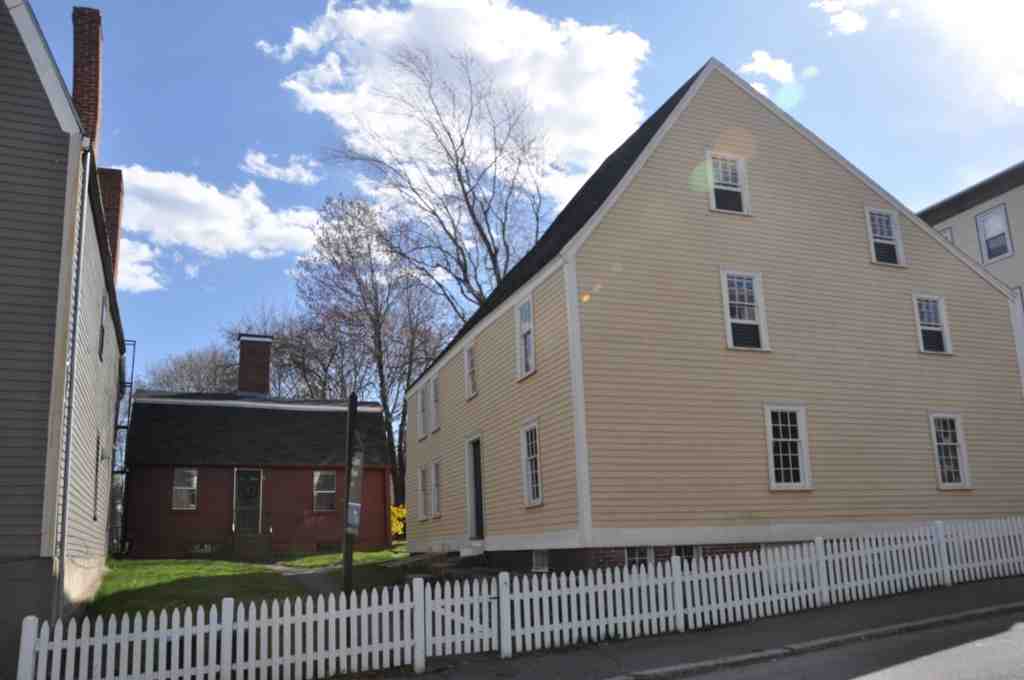
To spot the Gedney and Cox Houses, just look for the large, pale-yellow, gable-roofed house rising above a classic white picket fence-right ahead and to your right-with a smaller red house tucked away just behind it.
Now that you’re here, take a deep breath and imagine the salty tang of the Atlantic drifting inland as it would have on a breezy day in the late 1600s-because you’re standing where some of Salem’s earliest colonial history lives and breathes. The Gedney House, built around 1665 for Eleazor Gedney, isn’t just any old house; it’s a survivor from Salem’s First Period, and, trust me, it has seen more costume changes than an actor in a historical drama. Gedney himself was a shipwright-he chose this very plot because it was so close to the bustling shore and his boat-building “buildplace.” Fresh from his wedding in 1665, he wasted no time putting up this sturdy, two-story home with its gabled attic and original parlor, attached with a lean-to roof (which, by the way, sounds like a very practical add-on when you keep needing more room for ship plans or mischievous kids).
Now, back when wigs were tall and houses were small, the Gedney House went through at least three major makeovers: the “parlor lean-to” grew into a full second floor around 1705, then a whole new two-story rear addition popped up about a century later, complete with a basement kitchen-imagine the stews and stories cooked up down there! Whenever life shook up its bones, like when the central chimney was taken out in the 1960s, the house held onto traces of every era, including layers of paint as lively as the layers of Salem’s history. Today, the Gedney and Cox Houses are rarely open, like a secret you’re lucky to glimpse-so savor this moment outside, hearing the echoes of craftsmen, sea breezes, and centuries of stories swirling just on the other side of the white picket fence.


