
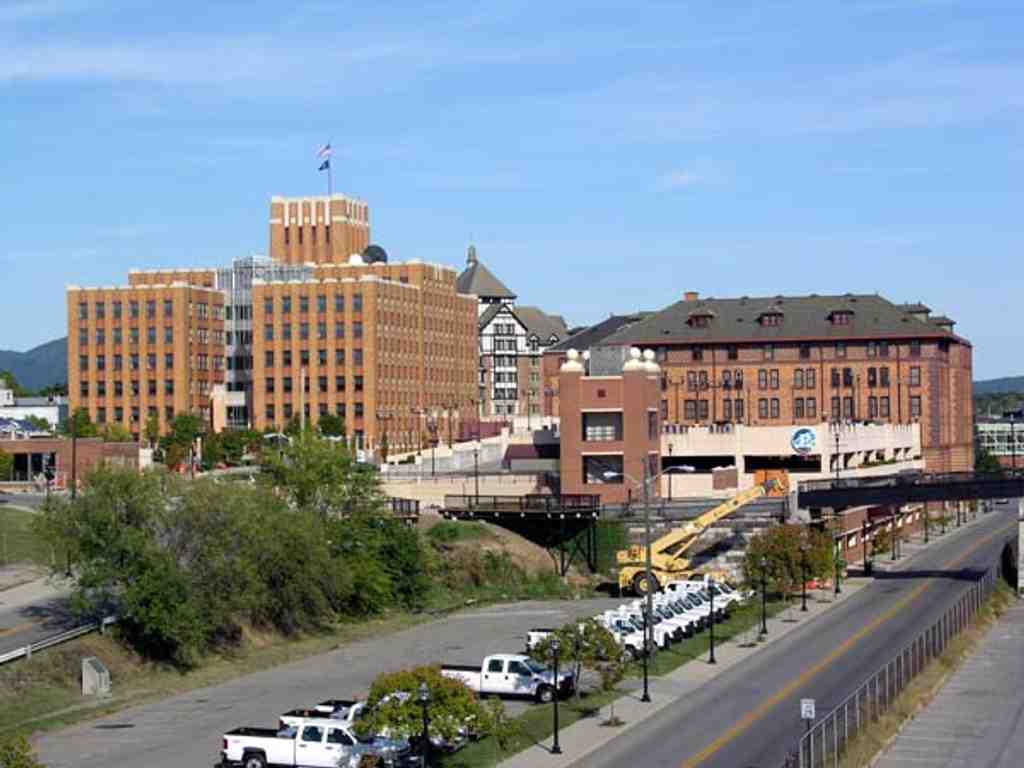
Look for the big, tan-brick railroad office blocks ahead of you, with a taller central tower and rows of dark windows-hard to miss, especially with the rail yards spread out nearby.
You’re standing at the Norfolk and Western Railway Company Historic District, which is basically Roanoke’s “we run this town” portfolio in brick and stone. Three major buildings make up the story here, and they don’t even pretend to be shy about it.
The oldest part is the General Office Building-South. In 1896, after N and W’s previous headquarters went up in flames in January… they rebuilt on the same spot, because railroads don’t do “setbacks.” The eastern wing came first, then in 1903 they copied it like a carbon print and added a matching western wing, linking the two with a connector piece-practical, symmetrical, very “we have schedules to keep.”
Then in 1931, they add the General Office Building-North, connected by a skywalk. This one leans Art Deco and borrows some swagger from New York-design cues that nod at the Chrysler Building, scaled to Roanoke and powered by coal-country confidence.
Just east of here sits the Passenger Station-born in 1905 with a classical, civic-look… then remodeled in 1949 into sleek Moderne by designer Raymond Loewy. If that name rings a bell, it should: the guy shaped the look of 20th-century industry, and people have argued this station was one of his best architectural swings.
Passenger service ended in 1971, offices moved out in 1992, and these buildings got second lives-apartments, classrooms, and today, visitors and local history inside the station. In 1999, the whole trio earned a spot on the National Register.
When you’re set, Wells Fargo Tower is a 3-minute walk heading east, and it’ll be on your right.


