
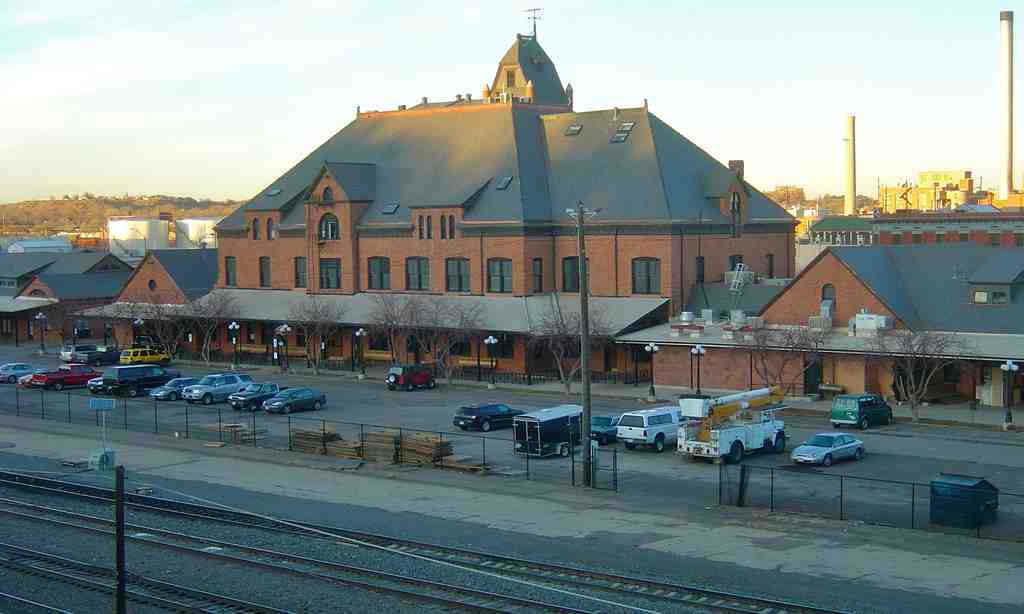
Look for a grand, reddish-brown brick building with a steep, slate-gray roof and dormer windows rising dramatically above the nearby parking lot and railroad tracks-this impressive structure signals you've reached the historic heart of Union Avenue.
Welcome to the Union Avenue Historic Commercial District-Pueblo’s very own time machine, though thankfully, without the risk of running into any wild west shootouts. As you stand here, take a deep breath and let those century-old bricks whisper some secrets into your ear. The bricks and stones around you have seen so much-more than one wild night and more than a couple of disasters!
Back in the 1880s, Union Avenue buzzed with the hopeful energy of two growing cities, South Pueblo and Central Pueblo, before they married their neighbors Pueblo and Bessemer to finally create present-day Pueblo. Picture dusty roads, horse-drawn wagons, tough railroad men, and the ever-watchful eyes of Bat Masterson himself-yes, the same Bat who ran with Wyatt Earp and Doc Holliday-keeping the peace as a sheriff while the railroad crept through town. Imagine walking these same streets and bumping into legendary lawmen. Or running away from them, depending on your luck!
Now, let’s go back even further-if you squint, you might still see 5th Street in the haze, because that’s what this area was called as early as 1872, before Union Avenue was officially born in 1880. City Hall itself was woven into the fabric of this place by law, anchoring Pueblo’s government right here where the energy of trade, trains, and tales flowed thick.
But even the bravest city can have a rainy day-or in Pueblo’s case, a very wet one. The biggest drama hit in 1921, when the Arkansas River, likely tired of its banks, decided to visit town. With waters up to 18 feet deep, the flood tore through this district, sweeping away buildings, dreams, and, sadly, many lives. You’re standing on the bones of resilience. Maj. Paul Newlon called the devastation “beyond description,” and he wasn’t kidding-virtually every building from the post office to the square past the station vanished under water. Pueblo was the economic jewel of southern Colorado, and this watery misfortune set the city back for years.
But Puebloans are nothing if not determined, and with time, things rebuilt-but not without some quirks. Many of the sturdy old buildings you see today date to the 1880s, though a lot were remodeled after floods to suit newer styles of the day. And talk about a colorful history: Union Avenue soon became notorious far and wide as a lively Red Light District full of taverns and, let’s just say, enthusiastic nightlife. Gossip has it the folks in the mesa junction area got so tired of the stories that, by 1939, they literally renamed part of the street to Colorado Avenue to avoid the reputation.
Through good times and “unsightly” decline, the district saw everything-scenes straight from a gangster movie, mobsters like Jo Jo Concialdi and The Branch Inn explosion in 2008, where a sudden blast shattered windows and lives, shaking Pueblo’s heart. Years later, the lot found new hope, as neighbors looked forward to fresh starts and safer nights.
Those floods and booms weren’t the end, though. In the 1990s, as buildings faced decay and jobs dried up after the steel mill layoffs, Pueblo came together and chose revival. The Historic Arkansas Riverwalk was born, adding water back in-this time on purpose!-tracing the river that once ran wild here, and marking an area where national borders once shifted like card tricks: France, Spain, Mexico, the US, and even a sprinkle of the Republic of Texas.
And still, Union Avenue is where Pueblo celebrates, mourns, and rallies. From “B Street Bash” in June to Oktoberfest in September, and the always spicy Chile and Frijoles Festival in autumn, locals and visitors fill the air with music, laughter, and a lot of roasted peppers. Famous politicians have come to make their mark here, too-like Woodrow Wilson’s final great speech at Memorial Hall, immortalized by a plaque just steps away.
So, as you look around, remember: you’re not just walking past pretty old bricks-you’re stepping through layers of grit, glamour, and Pueblo pride, where every echo under your step has its own wild story to tell.


