
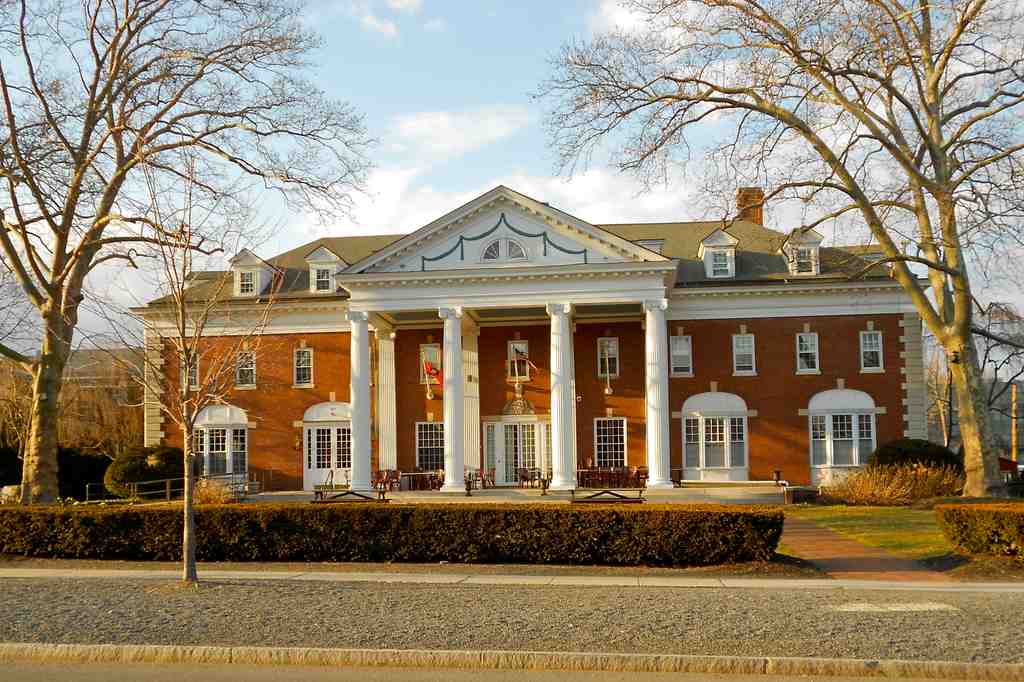
You’re looking for a huge, red-brick mansion just across the street from Prospect Avenue, easily spotted by its grand entryway and four towering white columns in classic Colonial style.
Alright, picture yourself standing in front of the Colonial Club-a place that’s seen more plot twists than a soap opera and glows on Friday nights under those very columns you see now. Take a deep breath-smell that early morning grass and hear the soft as students hurry past the massive portico. Dating back to 1891, this club started with just 13 Princeton juniors who called themselves the “Plug and Ulster Club”-if that doesn’t sound like a name for a secret society, I don’t know what does! Back then, the college president tried to stop them from settling so close to Evelyn College, Princeton’s women’s college. Negotiations finally led to the founding of Colonial, first in a rickety old Virginian house. Imagine those early meetings-guys in heavy coats, huddled on the porch, plotting the club’s future with more ambition than a squirrel with a secret nut stash.
But life at Colonial has never been dull. During World War I, the campus shifted dramatically. Most men left for military service, leaving the club so empty you might’ve heard a pin drop through the dining hall. The club nearly closed, but in classic Princeton fashion, it bounced back after the war. One of the heroes of this revival was Harvey Firestone Jr.-yep, from the tire company family! Even in the darkest times, Colonial members gathered for formal dinners in New York, and that tradition still lives on in glass-clinking alumni reunions.
In the roaring twenties and thirties, Colonial swelled with life. Fancy parties with orchestras, billiards rooms humming with laughter, and students sipping sodas by the library. But pep soon turned to tension-when World War II struck, Colonial again emptied, with 18 members lost to the conflict. Yet after each trial, the club seemed to reinvent itself. By the fifties, buffet dinners replaced white tablecloths, and the vibe had shifted from stiff formality to a new sense of freedom (and probably a few more laughs).
Let’s fast-forward to the swinging sixties. Colonial made history as the first Princeton eating club to admit women and do away with the selective “bicker” process-opening its doors to all students willing to join in 1969. Rival clubs across the street weren’t so quick, but Colonial set the tone-a pioneering move that filled this house with a wider, more spirited crowd, big and small parties alike. Occasionally, tough times hit again-at one point, the club was so low on members, you could probably fit them all in one billiards room! More than once, alumni and students teamed up, raising hundreds of thousands of dollars with a “never give up” attitude to keep Colonial afloat.
Inside these walls, history’s thrummed to the rhythm of club events-game nights, trivia battles, outdoor BBQs, wild spring house parties, even medieval feasts that’d make King Arthur jealous. Some Friday nights, the big white columns flicker with light, drawing students from across campus for another evening at Princeton’s most welcoming mansion. Did I mention their obsession with flu shots? After losing nearly all their members in the 1918 pandemic, Colonial became Princeton’s flu vaccine champion-so if you’re feeling sniffly, you’re in good company!
And the alumni-oh, what a cast! From the third man on the Moon, Pete Conrad, who carried a Princeton flag all the way up there (and brought it back for Colonial-at least until it got lost in a wild pyrotechnics night!), to Google’s Eric Schmidt, Texas Senator Ted Cruz, and more. Even two-time Pulitzer-winning novelist Booth Tarkington, founder of the Princeton Triangle Club, was a Colonial man. Each left a story embedded in the club’s woodwork and photographs.
Today, under that impressive facade, Colonial Club still buzzes with breakfast chatter, lecture debates, and the clink of pool cues. Like a cat with nine lives, it keeps coming back-open to all, proud of its past, and always ready for the next chapter. Even if you never eat a panini here, you’re now part of its long, colorful story, just for having stopped and listened.
Eager to learn more about the clubhouse, club culture or the notable alumni? Simply drop your inquiries in the chat section and I'll provide the details you need.


