
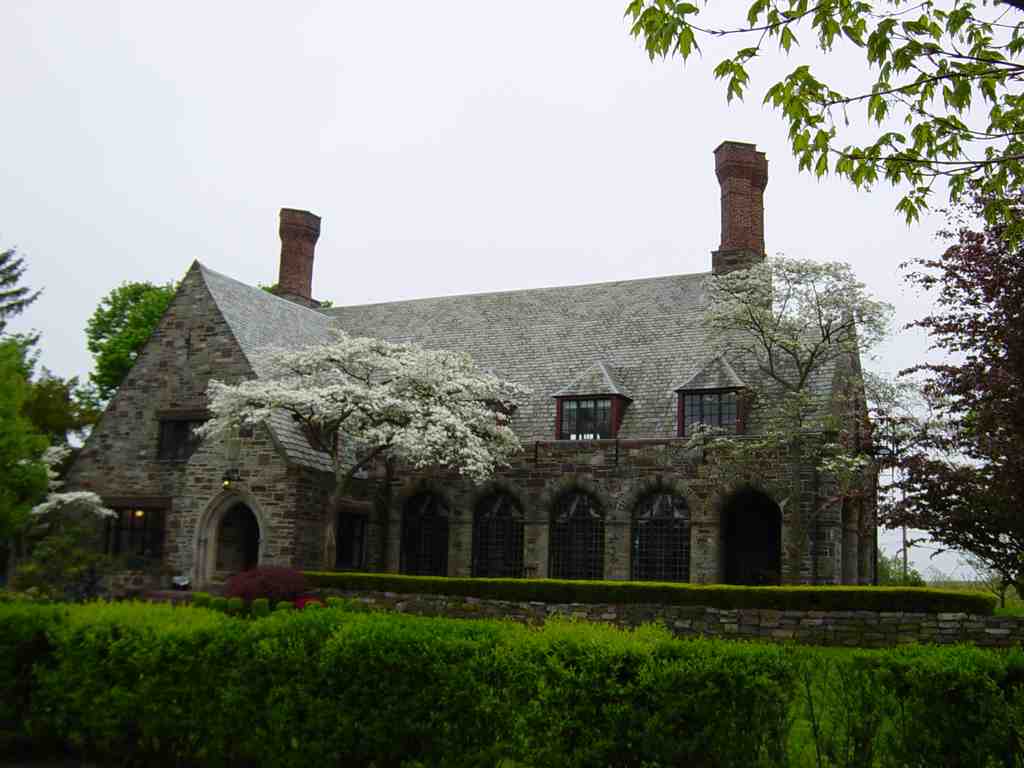
To spot Cloister Inn, look ahead for a striking stone building with a slate roof, tall chimneys, and a row of Gothic-style arched windows, framed in spring by blossoming trees and nestled behind a tidy green hedge.
Alright, you’ve made it to Cloister Inn-welcome to one of Princeton’s most storied eating clubs, where the motto is “Where everybody knows your name.” And let me tell you, with a motto like that, you’d be hard-pressed to stumble in here and remain anonymous for long. Take a deep breath and imagine the scent of fresh rain on old stone, mingling with a trace of woodsmoke curling up from those proud chimneys. This neo-Gothic marvel has stood watch on Prospect Avenue since 1924, but its story really begins back in 1912, when a group of Princeton undergraduates looked around and thought, “What this place really needs is a spot that feels like home, but with less laundry and more Olympians.”
Picture the early days-Princeton’s campus alive with energy, professors in tweed dodging students on bicycles, and in the midst of it all, Cloister Inn rises from the manicured lawns, its heavy doors opening with a creak that promises camaraderie and maybe a little mischief. Designed by R.H. Scannell and Charles Lewis Bowman, this building isn’t just architecture; it’s a whole mood. Those arched windows aren’t just for show-they invite sunlight to dance across roaring fires and, on late nights, to glimmer off the trophies won by Cloister’s extraordinary athletes.
Let’s time travel a bit. In 1972, something curious happened: the doors closed to undergraduates. For a few years, only Princeton alumni could rub elbows here-imagine the conversations! A room full of old friends swapping tales of glory days, perhaps debating who really pulled off the greatest rowing victory or who ate the most club sandwiches in a single sitting. But by 1977, the undergraduates came bounding back, the laughter and friendly banter louder than ever. And in a twist of tradition, Cloister chose the sign-in system over the more exclusive “bicker” process-meaning you didn’t need a secret handshake or to serenade anyone to join, just a spot of luck in the lottery. Maybe not quite as dramatic as winning the Hunger Games, but certainly easier on the nerves.
Speaking of nerves, if these walls could talk, they’d whisper tales of Olympians and world-beaters. Cloister is famous for attracting students who aren’t just good at sports-they’re world-class. Imagine the energy at dinner when someone at your table is off to compete in the Olympics, rowing or swimming for their country! Legends like gold medalist Caroline Lind, fencer Frank Anger, and a whole parade of athletes have gathered here before jetting off to make history. Even if you were just a benchwarmer on the club ping-pong team, you could always say, “I sat next to an Olympian at dinner. And they passed the salt!”
But it’s not all sports stories and friendly teasing. Cloister has made its mark in literature and the arts, too. Did you know the bestselling novel The Rule of Four features this very club? Author Ian Caldwell, a Cloister member himself, immortalized its mysterious, close-knit atmosphere. You might feel a hint of suspense in the shaded alcoves and picture students trading secrets or plotting grand adventures.
The alumni roster is like a who’s who of movers and shakers: Supreme Court Justices, governors, tech titans, and journalists who chased down impossible stories-all ate, studied, and built lasting friendships right where you’re standing. There’s even a rumor that if you sit here long enough, you’ll spontaneously develop an impressively competitive spirit-or at the very least, get really good at remembering names.
So as you gaze up at those Gothic arches and breathe in the rich Princeton air, imagine the laughter, the debates, the dreams of champions and the friendships forged over meals. Cloister Inn is more than just a club-it’s a vibrant piece of Princeton’s living history, and who knows, maybe if you listen closely, you’ll catch the echo of a victory cheer or the clink of glasses from a celebration long past. Now, ready for the next adventure? Let’s keep moving!


