
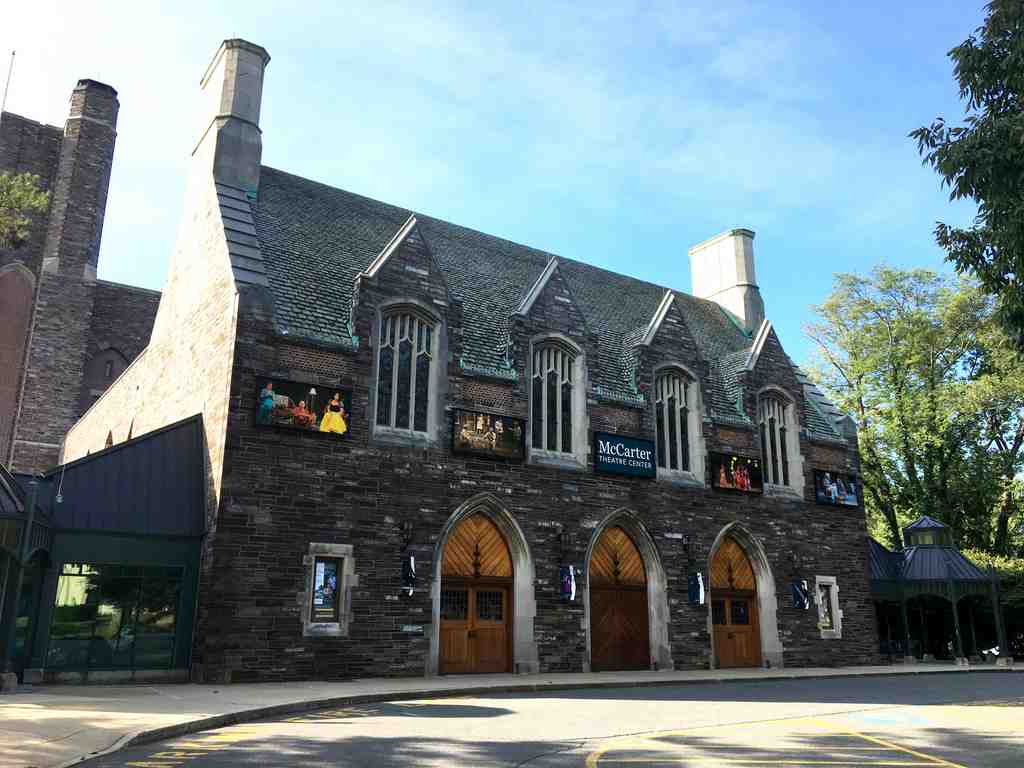
To spot McCarter Theatre in front of you, just look for a grand, gray stone building with a steep, slate roof, tall windows, and two strikingly large wooden doors-almost like it should be welcoming you into a medieval storybook rather than a Tony Award-winning playhouse.
Welcome to the legendary McCarter Theatre, where drama and laughter have danced together for almost a century. Take a breath, close your eyes for just a moment, and imagine-it's the year 1930. The world outside is gripped by the Great Depression, yet in Princeton, a great stone castle rises, promising adventure. With a flourish of trumpets and a rustle of excited chatter, the golden doors swing wide, and the very first audience tumbles in, ready for a night with the Princeton Triangle Club. On that night, stars of the future-Joshua Logan, James Stewart-share jokes backstage, nerves jangling like coins in a pocket.
In its early years, the McCarter was so close to Broadway, geographically and artistically, that it became the pre-Broadway launching pad. Imagine large crowds streaming beneath those stone towers-and inside, the cavernous auditorium bathed in the warm glow of footlights. Here, the greats of American theater found their home before hitting the bright lights of New York: Thornton Wilder’s “Our Town” had its first heartbeat right where you’re standing, and “You Can’t Take It With You” was born not in Manhattan, but right here on this New Jersey stage. Just picture Katharine Hepburn, Gene Tierney, and even the iconic Kim Stanley nervously waiting in the wings, surrounded by mountains of stage props and crisp playbills.
Music drifted from the McCarter just as often as Shakespearean soliloquies. In the 1930s, the world’s best orchestras stormed through-imagine the Philadelphia Orchestra’s strings shivering into the night, and the thunderous applause following legendary performers like Jascha Heifetz or the young George Balanchine’s American Ballet dancers pirouetting onstage.
But not all times were easy. As Broadway changed, out-of-town tryouts faded, and McCarter faced its own dramatic twist: could it survive without the sparkle of pre-Broadway premieres? The lifeline arrived from Princeton University, which swept in like a hero to save the day. From then on, McCarter had the institutional backbone to match its creative heart.
By the turbulent 1960s, a fresh cast of stars arrived, both onstage and behind-the-scenes, shaking the rafters with new ideas. Rosemary Harris, Donald Moffat, Edward Asner-these names filled the playbills-but it was also a haven for daring directors ready to commission bold new works. With time, McCarter evolved from a single grand hall to a bustling theater complex, thanks to thoughtful renovations and the addition of a cozy second stage, the Berlind Theater. Creativity now had even more space to roam.
What’s most magical about McCarter, though, is its beating heart: the people. It isn’t just a place where stars are born, but one where 100,000 community members get to join in-students, families, budding playwrights, all swept up in the magic of the stage. You might even hear the distant echoes of children’s laughter from a school program or the low murmur of actors pacing before a big opening night.
Today, as you stand under the pointed arches and gaze at those old stone walls, you’re sharing space with nearly a century’s worth of triumphs, tragedies, and standing ovations. New productions still sparkle to life under Artistic Director Sarah Rasmussen and Executive Director Martin Miller-just as they have, wave after wave, since 1930. And if you listen closely as you pass, you might hear the whispered secrets of giants who once took their first bow here.
So before you leave, take a dramatic pause and let your imagination fill these stones with scenes of hope, heartbreak, and hilarity-because the McCarter truly is where stories come to life, and where, for almost a hundred years, Princeton has come to laugh, wonder, and dream.


