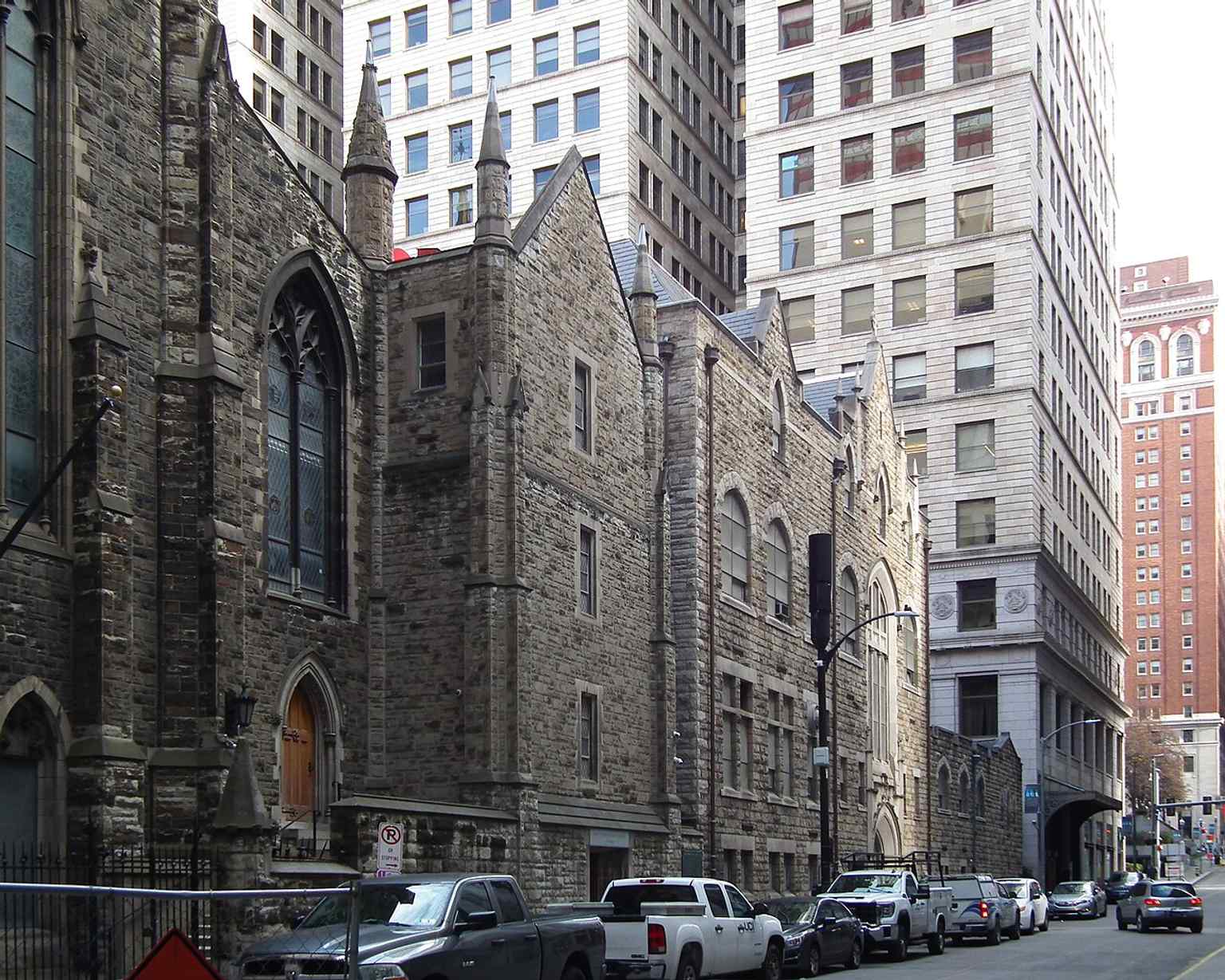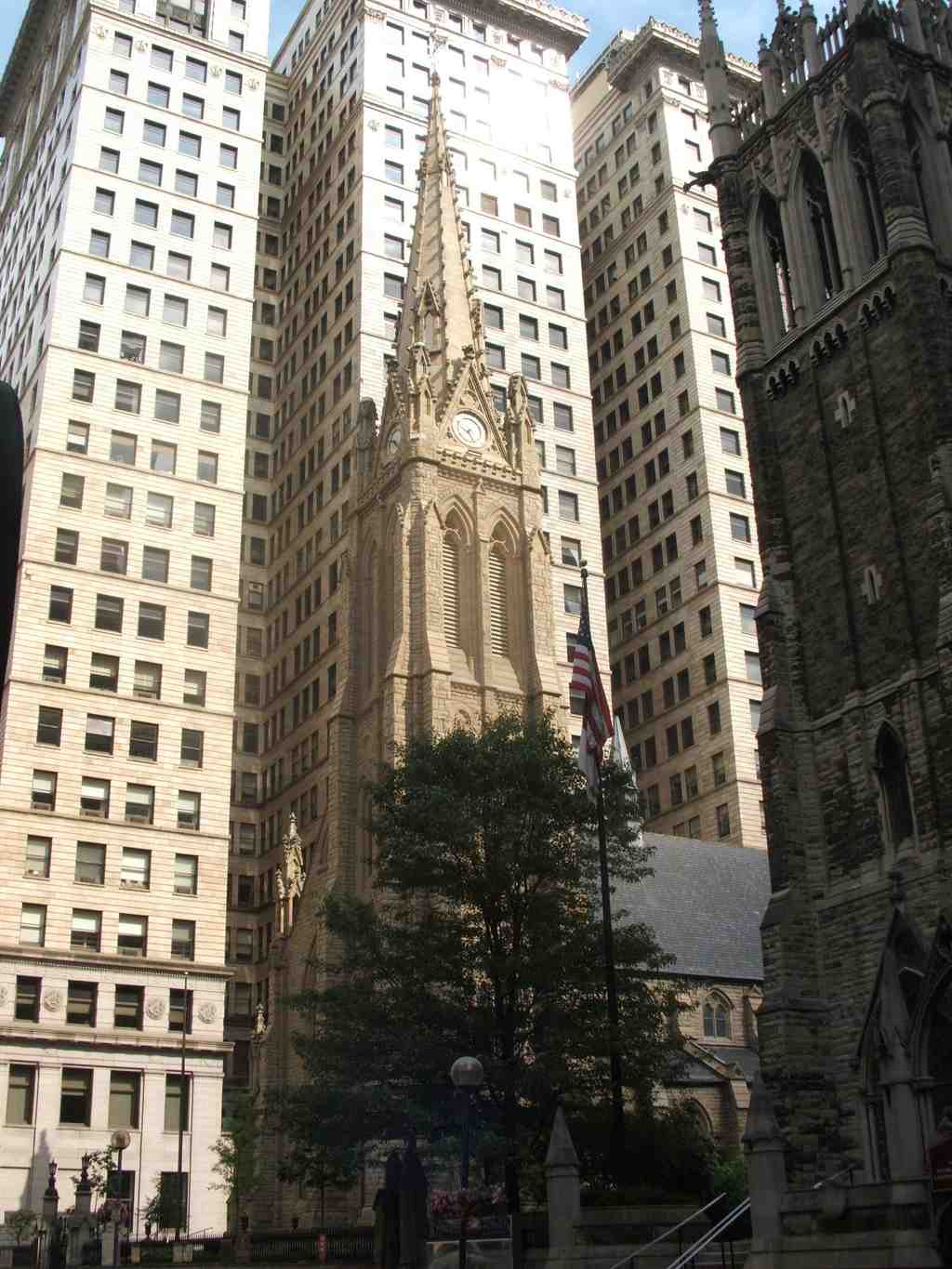
Look to your left and spot the striking Trinity Cathedral, a tan stone structure featuring classic Gothic pointed arches and a distinctive, towering central spire with a clock face.
This land holds incredible historical weight! Long before European settlers arrived, this terrace above the rivers was sacred to Native Americans as a burial ground. Later, heirs of Pennsylvania's founder, William Penn, actually deeded this very plot to the congregation. Because of this layered history, the churchyard holds the oldest marked graves west of the Atlantic Seaboard, serving as the resting place for Native American leaders alongside French, English, and American colonists.
The congregation itself evolved dramatically over the centuries. They started in the 1780s two blocks away in a brick, eight-sided meeting house literally called the Round Church. By 1824, they moved here and built what is considered Western Pennsylvania's first Gothic structure.
The beautiful building before you is their third home, completed in 1872 by architect Gordon W. Lloyd. Look at the image on your device to see a clear view of that central steeple. This English Gothic style was incredibly popular with mid-Victorian Episcopalians, a Christian denomination that is part of the worldwide Anglican communion. Inside is a soaring central hall known as a nave, lined with clustered stone columns. While most of the stained glass dates back to 1872, a 1967 fire destroyed several windows, which were then replaced with stunning medieval-style glass.
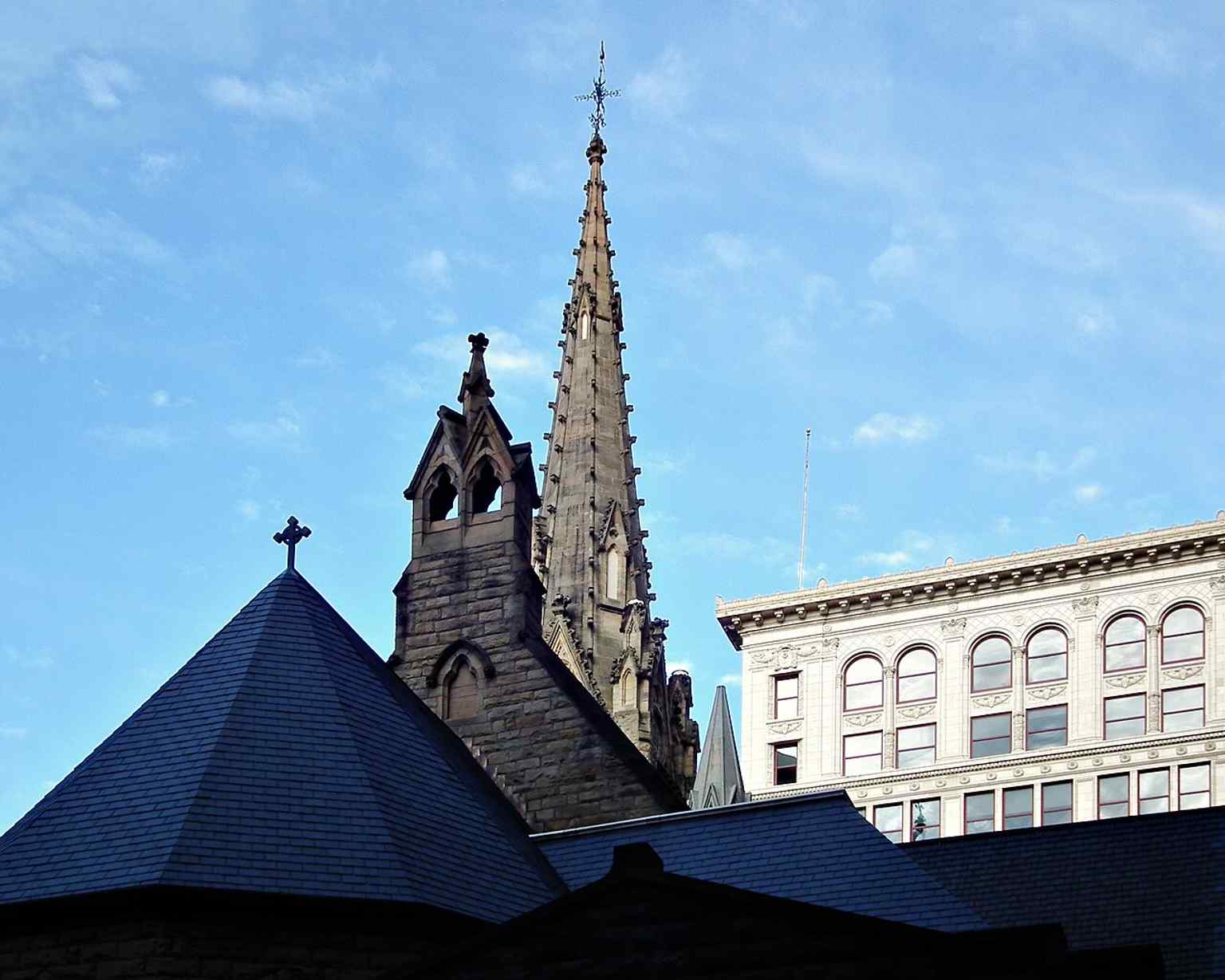
You might notice the exterior stonework looks remarkably well-preserved. Up until 2007, it was covered in thick industrial soot from Pittsburgh's famous steel-making era. That grime was actually causing acid runoff to eat away at the stone before they finally scrubbed it clean!
The cathedral also navigated a complex modern chapter during a major 2008 theological split, or schism, within the diocese. For three years, Trinity miraculously maintained ties with both the breakaway and continuing factions, until officially reaffirming its Episcopal identity in 2011.
If you want to view the interior, they are open Tuesday through Friday from ten to three, and Sunday mornings. Trinity Cathedral remains an enduring monument to faith, survival, and community. Take all the time you need, and whenever you are ready, we will head over to our next stop.