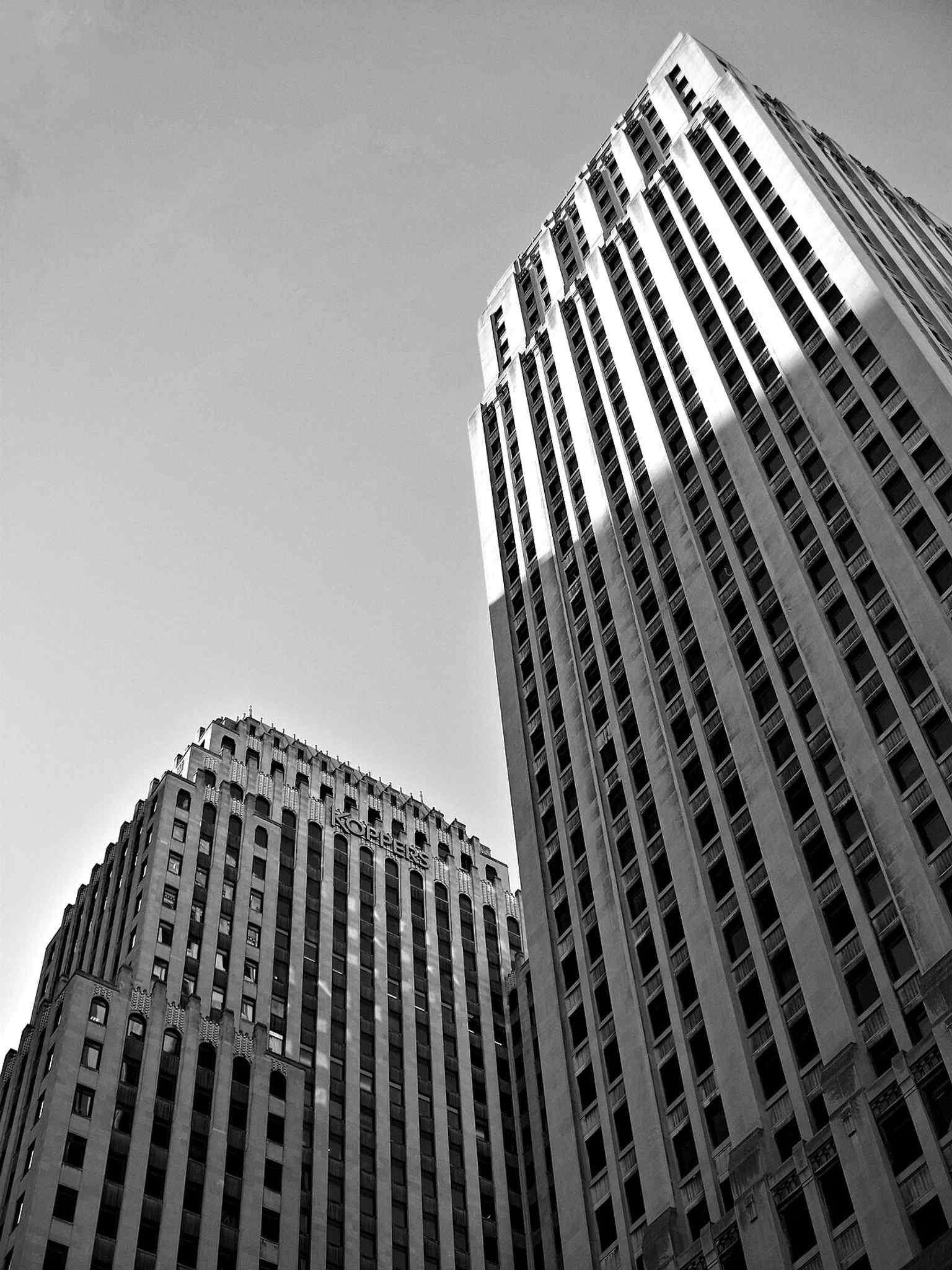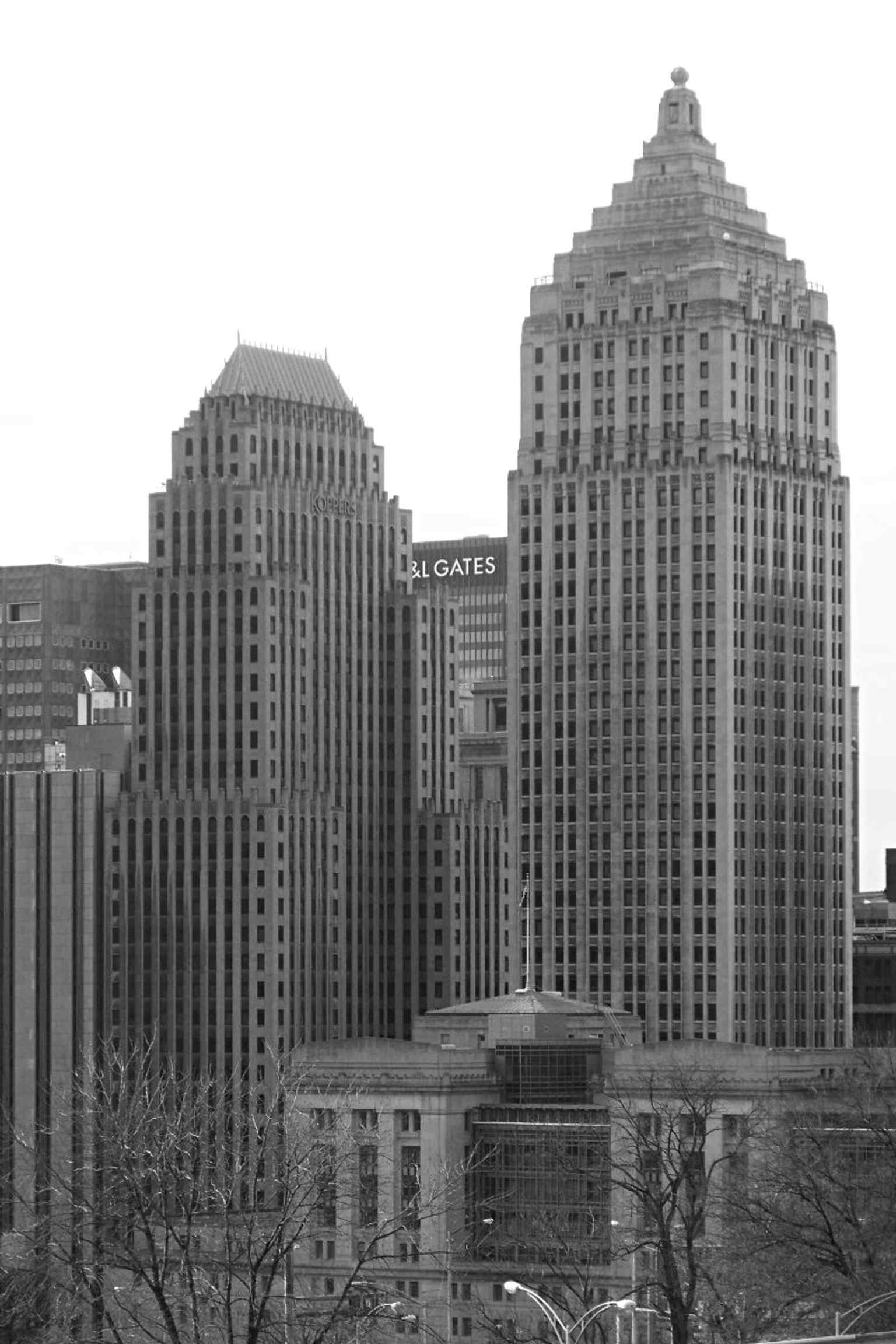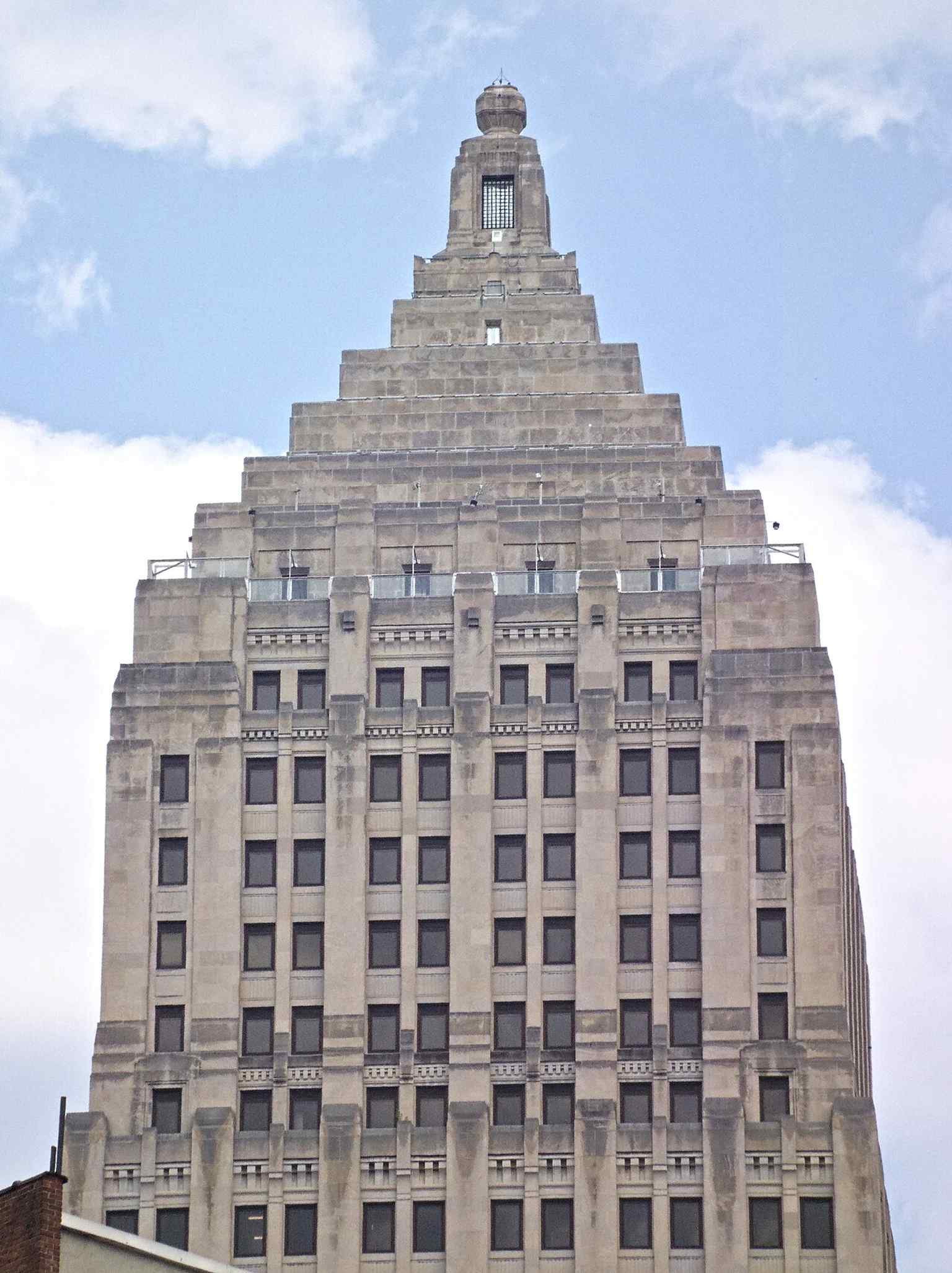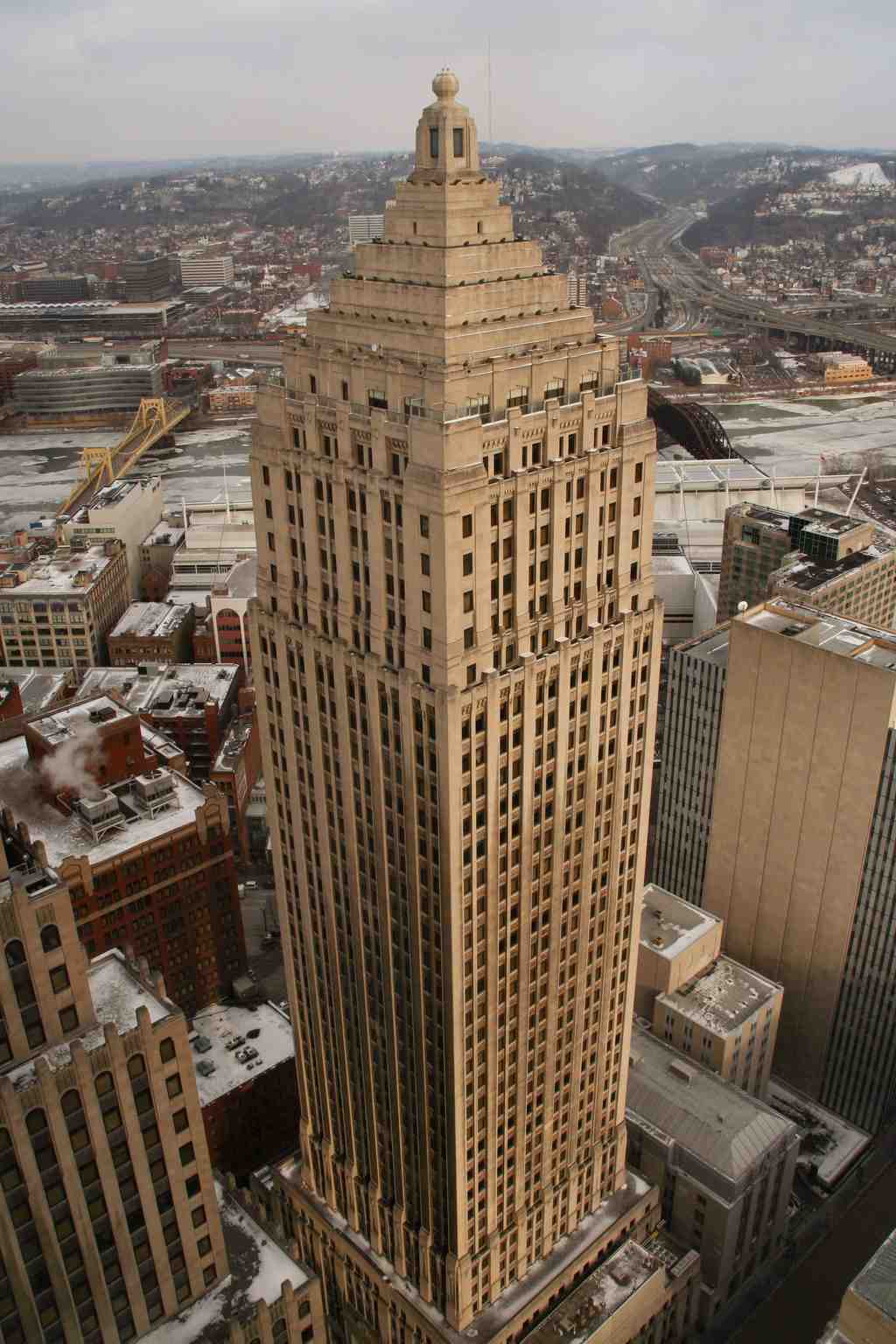
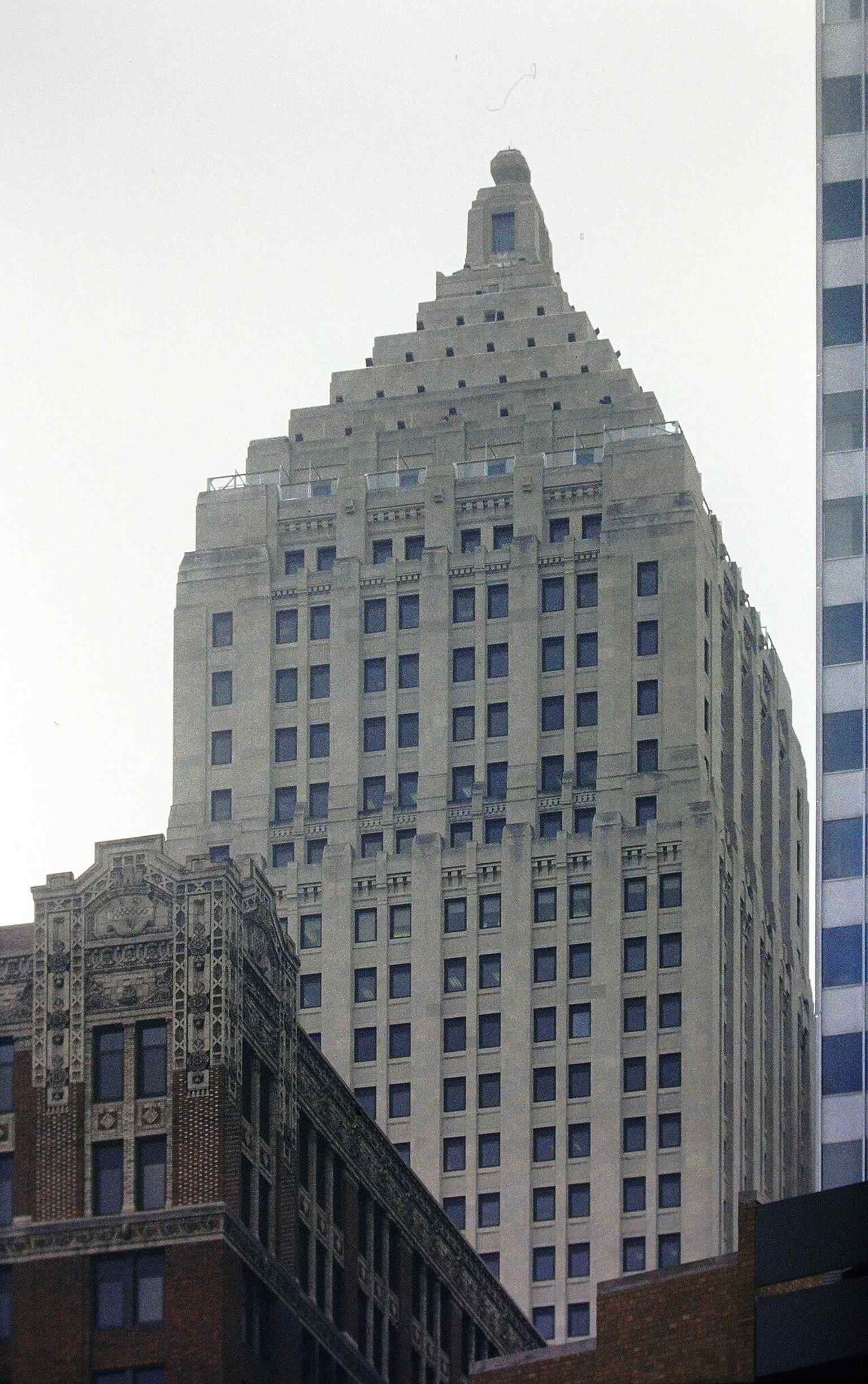
Look to your left for the soaring, beige stone skyscraper with long vertical columns of windows, capped off by a distinctive stepped pyramid at its very top.
This is the Gulf Tower, a forty four story masterpiece finished in 1932. It cost ten million dollars to build, which is well over two hundred million dollars today. It was designed as the headquarters for the Gulf Oil Company in the Art Deco style, an architectural movement known for its sleek, bold, geometric shapes. See that stepped crown? It is actually modeled after the Mausoleum of Halicarnassus, a massive ancient Greek tomb that was famously one of the Seven Wonders of the Ancient World.
This grand building holds some intense history, too. In June 1974, a bomb tore through the twenty ninth floor. A radical group called the Weather Underground Organization planted the explosive, claiming it was a protest against Gulf Oil's operations in regions affected by the Angolan War of Independence.
But for generations of Pittsburghers, this building is beloved for something a lot more practical... its giant weather beacon! Starting in the mid twentieth century, building manager Edward Heath used the neon lights on that pyramid to broadcast the forecast for miles. A steady blue meant fair and colder, while flashing orange meant warmer with rain. You can check out a neat before and after shot in your app showing how the old neon tubes were eventually upgraded to bright modern LEDs.
The beacon is not just for weather, though. Take a look at the photo in your app to see the pinnacle flashing during a celebration. Since 2001, whenever the Pittsburgh Pirates hit a home run across the river, the top of the tower flashes wildly. It started with Regina Taylor, a lobby receptionist who would listen to the games on her radio and manually trigger the lights. Pirates announcer Lanny Frattare loved this so much he started shouting over the broadcast... Flash the beam, Regina, that one is out of here!
The tower remains a fantastic piece of local pride that connects ancient architecture to modern baseball. Feel free to linger here, and follow your map to the next site when you're ready.