
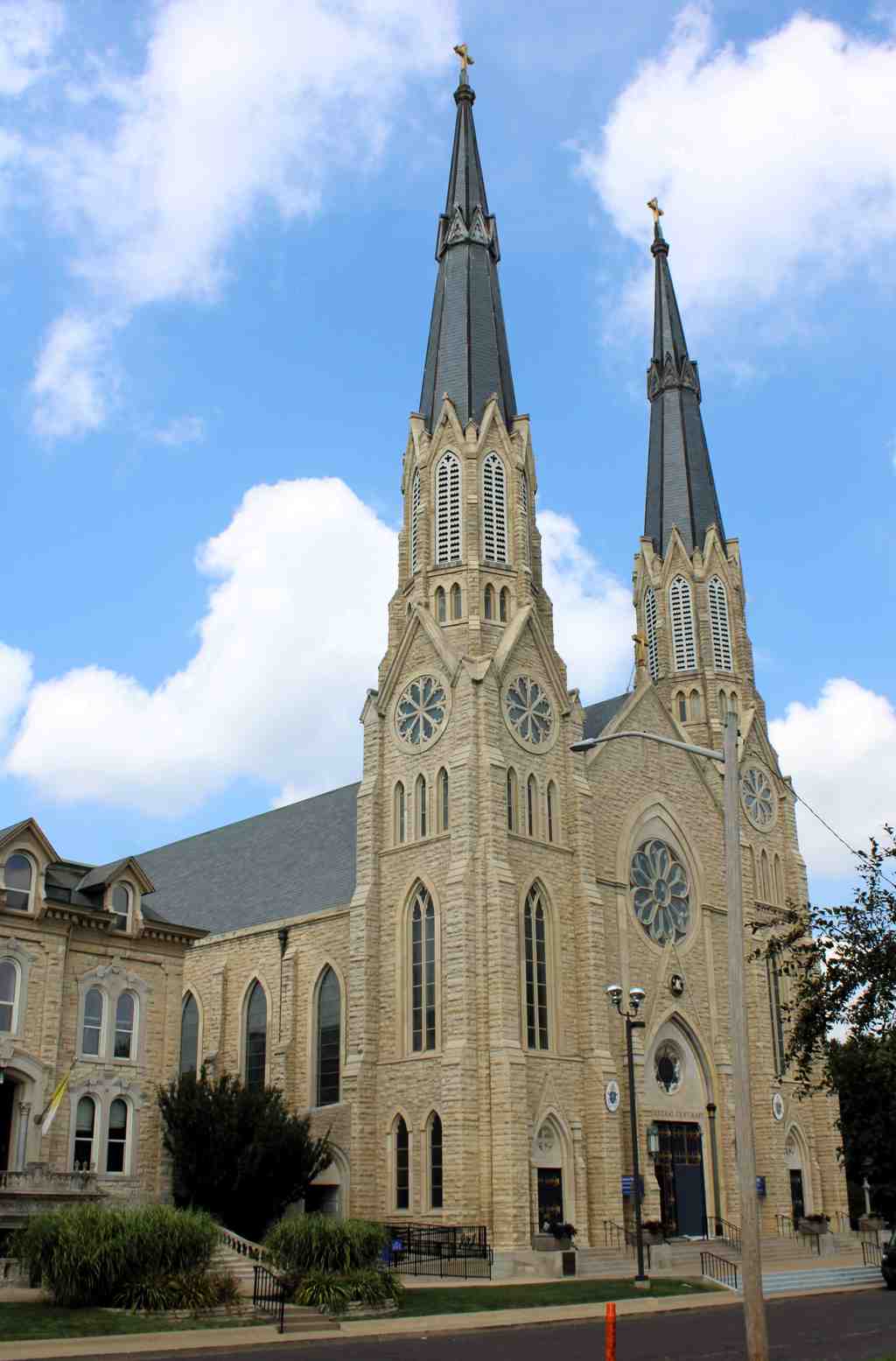
On your left, look for the big limestone Gothic church with TWO needle-sharp spires and round rose windows staring out over the street like quiet, stony eyes.
This is the Cathedral of Saint Mary of the Immaculate Conception... and it’s been anchoring Peoria’s Catholic story for a long time. Long before these spires showed up on the skyline, the first Mass in this area happened across the river at Fort Crevecoeur, with French Récollet missionaries-names like Gabriel Ribourde and Louis Hennepin-trying to keep faith going on the edge of the frontier. By 1839, Mass was being celebrated in Peoria itself, and in 1846 St. Mary’s parish was officially founded. The first St. Mary’s church building went up in 1851.
Then Peoria decided to go big. In 1885, Bishop John Lancaster Spalding laid the cornerstone for this very cathedral, designed by Chicago architect Casper Mehler with a clear nod to St. Patrick’s Cathedral in New York. Because if you’re going to build in limestone, why not think tall? The exterior is Anamosa limestone, and those twin spires climb about 230 feet into the sky.
Step a little closer... this place is also tied to Archbishop Fulton J. Sheen-born and raised in the diocese, an altar boy here, ordained a priest here in 1919, and since 2019, entombed here after a real-life court fight over where his remains should rest. Even in death, the man drew a crowd.
Inside, there’s a lingering link to the older cathedral-an 1873 Crucifix painting by Spanish artist Yzquierda, plus a bell that survived when Old St. Mary’s was taken down in 1898. And if you ever catch the organ: the 1936 Wicks instrument has 3,329 pipes... which is just an objectively excessive number of ways to be loud in church.


