
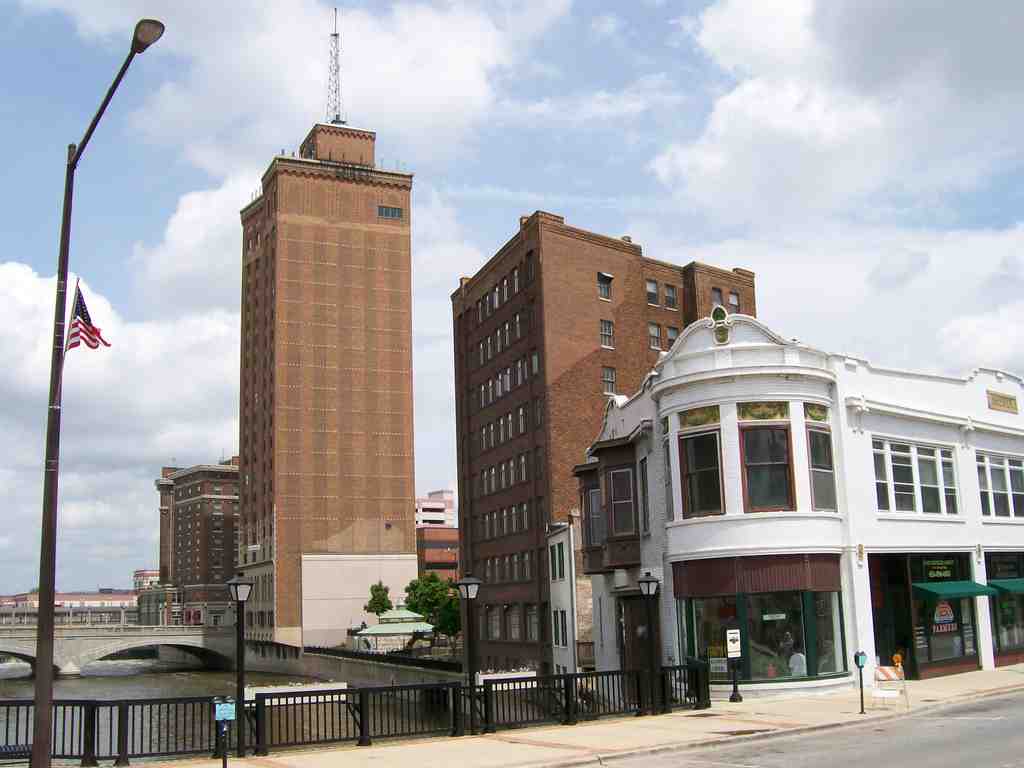
To spot Stolp Island, look right in front of you across the Fox River-it's marked by a cluster of historic brick buildings, including tall towers and white-trimmed storefronts sitting proudly on the riverbank.
Now, let’s step into a story that’s as lively as the river rushing beside you. Imagine you’re standing on Stolp Island, a small patch of land that has always had a big personality. When Joseph Stolp first set foot here, this whole place cost him only $12.72-less than the price of a fancy lunch today! He and some determined friends, the McCarty brothers and Zaphna Lake, wasted no time and got to work, raising the first mill by the water. Can you hear that? The Fox River was both their helper and their challenge, splitting the growing town into East and West, causing quite a rivalry between the two.
As Aurora blossomed and the population grew past 1,000, people needed a space to come together-quite literally between the two halves. So Stolp Island became the city’s heart, neutral ground for Aurorans. They even built the very first City Hall right here, topped with a bustling post office where news from near and far would shuffle in and out each day. Through those windows, you could have glimpsed a city in motion: families trading goods, kids rushing bikes past horses, and civic leaders plotting Aurora’s next big step.
The island’s story keeps building. After the railroad’s arrival in 1856, business exploded. Shops and shops, hotels towering up and up, each built with a hope of drawing crowds to Stolp’s middle ground. When the Hotel Aurora soared skyward in 1917, people craned their necks just to see its rooftop. That record didn’t last too long-Leland Tower next door took the local title as Illinois’ tallest building outside Chicago a decade later.
But Stolp Island isn’t just about tall tales; it’s about community. Here stood the city’s first YMCA, a Carnegie library with the smell of old books, and the Grand Army of the Republic Hall ringing with stories from Civil War veterans. The north end, once threatened by every heavy rain, was beefed up and expanded in the roaring twenties, a time when jazz music, theater crowds, and the fancy footwork of the Columbia Conservatory’s students filled the streets.
Stolp Island is Aurora in miniature: a patchwork of ambition, invention, and neighborly drama, all tucked between the shifting currents of the Fox. Look around and you might even feel a sense of Aurora’s pulse, humming through these bricks and flowing on in the river.




